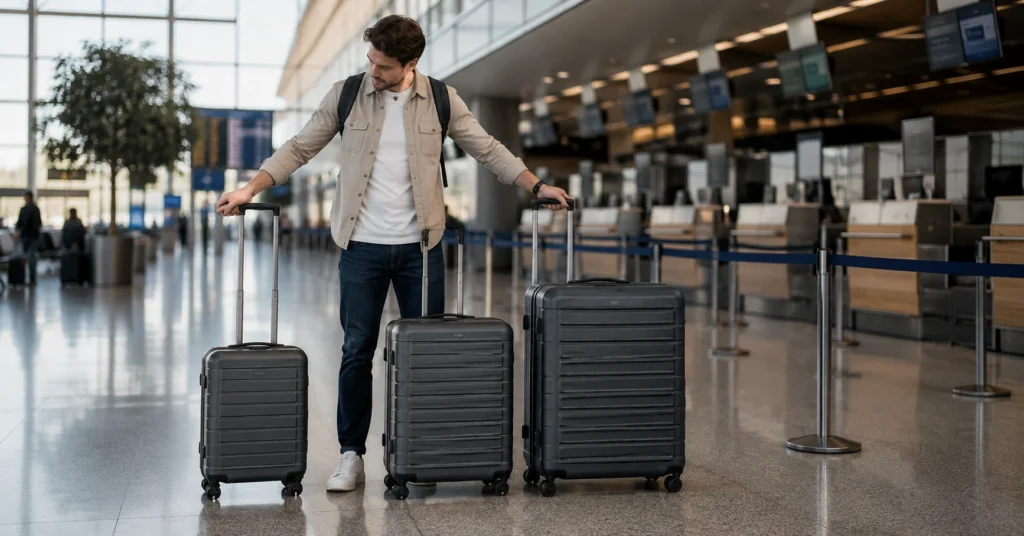
The biggest luggage mistake happens before a trip is even booked. Most people buy a suitcase because it looks durable, comes from a recognizable brand, or happens to be on sale. Then they discover it doesn’t fit airline carry-on rules, weighs too much when packed, or becomes frustrating after a week of dragging it across train stations, cobblestones, and airport terminals.
I’ve made that mistake myself. A heavily discounted hard-shell suitcase looked like a bargain until its wheels started wobbling halfway through a two-week trip. The replacement wasn’t cheap, but it taught an important lesson: luggage isn’t about appearance. It’s about making travel easier.
This luggage buying guide focuses on what actually matters—size, weight, durability, wheels, handles, materials, and how you travel. Get those right and your suitcase becomes invisible. Get them wrong and you’ll think about it every day of your trip.
Quick Facts
| Factor | Best Choice | Best For | Limitation | Verdict |
|---|---|---|---|---|
| Carry-On Spinner | 35–45L | Short trips | Limited capacity | Best first purchase |
| Checked Suitcase | 60–90L | 1+ week trips | Airline fees | Most versatile |
| Hard Shell | Polycarbonate | Protection | Scratches visible | Best all-round choice |
| Soft Shell | Ballistic nylon | Flexibility | Less impact protection | Better for road trips |
| Two Wheels | Rough surfaces | Durability | Harder to maneuver | Better outdoors |
| Four Wheels | Airports | Convenience | Less stable outdoors | Best for most travelers |
Quick Overview: The Right Suitcase Depends on the Trip, Not the Brand
If you’re buying your first piece of travel luggage, start by thinking about trip length rather than logos.
Weekend trips generally need 35–45 liters. A week-long vacation usually works with 60–75 liters. Extended travel often requires 75–100 liters, depending on climate and packing style.
The strongest recommendation for most first-time buyers is surprisingly simple: buy one quality carry-on spinner before buying anything else.
A good carry-on works for weekend breaks, business travel, domestic flights, and many international trips. You’ll use it more often than any other piece of luggage.
What Different Types of Luggage Are Actually Designed For
Not all suitcases solve the same problem.
Carry-On Suitcases
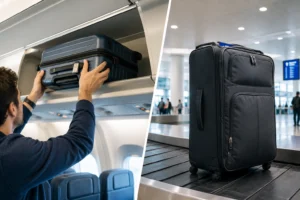
Most airlines allow carry-ons around 55 × 40 × 20 cm, though exact limits vary.
Carry-ons reduce baggage fees, eliminate baggage-claim waits, and lower the risk of lost luggage. They’re ideal if you travel for fewer than seven days and pack efficiently.
The trade-off is obvious: less space means more discipline.
Checked Suitcases
Checked luggage usually ranges from 60–90 liters.
This is where family vacations, winter travel, and longer international trips become easier. Heavy coats, hiking boots, and souvenirs need room.
The downside isn’t only baggage fees. Larger suitcases tempt overpacking.
Duffel Bags
Duffels work well for road trips, adventure travel, and situations where luggage gets loaded into vehicles frequently.
They’re less enjoyable in airports. A packed duffel always feels heavier after the third terminal connection.
Travel Backpacks
Travel backpacks excel when routes involve trains, ferries, stairs, and uneven streets.
You’ll sacrifice organization compared with traditional suitcases, but gain mobility.
What This Luggage Buying Guide Recommends Before You Spend a Dollar
Answer these questions first:
- How often do you fly?
- Do you mostly take short or long trips?
- Will you use trains and public transport?
- Do you travel for business, leisure, or both?
- Are airline baggage fees a concern?
Most first-time travelers discover they need versatility more than capacity.
That’s why a quality carry-on spinner remains the strongest first purchase.
It handles far more travel situations than a large checked suitcase.
The Traveler-First Framework
Buy luggage for the trip you’ll take most often—not the biggest trip you imagine taking one day.
Many people buy giant suitcases for a once-every-five-years holiday. Then they spend the next five years dragging around luggage that’s too large for their actual travel habits.
Don’t do that.
Where Materials, Wheels, and Handles Make the Biggest Difference
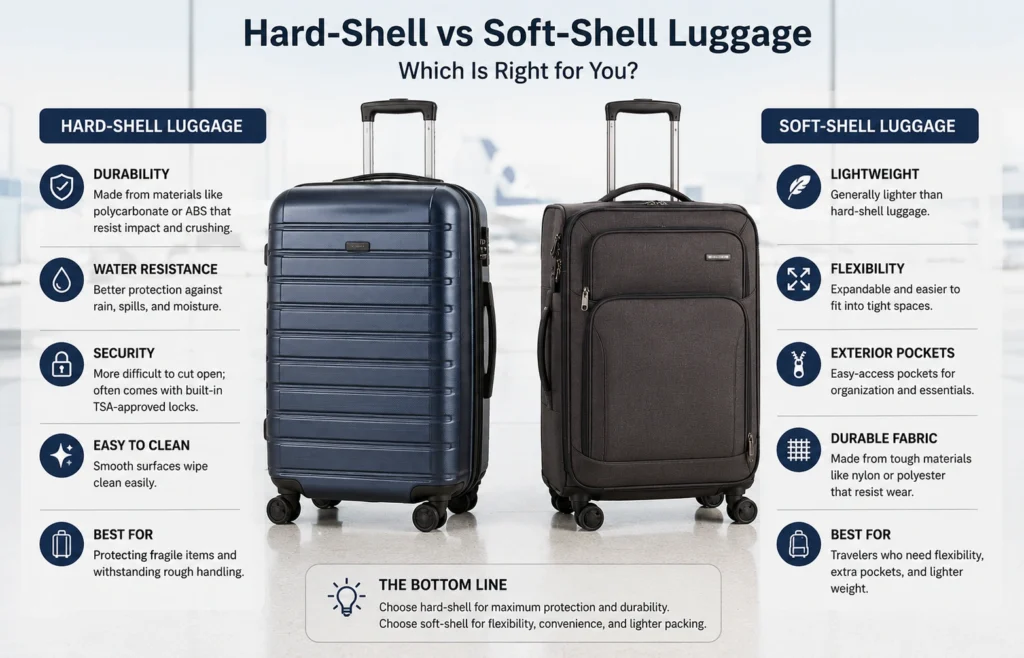
Marketing focuses on colors and branding.
Durability comes from construction.
Hard-Shell Luggage
Polycarbonate is generally the best material balance for most travelers.
It offers strong impact resistance while remaining relatively lightweight.
ABS plastic costs less but cracks more easily after repeated impacts.
Aluminum provides exceptional protection but increases weight and price dramatically.
Soft-Shell Luggage
Ballistic nylon and high-denier polyester dominate quality soft-shell luggage.
They flex better, often include external pockets, and can squeeze into tight storage spaces.
They’re also easier to repair after minor damage.
Wheels
This matters more than most buyers realize.
Four-wheel spinner luggage glides effortlessly through airports. Two-wheel luggage performs better on rough streets, gravel, and uneven surfaces.
Airport traveler? Four wheels.
Frequent outdoor traveler? Two wheels.
Handles
Extend the handle fully before buying.
Any wobble in a store becomes far more noticeable after eight airport transfers.
A stable telescoping handle often tells you more about overall build quality than marketing claims ever will.
What It Actually Costs: Budget, Mid-Range, and Worth-the-Splurge
| Tier | Typical Price | What You Get | Best For |
| Budget | $50–$120 | Basic materials and warranties | Occasional trips |
| Mid-Range | $120–$300 | Better wheels, stronger materials | Most travelers |
| Worth-the-Splurge | $300–$700+ | Premium construction and warranties | Frequent travelers |
(2025–2026 rates — verify before travel)
Budget Tier
Budget luggage works if you travel once or twice annually.
Expect heavier materials, simpler wheel systems, and shorter warranties.
Mid-Range Tier
This is the sweet spot.
Most travelers receive the biggest improvement in durability, wheel quality, and handling without entering luxury pricing.
Worth-the-Splurge Tier
Frequent flyers often justify premium luggage quickly.
Better wheel systems, stronger shells, and longer warranties become noticeable after dozens of trips.
Common Luggage Buying Mistakes That Cost Travelers Money
Buying the Largest Suitcase Available
Extra capacity encourages extra packing.
Extra packing creates overweight baggage fees.
Ignoring Empty Weight
A suitcase can consume a significant portion of airline weight allowances before you’ve packed anything.
Always compare empty weight specifications.
Prioritizing Appearance Over Function
The sleek suitcase in the showroom still has to survive baggage handlers, train stations, and sidewalks.
Function wins every time.
Forgetting Warranty Coverage
A strong warranty doesn’t guarantee durability.
But weak warranty coverage often signals limited manufacturer confidence.
Choosing Four Wheels for Every Situation
Spinner wheels excel in airports.
They’re less enjoyable on cobblestones, broken sidewalks, and gravel paths.
That’s a trade-off many first-time buyers only discover after arrival.
TravelDiaryy Recommendations by Travel Style
First-Time Traveler
Buy a mid-range polycarbonate carry-on spinner between 35 and 45 liters.
It covers the widest range of travel scenarios with the fewest compromises.
Frequent Flyer
Invest in stronger wheel systems and longer warranty coverage.
The difference becomes obvious after dozens of airport journeys.
Family Traveler
A combination of one large checked suitcase and one carry-on often provides the best balance of flexibility and organization.
Adventure Traveler
Choose durability over appearance.
Scratches don’t matter. Broken wheels do.
That’s the distinction worth paying for.
Frequently Asked Questions About Buying Luggage
What size suitcase should I buy for a one-week trip?
A suitcase between 60 and 75 liters usually provides enough space for a week-long trip while remaining manageable in airports and hotels.
Is hard-shell luggage better than soft-shell luggage?
For most travelers, yes. Polycarbonate hard-shell luggage offers stronger protection. Soft-shell luggage remains a better choice when flexibility and external storage pockets matter.
How much should I spend on a suitcase?
Most travelers find the best value between $120 and $300 (2025–2026 rates — verify before travel). This range delivers meaningful improvements in wheels, materials, and durability.
Are spinner wheels worth it?
Yes for airport-heavy travel. No if your trips frequently involve rough roads, gravel, or uneven surfaces.
How long should a quality suitcase last?
A well-built mid-range suitcase often lasts many years of regular travel when wheels, handles, and zippers are properly maintained.