If you’re picturing Japan as a country where you can glide effortlessly between cities on silent, on-time trains, you’re mostly right—but there are trade-offs. Train travel in Japan is efficient, comfortable, and often scenic, yet it can also be expensive and intimidating at first.
This guide is not a romantic ode to rail travel. It’s a practical decision-making tool: what’s worth paying for, what you can skip, and how to plan a trip that fits your money and time.
Quick Verdict: Is Train Travel in Japan Worth It?
Recommendation:
Yes—if you plan to visit multiple cities or regions and value speed, comfort, and punctuality. No—if you’re staying in one city or are on a very tight budget and don’t mind slower, cheaper options.
Who should go:
- First-time visitors wanting to see Tokyo, Kyoto, Osaka, Hiroshima, or beyond
- Travelers who prioritize convenience and comfort over absolute lowest cost
- People who enjoy efficient public transport and don’t want to drive
Who should skip:
- Visitors based in a single city for most of the trip
- Ultra-budget travellers unwilling to pay shinkansen fares
- Those who prefer very slow, unstructured travel without fixed schedules
Biggest trade-off:
You’re paying for speed, comfort, and reliability. For many, that’s worth it. For others, buses, flights, or staying local may make more sense.
Quick Facts
| Information | Details |
|---|---|
| Best time | March–May, October–November (avoid Golden Week, Obon, New Year) |
| Budget | Shinkansen long-distance: ~¥14,000+ per leg; city trips: ¥200–1,500 |
| Best areas | Tokyo–Kyoto–Osaka corridor; day trips to Hakone, Nara, Hiroshima, etc. |
| Transport | Shinkansen, limited express, local trains, subways; IC cards + JR Pass |
What Train Travel in Japan Is Actually Like
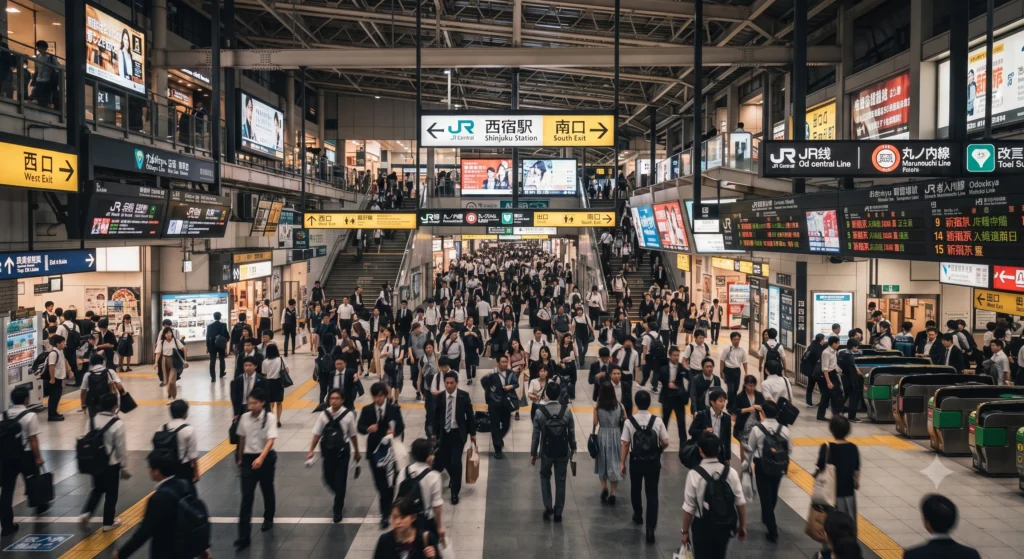
Japan’s rail network is one of the most efficient in the world: trains are safe, punctual, and cover nearly every region, from big cities to remote countryside. The average delay on the Tōkaidō Shinkansen is measured in seconds, and even small delays are treated seriously.
On paper, that sounds perfect. In practice, it means:
- Major stations are huge. Tokyo, Shinjuku, Osaka, and Nagoya can feel like small cities. Transfers can take 10–20 minutes if you don’t know the layout.
- Rush hour is intense. Weekday mornings and evenings see packed commuter trains, especially in Tokyo and Osaka.
- Signage is good but not magical. Most signs are in Japanese and English, but you still need to pay attention to line names, directions, and platform numbers.
- It’s quiet and orderly. Loud conversations and phone calls on trains are frowned upon. Eating is fine on long-distance trains but generally avoided on local and subway services.japan
For many visitors, the experience is a mix of awe and mild overwhelm. The system works extremely well, but it rewards preparation.
What Makes It Worth Your Time
1. Shinkansen for long-distance hops
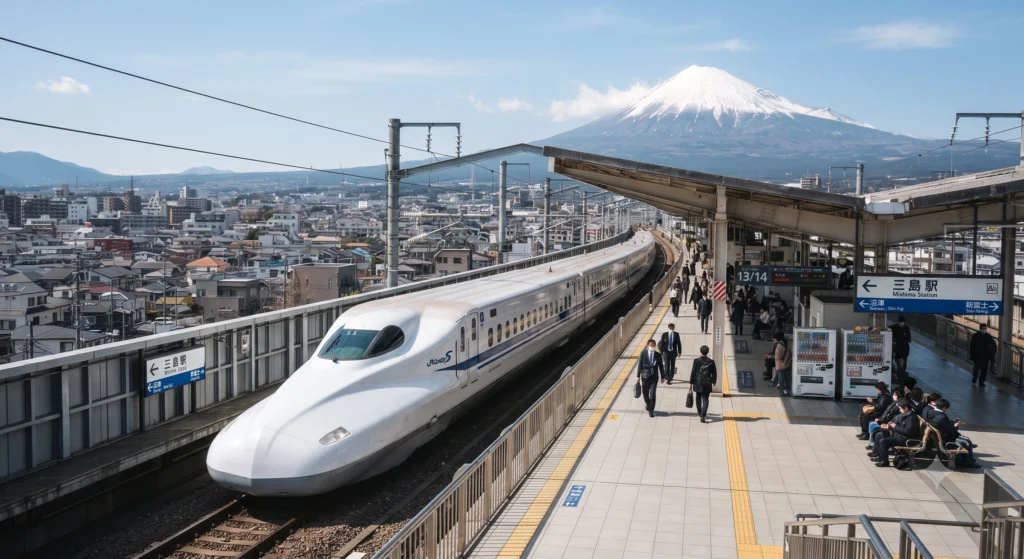
If you’re moving between major cities—Tokyo, Kyoto, Osaka, Hiroshima, Fukuoka—the shinkansen is hard to beat. It’s fast, comfortable, and offers views (including occasional Mt Fuji sightings on the Tōkaidō line). For example, Tokyo to Kyoto takes about 2 hours 15 minutes on the fastest service.cnn+1
Who enjoys this most:
Travelers with limited time who want to see several regions without spending entire days in transit.
2. Scenic limited express and rural trains
Not every great journey is about speed. Limited express trains like the Romancecar (Tokyo–Hakone), Thunderbird (Osaka–Kanazawa), and various scenic lines in Hokkaido, Tohoku, and Kyushu offer relaxed travel with views.japan+1
Who enjoys this most:
Travelers who want a mix of efficiency and atmosphere, and don’t mind paying a surcharge for comfort and views.
3. City trains and subways
Within cities, trains and subways are the backbone of daily life. They’re fast, frequent, and usually the best way to reach attractions. IC cards (Suica, Pasmo, ICOCA) make tap-and-go travel easy across most urban networks.japan
Who enjoys this most:
Anyone staying in or frequently visiting major cities. If you’re based in Tokyo or Osaka, you’ll probably use these daily.
Where To Stay (Relative to Train Access)
You don’t need to sleep inside a station, but being within 10–15 minutes’ walk of a major line makes life easier.
Tokyo:
- Areas like Shinjuku, Shibuya, Ueno, and Asakusa offer excellent rail access and a range of accommodation.
- For first-timers, staying near a JR Yamanote Line station simplifies getting around.
Kyoto:
- Kyoto Station area is convenient for shinkansen and regional trains, though some prefer the Gion/Kawaramachi area for atmosphere and good subway/bus access.
Osaka:
- Namba, Umeda, and Shin-Osaka are all strong choices, depending on whether you prioritize shinkansen access (Shin-Osaka) or nightlife/shopping (Namba/Umeda).
Hiroshima, Kanazawa, Sapporo, Fukuoka:
- Staying near the main JR station is usually the most practical choice, especially if you’re using the city as a base for day trips.
Getting Around
Shinkansen and long-distance trains
- Require a base fare plus a shinkansen surcharge; seat reservations are recommended during peak times.japan
- Reservations can be made at JR ticket counters, machines, or via apps like SmartEX and JR East’s reservation system.japan
Local, rapid, and express trains
- Local trains stop at every station; rapid and express skip some stops but don’t usually require extra fares.japan
- No reservations needed; just tap your IC card or buy a ticket.
IC cards
- Suica, Pasmo, ICOCA, and similar cards work across most of Japan for trains, subways, and buses.japan
- Welcome Suica and mobile versions are available for short-term visitors, though compatibility varies by device.japan
Navigation tools
Use:
- Japan Transit Planner (Jorudan): https://world.jorudan.co.jp/mln/en
- NAVITIME: https://japantravel.navitime.com/en/area/jp/route
- Google Maps is also reliable for most routes and transfer guidance.
What It Really Costs
Prices vary by route and season, but these rough ranges help set expectations. Current rates should be checked before booking.
Budget option
- Rely on local and rapid trains where possible.
- Use IC cards for city travel and short regional trips.
- Consider overnight buses or budget flights for long distances if you’re very price-sensitive.
Comfortable option
- Mix of shinkansen for long distances and limited express for scenic routes.
- Reserved seats on busy shinkansen legs.
- IC card for daily city travel.
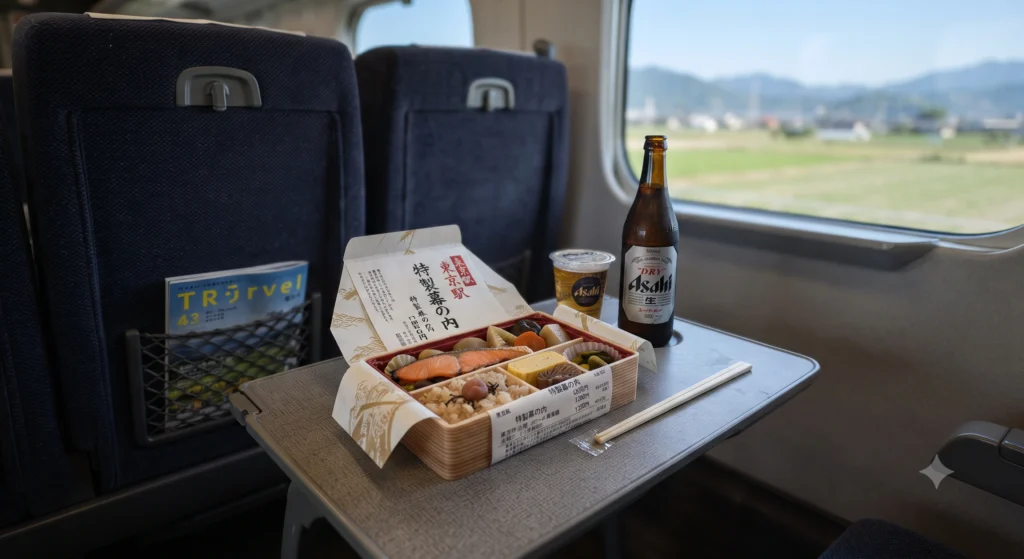
- Occasional ekiben or onboard meals for longer journeys.
Premium option
- Green Car (first class) on shinkansen and some limited express trains.
- Staying near major stations and prioritizing direct routes.
- Themed or luxury trains (e.g., Excelsior, Twilight Express) for special experiences.
JR Pass: worth it or not?
The nationwide Japan Rail Pass increased significantly in price in late 2023, and for many itineraries, it no longer pays off. It can still make sense if you’re doing multiple long-distance shinkansen trips within a short period (e.g., Tokyo–Kyoto–Hiroshima–Tokyo in 7 days). For simpler itineraries, point-to-point tickets or regional passes often offer better value.japan
Regional passes (JR East, JR West, JR Kyushu, etc.) can be excellent for focused trips and are worth comparing before committing to a nationwide pass.
What To Skip And What To Do Instead
Overrated: assuming the JR Pass always saves money
Many travellers buy the nationwide JR Pass by default, then realize they’ve spent more than they would have on individual tickets.
Better approach:
- Map your intended routes first.
- Use the Jorudan or NAVITIME planners to estimate total fares.
- Compare that to the cost of the JR Pass or regional passes.
- Buy the pass only if the math clearly works in your favor.
Skip: using shinkansen for very short hops
For distances under an hour or two, limited express or local trains may be almost as fast once you factor in station transfer time—and cost less.
Better approach:
- Use shinkansen for genuine long-distance legs.
- For nearby cities (e.g., Osaka–Nara, Kyoto–Nara, Tokyo–Nikko), check express or local options.
Skip: overcomplicating your itinerary
Trying to hit Tokyo, Kyoto, Osaka, Hiroshima, Kanazawa, Hokkaido, and Kyushu in one week by train is possible but exhausting and expensive.
Better approach:
- Choose one or two regions and explore them thoroughly.
- Accept that some places are better saved for a future trip.
Final Recommendation
Train travel in Japan is worth it if you:
- Plan to visit multiple cities or regions
- Value punctuality, comfort, and safety
- Are comfortable with a bit of planning and navigation
It’s less ideal if you:
- Are staying mostly in one city
- Are on a very tight budget and unwilling to pay shinkansen fares
- Prefer a very slow, unstructured style of travel
For many first-time visitors, a mixed approach works best: shinkansen for key long-distance legs, regional passes where they make sense, and IC cards for everyday city travel. Done thoughtfully, rail travel in Japan isn’t just a way to get around—it’s a core part of the experience.
FAQ
Is the Japan Rail Pass still worth it?
It depends on your itinerary. Since the 2023 price increase, the nationwide JR Pass is mainly worthwhile for heavy long-distance travel (e.g., multiple shinkansen trips in 7–14 days). For simpler routes, point-to-point tickets or regional passes often offer better value. Always calculate your expected fares before buying.
How do I pay for trains in Japan?
Most travelers use IC cards (Suica, Pasmo, ICOCA) for tap-and-go travel on trains, subways, and buses. For shinkansen and some limited express trains, you’ll need a ticket (with or without a seat reservation) in addition to or instead of an IC card. Paper tickets are still widely available.
Are Japan’s trains easy to use for first-timers?
Yes, once you understand the basics. Signage is in Japanese and English, and apps like Jorudan, NAVITIME, and Google Maps make route planning straightforward. The main challenge is the size and complexity of major stations, so allow extra time for transfers.
Can I eat on trains in Japan?
On long-distance trains like the shinkansen and limited express, eating and drinking are common, and many travelers enjoy ekiben (station bento boxes). On local and subway trains, however, eating is generally considered impolite and should be avoided.japan
What if my train is delayed?
Delays are rare, especially on the shinkansen. When they do happen, even small delays are announced and sometimes come with a “delay certificate” for work or school. For significant disruptions (e.g., weather, typhoons), check official JR sites and station information for updates and alternative routes.youtubejapan