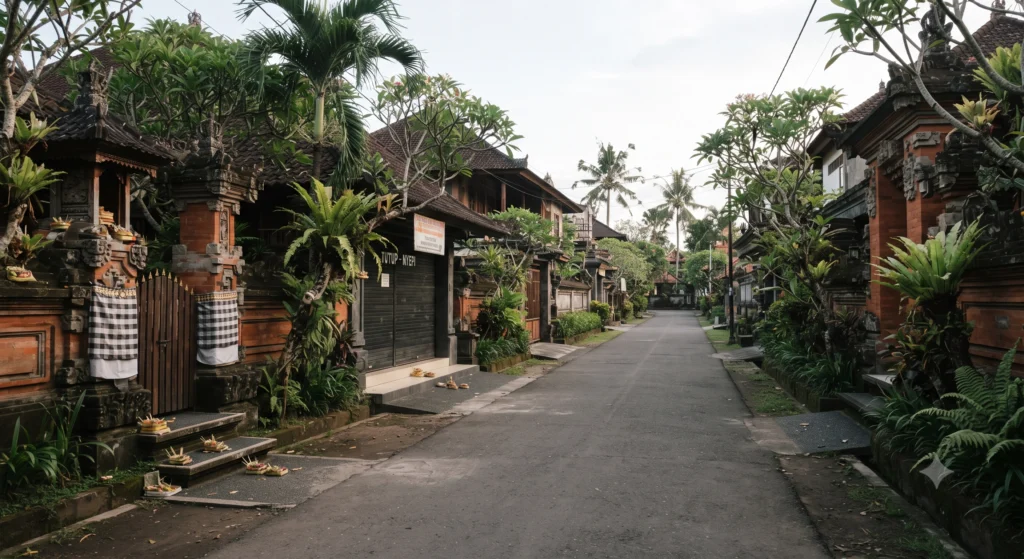
Nyepi Day in Bali is not the kind of travel experience you can treat casually. For one full day, the island slows to a near standstill: streets empty, shops close, the airport shuts, and visitors are expected to stay inside their accommodation.
That makes Nyepi either a memorable cultural experience or a planning mistake, depending on how you approach it. The real question is not whether it is “interesting.” It is whether you are willing to give up flexibility for one of the most unusual travel days in Southeast Asia.
Quick Verdict: Is Nyepi Day in Bali Worth It?
Yes, but only for the right traveller. If you want to understand Bali beyond beaches and cafés, and you are comfortable structuring your trip around a hard shutdown, Nyepi can be worth planning for. If you want free movement, late dinners, nightlife, or spontaneous sightseeing, it is better to avoid being in Bali on Nyepi Day itself.
The biggest trade-off is simple: you get a rare cultural experience, but you give up almost all normal travel convenience.
Quick Facts
| Information | Details |
|---|---|
| Best time | The day before Nyepi for parades, and the day after for the return to normal life |
| Nyepi period | A full day of silence, reflection, fasting, and no travel across Bali |
| Airport | Ngurah Rai International Airport closes on Nyepi Day |
| Movement | Visitors are expected to remain inside their accommodation |
| Food | Shops and restaurants broadly close; hotel arrangements should be checked in advance |
| Best for | Culture-focused travellers who plan ahead |
| Not ideal for | Travellers who need freedom, nightlife, or easy logistics |
What Nyepi Actually Feels Like
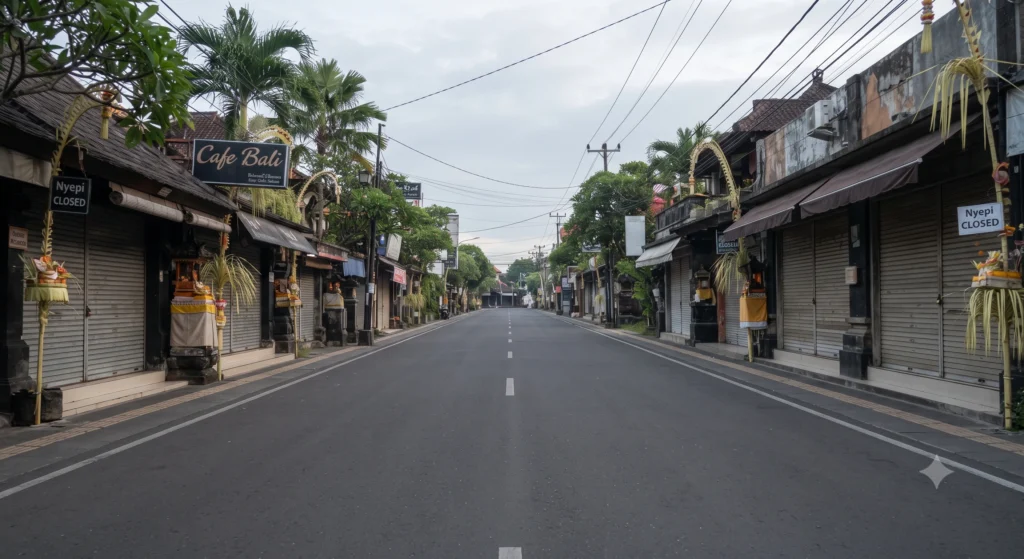
Nyepi is Bali’s Day of Silence, and it is more serious than many first-time visitors expect. On the day itself, the island does not function like a normal tourist destination. There is no wandering out for a meal, no moving between neighbourhoods, and no treating the day as a break in your itinerary.
What surprises many visitors is how complete the shutdown feels. The streets are empty, beaches are closed, and even the airport stops operating. For some travellers, that creates a rare sense of calm and stillness; for others, it feels restrictive and inconvenient. Both reactions are valid, which is why Nyepi is better understood as a cultural commitment than a sightseeing day.
Why It Can Be Worth Your Time
The strongest reason to experience Nyepi is that it reveals a side of Bali that many travellers never see. The island’s usual energy gives way to silence, and that contrast makes the holiday memorable in a way that ordinary attractions often are not. The day before Nyepi also adds context, because the Ogoh-ogoh parades show the island preparing for the ritual pause.
For travellers interested in local traditions, this is one of the more distinctive cultural experiences in Asia. It is not “fun” in the usual vacation sense, but it can be meaningful if you value travel as observation rather than constant activity. That distinction matters because Nyepi rewards patience, not checking off sights.
What To Expect Before And After
The day before Nyepi is often the busiest part of the holiday period. Traffic can become heavy, roads may close for parades, and movement across the island becomes more stressful than usual. If you need to transfer hotels, reach the airport, or buy supplies, do it early.
The day after Nyepi is the practical recovery day. Bali starts moving again, and the contrast can be striking after the silence. This is often the best time for travellers to continue sightseeing, because the holiday itself has passed and the island’s rhythm returns to normal.
If your itinerary is flexible, building around these two surrounding days is usually smarter than arriving or departing on Nyepi itself.
Where To Stay

Your accommodation choice matters more than usual during Nyepi. A comfortable hotel or resort with reliable on-site dining is the safest option because you should not assume you will be able to go out for food. Rooms with enough space, a balcony, or a pleasant common area also matter more when you are staying inside for an entire day.
This is not the best time to book a basic stay with little on-site service unless you have already confirmed what will be available. Check whether meals are served, whether guests can move freely within the property, and what restrictions the hotel follows. In practice, Nyepi is much easier if your accommodation feels like a place you would not mind staying in for a day without leaving.
What It Really Costs
Nyepi itself may not create direct sightseeing costs, but it can affect the overall value of your trip. You may need to spend more on better accommodation, stock up on snacks or drinks before the shutdown, or adjust your flight dates so you do not get stranded. The day is not necessarily expensive, but it does reward travellers who plan well.
For budget travellers, the main challenge is not the holiday itself but the logistics around it. A cheaper stay with poor on-site service can become inconvenient fast. For comfort-focused travellers, the cost of a better hotel is often worth it simply because it removes most of the friction.
What To Skip
Do not plan a Bali trip that depends on movement, meals out, or beach-hopping on Nyepi Day. That is the wrong way to use your time. It is also a mistake to assume you can improvise once you arrive, because the holiday is structured and the restrictions are real.
Skip any itinerary that treats Nyepi as an ordinary free day between sightseeing stops. A better approach is to either plan deliberately around it or avoid it altogether. If you want a smoother holiday with less planning pressure, choose dates outside the Nyepi period.
Who Should Go
Nyepi is best for travellers who are curious about culture and willing to adjust their expectations. It suits people who enjoy rare, unusual travel moments and do not mind a quiet, inward-facing day. It also works well for couples or solo travellers who are happy spending time in one place and seeing Bali in a different mood.
It is less suitable for travellers with packed itineraries, families who need constant movement, or anyone who dislikes being confined to one property. If your ideal trip depends on flexibility, Nyepi will probably feel limiting rather than special.
Final Recommendation
Plan around Nyepi only if you want the cultural experience enough to accept the inconvenience. The holiday is real, memorable, and unusual, but it is not forgiving of poor planning. For the right traveller, it adds depth to a Bali trip; for the wrong one, it becomes a logistical headache.
FAQ
Is Bali completely closed on Nyepi Day?
Yes, Bali essentially shuts down for the day. The airport closes, travel is restricted, and visitors are expected to stay inside their accommodation. Shops and restaurants are broadly closed, so you should not count on normal tourist services.
Can tourists leave their hotel during Nyepi?
No, not in the normal sense. Visitors are expected to remain inside their accommodation for the day. You should confirm your hotel’s exact rules before arrival and make sure you have what you need in advance.
Is Nyepi worth planning a trip around?
It is worth planning around only if you are interested in culture and do not mind a full day with no sightseeing. Many travellers find the silence and contrast memorable, but it is not a good fit for people who want a flexible holiday.
What should I do the day before Nyepi?
Arrive early, avoid last-minute transfers, and stock up on anything you may need. The day before is often busy because of parades and road closures. A calm, well-located hotel is more useful than a packed schedule.
What happens after Nyepi?
The day after Nyepi, Bali returns to normal life. Movement resumes, services reopen, and sightseeing becomes practical again. For most visitors, that is the best time to continue the trip.