Direct answer: The right everyday sneaker is the one that matches how you move daily — walking distance, terrain, and how long you stand — while fitting your foot length and width with 0.5–1 cm of toe room and an insole that supports your arch.
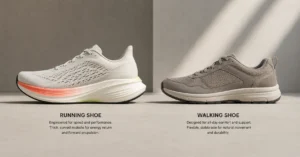
Decide between a running-derived cushioned midsole for long walks, a low-profile court-style for city life, or a minimal trainer if you want a close ground feel; then use the step-by-step checklist below to pick the correct size and material. Read on for specific budgets, real wear expectations, and three honest recommendations you can actually buy.
Quick facts: Sneakers at a glance (Structured Element — Quick Facts)
- Typical life expectancy: 400–800 km (250–500 miles) for cushion midsoles; 800–1,200 km (500–750 miles) for firmer, durable outsoles (2025–2026 rates — verify before travel)
- Average price ranges: Budget $40–$80; Mid-range $90–$160; Splurge $170–$300+ (2025–2026 rates — verify before travel)
- Standard global size notes: US vs EU vs UK discrepancies up to 1.5 sizes; always check brand-specific size chart.
- Break-in time: 0–2 days for knit/mesh; 3–14 days for leather or structured uppers.
- Key extractable fact: Fit rule — 0.5–1 cm (5–10 mm) toe room when standing in the shoe.
The one-line answer: Which sneaker to buy first
Buy a neutral running-derived sneaker with a foam midsole and knit upper in your correct length and width — they handle most city walking, travel, and standing jobs, and age predictably. If you stand all day choose a model with responsive foam and a stable heel; if your day is short walks and cafés, a low-profile court sneaker will be lighter and look neater.
The types of sneakers that matter
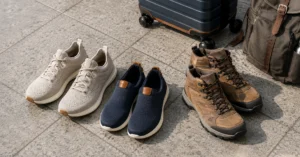
- Casual/court-style
- What it does: Low profile, flat sole, minimal cushioning; works for office-casual and short urban walks.
- Materials: Smooth leather or canvas uppers; rubber outsoles.
- Durability: Leather holds up well to scuffs and can be resoled in some models; canvas shows wear faster.
- Limitation: Not designed for long walks — expect discomfort after ~10 km.
- Running-derived (everyday trainers)
- What it does: Cushioned midsole, engineered for heel-to-toe transition; best for long periods on feet.
- Materials: Knit/engineered mesh uppers, EVA or proprietary foams (PEBAX, Boost-type).
- Durability: Midsole compression after 400–800 km; uppers generally hold.
- Limitation: Bulkier look; some models over-cushion for short commutes.
- Court/tennis revival
- What it does: Stiffer sole, stable platform, cleaner silhouette.
- Materials: Leather or synthetic leather uppers, flat rubber outsoles.
- Durability: High abrasion resistance; sole thickness predicts lifespan.
- Limitation: Minimal shock absorption.
- Minimal / barefoot-style
- What it does: Low drop, thin sole, close-ground feel for natural biomechanics.
- Materials: Thin rubber outsoles, mesh or leather uppers.
- Durability: Soles wear faster; best for light urban use.
- Limitation: Not for heavy standing or long distances unless you’ve trained your feet.
- Slip-on / casual knit
- What it does: Convenience-focused; variable support depending on brand.
- Materials: Stretch knit uppers, molded footbeds.
- Durability: Depends on knit quality; often less structural support.
- Limitation: Fit can loosen with wear; not ideal for wide feet unless marked.
Materials and durability expectations
- Knit/engineered mesh: Breathable, flexible; low break-in time; can stretch 3–5 mm over weeks; not abrasion-proof around toes.
- Full-grain leather: Ages well, resists weather; needs conditioning; break-in 3–10 days depending on construction.
- Synthetic leathers: Lower weight and cost; less breathable; may crack after heavy flexing.
- Midsoles: EVA (cheaper, light, compresses faster), PU (denser, heavier, lasts longer), TPU/PEBAX (responsive, more durable, higher cost).
- Outsoles: Carbon rubber in high-wear areas extends life; blown rubber is lighter but abrades faster.
How to choose: A step-by-step buying guide (First-timer framework)
Step 1 — Define your use case and daily mileage
- Count average daily walking distance and longest single walk. 0–3 km/day: casual sneakers are fine. 3–8 km/day: running-derived trainers recommended. 8+ km/day or standing all day: choose high-rebound foam and a stable heel.
Step 2 — Know your fit (length, width, heel-to-toe, arch)
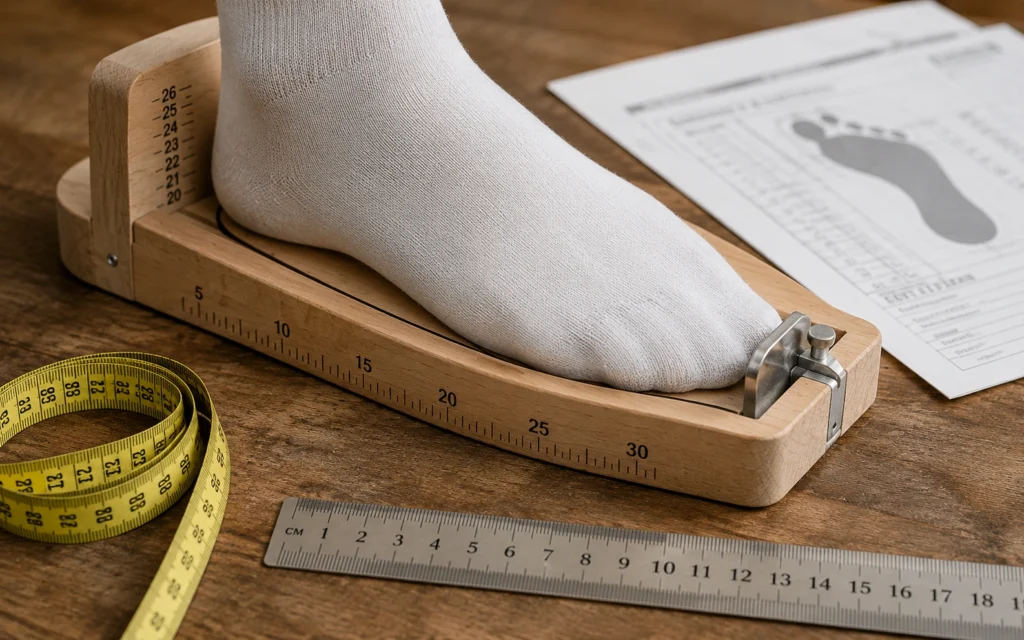
- Measure standing foot length and width late in the day. Use brand size charts. Rule: 0.5–1 cm toe room when standing, heel should not slip more than 5 mm on the first fit, and insole arch should contact midfoot without pressure points.
- Sizing systems: US men’s to EU conversion roughly add 33 (e.g., US 9 ≈ EU 42), but brand variance up to 1.5 sizes. Always consult the brand chart.
Step 3 — Understand midsole tech and cushioning
- Ask: Is the foam soft and squishy, or firm and springy? For long days pick responsive, mid-density foam (eg. TPU/PEBAX or higher-end EVA blends). Avoid ultra-soft foams if you need stability.
Step 4 — Upper materials and breathability
- Hot climates: knit/mesh uppers with ventilation; treat suede/leather carefully.
- Rainy climates: treated leather or a waterproof membrane (Gore-Tex) — note: membranes reduce breathability and increase cost.
Step 5 — Outsole pattern and terrain
- Slick urban pavements: shallower treads sufficient.
- Wet/muddy: deeper lug pattern, stickier rubber.
Step 6 — Try-on checklist and break-in expectations
- In-store: wear socks you plan to use, stand and walk 10–15 minutes, test a full-step descent on stairs, try both shoes, check heel slip, toe room, and lateral support.
- Online: compare your measured foot length to the brand’s insole length (usually in mm); allow return window for full test. Note break-in: leather 3–14 days; knit 0–2 days; structured trainers sometimes require up to 1 week.
What sneakers cost (Budget guide)
- Budget ($40–$80)
- Typical features: Basic EVA foam, synthetic uppers, shorter warranty.
- Best for: Light daily use, occasional travel.
- Limitation: Midsole compression faster; expect 400–600 km lifespan.
- Mid-range ($90–$160)
- Features: Better foams, engineered mesh uppers, better fit consistency, some brand warranties.
- Best for: Daily commuters, moderate walking, travel.
- Limitation: Still not as durable as premium foams but better value.
- Worth-the-splurge ($170–$300+)
- Features: Proprietary foams (PEBAX/TPU), premium leathers, advanced outsoles.
- Best for: Long days on feet, travel with a lot of walking, those who want long-term durability and comfort.
- Limitation: Higher upfront cost — evaluate by km-per-dollar (lifespan × comfort).
Common mistakes first-timers make — and how to avoid them
- Mistake: Buying purely by size label. Fix: Measure foot length and use brand insole length.
- Mistake: Choosing looks over fit. Fix: Prioritise fit; if a model looks great but rubs, don’t keep it.
- Mistake: Ignoring heel slip. Fix: If heel slips more than 5 mm, size down or switch width.
- Mistake: Assuming all “running” shoes fit the same. Fix: Test for arch contact and heel stability; technologies differ.
- Mistake: Not considering maintenance. Fix: Learn care: leather needs conditioner; knit needs gentle wash and air dry.
Specific, realistic recommendations (By budget + use case)
Notes: Every recommendation includes material, fit profile, target use case, price tier, and realistic limitation.
Best budget everyday sneakers
- Recommendation A — Generic Knit Trainer (synthetic knit upper, EVA midsole, rubber outsole). Fit profile: True to size with snug midfoot. Use case: Short commutes, travel, café days. Price tier: Budget. Limitation: Midsole compresses earlier; replace after ~400–600 km.
Best mid-range everyday sneakers
- Recommendation B — Running-derived trainer with engineered mesh, EVA+blended midsole, carbon rubber in high-wear areas. Fit profile: Slightly roomy; size normally and use insole to confirm. Use case: Daily walking, airport days, light hikes. Price tier: Mid-range. Limitation: Bulkier aesthetic.
Worth-the-splurge everyday sneakers
- Recommendation C — Premium trainer with PEBAX/TPU midsole, full-grain leather/knit hybrid upper, durable outsole. Fit profile: Precise fit; try-on recommended. Use case: Long standing days, travel-heavy itineraries. Price tier: Splurge. Limitation: Higher weight and cost.
Quick picks for travel, long walks, and standing jobs
- Travel: Lightweight knit trainer with compressible midsole, foldable toe box, breathable upper.
- Long walks: Stability-focused trainer with responsive foam and firmer heel cup.
- Standing jobs: Model with high-rebound foam, supportive insole, and firm heel cradle.
Care, repair, and lifespan expectations
- Daily wear lifespan: 400–1,200 km depending on midsole type and outsole durability.
- Cleaning: Knit/mesh — hand wash with mild soap, air dry; leather — wipe, condition every 3–6 months; avoid machine drying.
- Resoling/repairs: Leather-cupsole models sometimes resolable; most modern trainers are glued and not cost-effective to resole.
- Storage: Use shoe trees for leather to reduce creasing; for knit, stuff with paper to hold shape.
- Warranty: Keep receipts; many brands offer 90-day to 1-year defect coverage — check brand policy.
Frequently Asked Questions About sneakers guide
How much toe room should I leave in a sneaker?
0.5–1 cm (5–10 mm) of toe room when standing. Enough to avoid contact during downhill walks but not so much the foot slides forward.
Can I use running shoes for everyday wear?
Yes — running-derived trainers are often the best everyday choice because of cushioning and predictable wear patterns; pick a model with stable heel support if you stand long.
How long before my sneakers need replacing?
Expect 400–800 km for softer-foam trainers and up to 1,200 km for firmer, durable outsoles. Replace sooner if you notice midsole divots, reduced energy return, or upper failure.
Should I size up for wide feet?
Measure width and consult the brand chart; some brands offer wide (W) fits. Sizing up can help toe room but risks heel slip — prefer a wide-specific model if available.