France has over 3,000 miles of coastline, but treating “French beaches” as a single destination is a quick way to ruin a vacation.
If you pack flip-flops expecting soft white sand in Nice, you will spend your afternoon sitting on hard, sun-baked gray pebbles. If you head to Normandy in July expecting warm swimming, you will find crisp 17°C (62°F) water that leaves most people shivering after five minutes. Meanwhile, spending €90 a day for a sunbed in Saint-Tropez might get you a view of luxury yachts, but it won’t buy you peace and quiet.
Planning a coastal trip to France isn’t about finding the “prettiest” picture online. It’s about deciding what kind of trade-offs you are willing to make with your time, budget, and comfort.
Quick Verdict: Which French Coast Fits Your Trip?
- Choose the French Riviera (Côte d’Azur) if you want warm Mediterranean water, vibrant town life, and glamorous beach clubs—and you don’t mind heavy summer crowds or high prices.
- Choose Corsica if you are looking for the absolute best sand and clearest turquoise water in the country, paired with dramatic mountain scenery, provided you are comfortable renting a car and driving narrow roads.
- Choose the Atlantic Coast (Biarritz & Arcachon) if you prefer wide sandy expanses, ocean waves, surf culture, and world-class seafood at reasonable prices.
- Choose Normandy & Brittany if you value dramatic cliff landscapes, rich history, cooler summer air, and coastal hiking over tropical-style sunbathing.
- Skip Nice’s central promenade beaches if soft sand is a non-negotiable requirement for your holiday.
Quick Facts for Coastal Decision-Making
| Region | Primary Vibe | Sand Type | Avg Water Temp (Aug) | Budget Level | Best For |
|---|---|---|---|---|---|
| Corsica | Wild & Untamed | Fine White/Golden Sand | 24°C (75°F) | Mid to High | Swimming & Snorkeling |
| French Riviera | Glamorous & Busy | Mixed (Pebbles in Nice, Sand in St-Tropez) | 25°C (77°F) | High to Luxury | Nightlife & Town Life |
| Atlantic Coast | Casual & Surfer-Friendly | Endless Fine Sand | 20°C (68°F) | Moderate | Surfing & Wide Open Space |
| Normandy / Brittany | Dramatic & Historic | Pebbles (Normandy) / Sand (Brittany) | 17°C (62°F) | Moderate | Hiking & Scenery |
A Tour of France’s Coastal Realities

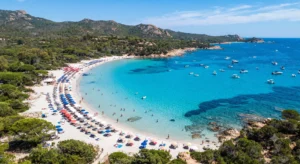
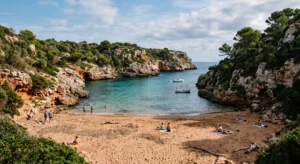
Plage de Palombaggia, Corsica. Source: France / Palombaggia Beach – Where it is located and how to get there

Calanque d’En-Vau, Cassis. Source: Parc national des calanques / En-Vau | Parc national des calanques

Pampelonne Beach, Saint-Tropez. Source: Michaël Zingraf Real Estate / Explore the most beautiful beaches of Saint-Tropez
1. Corsica: Island Paradise with Infrastructure Challenges
If your visual ideal of a European beach involves pine trees overhanging turquoise water and soft white sand underfoot, southern Corsica delivers faster than anywhere else in mainland France.
What It’s Actually Like
Plage de Palombaggia and nearby Santa Giulia feel almost Caribbean on calm summer mornings. The water is clear, warm, and shallow for dozens of meters out, making it ideal for swimming and snorkeling.
However, getting here takes effort. You will either need an expensive ferry ride with your vehicle or a flight into Figari followed by a car rental. Once on the island, roads are narrow and winding. During July and August, the small parking lots at Palombaggia fill up by 8:30 AM, forcing late arrivals to park along dusty roadside ditches and walk over a mile in the heat.
- Worth Doing: Renting a small motorboat without a license from Porto-Vecchio to explore hidden coves accessible only from the sea.
- Overrated: Trying to visit three major Corsican beaches in a single day during peak summer. You will spend four hours stuck behind campervans on narrow coastal routes.
Editor’s Note: Current parking fees at Palombaggia average €10–€15 per day, though spaces are non-existent past mid-morning in peak season. Confirm car rental availability before booking flights.
2. The French Riviera: Glamour, Pebbles, and High Costs
The Côte d’Azur remains world-famous for a reason: the light is extraordinary, the historic towns are charming, and the Mediterranean sea is reliable and warm. But expectations need careful management.
The Promenade des Anglais Reality (Nice)
Nice is a wonderful city, but its famous public beach consists entirely of large, smooth gray stones (galets). Laying down a thin towel directly on these stones gets uncomfortable within fifteen minutes. Getting out of the water can be awkward as the pebbles shift under your feet, and the sea drops off into deep water almost immediately.
If you want soft sand on the Riviera, you have to head elsewhere—such as Plage de Pampelonne near Saint-Tropez or the bays around Villefranche-sur-Mer and Juan-les-Pins.
Nice (Pebble Coast)       ---> Deep drop-off, hard underfoot, vibrant city backdrop.
Pampelonne (Saint-Tropez) ---> Fine sand, long bay, heavily commercialized beach clubs.
Villefranche-sur-Mer     ---> Coarse sand/tiny pebbles, sheltered bay, easy train access.
What to Skip and What to Do Instead
- Skip: Paying €60 to €100 for a middle-row sunbed at a crowded public-adjacent beach club in Nice or Cannes just for the brand name.
- Better Alternative: Take the 15-minute regional TER train from Nice to Villefranche-sur-Mer. The bay is sheltered, the backdrop of colorful Provençal buildings is stunning, and the beach features fine, rounded gravel that is far gentler on your feet than Nice’s pebbles.
3. The Calanques of Cassis: World-Class Scenery That Demands Effort
Located between Marseille and Cassis, the Calanques National Park features narrow, steep-sided fjord-like inlets carved into brilliant white limestone.
Calanque d’En-Vau: Breathtaking scenery, but require a 1.5-hour hike each way.. Source: Parc national des calanques
The Experience Realities
The most famous cove, Calanque d’En-Vau, offers stunning views with green-blue water framed by towering white cliffs. But it is not a casual beach day where you step off a bus onto the sand:
- The Hike: Reaching En-Vau requires a 1.5 to 2-hour hike over rough, rocky terrain with minimal shade. Good walking shoes are mandatory; flip-flops are dangerous.
- Summer Access Restrictions: Due to wildfire risks, access to the Calanques trails is strictly regulated (and frequently closed) during hot, windy summer days.
- Crowd Density: Because the pebble shoreline at the bottom of the cove is small, it gets packed tight with hikers and kayakers by noon.
- Best Approach: Book an early morning kayak rental from the port of Cassis. You get to paddle into the coves before trail hikers arrive and avoid the hot trek back uphill.
4. The Atlantic Coast: Surfing, Endless Sand, and Cold Waters
Stretching from the dune-lined shores of Arcachon down to the Basque country around Biarritz, France’s Atlantic coast offers a completely different rhythm.
What It’s Actually Like
Here, you won’t struggle to find space on the sand. Beaches like Plage de la Côte des Basques in Biarritz stretch for miles, backed by dramatic ocean rollers and grand Belle Époque architecture.
The compromise here is the sea itself. The Atlantic Ocean is colder (rarely exceeding 20°C / 68°F), and the waves are powerful. Strong rip tides mean swimming is strictly confined to designated zones marked by flags and supervised by lifeguards.
- Best For: Surfers, active families, and travellers who hate feeling cramped on a beach.
- Skip: Swimming outside marked lifeguard flags. Atlantic currents along the French southwest coast are notoriously dangerous.
5. Normandy & Brittany: Scenery Over Sunbathing
Heading north to the English Channel brings dramatic landscapes, but sunbathing conditions require realistic expectations.
The Étretat Reality Check
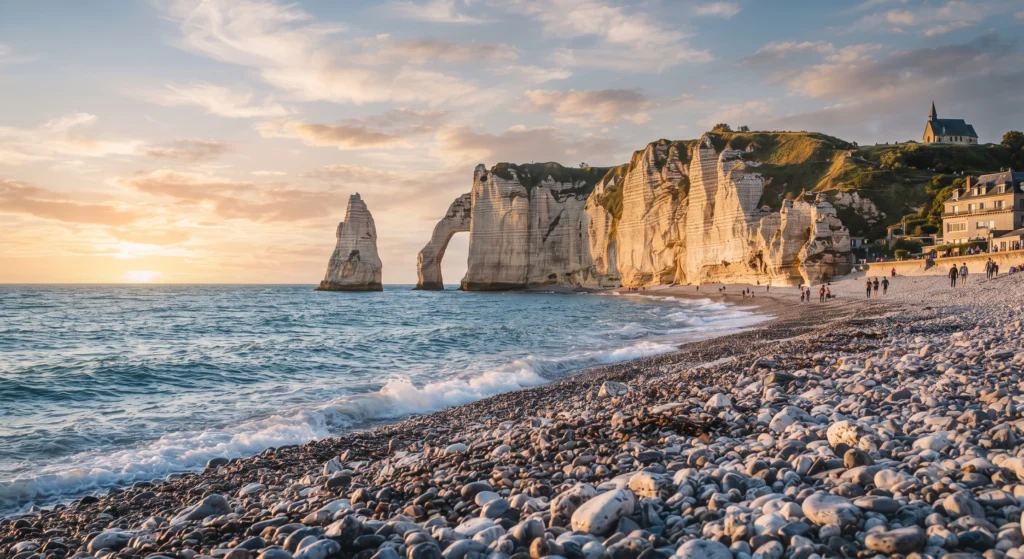
The towering chalk cliffs of Étretat in Normandy are among the most photographed natural sites in France. Sitting on the pebble beach below these white arches is a memorable experience, but swimming is secondary. The water is cold (16–18°C in midsummer), and strong winds off the Channel are common.
Come to Normandy and Brittany for coastal cliff paths, fresh cider, oysters, and maritime atmosphere—not for lounging in a swimsuit all day.
What It Really Costs: A Budget Comparison
Coastal France varies widely in cost depending on the region you select:
Budget / Backpacker Option (€70–€100 / day)
- Region: Atlantic Coast or Brittany campsites.
- Stay: Coastal municipal campsites or hostels near surf hubs.
- Food: Fresh bakery baguettes, supermarket picnic lunches, and casual crêperies.
- Transport: Regional trains or shared car rides.
Comfortable Mid-Range (€180–€300 / day)
- Region: Villefranche-sur-Mer, Cassis, or Arcachon.
- Stay: 3-star boutique hotel or rented apartment slightly back from the seafront.
- Food: Sit-down seafood lunch or dinner at regional bistros; public beach days with rented umbrellas.
- Transport: Compact rental car or regional train pass.
Premium / Riviera Luxury (€500+ / day)
- Region: Saint-Tropez, Cannes, or Porto-Vecchio (Corsica).
- Stay: Sea-view hotel on the coast.
- Food: Daily private beach club lounger rentals (€50–€120/bed) with full food service on the sand.
Final Recommendation
- Go to Corsica if your priority is pristine swimming in calm, warm, turquoise water surrounded by nature—and you don’t mind renting a car.
- Go to the Riviera if you want culture, fine dining, vibrant nightlife, and warm weather, and are happy to use pebbles as a backdrop or pay for beach club access.
- Go to the Atlantic Coast if you prefer endless sandy spaces, ocean waves, and casual coastal towns over luxury crowds.
- Go to Normandy or Brittany if you prefer cooler weather, dramatic cliff walks, and coastal history over traditional hot-weather sunbathing.
FAQ
What is the warmest water temperature on French beaches?
The warmest waters are along the Mediterranean coast and Corsica, reaching 24–26°C (75–79°F) in August. Atlantic beaches stay around 19–21°C (66–70°F), while Normandy and Brittany hover between 16–18°C (61–64°F).
Are public beaches free in France?
Yes. Under French law (Code de l’environnement), all beaches are public property up to the high-tide line. Even in exclusive Riviera towns, private beach clubs are legally required to leave at least 20% of the beach area open for free public access.
Do I need a car for a coastal trip to France?
Not for the main Riviera cities (Nice, Cannes, Villefranche are connected by the TER train line) or Biarritz. However, exploring wilder coves in Corsica, the Calanques, or the remote coasts of Brittany requires a car.
Are there sand beaches near Nice?
The town beaches in Nice itself are 100% pebbles. The closest soft sandy beaches are found a short train ride away in Villefranche-sur-Mer (coarse sand/shingle), Juan-les-Pins, or Antibes.