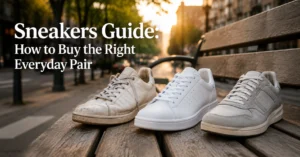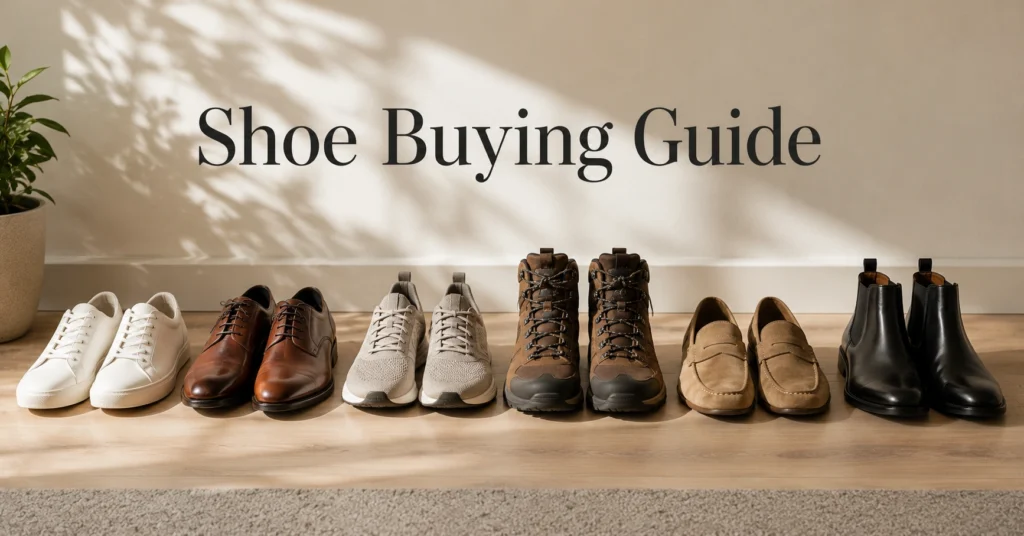
Buying shoes sounds simple until you’re standing in front of a wall of options that all claim to be comfortable, supportive, lightweight, durable, and suitable for daily wear. Then the confusion starts.
Most people don’t buy bad shoes. They buy the wrong shoes for the job.
A pair that feels great during a five-minute store try-on can become a regret halfway through an airport terminal. A fashionable sneaker may handle city streets perfectly but struggle during long days on uneven ground. And expensive doesn’t automatically mean better.
This shoe buying guide is built for first-time buyers who want practical answers rather than marketing language. You’ll learn how different shoe types work, what materials matter, how much you should spend, and the mistakes that lead to sore feet and wasted money.
Quick Overview: The First-Timer’s Shoe Buying Checklist
| Factor | What to Check | Why It Matters |
|---|---|---|
| Fit | Thumb-width space at toe box | Prevents pressure and blisters |
| Width | No pinching at sides | Improves comfort |
| Cushioning | Match activity level | Reduces fatigue |
| Support | Arch and heel stability | Better long-term comfort |
| Material | Mesh, leather, knit, suede | Affects breathability and durability |
| Weight | Light vs structured | Impacts all-day wear |
| Use Case | Walking, work, travel, formal | Determines best design |
| Maintenance | Cleaning requirements | Influences longevity |
Don’t start with brands.
Start with how you’ll actually use the shoes.
That’s the decision that makes every other choice easier.
The Main Types of Shoes and What They’re Actually For
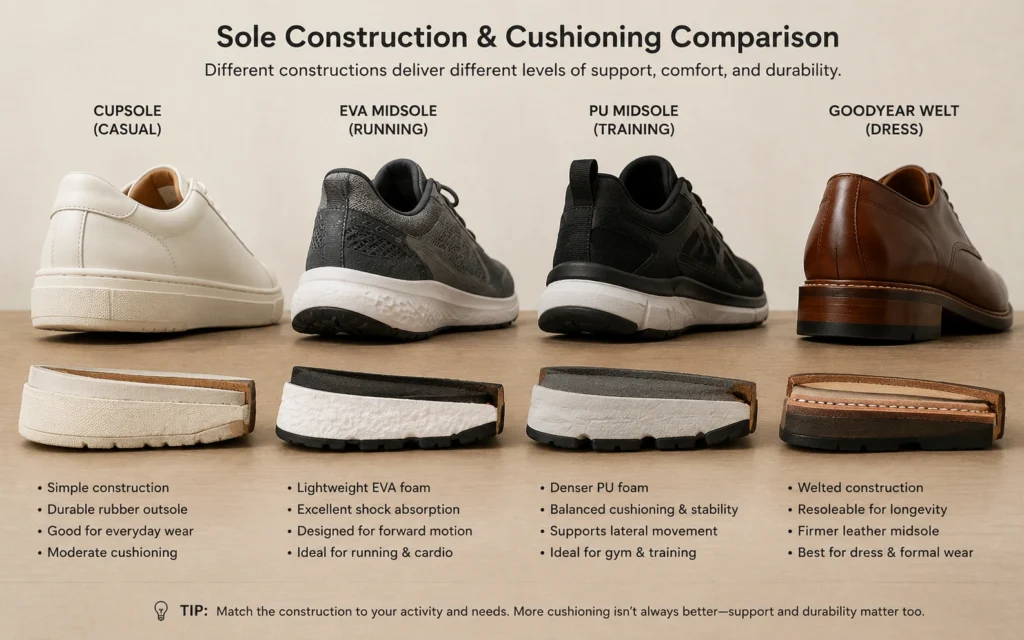
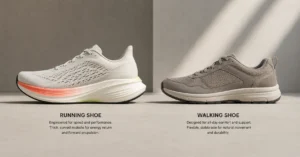
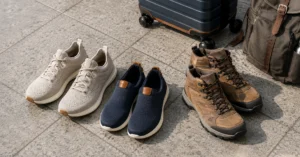
Running Shoes
Built for forward movement and repetitive impact.
Most use mesh uppers, foam midsoles, and rubber outsoles. They prioritize cushioning and shock absorption rather than durability against rough surfaces.
Best for:
- Exercise
- Long walks
- Travel days
- Daily commuting
Typical price:
- $60–$180
Break-in period:
- Usually minimal
Casual Sneakers
The most versatile category for everyday wear.
A good casual sneaker can handle city walking, office-casual environments, weekend errands, and travel. Leather sneakers generally last longer than canvas versions but require more maintenance.
Best for:
- Everyday wear
- Urban travel
- Smart-casual outfits
Typical price:
- $50–$200
Dress Shoes
Appearance comes first. Comfort varies significantly.
Leather oxfords, derbies, loafers, and monk straps all fit within this category. Many first-time buyers underestimate break-in periods, especially with full-grain leather.
Best for:
- Business settings
- Weddings
- Formal events
Typical price:
- $100–$400+
Break-in period:
- One to three weeks
Hiking Shoes
Built for grip, protection, and stability.
They’re heavier than running shoes but provide better traction and durability. Waterproof versions perform well in wet conditions but often run warmer.
Best for:
- Trails
- Outdoor travel
- Uneven terrain
Typical price:
- $90–$250
Boots
Boots trade weight for protection.
Leather boots often improve with age if maintained properly. Many quality models can last years with periodic conditioning and sole replacement.
Best for:
- Work
- Cold weather
- Rugged environments
Typical price:
- $120–$350+
How to Choose the Right Shoes Step by Step
Step 1: Identify the Primary Use
One question solves most buying mistakes:
Where will these shoes spend 80% of their time?
Airport terminals require different footwear than office meetings. Trail hikes demand different support than city commuting.
Choose the primary use first.
Everything else becomes secondary.
Step 2: Measure Your Feet Properly
Foot size changes over time.
Many adults continue wearing the same size they wore years ago despite gradual changes in foot shape.
Measure:
- Length
- Width
- Both feet
Buy for the larger foot if there’s a difference.
Step 3: Understand Materials
Mesh
Pros:
- Lightweight
- Breathable
- Fast drying
Cons:
- Less durable
Best for:
- Running
- Warm climates
- Travel
Full-Grain Leather
Pros:
- Durable
- Ages well
- Professional appearance
Cons:
- Requires maintenance
- Heavier
Best for:
- Dress shoes
- Premium casual footwear
Knit Uppers
Pros:
- Flexible
- Comfortable immediately
Cons:
- Can stretch over time
Best for:
- Walking
- Casual wear
Step 4: Check Cushioning and Support
“Cushioned” doesn’t mean “best.”
Some people need soft foam. Others perform better with firmer support.
Walk for several minutes during fitting. A shoe that feels slightly supportive often performs better over eight hours than one that feels like a pillow during the first thirty seconds.
Step 5: Buy at the Right Time of Day
Feet swell.
Most people notice it while travelling, but it happens daily.
Try shoes in the afternoon or evening. Morning fittings can result in shoes that feel too tight later.
That’s one of the oldest shoe buying tips because it works.
What Good Shoes Cost: Budget, Mid-Range, and Premium Tiers
| Tier | Price Range | Best For | Limitation | Verdict |
| Budget | $40–$80 | Occasional wear | Shorter lifespan | Good starter choice |
| Mid-Range | $80–$180 | Most buyers | Few compromises | Best value |
| Premium | $180–$400+ | Heavy users | Higher upfront cost | Worth it if used often |
Budget Tier
Good for occasional use and first purchases.
Expect synthetic materials, simpler construction, and shorter replacement cycles.
Mid-Range Tier
The sweet spot.
This range offers the strongest balance of comfort, durability, and support. Most people never need to spend beyond it.
Premium Tier
Not automatically better.
Premium footwear usually provides higher-quality materials, repairability, stronger warranties, and longer service life. But the benefits only matter if you’ll use them enough to justify the cost.
The Shoe Buying Mistakes That Keep Costing People Money
Buying Based on Looks Alone
The most common mistake.
A good-looking shoe that hurts after two hours becomes closet decoration.
Ignoring Width
Length gets attention.
Width gets ignored.
Many comfort problems come from width mismatch rather than incorrect size.
Assuming Expensive Means Comfortable
Price reflects materials, branding, manufacturing methods, and positioning.
Comfort still depends on fit.
Owning One Pair for Everything
One pair can’t excel everywhere.
A walking shoe, formal shoe, and versatile casual sneaker solve most footwear needs more effectively than one “do everything” option.
Skipping Maintenance
Leather dries.
Foam compresses.
Outsoles wear down.
Simple care extends lifespan dramatically.
Shoe Recommendations by Occasion
Everyday Wear
Choose:
- Casual sneakers
- Lightweight walking shoes
Look for:
- Breathability
- Moderate cushioning
- Easy maintenance
Office and Business
Choose:
- Leather loafers
- Derby shoes
- Minimal leather sneakers
Look for:
- Structured support
- Durable leather uppers
Travel
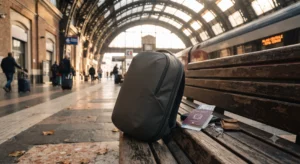
This is where many people get it wrong.
The best travel shoe usually isn’t a hiking boot.
For most trips, a comfortable sneaker with good cushioning and neutral styling handles airports, cities, trains, and casual restaurants without drawing attention.
Formal Events
Choose:
- Oxfords
- Dress loafers
Look for:
- Full-grain leather
- Durable sole construction
Outdoor Activities
Choose:
- Hiking shoes
- Trail runners
Look for:
- Traction
- Water resistance
- Reinforced toe protection
Frequently Asked Questions About Shoe Buying
How many pairs of shoes does a beginner need?
Three pairs cover most situations: one casual everyday shoe, one formal option, and one activity-specific pair for exercise or outdoor use.
Should shoes feel tight at first?
No. Slight firmness is normal. Pain, pressure points, or toe compression usually indicate poor fit and rarely improve enough to justify keeping them.
How long should good shoes last?
Usage matters more than price. Daily-use sneakers often last 8–18 months. Quality leather footwear can last several years with proper care.
Is leather better than synthetic materials?
Not always. Leather generally offers greater durability and repair potential. Synthetic materials often provide lighter weight and better breathability.
What’s the most important factor when buying shoes?
Fit. Materials, brand, price, and appearance matter less if the shoe doesn’t fit your foot correctly.
Continue Exploring
- fashion buying guide:Understanding footwear is only one part of making better wardrobe purchases. The broader fashion buying guide explains how quality, materials, and value apply across clothing and accessories.
- smart fashion purchasing decisions: You’ll save more money by understanding how to evaluate products before buying than by chasing discounts after the fact.