Every safari brochure promises the same cinematic scene: a solitary male lion resting on a sunlit rock, a leopard lounging in an acacia tree, and a cheetah sprinting across open plains after a gazelle.
Kenya can deliver all three. In fact, it remains one of the best places on Earth to see wild felines in high numbers. But what those glossy travel brochures rarely show is the row of fifteen diesel minivans idling ten feet away, blocking the view, or the three-hour drive on rutted dirt tracks just to reach a sleeping pride that doesn’t move until dark.
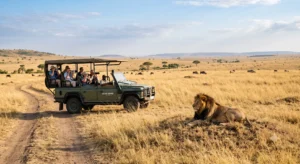
Lions are plentiful in the Maasai Mara, but sighting quality depends on where you stay.. Source: Masai Mara National Reserve
Seeing Kenya’s big cats isn’t just about showing up in a national park. It’s about understanding the compromises behind your budget, your choice of park, and where you lay your head at night. Here is the realistic guide to planning a big cat safari in Kenya—without paying for expectations that don’t line up with reality.
Quick Verdict: Is a Big Cat Safari in Kenya Worth It?
Yes—provided you choose the right reserve model for your expectations. If you visit the main Maasai Mara National Reserve during peak season, you will see lions and cheetahs, but you will share almost every sighting with dozens of other vehicles.
If you want quiet, uncrowded wildlife encounters where predators exhibit natural hunting behaviors, you must budget for a private conservancy (such as Mara Naboisho, Mara North, or Ol Pejeta in Laikipia). It costs considerably more per night, but it solves the vehicle crowding problem completely.
- Who Should Go: Wildlife photographers, nature enthusiasts, and travelers looking for a bucket-list safari who can afford $600–$1,500+ per day for conservancy access or private guiding.
- Who Should Skip: Travelers on tight shoestring budgets expecting cheap self-drive road trips, or those who dislike long rough drives, dusty trails, and early 5:30 AM starts.
- The Biggest Trade-Off: High costs vs. crowd levels. Paying less means staying outside public park gates and facing vehicle swarms at every predator sighting. Paying more buys low vehicle density, off-road tracking capability, and night drives.
Quick Decision Guide: Kenya Big Cat Safaris
| Information | Details |
|---|---|
| Best Time | July–October (Migration & dry grass) & Jan–Feb (Dry season, clear visibility) |
| Avoid Period | April–May (Heavy rains, muddy tracks, dense brush, camp closures) |
| Daily Budget Range | $350–$400 (Budget Minivan), $600–$950 (Mid-range), $1,200–$2,200+ (Luxury Conservancy) |
| Top Big Cat Region | Maasai Mara Conservancies (Lions/Cheetahs) & Laikipia / Samburu (Leopards) |
| Transit Method | Fly-in bush flights from Nairobi Wilson (WIL) recommended over 6-hour dirt drives |
What a Kenya Big Cat Safari Is Actually Like
A typical safari day revolves around predator habits. Lions, leopards, and cheetahs spend 16 to 20 hours a day resting to conserve energy. If you set out on a game drive at 11:00 AM under the baking sun, you will mostly see sleeping cats that look like large tan boulders in the tall grass.
The real activity happens during the fringe hours:
- 5:30 AM – 8:30 AM: Cold morning air, crisp light, active patrols, scent marking, and morning hunt attempts.
- 5:00 PM – 6:30 PM: Cats waking up, stretching, grooming, and preparing for night hunts.
The atmosphere varies drastically depending on where you are. In the public section of the Maasai Mara National Reserve, drivers monitor radio channels. When a leopard or cheetah is spotted, word spreads fast. Within 20 minutes, 15 to 30 vehicles can converge on a single spot. Off-roading is strictly illegal here, meaning vehicles queue up along fixed dirt tracks.
In contrast, Private Conservancies bordering the reserve operate under strict self-policing rules: no more than 5 vehicles per sighting, mandatory off-road tracking clearance for major predator finds, and night game drives equipped with red-filtered spotlights.
Key Takeaway: You are not paying extra in a private conservancy for fancy canvas tents or gourmet meals alone; you are paying for space, silence, and driver ethics around vulnerable wildlife.
The Big Three Cats: Where to Find Them & What to Expect
1. Lions: The High-Probability Sightings
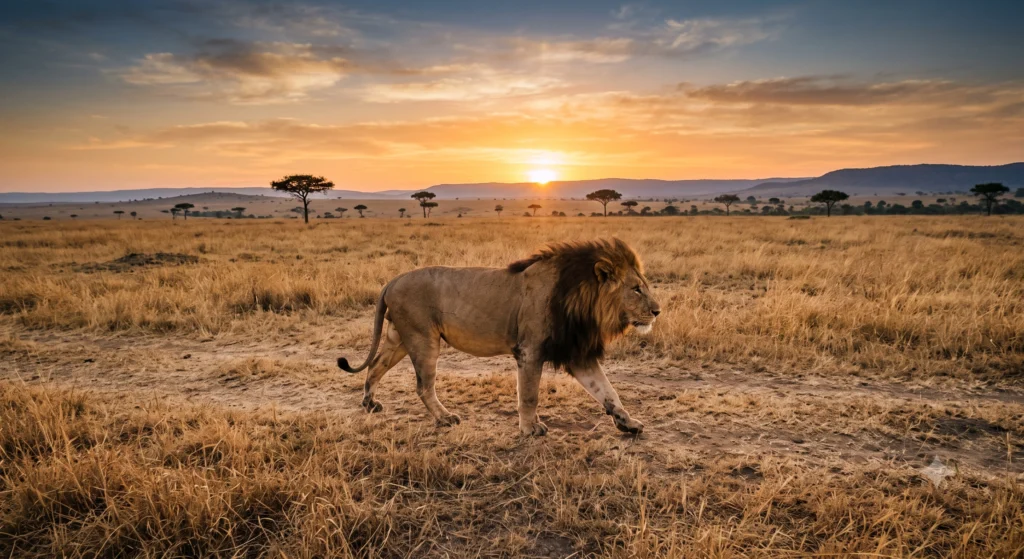
With an estimated population of over 2,000 across Kenya, lions are the easiest big cat to spot. The open grasslands of the Maasai Mara host some of the highest lion densities on the continent. Prides here are accustomed to safari vehicles and will often rest in the shade cast by a 4×4.
- Where They Excel: Maasai Mara (Main Reserve & Naboisho Conservancy), Ol Pejeta Conservancy.
- The Reality Check: Seeing a lion is easy; seeing a lion hunt requires patience, multiple days in the field, and a fair bit of luck.
2. Leopards: The Elusive Tree Dwellers
Leopards are solitary, secretive, and brilliantly camouflaged. They spend hot days hidden in riverine foliage along the Mara and Talek Rivers or tucked inside rocky kopjes in Laikipia and Samburu.
Leopards require patient tracking in riverine forests or rocky outcrops.. Source: Vecteezy
- Where They Excel: Laikipia Plateau (Loisaba, Lewa), Samburu National Reserve, and river corridors of the Mara.
- The Reality Check: Spotting a leopard usually depends on night game drives (only allowed in private conservancies) or a skilled guide tracking fresh paw prints and listening to baboon alarm calls.
3. Cheetahs: Speed on the Open Plains
Cheetahs are daytime hunters that rely on wide-open visibility and explosive speed. Because they are lighter than lions and hyenas, they are easily bullied off their kills and avoid thick brush where larger predators hide.
Cheetahs hunt by day on open plains, making them vulnerable to vehicle crowding.. Source: The Safari Collection
- Where They Excel: Open plains of Central Maasai Mara, Mara North Conservancy, Amboseli National Park.
- The Reality Check: Cheetahs are easily stressed by loud engines and tight vehicle rings. Responsible guides keep a respectful distance to avoid interrupting a hunt.
Where to Stay: Choosing the Right Safari Base
Your choice of accommodation dictates your overall wildlife experience.
Option A: Private Conservancies (Best Overall Experience)
- Examples: Mara Naboisho, Mara North, Ol Pejeta, Lewa.
- Why Choose It: Land is leased directly from local Maasai landowners, creating low-density safari zones. Vehicle counts are capped, off-roading is permitted for major sightings, and night game drives are offered.
- Drawback: Expensive. Rates range from $800 to $2,000+ per person per night (inclusive of conservation fees, full board, and open-vehicle game drives).
Option B: Camps Inside the Main Public Reserve
- Examples: Lodges around Keekorok, Talek, or Mara Serena.
- Why Choose It: Quick access to iconic river crossing points during the Great Migration (July–October).
- Drawback: High vehicle congestion, strict 6:30 PM curfews, no off-roading allowed, and high official park fees ($100–$200 per adult per 24 hours).
Option C: Budget Lodges Outside Park Gates
- Examples: Tented camps clustered around Sekenani or Talek gates.
- Why Choose It: Lowest cost entry point ($250–$400/day).
- Drawback: You must queue at park entry gates every morning alongside dozens of tour minivans, losing prime dawn wildlife hours in transit.
What It Really Costs (2026 Reality Check)
Safaris in Kenya are expensive due to conservation fees, remote logistics, and high demand. Here is a realistic daily breakdown per person:
- Budget Tier ($250 – $400 / day): Group tour in a shared 2WD/4WD minivan, basic camp outside park gates, public reserve access only.
- Mid-Range Tier ($600 – $950 / day): Shared 4×4 Land Cruiser, mid-range tented camp inside or near the reserve, standard game drives.
- Luxury Conservancy Tier ($1,200 – $2,200+ / day): Fly-in transfers, luxury tented camp in a private conservancy, open-top custom 4×4, expert private guide, night drives, and bush walks included.
Note: Park and conservancy entry fees run between $100 and $200 per adult per 24-hour period. Always confirm if your quoted lodge rate includes these fees.
What to Skip and What to Do Instead
- SKIP: 3-Day Overland Minivan Road Trips from Nairobi.
- Why: You spend 12 to 14 hours over three days bouncing on bumpy highway asphalt and rough dirt tracks, leaving very little time inside the reserve. Minivans also lack the clearance and traction needed in wet or muddy terrain.
- BETTER ALTERNATIVE: Take a 45-minute bush flight from Nairobi’s Wilson Airport (WIL) straight to a Mara or Laikipia bush airstrip, or hire a dedicated 4×4 Land Cruiser with a private guide.
- SKIP: Midday Game Drives (11:00 AM – 3:30 PM).
- Why: Big cats spend hot afternoon hours sleeping deep in thickets or under shade trees. You waste fuel and sit in hot, dusty vehicles for low-reward sightings.
- BETTER ALTERNATIVE: Do early 5:30 AM dawn drives and late 4:30 PM afternoon drives. Rest at camp during the heat of the day.
- SKIP: Relying Solely on the Main Reserve During Peak Migration.
- Why: July and August bring severe overcrowding to the public reserve, with long vehicle traffic jams near the Mara River.
- BETTER ALTERNATIVE: Split your itinerary: spend 2 nights in a private conservancy for quiet cat tracking, and 2 nights in the main reserve if river crossings are a priority.
FAQ
Which month is best for seeing big cats in Kenya?
July through October is ideal due to dry weather, short grass, and predator activity around the Great Migration. January and February are also excellent dry-season months with lower grass and fewer crowds.
Is a 4×4 Land Cruiser necessary, or is a safari minivan fine?
A 4×4 Land Cruiser offers superior suspension on rough tracks, better elevation for photography, and essential off-road traction in wet ground. Minivans are cheaper but far less comfortable on long game drives.
Can I see lions, leopards, and cheetahs in a single 3-day trip?
It is possible in high-density areas like the Maasai Mara, but big cat sightings are never guaranteed. Giving yourself 4 to 5 days across different habitats significantly increases your chances of spotting all three.