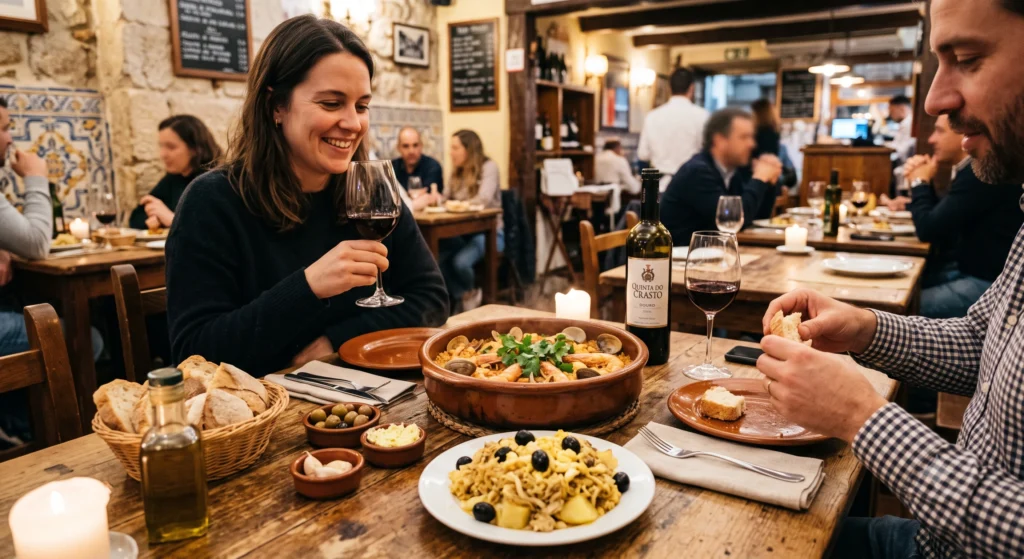
Portugal is one of those countries where food rarely tries to impress you at first glance.
You will not find the same level of theatrical presentation that defines some European cuisines. Instead, Portuguese cooking is built around something quieter: fresh seafood, slow-cooked dishes, local ingredients, and recipes that have survived because families kept making them. That is also why eating in Portugal can be slightly confusing for first-time visitors.
The famous dishes are easy to find, but the best food experiences are not always the most photographed ones. A tourist restaurant near a major attraction may serve the same traditional dishes at a higher price, while a small neighbourhood restaurant can offer a much more memorable meal.
Portugal is absolutely worth exploring through food, but it helps to know what deserves your attention. Some dishes are genuinely unforgettable. Some are famous mainly because they are famous. And some experiences depend heavily on where you eat them. This guide explains what Portuguese food is really like, what to order, and how to avoid wasting meals on average tourist experiences.
Quick Verdict: Is Portuguese Food Worth Planning a Trip Around?
Yes — especially if you enjoy simple, traditional cooking rather than trend-driven restaurants.
Portugal is a great food destination for travellers who enjoy:
- seafood
- local markets
- wine regions
- family-style restaurants
- slow lunches
- affordable traditional meals
The biggest trade-off is variety. Portugal’s cuisine is excellent, but it is not as internationally diverse as countries like Italy or Spain. If you expect endless regional cuisines changing dramatically every few kilometres, you may find it more limited.
But if you appreciate dishes built around quality ingredients and tradition, Portugal delivers.
Best for: seafood lovers, wine travellers, relaxed food explorers
Less ideal for: travellers looking for highly experimental dining scenes or extensive vegetarian variety
Quick Facts: Portuguese Food Guide
| Information | Details |
|---|---|
| Best food cities | Lisbon, Porto, Braga, Coimbra |
| Must-try dish | Bacalhau (salted cod) |
| Famous snack | Pastel de nata |
| Best drink experience | Portuguese wine tasting |
| Budget meal | Local restaurants and cafés |
| Food style | Seafood, grilled meats, soups, pastries |
What Portuguese Food Is Actually Like
Portuguese cuisine is shaped by geography.
The Atlantic Ocean influences the seafood culture, while rural regions contribute hearty meat dishes, cheeses, breads, and slow-cooked recipes.
Unlike some Mediterranean cuisines that rely heavily on herbs and fresh vegetables, Portuguese cooking often focuses on fewer ingredients prepared well.
A simple grilled fish with olive oil, garlic, and lemon can be more representative of Portugal than an elaborate restaurant dish.
Travellers sometimes expect Portuguese food to feel similar to Spanish cuisine. There are connections, but the experience is different.
Spanish meals often revolve around sharing many small plates. Portuguese meals are frequently more straightforward: a main dish, a side, bread, wine, and conversation.
The best Portuguese meals are usually not rushed.
Bacalhau: Portugal’s Most Famous Dish
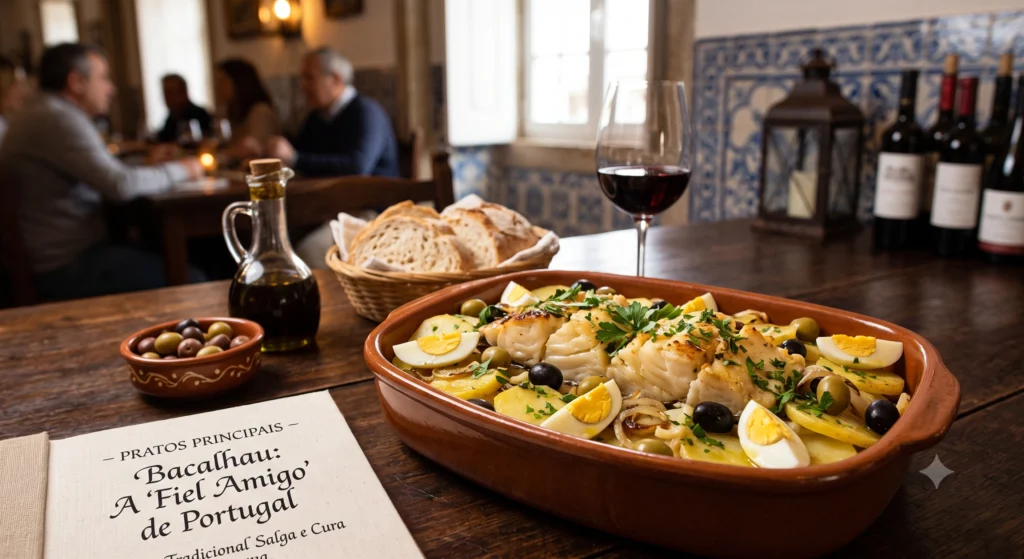
If there is one food associated with Portugal, it is bacalhau.
Bacalhau is salted cod that has been preserved and prepared in countless ways. Portugal has hundreds of traditional recipes using it, which is why locals often joke that there is a different bacalhau dish for every day of the year.
Popular versions include:
- Bacalhau à Brás – shredded cod mixed with potatoes, eggs, and onions
- Bacalhau com Natas – cod baked with cream
- Bacalhau à Gomes de Sá – cod with potatoes, onions, and eggs
Is it worth trying? For most visitors, yes. However, expectations matter.
Fresh cod is not the point. The appeal comes from the preparation and the history behind the ingredient. If you dislike salty fish or traditional comfort food, it may not become your favourite meal.
Worth doing: Try bacalhau once in a traditional restaurant.
Skip: Ordering it repeatedly just because it is famous.
Portugal has far more food to discover.
Pastéis de Nata: Famous for a Reason
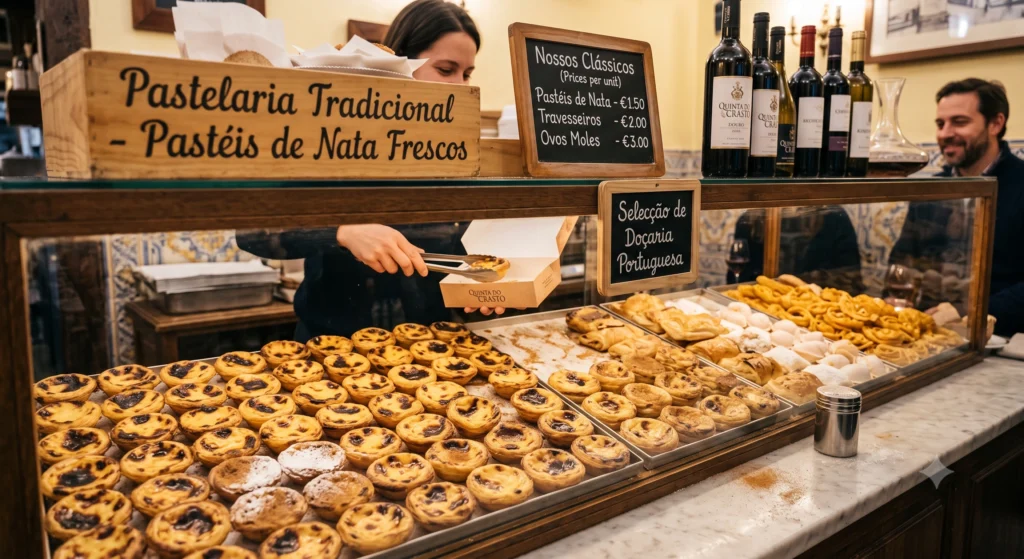
The pastel de nata is probably Portugal’s most recognisable food worldwide.
This small custard tart combines:
- flaky pastry
- creamy egg custard
- caramelised top
It looks simple, but a good one is surprisingly difficult to replicate.
The mistake many travellers make is treating pastéis de nata as just a quick snack.
They are best enjoyed fresh, ideally with coffee, during a relaxed morning or afternoon break.
You do not need to chase every famous bakery in Portugal.
A popular bakery may have excellent pastries, but long queues do not always mean a dramatically better experience.
The better approach:
Try one from a respected bakery, then compare it with a smaller local café.
The difference is often more about atmosphere than taste.
Seafood: Where Portugal Really Shines
Portugal’s coastline is the reason seafood plays such an important role in its cuisine.
For seafood lovers, Portugal is one of Europe’s strongest destinations.
Popular choices include:
Grilled Sardines
Especially associated with Lisbon festivals and summer evenings.
They are simple, inexpensive, and strongly connected with local culture.
Polvo à Lagareiro
Octopus roasted with olive oil and potatoes.
This is one of the dishes that surprises many visitors because the preparation creates a richer, more comforting meal than expected.
Amêijoas à Bulhão Pato
Clams cooked with garlic, olive oil, coriander, and lemon.
A great choice for travellers who want something lighter.
Best experience: Seafood near coastal areas rather than expensive restaurants advertising “authentic Portuguese seafood” in tourist zones.
Portuguese Meat Dishes Worth Trying
Portugal is not only about seafood.
Some of the country’s best comfort foods come from inland regions.
Francesinha (Porto)
Porto’s famous sandwich combines layers of meat, bread, cheese, and sauce.
It is filling, heavy, and not something most people would eat every day.
Is it worth trying?
Yes, especially if you enjoy rich comfort food.
But do not plan your entire Porto food experience around it.
Cozido à Portuguesa
A traditional boiled dish combining meats, vegetables, and sausages.
It represents old Portuguese home cooking more than modern restaurant culture.
It may not be the most visually appealing dish, but it tells an important story about Portuguese food traditions.
Portuguese Drinks: Wine Is Only the Beginning
Portugal’s wine reputation is growing internationally, but many visitors only know Port wine.
That misses a lot.
Port Wine
Produced in the Douro Valley, Port is a sweet fortified wine usually enjoyed after meals.
It is worth trying, especially during a visit to Porto.
Vinho Verde
A light, refreshing wine from northern Portugal.
It is especially enjoyable during warmer months.
Portuguese Coffee Culture
Coffee is a small but important part of daily life.
A simple espresso in a local café can be one of the easiest ways to experience everyday Portugal.
What Food Experiences Are Overrated?
Not every famous food experience deserves your limited holiday time.
Eating Only Near Tourist Landmarks
Restaurants around major attractions often offer familiar Portuguese dishes, but the atmosphere and prices may not match the quality.
Better alternative:
Walk a few streets away and look for places filled with locals.
Trying Every Famous Dish in One Trip
Portugal has many traditional foods, but forcing yourself through a checklist can make eating feel like work.
Choose a few meaningful experiences instead.
Expensive “Traditional” Restaurants
Higher prices do not automatically mean better Portuguese food.
Some of the best meals come from simple restaurants with limited menus.
Where Should You Eat in Portugal?
Lisbon
Best for:
- traditional restaurants
- seafood
- markets
- modern Portuguese cuisine
Lisbon has the widest range of food experiences, but also the highest number of tourist-focused restaurants.
Research matters.
Porto
Best for:
- hearty dishes
- wine experiences
- traditional northern cuisine
Porto is particularly good for travellers who enjoy heavier, comforting food.
Algarve
Best for:
- seafood
- grilled fish
- coastal dining
The region is popular with tourists, so choosing restaurants carefully is important during peak season.
What Should Vegetarians Expect?
Portugal is not the easiest European destination for vegetarians, especially compared with places like Italy.
Traditional cuisine heavily features:
- seafood
- meat
- eggs
- dairy
However, major cities now have many vegetarian and plant-based options.
Travellers should not assume every small traditional restaurant will have extensive vegetarian choices.
Planning helps.
Final Recommendation: Should You Explore Portuguese Food?
Yes. Portuguese food is not about chasing the most famous dish. It is about understanding how Portugal eats. Order the bacalhau. Try the pastries. Taste the wine. Eat seafood near the coast. Sit down for a slow meal instead of rushing between attractions.
The biggest mistake is expecting Portuguese cuisine to be a checklist. The best experiences come from slowing down and noticing the details: the neighbourhood café, the family restaurant, the local wine, and the dishes that have been prepared the same way for generations.
FAQ
What food is Portugal most famous for?
Portugal is best known for dishes such as bacalhau (salted cod), pastéis de nata, grilled sardines, seafood dishes, and Portuguese wines. These foods represent different parts of the country rather than one single national cuisine.
Is food expensive in Portugal?
Portugal can still be affordable compared with many Western European destinations. Local restaurants and cafés often provide better value than tourist-focused restaurants in major areas. Prices vary significantly by city and location.
What should first-time visitors eat in Portugal?
Start with a pastel de nata, try a traditional bacalhau dish, enjoy Portuguese seafood, and explore local wine. These give a good introduction without trying to cover everything.
Is Portuguese food good for vegetarians?
Vegetarian options are improving, especially in cities like Lisbon and Porto. However, traditional Portuguese cuisine is heavily based around seafood, meat, eggs, and dairy, so vegetarians may need to plan ahead.
Which city has the best food in Portugal?
Lisbon offers the widest variety, while Porto is excellent for traditional northern dishes and wine experiences. Coastal areas are especially good for seafood.