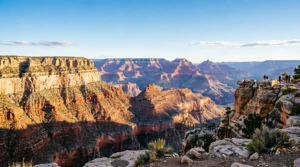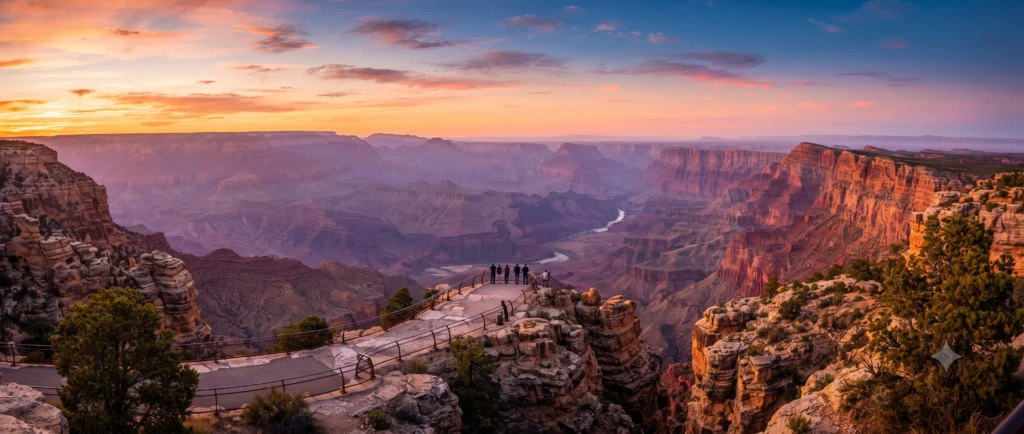
Standing on the rim of the Grand Canyon is one of those rare moments where reality actually exceeds the postcard. The shear scale of a mile-deep gorge stretching 277 miles across northern Arizona is genuinely humbling.
However, getting to that rim can easily become a frustrating exercise in roadside tourist traps, endless traffic queues at entrance gates, and inflated room rates if you follow generic travel itineraries.
Many first-time road trippers assume that driving to the Grand Canyon is a simple plug-and-play day trip. They map a route from Las Vegas or Phoenix, buy a highway snack, and expect a smooth scenic drive. In reality, northern Arizona is vast, high-altitude desert country. Drive distances are deceptive, mountain passes can surprise you with sudden weather shifts, and commercial operations outside national park boundaries frequently capitalize on confused tourists.
This guide exists to help you navigate the trade-offs: which route gives you the best value, where you should spend your accommodation budget, and which advertised stops are better left off your itinerary.
Quick Verdict: Is a Grand Canyon Road Trip Worth It?
The Short Answer: Yes—provided you focus on Grand Canyon National Park (South Rim), allocate at least 2 full days, and avoid commercial shortcuts like Grand Canyon West unless your time is strictly limited to a single day from Las Vegas.
- Who should go: Drivers who appreciate grand landscapes, photographers, active couples, and families comfortable with 3 to 5 hours of highway driving between major destinations.
- Who should skip: Travellers expecting luxury boutique hospitality on the park doorstep, nightlife lovers, or anyone who finds long stretches of monotonous desert highway exhausting.
- Biggest trade-off: In-park convenience versus cost and comfort. Staying inside the park saves 2 hours of daily gate queuing but requires booking basic, historic rooms up to a year in advance. Staying in gateway towns offers modern hotels at lower rates, but adds significant daily commute friction.
Quick Facts
| Information | Details | Editorial Advice |
|---|---|---|
| Best Travel Period | April–May & September–October | Mild rim weather (15°C–22°C); avoids summer monsoons and high heat. |
| Avoid Periods | July–August & Jan–Feb | Summer heat inner canyon exceeds 40°C (104°F); winter snow causes rim road ice. |
| Ideal Duration | 4 to 6 Days (Full Loop) | Allows 2 days at South Rim plus stops in Sedona, Route 66, or Page. |
| Park Entry Fee | $35 per vehicle (Valid 7 Days) | Buy the $80 America the Beautiful Pass if visiting 3+ national sites. |
| Primary Base | Tusayan or Grand Canyon Village | Tusayan is 5 minutes outside gate; Williams/Flagstaff are budget options (45–90 min drive). |
| Transport | Rental Car + Free Park Shuttle | Drive between major highway towns; use free park shuttles for rim viewpoints. |
What This Road Trip Is Actually Like
A Grand Canyon road trip is less about alpine forest drives and more about high-desert transit. Depending on whether you launch from Phoenix (sky harbour) or Las Vegas, you will spend long stretches on Interstate 40 or US-93 navigating straight ribbons of asphalt surrounded by sagebrush, yucca, and volcanic plateaus.
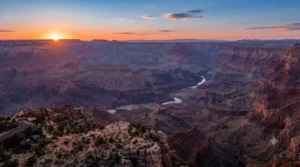
South Rim Golden Hour: Mather Point at sunset. Source: GrandCanyon.com
Once you approach the park, the atmosphere changes dramatically:
- Pace & Rhythm: Highways move fast (75 mph / 120 km/h limits), but park entrance gates crawl during peak morning hours (9:00 AM – 1:00 PM). Wait times at the South Entrance Gate can easily reach 45 to 60 minutes in peak months.
- Altitude Factor: The South Rim sits at roughly 7,000 feet (2,130 metres) above sea level. Readers frequently underestimate how thin and dry the air is. Simple walks along the Rim Trail can cause breathlessness, and hydration needs double compared to coastal climates.
- Crowd Dynamics: Grand Canyon Village, Mather Point, and Bright Angel trailhead operate like bustling high-density hubs. However, walking just 15 minutes away from any major shuttle stop along the paved Rim Trail cuts crowd density by nearly 80%.
Choosing Your Route: Las Vegas vs. Phoenix Launchpads
The route you pick dictates what kind of trip you experience. Both primary starting points have distinct advantages and compromises.
Route A: Phoenix to South Rim via Sedona & Flagstaff
- Distance: ~230 miles (one way direct)
- Pace: Scenic, mountainous, and culturally rich.
Leaving Phoenix, Interstate 17 climbs rapidly out of the Sonoran Desert into the high country. Taking the scenic bypass through Sedona (AZ-179 & AZ-89A) takes you through Oak Creek Canyon—a stunning corridor of red rock spires and dense evergreen foliage.
- The Reality: Sedona traffic on weekends is gridlocked. What looks like a short 30-minute drive through town can take 90 minutes.
- Editorial Recommendation: Stop in Flagstaff for lunch or coffee. It is an authentic mountain college town with a craft brewery scene and far fairer prices than Tusayan or Sedona.
Route B: Las Vegas to South Rim via Kingman & Seligman
- Distance: ~280 miles (one way direct)
- Pace: Fast highway miles with vintage roadside Americana.
This route heads south on I-11 over the Mike O’Callaghan–Pat Tillman Memorial Bridge (adjacent to Hoover Dam), cutting through Kingman before hitting historic stretches of Route 66.
Seligman: Historic Route 66 roadside preservation. Source: Lisay / Getty Images
- The Reality: Seligman and Kingman are kitschy, enjoyable 30-minute coffee and photo stops, but they are tourist-focused neon corridors. Do not plan to spend an entire afternoon here.
- Editorial Recommendation: Use Route 66 as a mid-drive break to stretch your legs and fuel up, rather than treating it as the main destination.
What Is Worth Your Time vs. What to Skip
Navigating the Grand Canyon requires separating high-value national park assets from commercial traps located on adjacent lands.
1. Grand Canyon West & The Skywalk — SKIP (For Most Road Trippers)
- The Reality: Grand Canyon West is located on the Hualapai Indian Reservation, roughly 2.5 hours west of the main National Park. It is heavily advertised in Las Vegas.
- The Compromise: Entry packages cost significantly more ($80 to $110+ per person compared to the National Park’s $35 per car pass). Personal belongings, cameras, and phones are forbidden on the glass Skywalk; official photos are sold at high prices. Furthermore, the canyon walls at Grand Canyon West are shallower and less dramatically layered than at the South Rim.
- Who it suits: Travellers with only 1 day to spare who are stuck in Las Vegas and cannot commit to the 4.5-hour drive to the South Rim.
2. Desert View Drive (AZ-64) — WORTH DOING
- The Reality: This 25-mile scenic road runs east from Grand Canyon Village to the East Entrance Gate.
- Why it matters: It features fewer shuttle buses and offers dramatic viewpoints where you can actually see the Colorado River winding through the canyon floor (Lipan Point and Navajo Point).
At the eastern terminus sits the 70-foot Desert View Watchtower, designed by architect Mary Colter in 1932. The interior stone murals and high observation windows present one of the most cohesive artistic interpretations of Southwest indigenous history in the park system.
3. Hiking Below the Rim — APPROACH WITH CAUTION
- The Reality: Trails like Bright Angel and South Kaibab drop precipitously into the canyon.
- The Mistake: Down is optional; up is mandatory. Every year, hundreds of visitors require rescue because they underestimate the physical strain of ascending high-altitude, unshaded switchbacks in dry heat.
- Editorial Recommendation: Hike to Ooh Aah Point on the South Kaibab Trail (1.8 miles round-trip, 760 ft elevation change). It offers an unmatched open-canyon panorama without committing you to a dangerous multi-hour climb. Bring at least 1.5 litres of water per person, even for short morning hikes.
Where to Stay: Strategic Base Camp Trade-Offs
Where you sleep dramatically impacts your daily energy and budget.
[In-Park Lodges] -------------- [Tusayan Gateway] -------------- [Williams / Flagstaff]
  Direct Rim Access               5-Minute Drive                  45-90 Min Drive
  Historic / Basic Rooms          Modern Chains / Premium Price   Budget-Friendly / Authentic
  Book 6-12 Months Ahead          Book 2-4 Months Ahead           Book Short Notice
1. In-Park Lodging (Grand Canyon Village)
- Options: El Tovar, Bright Angel Lodge, Thunderbird Lodge, Yavapai Lodge.
- Pros: Unbeatable location. You can walk out of your room directly onto the rim for sunrise without touching your car keys or dealing with gate lines.
- Cons: Rooms are historic, smaller, and feature basic amenities. High demand requires booking 6 to 12 months in advance through the official concessionaire (Xanterra).
2. Tusayan (Gateway Town — 5 Minutes Outside Gate)
- Options: Standard mid-tier chain hotels (Best Western, Holiday Inn Express, Squire Resort).
- Pros: Modern comforts, swimming pools, multiple dining options, and extreme proximity to the park entrance.
- Cons: Premium pricing for standard chain rooms (often $250–$400/night during peak season). High sales tax rates and tourist-heavy dining options.
3. Williams or Flagstaff (Budget Base Camps)
- Distance: Williams (45 mins); Flagstaff (75–90 mins).
- Pros: Substantially lower accommodation rates, authentic local dining, grocery stores, and vibrant downtown areas.
- Cons: You sacrifice 1.5 to 3 hours of daily round-trip driving and must arrive at the park gate before 8:00 AM to avoid lengthy entry lines.
What It Really Costs: Realistic Budgeting
A Grand Canyon road trip involves several overlooked costs beyond fuel and hotel rates.
Realistic Daily Expense Averages
| Expense Category | Budget Option | Comfort Option | Premium Option |
|---|---|---|---|
| Accommodation | $80 – $130 (Motels/Camping) | $220 – $350 (Tusayan / In-Park) | $450+ (El Tovar Suite) |
| Dining (per person) | $30 – $45 (Self-catering/Fast Casual) | $70 – $110 (Park Cafes / Sit-down) | $150+ (El Tovar / Fine Dining) |
| Vehicle & Fuel | $50 – $70/day (Economy car) | $90 – $130/day (Mid-SUV) | $180+/day (Full-size SUV) |
| Park Fees / Activities | $35 (7-day car pass) | $35 Pass + $15 Park Maps | $350+ (Helicopter Flight) |
Hidden Costs to Watch
- Park Dining Inflation: Basic cafeteria lunches inside the park average $18–$25 per person for mediocre quality. Packing a cooler box with supplies bought in Flagstaff or Williams cuts food expenses by half.
- National Park Pass Value: If your road trip includes Zion, Bryce Canyon, or Monument Valley, purchase the America the Beautiful Pass ($80) at your first park entrance. It pays for itself by your third park visit.
Smarter Alternatives & Extended Detours
If you have 5 to 7 days, extending your road trip beyond the South Rim adds extraordinary value to your Southwest itinerary.
Horseshoe Bend: 2-hour drive north in Page, Arizona. Source: National Park Service
- Page, Arizona (Horseshoe Bend & Antelope Canyon): Located 2 hours north of the East Entrance via US-89. Horseshoe Bend offers a sheer 1,000-foot drop into a 270-degree meander of the Colorado River ($10 city parking fee). Antelope Canyon requires advance booking with authorized Navajo tour operators.
- Sedona’s Red Rock Country: Located 30 miles south of Flagstaff down AZ-89A. Offers world-class mountain biking, hiking trails like Cathedral Rock, and unique red sandstone scenery that directly contrasts the vast open canyon space.
Final Editorial Verdict
The Grand Canyon remains one of North America’s most magnificent physical landscapes, but a successful road trip requires setting realistic expectations.
If you are expecting luxury resort amenities inside national park borders, you will likely be disappointed by basic historic lodging and crowded cafeterias. However, if you treat the South Rim as a majestic, high-altitude sanctuary—arriving early at sunrise, exploring Desert View Drive, packing your own trail meals, and stepping away from the main shuttle hubs—it delivers a road trip experience that stays with you forever.
Frequently Asked Questions
Is 1 day enough to see the Grand Canyon on a road trip?
A single day allows you to drive Desert View Drive, walk a portion of the paved Rim Trail, and view sunset at Mather or Lipan Point. However, it requires an early start from Flagstaff or Williams. Two days are ideal to experience sunrise, hike below the rim safely, and explore without rushing.
What is the best month for a Grand Canyon road trip?
May and October offer optimal conditions. Temperatures along the South Rim average 18°C to 22°C (65°F–72°F) with clear skies and manageable crowds. Avoid July and August due to severe afternoon monsoon thunderstorms, extreme inner-canyon heat, and peak tourist congestion.
Should I visit the South Rim or West Rim?
Visit the South Rim (Grand Canyon National Park) for classic panoramic views, lower entrance costs ($35 per car), superior hiking trails, and historic architecture. Choose the West Rim (Skywalk) only if you are based in Las Vegas and limited to a single day.
Do I need a four-wheel-drive vehicle for a Grand Canyon road trip?
No. All main access highways (I-40, US-180, AZ-64) and park roads are fully paved and well-maintained. A standard sedan or mid-size crossover is perfectly adequate. Four-wheel drive is only necessary if traveling unpaved backroads during winter snowstorms.