Seeing a Broadway show is held up as an essential New York experience, but it comes with real costs. Between $200 orchestra seats, cramped historic auditoriums, and crowded Midtown sidewalks, dropping money on a marquee title can quickly turn into a rushed, overpriced evening if you don’t plan ahead.
Broadway isn’t a single venue; it is a collection of 41 commercial theatres clustered around Times Square. The quality of production is remarkably high, but ticket pricing structures are designed to capitalize on tourist demand. Understanding how to navigate seat selection, discount channels, and scheduling is the difference between a memorable night out and paying premium rates for a restricted-view seat.
Quick Verdict: Is a Broadway Show Worth It?
Yes, but only if you choose the show around your tastes rather than raw hype—and refuse to pay full price for standard seats.
- Who should go: Anyone who appreciates high-production-value performing arts, storytelling, and historic venue architecture.
- Who should skip: Travellers on strict shoe-string budgets, anyone uncomfortable in tight physical spaces, or visitors who dislike dense crowd congestion before and after showtime.
- Biggest trade-off: You trade significant money (or early-morning time hunting discounts) for 2.5 hours of world-class performance inside a crowded, century-old hall.
Quick Facts
| Information | Details |
| Best Time for Bargains | Jan–Feb & Sept–Oct (Lower demand, easier ticket access) |
| Realistic Budget | $40–$60 (Rush/Lottery), $80–$140 (Discounted/Mid-tier), $200+ (Premium) |
| Best Neighborhood Base | Hell’s Kitchen (West of 8th Ave) for dining; Midtown West for walking distance |
| Transit Access | Times Sq–42 St Station (N, Q, R, W, S, 1, 2, 3, 7 subway lines) |
What the Broadway Experience Is Actually Like
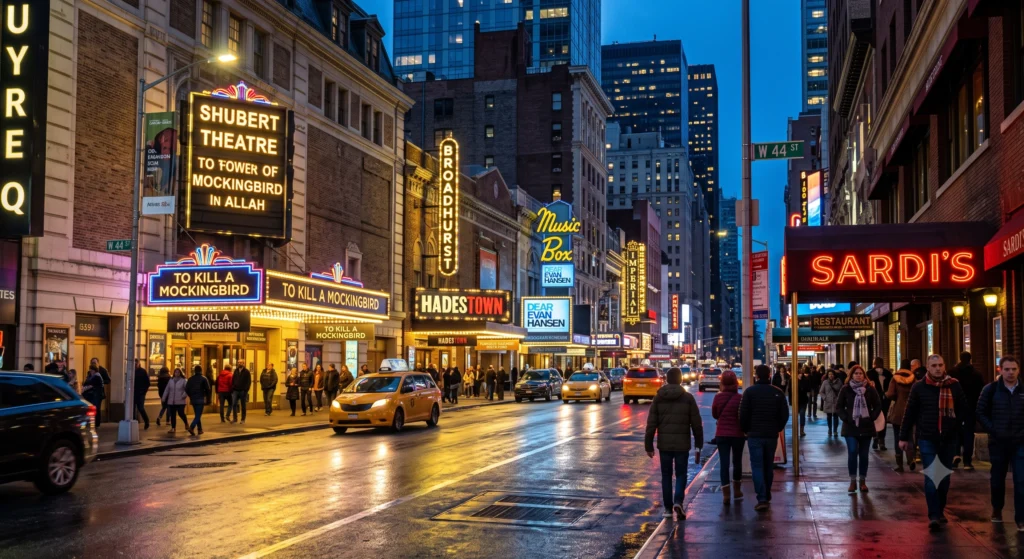
The atmospheric glow of marquee bulbs on 44th or 45th Street is real, but so is the immediate physical reality of the Theater District. Between 6:30 PM and 7:00 PM, thousands of theatergoers pour into narrow midblock streets alongside delivery vans and rideshares.
Inside, most Broadway venues were built between 1900 and 1930. They boast gorgeous ornate ceilings and rich plasterwork, but they were designed for audiences of a different era. Legroom in the upper balconies is notoriously tight, restrooms feature long lines during 15-minute intermissions, and lobby space is minimal.
Reality Check: Do not expect modern stadium seating. If you are over 6 feet tall, side aisle seats or front-row Mezzanine seats offer substantially better comfort than middle seats in deep rows.
What Makes It Worth Your Time
When a Broadway production clicks, the level of craftsmanship is exceptional. The world’s top set designers, sound engineers, actors, and musicians work in these rooms.
- New Musicals & Original Works: Shows in their initial runs bring an energy that touring productions rarely replicate.
- Intimate Star Revivals: Plays featuring top-tier stage actors in 800-seat houses offer an intensity you cannot get from a film screen.
- Off-Broadway Competitors: Off-Broadway theatres (venues with 100 to 499 seats) often produce bolder, more experimental work at half the price tag with zero sightline compromises.
What It Really Costs (And How to Pay Less)
Pricing changes dynamically based on day of the week, seasonality, and lead time. You rarely need to pay full face value unless you are targeting a brand-new smash hit during peak holidays.
Tier 1: Budget ($40 – $60)
- Digital Lotteries & Rush: Almost every show offers a limited number of $40–$50 tickets via official apps (like TodayTix or show-specific lottery sites). Entering daily online lotteries for weeknight performances yields surprisingly high win rates during off-peak months.
- In-Person Box Office Rush: Arriving at a venue box office when it opens (usually 10:00 AM) can secure remaining same-day seats at steep markdowns.
Tier 2: Mid-Range ($80 – $140)
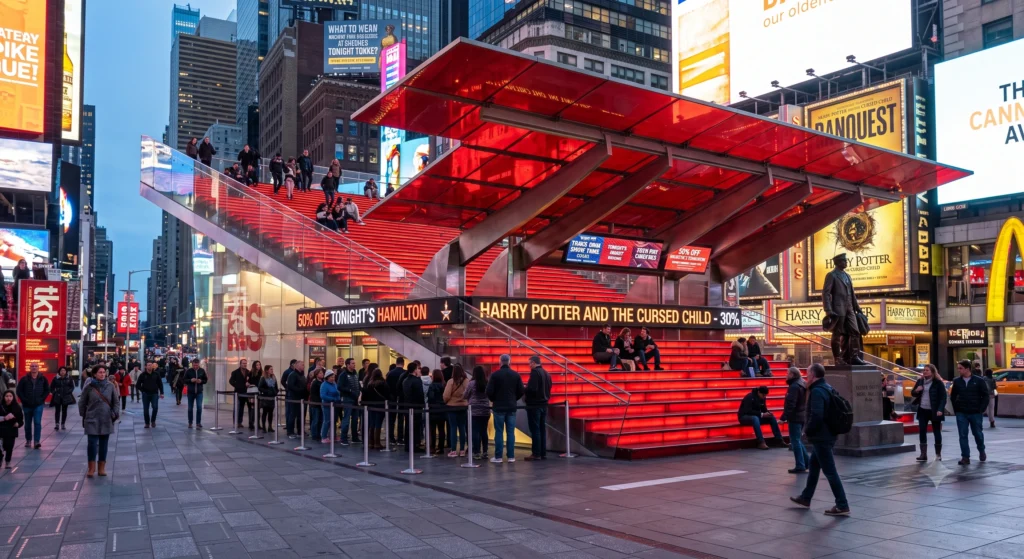
- TKTS Booths: Run by the non-profit Theatre Development Fund, TKTS sells same-day discount tickets at 20% to 50% off box office prices.
- Advance Mid-Mezzanine: Booking 3–6 weeks in advance directly through official ticket sellers (Telecharge or SeatGeek) for central Rear Mezzanine or Front Balcony spots.
Tier 3: Premium ($200 – $450+)
- Center Orchestra: Prime rows 5 through 12. Worth the expense primarily for large-scale production spectacles where visual detail matters immensely.
Ticketing Warning: Avoid third-party reseller markups. Always check the production’s official website to identify their authorized primary ticketing platform (Telecharge, Ticketmaster, or SeatGeek) before purchasing.
Where to Stay & How to Get Around
- Staying Near the District: If theatre is your trip’s central focus, look at hotels along 8th Avenue or in Hell’s Kitchen (42nd to 57th Streets). You can walk to your theatre in under 10 minutes, completely bypassing pre-show subway rushes.
- Staying Elsewhere: Staying in Flatiron, Chelsea, or the Upper West Side keeps you a short 15-minute subway ride away via the 1, 2, 3, N, Q, or R trains, while offering quieter evenings and far better neighborhood dining options.
- Transit Tip: Never take a taxi or rideshare across Midtown between 6:30 PM and 8:00 PM. Traffic grinds to a halt; walking or taking the subway is vastly faster.
What to Skip and What to Do Instead
- SKIP: Standing in line at the main Times Square TKTS booth at 3:00 PM.
- DO THIS INSTEAD: Use the TKTS Lincoln Center location (indoors with significantly shorter queues) or monitor discounts directly on official digital apps.
- SKIP: Pre-show dining on 46th Street “Restaurant Row” when rushed.
- DO THIS INSTEAD: Walk two blocks west to 9th Avenue in Hell’s Kitchen. You’ll find superior Thai, Italian, and South American spot options with faster service and lower prices.
- SKIP: Buying rear-side balcony seats marked “Partial View” to save $15.
- DO THIS INSTEAD: Pay slightly more for an Off-Broadway play where every seat is close to the stage, or opt for a digital rush ticket for a front-row view at a lower cost.
FAQ
What is the difference between Broadway and Off-Broadway?
The distinction is strictly house capacity, not quality. Broadway theatres have 500 seats or more and are located mostly in Midtown. Off-Broadway venues hold 100 to 499 seats and are spread across Manhattan, offering smaller, often more innovative productions at significantly lower ticket prices.
How early should I arrive at the theatre before curtain time?
Arrive 30 to 45 minutes before curtain. Doors usually open 30 minutes prior. Arriving early gives you adequate time to clear security, scan tickets, navigate tight aisles, find your seat, and use the restroom before the lights go down.
Is there a dress code for attending a Broadway show?
No formal dress code exists for standard Broadway performances. You will see everything from business casual and evening wear to jeans, sneakers, and t-shirts. Dress comfortably, but bring a light layer as historic auditoriums can be chilly from air conditioning.
Can I bring food or drinks inside a Broadway theatre?
Outside food and beverages are generally prohibited. Most venues sell soft drinks, alcoholic beverages, and light snacks at lobby bars, which you can bring to your seat in covered theatre-provided cups. However, prices inside the venue carry steep venue markups.