Introduction
A Kenya safari sounds like the kind of family holiday that children remember for years: watching elephants walk across open plains, seeing lions in the wild, and experiencing a world that feels completely different from everyday life.
That is exactly why many families choose it.
But a safari is not a typical vacation. It is not a trip where everyone wakes up whenever they want, spends the afternoon at a pool, and follows a flexible schedule. Kenya rewards families who enjoy adventure, patience, and discovery — but it can feel challenging for travellers expecting convenience at every step.
The real question is not whether Kenya is impressive. It is. The better question is whether a Kenya safari matches your family.
The right itinerary can create extraordinary memories. The wrong one can leave parents managing tired children, long transfers, and a budget that feels difficult to justify.
Before booking, families should understand what the experience is actually like, what is worth paying for, and where compromises are unavoidable.
Quick Verdict: Is a Family Safari in Kenya Worth It?
Yes — for families who want a meaningful adventure and are comfortable with a slower, more structured style of travel.
Kenya is one of the strongest choices for a first African safari because it combines:
- iconic wildlife experiences
- established safari infrastructure
- family-friendly lodges
- opportunities to combine safari with a beach holiday
However, it is not ideal for every family.
Best for:
✓ Children who love animals, nature, and exploration
✓ Families celebrating a special occasion
✓ Parents who prefer experiences over convenience
✓ Travellers willing to invest in a memorable trip
May not suit:
✗ Families looking for a budget-friendly holiday
✗ Very young children who struggle with long drives
✗ Travellers who dislike early mornings and planned schedules
Biggest trade-off:
Kenya offers unforgettable wildlife experiences, but families usually exchange convenience and flexibility for adventure.
What Kenya Is Actually Like for Families
A Kenya safari is often imagined as a simple experience: drive into the park, see animals, return to a comfortable lodge.
The reality is more layered.
A typical safari day begins early.
Very early.
Morning game drives often start around sunrise because wildlife is more active before temperatures rise. For adults, this feels exciting. For some children, it can mean a difficult first few days while they adjust.
The rhythm of safari life is different:
- wake early
- drive through wildlife areas
- return for meals
- rest during hotter hours
- go out again later in the afternoon
This routine works beautifully for families who enjoy being outdoors. Children often become more engaged when they realise they are not simply visiting a zoo — they are observing animals behaving naturally.
But parents should not expect constant action.
Wildlife viewing requires patience.
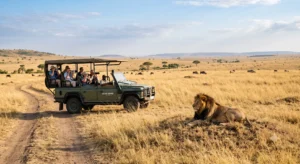
There may be moments when a lion appears within minutes. There may also be long periods of driving while searching for animals.
That uncertainty is part of what makes safari special, but it is also something families should understand before booking.
Is Kenya Safe for Children?
Safety is one of the first questions parents ask, and understandably so.
A professionally organised safari is designed around visitor safety. Safari guides understand animal behaviour, park rules, and how to manage wildlife encounters.
The main safety considerations for families are usually practical rather than dramatic:
- following guide instructions
- staying inside vehicles when required
- protecting against sun exposure
- managing food and water needs
- preparing for travel distances
The bigger challenge for families is often comfort.
Young children may struggle with:
- long vehicle rides
- unfamiliar environments
- changing accommodation frequently
A well-designed itinerary matters more than simply choosing the most famous parks.
A slower safari with fewer locations is often a better family experience than trying to see everything.
What Makes Kenya Worth Your Time
1. Seeing Wildlife in Its Natural Environment
The biggest reason families choose Kenya is simple:
The animals are not performing.
A safari offers something children rarely experience:
seeing nature operate without barriers.
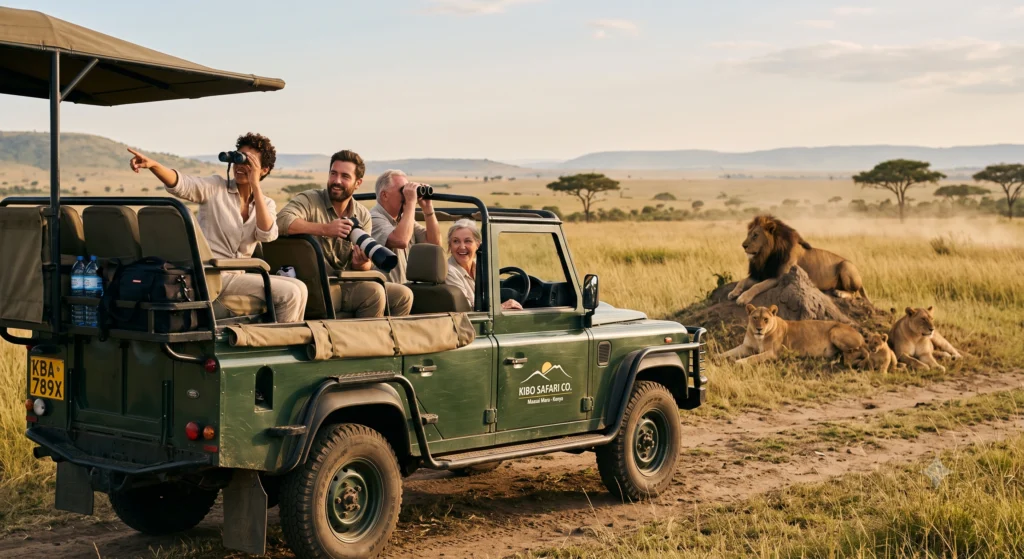
Watching elephants move together, seeing predators follow their instincts, or spotting giraffes across open landscapes creates a stronger connection than seeing animals behind glass.
This is where Kenya justifies the effort.
The experience is educational without feeling like a classroom.
2. Kenya Works Well for a First Safari
Some safari destinations offer incredible wildlife but require more complicated planning.
Kenya has advantages for first-time families:
- established safari routes
- experienced guides
- many accommodation choices
- strong tourism infrastructure
The Maasai Mara is especially popular because it provides the classic safari image many travellers imagine.
Open grasslands.
Large wildlife populations.
The possibility of seeing famous African animals in one landscape.
However, popularity also brings challenges.
During busy periods, some areas can become crowded, especially around major wildlife events.
3. Combining Safari With Beach Time
One reason Kenya works particularly well for families is that the trip does not have to be only about safari.
After several days of early mornings and wildlife drives, many children appreciate a few slower days by the coast.
Places such as Diani Beach or the Mombasa coastline offer a different pace:
- swimming
- relaxing
- beach activities
- recovery time
This combination often creates a better-balanced family holiday.
Safari provides adventure.
The coast provides rest.
Choosing the Right Safari Park for Families
Maasai Mara: The Classic Choice
For many families, the Maasai Mara is Kenya’s introduction to safari.
Why families choose it:
- excellent wildlife opportunities
- iconic landscapes
- strong safari culture
It is especially suitable for first-time visitors who want the classic experience.
The downside:
The most famous places are not always the quietest.
During popular periods, travellers may encounter more vehicles around major sightings.
For some families, that does not matter. Seeing a lion in the wild is still extraordinary.
For others, the feeling of wilderness is reduced.
Amboseli: Often Easier With Children
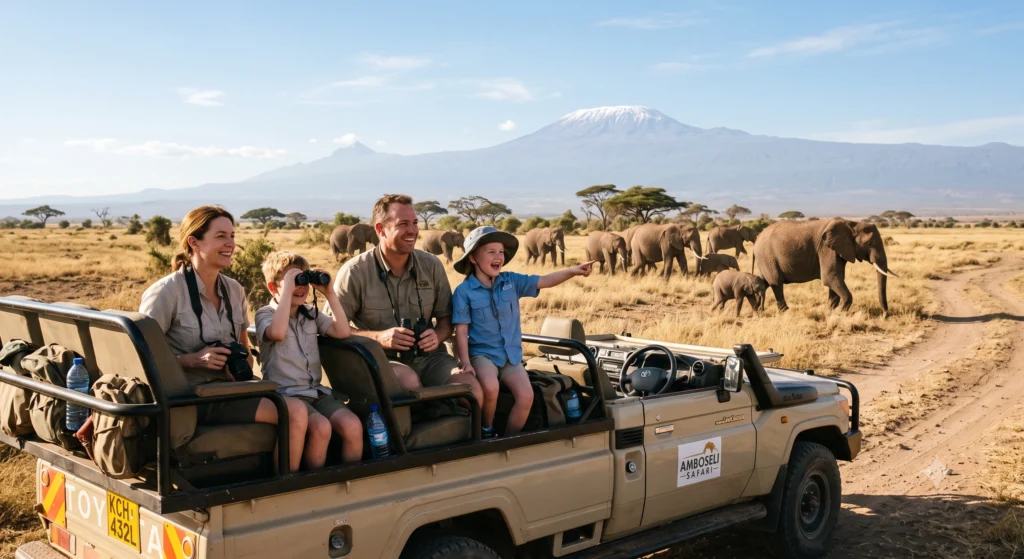
Amboseli can be a strong choice for families because wildlife viewing can feel more accessible.
The park is famous for:
- elephants
- open landscapes
- views toward Mount Kilimanjaro
For younger children, frequent animal sightings can help maintain excitement.
A safari where children regularly see something interesting is often easier than long drives with limited activity.
Samburu: Better for Families Wanting Something Different
Samburu offers a different perspective of Kenya.
It is less about the classic postcard image and more about experiencing a unique ecosystem.
Families who enjoy:
- fewer crowds
- cultural experiences
- unusual wildlife
may prefer it.
The trade-off:
Getting there usually requires more planning.
Where Should Families Stay?
Accommodation can completely change the safari experience.
Luxury Safari Lodges
These work well for families who want comfort.
Advantages:
- better facilities
- family-friendly services
- easier organisation
They reduce some of the stress that comes with travelling internationally with children.
The downside is obvious:
They cost more.
Mid-Range Safari Camps
For many families, this is the best balance.
You still get:
- authentic safari atmosphere
- guided experiences
- comfortable accommodation
without paying the highest prices.
Budget Safari Options
Budget safaris can make Kenya more accessible.
But families should understand what lower prices may involve:
- shared vehicles
- simpler accommodation
- less flexibility
The cheapest option is not always the best value when travelling with children.
What a Kenya Safari Really Costs
A family safari is usually a major holiday investment.
The final price depends on:
- travel season
- number of safari days
- accommodation style
- transport choices
- private or shared vehicles
Instead of thinking only about price, families should think about what they are buying.
A cheaper safari may save money but involve:
- longer drives
- less comfort
- fewer choices
A more expensive safari often provides:
- better locations
- more convenient transfers
- easier family logistics
The goal is not always the cheapest safari.
It is finding the version that your family will actually enjoy.
What To Skip And What To Do Instead
Skip: Trying To Visit Too Many Parks
A common mistake is believing more destinations mean a better trip.
For families, constant movement can become exhausting.
Every new location means:
- packing again
- another transfer
- another adjustment period
A slower itinerary usually creates better memories.
Skip: Planning Around Only the Great Migration
The Great Migration is one of Africa’s most famous wildlife events.
But it should not be the only reason to visit Kenya.
Families travelling outside peak migration periods can still experience excellent wildlife viewing, often with fewer crowds.
Better Alternative: Build Around Your Children’s Energy
A family safari should consider:
- children’s ages
- travel experience
- tolerance for long journeys
Sometimes fewer safari days combined with beach time creates a better overall holiday.
Final Recommendation
A Kenya family safari is worth choosing if your family sees travel as an experience rather than simply a holiday.
It asks for more effort than a typical vacation.
There will be early mornings.
There will be long drives.
There will be moments when children are tired.
But those challenges are part of what makes the experience different.
Kenya is not about constant entertainment. It is about curiosity, patience, and seeing something genuinely rare.
For families with children who enjoy animals, adventure, and discovering unfamiliar places, Kenya can become one of the most meaningful trips they take together.
However, families wanting easy logistics, predictable schedules, or a low-cost holiday may find other destinations more suitable.
The smartest approach is not asking:
“Is Kenya the best family safari destination?”
The better question is:
“Is Kenya the right safari experience for our family?”
For the right travellers, the answer is yes.
FAQ
Is Kenya a good safari destination for families with children?
Yes, Kenya can be an excellent family safari destination because it has established safari routes, experienced guides, and many accommodation options. However, parents should consider their children’s ages, patience levels, and comfort with early mornings and long vehicle journeys.
What is the best age for children to visit Kenya on safari?
There is no universal perfect age, but many families find children around school age benefit most because they can understand wildlife experiences and handle longer travel days. Younger children can enjoy safari too, but itineraries usually need more careful planning.
How many days are enough for a family safari in Kenya?
Many families find around four to seven safari days provides a good balance. Longer trips allow more wildlife experiences but can become tiring for children. Combining safari with coastal relaxation is often a popular approach.
Is Kenya expensive for a family holiday?
A Kenya safari is usually more expensive than a standard family holiday because of accommodation, guides, park fees, and transport. Costs vary widely depending on comfort level, season, and itinerary choices.
Kenya or Tanzania: Which is better for families?
Both offer excellent safari experiences. Kenya may suit families wanting a classic first safari with easier combinations like beach extensions. Tanzania may appeal more to travellers focused on longer Serengeti-style safari experiences.