Thailand is one of those places that looks easy to drive—plenty of highways, cheap fuel, and endless scenery. But the real question before you book a rental car or motorbike is not “Can I drive in Thailand?” It’s “Which routes are actually worth my time, and which will just eat my holiday?” .
This guide is for travellers who want a realistic picture of a Thailand road trip: the routes that justify the effort, the ones that are more trouble than they’re worth for most visitors, and the practical trade-offs you should expect.
Quick Verdict: Are Road Trips in Thailand Worth It?
Yes—for the right traveller and the right route.
- Recommendation: Pick one region and do it properly (north, south-west coast, or east/gulf), rather than trying to “cross the whole country” in one go.
- Who should go: Confident drivers who enjoy flexibility, photographers, slow travellers with 10+ days, and anyone who wants to see beyond Bangkok and the main islands.
- Who should skip: First-timers with under a week, nervous drivers, beach-only travellers, and anyone uncomfortable with dense traffic, motorbike chaos, or mountain roads.
- Biggest trade-off: You gain freedom and access to smaller towns and viewpoints, but you lose time and energy to driving, heat, and road stress. For many, a hybrid plan—fly or train for long hops, drive locally—is smarter than one epic cross-country marathon.
Quick Facts
| Information | Details |
|---|---|
| Best time to drive | November–February (cool, dry); avoid peak monsoon on Andaman coast (Sept–Oct) and burning season in north (Feb–April) if smoke-sensitive. |
| Typical budget | Car rental 1,200–2,500 THB/day; fuel ~35–45 THB/litre; mid-range hotels 1,200–2,500 THB/night; meals 80–250 THB. |
| Best region for first road trip | Chiang Mai + Mae Hong Son Loop or Bangkok–Kanchanaburi as a shorter intro. |
| Transport reality | Right-hand traffic; good main highways; chaotic city traffic; motorbike risk high; some routes need ferries for islands. |
What Thailand Is Actually Like as a Road-Trip Destination
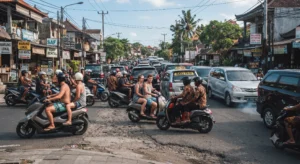
On paper, Thailand looks perfect for driving: decent highways, cheap petrol, and a culture used to tourists on two and four wheels. In practice, it’s a mix of serene mountain passes, exhausting urban traffic, and long, hot stretches where the scenery doesn’t change much.
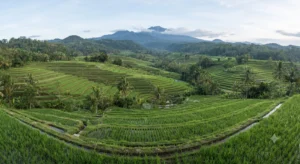
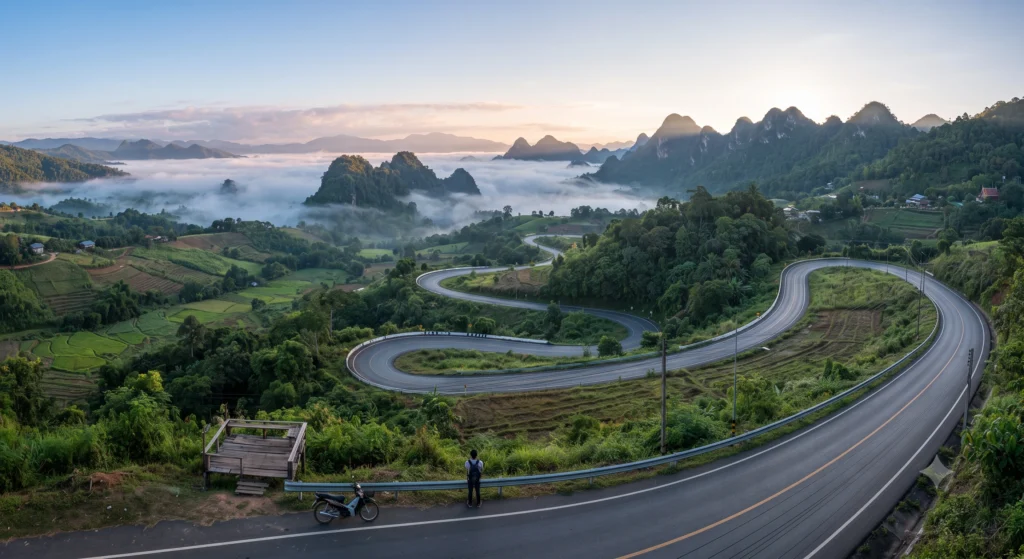
Many travellers find the north the most rewarding: winding roads, cooler temperatures, and small towns built around tourism and agriculture. The classic Mae Hong Son Loop from Chiang Mai through Pai and Mae Hong Son is often described as the most scenic drive in the country, with thousands of curves, mountain views, and hill-tribe culture along the way.
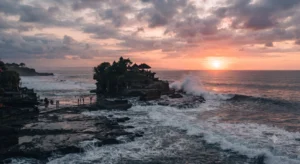
The south offers spectacular coastal drives, especially on the Andaman side (Krabi–Phuket–Phang Nga), where limestone cliffs drop into the sea and viewpoints are frequent. But much of this route is now heavily developed, with construction, traffic, and tourist congestion around main beaches.
Bangkok itself is not a road-trip highlight. It’s a starting point, not a destination for drivers. Most people do better to treat it as a hub: fly or take a train to a region, then rent a vehicle there. Shorter drives from Bangkok—especially to Kanchanaburi and Khao Yai National Park—work well as add-ons rather than the core of a holiday.
Northern Mountain Loop: Chiang Mai–Mae Hong Son–Pai
This is the route most serious road-trippers mean when they talk about Thailand. The Mae Hong Son Loop typically starts in Chiang Mai, heads northwest through Pai, loops around Mae Hong Son, and returns via Mae Sariang or the same road. Distances vary by exact route but are commonly quoted around 600–750 km of driving, often over 3–5 days.
Why choose this route:
- Constantly changing scenery: rice terraces, misty peaks, waterfalls, caves, and small markets.
- Frequent natural stopping points: hot springs, viewpoints, national parks, and hill-tribe villages make it easy to break up long drives.
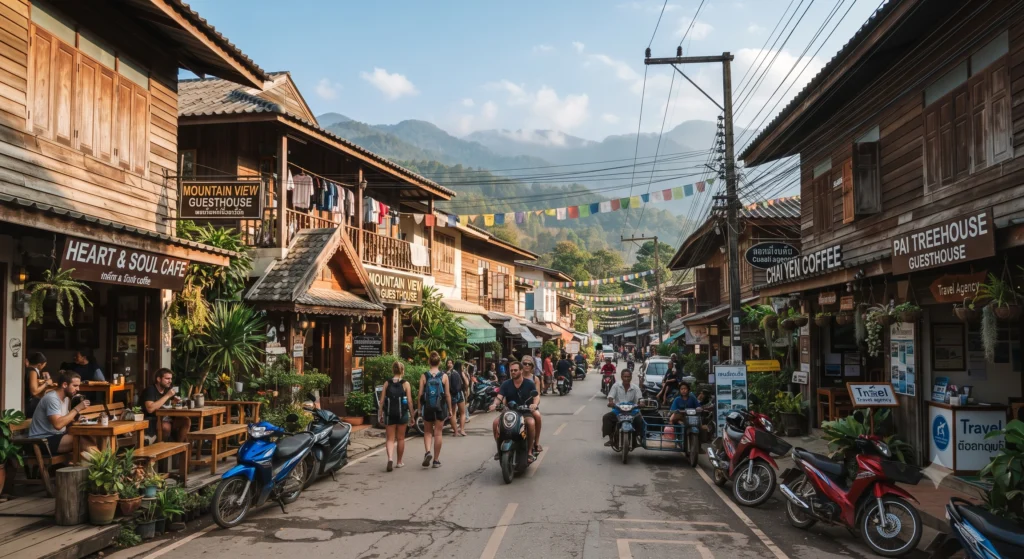
- A strong small-town infrastructure: guesthouses, cafes, and motorbike rentals in Pai and Mae Hong Son cater to overlanders.
What it really feels like:
Expect early starts to avoid midday heat, slow progress on mountain sections, and evenings in relaxed towns where the main activity is eating, wandering, and planning the next day’s drive. Many travellers mention the road to Pai as particularly intense: narrow, winding, and easy to misjudge if you’re tired. It’s satisfying, but it asks for your full attention.
Who enjoys it most:
- Confident car or motorbike drivers with mountain experience
- Photographers and slow travellers
- People who like small towns and don’t need big-city nightlife
Who should think twice:
- Inexperienced motorcyclists; accident rates are high on these roads.
- travellers with back or neck issues; the bends are relentless.
- Anyone trying to do the full loop in under three days. That turns a scenic journey into a risky endurance test.
Practical notes:
- Best driven in the cool season (Nov–Feb); roads can be slippery in heavy rain, and visibility poor in burning season.
- Fuel is easy to find; food options abundant in towns, sparse on some mountain stretches—don’t skip meals.
- Check current road conditions locally; landslides and repairs can temporarily close sections.
History and Nature Near Bangkok: Kanchanaburi and Khao Yai
If you only have a few days and want a taste of Thai road-tripping without committing to the north, the Bangkok–Kanchanaburi and Bangkok–Khao Yai corridors are the most sensible options. Both are roughly 2–3 hours’ drive from the capital, making them feasible as long day trips or one- or two-night add-ons.
Bangkok to Kanchanaburi takes you past reservoirs, forests, and small towns before reaching the “City of Waterfalls.” The pull here is twofold: wartime history (the Bridge over the River Kwai, war cemeteries, museums) and nature (notably Erawan National Park with its multi-tiered waterfall). The route is straightforward, mostly on well-maintained highways, and busy enough that you won’t feel isolated.
Why it’s worth it:
- Minimal driving stress compared to northern mountain roads.
- Strong mix of history and nature in a compact area.
- Good mid-range accommodation and restaurants in Kanchanaburi town.
Common mistakes:
- Trying to cram Erawan’s upper falls, the bridge, and several museums into one rushed day. You’ll spend most of your time in the car. A night in Kanchanaburi makes the trip feel humane.
- Visiting in the hottest part of the day and underestimating the hike to Erawan’s higher tiers. Go early, bring water, and accept that you may not reach the top.
Bangkok to Khao Yai National Park is another realistic short route, popular for wildlife, waterfalls, and cooler air. The park is a Unesco-listed part of the Dong Phayayen–Khao Yai Forest Complex and offers driving access to viewpoints, trails, and waterfalls like Haew Suwat and Haew Narok. This is a solid choice for nature lovers who want hiking and possible wildlife sightings rather than temples and history.
Who these routes suit:
- First-time visitors adding 2–3 days to a Bangkok stay.
- Families or groups wanting manageable driving and clear highlights.
- Travellers who prefer day hikes and short drives over multi-day epics.
Who might skip:
- Those seeking remote, “off-grid” driving; these are popular, well-trodden routes.
- Visitors whose main goal is beaches and islands; there are better southern options for that.
Coastal Andaman Drive: Krabi–Phuket–Phang Nga
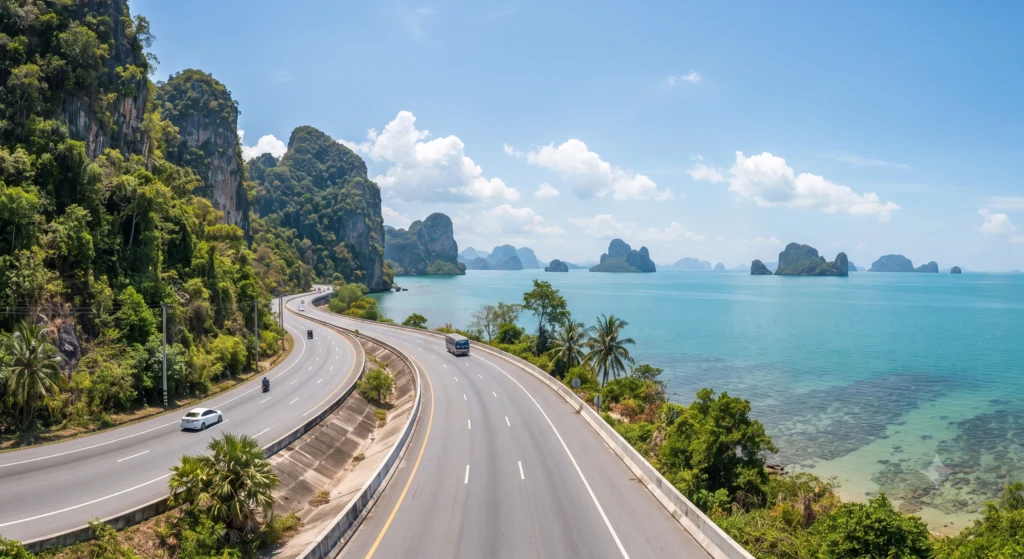
Thailand’s Andaman coast is where many people imagine a road trip: sea on one side, cliffs on the other, and endless possibilities for beach-hopping. The Krabi–Phuket–Phang Nga route delivers on scenery, but it also comes with the usual southern issues: traffic, construction, and crowds in high season.
What makes it worth your time:
- Coastal views that are genuinely spectacular, especially around Ao Nang, Railay access points, and the stretches approaching Phang Nga Bay.
- Flexibility to explore less crowded bays and viewpoints that tours don’t reach.
- Easy access to boat trips to places like James Bond Island, Hong Island, and other Andaman gems directly from multiple points along the route.
Reality check:
Much of the main road between Krabi and Phuket is now heavily developed. You will pass resorts, construction sites, and congested junctions, especially near Phuket Town and the main tourist beaches. The driving itself is not technically hard, but it can be tiring and frustrating in peak season.
The real value comes from using the car to reach quieter launch points for boats, secluded beaches, and viewpoints away from the main hubs.
Who enjoys this route:
- Beach and island lovers who want control over where and when they stop.
- Photographers chasing coastal light and karst landscapes.
- Travellers combining driving with boat trips and short hikes.
Who might prefer an alternative:
- Visitors who only care about a few famous beaches; public transport and tours may be enough.
- Anyone who dislikes traffic and construction; some sections feel more like a commute than a holiday.
If you’re set on this route, consider basing yourself in two or three spots (for example, Ao Nang/Railay area, a Phang Nga base near the bay, and a quieter part of Phuket) and using the car for local exploration and selective day trips, rather than constantly moving.
Eastern and Gulf Options: Chanthaburi–Trat and Songkhla Lake
These routes are less common in international itineraries but rewarding for travellers who want a different flavour of Thailand.
Chanthaburi–Trat (and Koh Chang)
The Chanthaburi–Trat corridor on the eastern Gulf coast is often described as a quieter alternative to the busy south-west. You pass fruit orchards, gem markets, and small towns before reaching the Koh Chang archipelago, where you’ll need a ferry to take the car across. The islands are less polished than Phuket but increasingly developed.
Why consider it:
- Less crowded than the Andaman hotspots in high season.
- Good mix of coastal scenery, small markets, and island time.
- Useful if you’re coming from or heading to Cambodia (via Trat border).
Trade-offs:
- Fewer iconic postcard views than the Andaman side.
- Ferry logistics and costs for taking a car to the islands.
- Some islands are now quite built up, so “untouched” is relative.
This route suits travellers who want a relaxed coastal drive with fewer crowds and don’t mind a slightly rougher, more local feel.
Songkhla Lake and the Deep South
The Nakhon Si Thammarat–Phatthalung–Songkhla route around Songkhla Lake offers a different kind of scenery: long lake views, fishing villages, and a mix of Muslim and Thai-Buddhist culture. The Tinsulanonda Bridge, one of the longest bridges over water in Thailand, is a notable landmark.
Why it can be interesting:
- A rare glimpse of southern Thai life beyond the main tourist islands.
- Scenic lake and coastal views, with opportunities for boat trips and local food exploration.
Why many travellers skip it:
- It’s far from the main northern and central circuits, so it usually requires a dedicated southern trip.
- The security situation in the deep south can be sensitive; travellers should check current advice and avoid restricted areas.
This route is best for repeat visitors or travellers specifically interested in southern culture and landscapes, not first-timers looking for a classic “Thailand” experience.
What It Really Costs to Road-Trip in Thailand
Exact prices change, so treat these as planning ranges rather than fixed numbers.
Car rental:
- Compact automatic: roughly 1,200–2,500 THB/day, depending on season, location, and company.
- SUVs and newer models cost more; one-way fees can apply if you pick up in one city and drop off in another.
Fuel:
- Petrol typically around 35–45 THB/litre; long routes like Bangkok–Chiang Mai or cross-country drives add up quickly.
- Mountain driving uses more fuel than flat highways.
Tolls and extras:
- Expressways around Bangkok and some major highways have tolls; budget a few hundred THB if you use them.
- Parking is usually cheap or free outside central Bangkok; hotels often provide parking.
Accommodation:
- Budget guesthouses: 800–1,200 THB/night
- Mid-range hotels and nice guesthouses: 1,200–2,500 THB/night
- Premium resorts: 3,500 THB/night and up, especially on the islands and in prime coastal areas
Food:
- Street food and local restaurants: 80–200 THB/meal
- Tourist-oriented or upscale places: 250–500+ THB/meal
Overall, a road trip in Thailand is not dramatically cheaper than a fly-and-stay holiday once you factor in rental, fuel, and extra nights on the road. The value is in flexibility and access, not in big savings.
What to Skip (and What to Do Instead)
Not every famous route is the best use of your time.
Overrated or Misunderstood Choices
- Bangkok to Phuket non-stop drive for first-timers.
It’s a very long haul (often quoted around 900+ km) with many hours of fairly monotonous highway before you reach the scenic bits. For most travellers, flying to Phuket or Krabi and renting a car locally is a smarter use of vacation days. - Trying to do the full Mae Hong Son Loop in 2 days.
The distance and number of curves make this unsafe and unpleasant. You’ll spend your entire trip in the car, with no time to enjoy the towns and viewpoints that make the route worthwhile. Aim for 3–5 days minimum. - Motorbike road trips without real experience.
Thailand’s accident statistics for two-wheelers are high, and mountain roads are unforgiving. Many visitors overestimate their skills and underestimate the conditions. If you’re not an experienced rider, a car is a far better choice.
Better Alternatives
- Fly + local rental instead of one giant cross-country drive.
For example: fly into Chiang Mai, do the northern loop; then fly south and do a short coastal drive. You keep the road-trip benefits Without burning days on repetitive highways. - Shorter, focused routes instead of “all of Thailand.”
Choose one region per trip:- North: Chiang Mai + Mae Hong Son Loop
- Central: Bangkok + Kanchanaburi + Khao Yai
- South-west: Krabi–Phuket–Phang Nga with boat trips
This gives you depth without exhaustion.
- Hybrid itineraries using trains or buses for long hops.
Thailand’s overnight trains and comfortable buses can cover long distances while you sleep, leaving your energy for local driving at the destination.
Who Should (and Shouldn’t) Do a Thailand Road Trip
A Thailand road trip is a good fit if you:
- Have at least 10–14 days for one region, or more for multi-region trips.
- Are a confident driver comfortable with busy cities, mountain roads, and occasional chaos.
- Enjoy slow travel: small towns, local markets, random stops, and flexible plans.
- Want to see beyond the main tourist beaches and temples.
Think carefully or skip if you:
- Have under a week in Thailand; you’ll spend too much of it in transit.
- Are nervous about driving in unfamiliar, busy environments.
- Primarily want a relaxed beach holiday with minimal time in a vehicle.
- Are planning to rely on motorbikes without strong riding experience and good insurance.
For many travellers, the best version of a “Thailand road trip” is not crossing the entire country, but choosing one or two regions and exploring them thoroughly by car, with planes or trains handling the long distances.
Final Recommendation
Road trips in Thailand are worth it, but only when treated as a means to explore a region, not as a checklist of kilometres. The Mae Hong Son Loop remains the standout for scenery and culture, provided you allow enough time and drive carefully. The Bangkok–Kanchanaburi–Khao Yai cluster is the smart add-on for first-timers with limited days. The Andaman coastal drive offers beautiful views but works best when you accept the traffic and focus on selective stops and boat trips.
If you’re planning your first trip to Thailand and have less than 10 days, you’ll probably be happier flying between regions and renting a car locally. If you have time, driving skill, and a taste for slow travel, a well-chosen Thai road trip can be one of the most rewarding ways to experience the country.
FAQ
Is it safe to drive in Thailand as a tourist?
Driving in Thailand is generally safe on main highways, but risks rise in cities, on mountain roads, and especially on motorbikes. Tourists should have a valid license (an International Driving Permit is recommended), wear seatbelts, avoid night driving on unfamiliar mountain routes, and be extra cautious with motorbikes. Many accidents involve inexperienced riders; if you’re not confident, choose a car.
What is the best route for a first Thailand road trip?
For most first-timers, the Mae Hong Son Loop (with 3–5 days minimum) or a Bangkok–Kanchanaburi–Khao Yai circuit are the best options. The north offers the most iconic scenery, while the central routes are shorter and easier to combine with a standard Bangkok stay. Both give a real taste of road-tripping without excessive distance.timesofindia.
Do I need an International Driving Permit (IDP) in Thailand?
Officially, foreign drivers should carry both their home-country license and an International Driving Permit. Police checkpoints and rental companies may ask for it, and it can affect insurance in case of an accident. Rules can change, so verify current requirements with your rental company and embassy before travelling.
How many days do I need for a meaningful road trip in Thailand?
For a single region, plan at least 7–10 days to avoid spending your whole holiday in the car. The Mae Hong Son Loop alone is best done in 3–5 days. Cross-country epics (e.g., Chiang Mai to the southern islands) can easily require 2–3 weeks to feel enjoyable rather than exhausting.
Can I combine a road trip with islands like Koh Samui or Koh Chang?
Yes, but expect ferry logistics. Routes that include Koh Chang (east) or islands near Surat Thani (e.g., Koh Samui, Koh Phangan) require car ferries, which add cost and time. Some travellers prefer to drive to the ferry port, then continue without a car on the islands, using local transport once there. Always check ferry schedules and vehicle policies in advance.