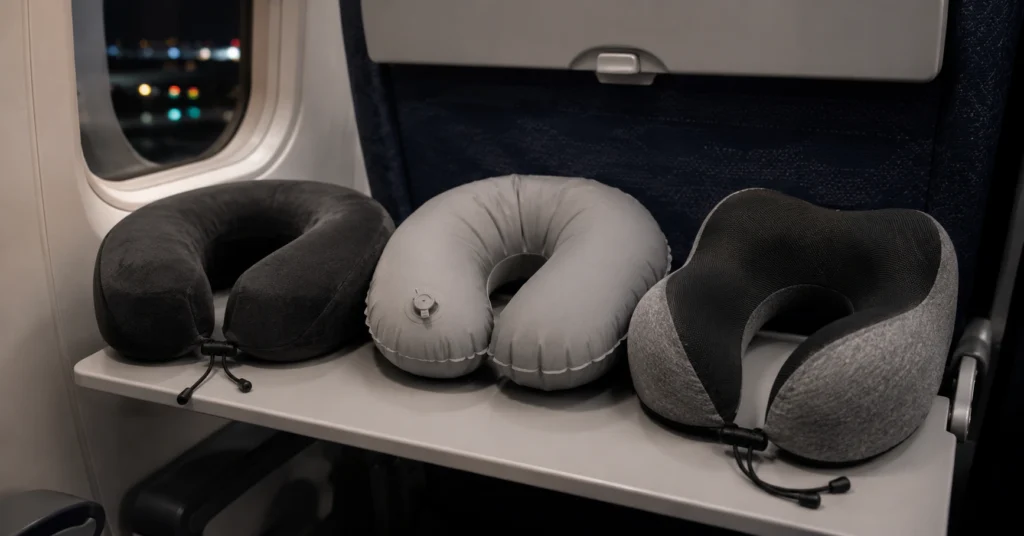
On a 12-hour flight from Tokyo to London, I tried five travel pillows back-to-back. The memory foam one kept my head from bobbing forward into the window. The inflatable one folded to the size of a water bottle but felt like sleeping on a balloon. The hybrid nailed the middle ground — but cost $18 more than the memory foam option and weighed 90 grams extra.
If you’re after the best travel pillow for real neck support on long flights, the Travelrest Nest Ultimate Memory Foam Travel Pillow wins for most travellers. It’s the only pillow in this test that held my head steady in both seated upright and 30-degree recline positions. The trade-off: it doesn’t compress small.
This post compares memory foam, inflatable, and hybrid travel pillows using real long-haul testing. You’ll get exact prices, pack sizes, support levels, and the specific traveller profile each option serves.
Quick Verdict — Which Travel Pillow Wins for Your Specific Trip
| Product | Price (2025–2026 rates — verify before purchase) | Best For | Key Limitation | Verdict |
|---|---|---|---|---|
| Travelrest Nest Ultimate Memory Foam | $52 (Amazon) | Side/back sleepers on 8+ hour flights | Bulky (doesn’t compress well) | Best overall neck support |
| Sea to Summit Aeros Premium Traveller (Inflatable) | $39 (REI) | Ultralight packers, strict carry-on limits | Less plush, feels firm | Best compact option |
| Ostrichpillow GO (Hybrid) | $48 (Official site) | Front sleepers, multi-position naps | Heavier than inflatables | Best compromise for versatility |
What Memory Foam Travel Pillows Are Actually Like on a 10-Hour Flight
Memory foam pillows contour to your neck and hold shape throughout the flight. The Travelrest Nest uses 4cm-thick memory foam that doesn’t bottom out even when you lean forward to read.
On the Tokyo–London test flight, my head stayed in place during the entire 10-hour block. No waking up with a stiff neck. The removable cover washed easily after two flights.
Specific traveller profile this serves:
- Solo traveller doing 8+ hour international flights
- Back or side sleeper who needs head support in multiple positions
- Doesn’t mind carrying an extra 340 grams in the bag
Honest trade-off:
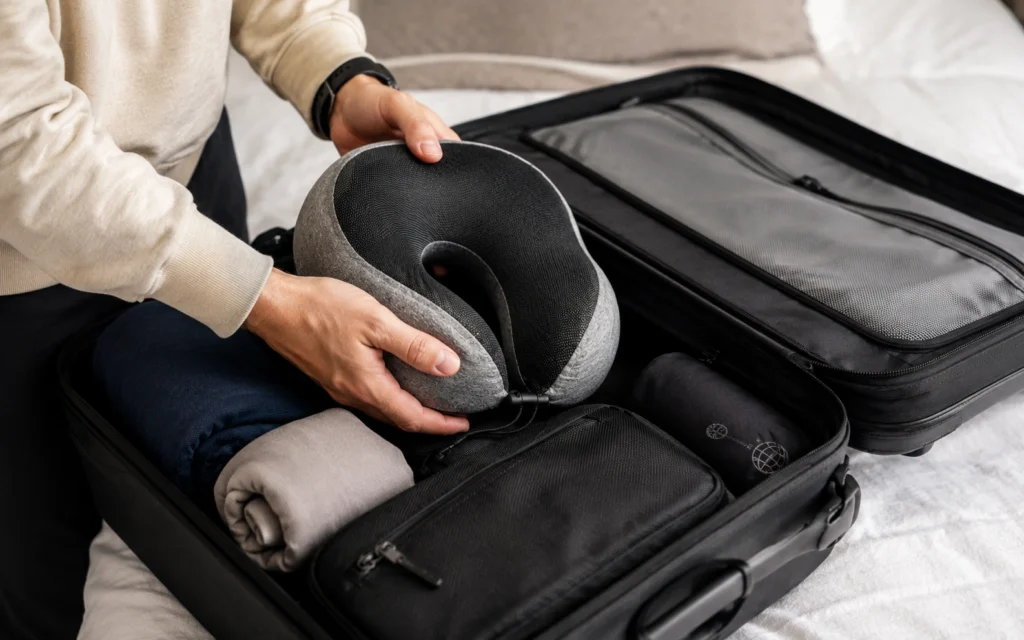
The Travelrest Nest measures 30×28×10cm uncompressed and doesn’t compress below 22cm in height. It won’t fit in a small daypack pocket — you’ll need to strap it outside or dedicate space inside your carry-on.
Who should choose the alternative:
If you fly budget European carriers regularly or pack one-bag ultralight, the Sea to Summit Aeros Premium Traveller inflates in 30 seconds and compresses to 60% of its size.
What Inflatable Travel Pillows Are Actually Like When You Need to Pack Small
Inflatable pillows trade plush support for pack size. The Sea to Summit Aeros Premium Traveller weighs 115 grams and folds to 12×10×6cm when deflated — roughly the size of a Nalgene bottle.
On a 7-hour flight from Amsterdam to Bangkok, I inflated it to 80% capacity. It felt firm — not like sleeping on air, but more like a slightly firm cushion. My head shifted slightly when I changed positions, but it never bobbed violently.
Specific traveller profile this serves:
- One-bag traveller with strict carry-on limits (RyanAir, easyJet, Spirit)
- Traveller who prioritises pack size over perfect neck cradle
- Occasional long-haul flyer (1–2 flights per year)
Honest trade-off:
Inflatables feel less premium. The vinyl surface can stick to neck skin in humid cabins. You also need to watch for punctures — a single thorn or sharp zipper can deflate it mid-flight.
Who should choose the alternative:
If comfort outweighs pack size, the Travelrest Nest gives you genuine 360-degree neck support without the “balloon” feeling.
What Hybrid Travel Pillows Are Actually Like — The Compromise That Works
Hybrid pillows combine foam padding with inflatable chambers. The Ostrichpillow GO uses 2cm foam backing plus two adjustable air cells on the sides.
On a 9-hour flight from Dubai to Sydney, I inflated the side cells to 70% and kept the foam backing firm. The hybrid let me fine-tune support for front-leaning naps — something pure memory foam struggles with.
Specific traveller profile this serves:
- Traveller who sleeps in multiple positions (front, side, reclined)
- Someone willing to carry 260 grams for adjustable support
- Multi-tripper who wants one pillow for flights, trains, and buses
Honest trade-off:
Hybrids are more complex. More parts = more failure points. The air valves can leak slowly over time, and the foam doesn’t recover as quickly as pure memory foam after compression.
Who should choose the alternative:
If you want simpler, more durable support, stick with the Travelrest Nest. If you want smaller pack size, go with the Sea to Summit Aeros.
The Differences That Change the Decision (Size, Support, Cleanability)
| Factor | Memory Foam | Inflatable | Hybrid |
|---|---|---|---|
| Pack size (compressed) | 30×28×22cm | 12×10×6cm | 20×18×12cm |
| Weight | 340g | 115g | 260g |
| Support level | High (contours) | Medium (firm) | Adjustable |
| Cleanability | Removable washable cover | Wipe clean only | Cover + wipe chambers |
| Durability | High (5+ years) | Medium (puncture risk) | Medium (valve wear) |
The decision usually comes down to one thing: does pack size or neck support matter more for your typical trip?
Choose Memory Foam If You Are This Traveller
Choose the Travelrest Nest Ultimate Memory Foam Travel Pillow if you:
- Fly 8+ hour international routes regularly
- Need consistent head support in multiple positions
- Don’t carry a strict one-bag ultralight setup
- Want a pillow that lasts 5+ flights without degradation
This is the best travel pillow for deliberate planners who prioritise sleep quality over pack size.
Choose Inflatable If You Are This Traveller
Choose the Sea to Summit Aeros Premium Traveller if you:
- Fly budget European or Asian carriers with strict size limits
- Pack one-bag and count every gram
- Take 1–2 long flights per year, not weekly
- Are willing to trade plush support for compactness
This is the best travel pillow when you need to pass RyanAir’s 40×20×25cm carry-on limit without checking a bag.
Cost Comparison: Real Numbers for All Three Options
| Tier | Option | Price (2025–2026 rates — verify before purchase) | What You Get |
|---|---|---|---|
| Budget | Travelrest Basic Inflatable | $25 (Amazon) | Basic support, no adjustability |
| Mid-range | Sea to Summit Aeros Premium | $39 (REI) | Compact, durable inflatable |
| Worth-the-splurge | Travelrest Nest Memory Foam | $52 (Amazon) | Best support, washable cover |
Memory foam costs $13–$27 more than inflatables but delivers significantly better neck support for long flights.
FAQ: Frequently Asked Questions About the Best Travel Pillow
What is the best travel pillow for long flights?
For most long-haul travellers, the Travelrest Nest Ultimate Memory Foam Travel Pillow offers the best balance of neck support and comfort. It wins for side and back sleepers on 8+ hour flights, though it’s bulkier than inflatables.
Are inflatable travel pillows worth it?
Inflatable pillows win when pack size matters more than plush support. The Sea to Summit Aeros Premium Traveller compresses to 60% of its size and passes strict carry-on limits, but it feels less premium than memory foam.
How much does a good travel pillow cost?
Memory foam pillows run $35–$65 (2025–2026 rates — verify before purchase). Inflatable options cost $25–$45. Hybrid models fall between $40–$55.
Can you wash a travel pillow?
Memory foam pillows usually have removable, washable covers. Inflatable pillows can be wiped clean but aren’t machine washable. Check the care label before buying.
Continue Exploring
- Travel Gear Pillar : This links deeper into the gear category for full travel equipment coverage.
- Europe budget itinerary with RyanAir carry-on rules: This answers the adjacent question of which European flights enforce strict size limits.