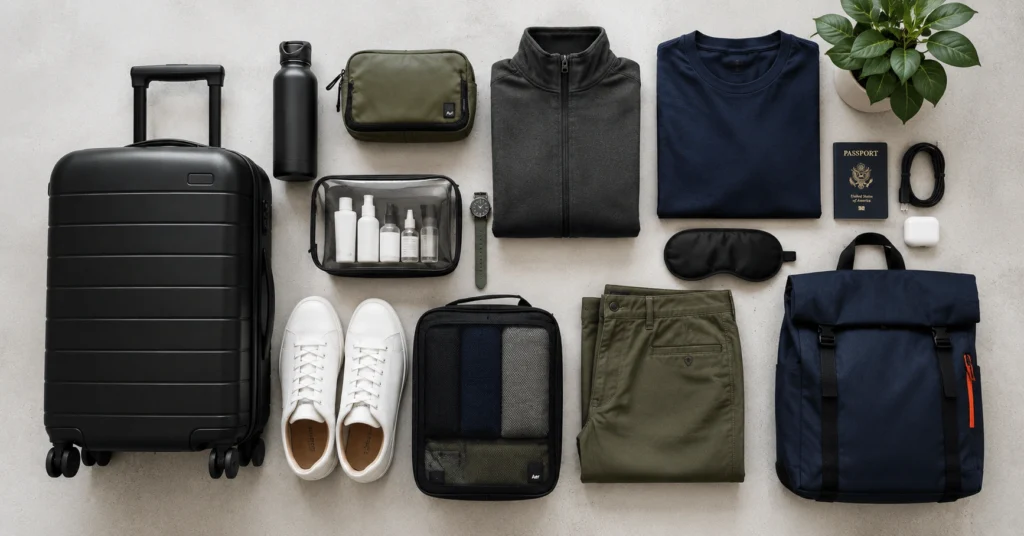
Most travel organizers fail within three trips. The zipper pulls snap off. The fabric pills. They add weight without solving the actual problem: your stuff ends up in a jumbled mess by day two anyway.
The issue isn’t that organizers don’t work. It’s that most people buy the wrong type for how they actually travel. You don’t need twelve different pouches. You need five things that survive real use and make unpacking at 11 PM after a delayed flight feel manageable instead of defeating.
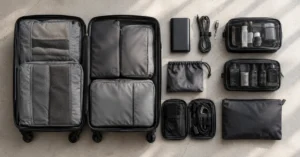
Here’s what works: compression packing cubes with YKK zippers, toiletry bags with waterproof linings and hanging hooks, tech organizers with padded compartments, shoe bags that actually contain dirt, and laundry separators you’ll use on trips longer than five days. The difference between the $20 version and the $80 version isn’t marketing—it’s whether the zipper survives trip number eight.
This guide covers what each type actually does, the price tiers that matter, and the specific mistakes that turn organizers into dead weight. You’ll leave knowing exactly what to buy for your next trip and what to skip.
Structured Element: Travel Organizer Comparison Table
| Type | Price Range | Best For | Key Feature | Limitation | Verdict |
|---|---|---|---|---|---|
| Compression Cubes | $25-$80 | Maximizing carry-on space | 15-20% capacity increase | Adds 8-12 oz weight | Essential for trips 5+ days |
| Standard Cubes | $15-$40 | Organization without compression | Lightweight, simple | No space savings | Good for weekend trips |
| Hanging Toiletry Bag | $20-$60 | Small bathrooms | Waterproof lining, hook | Bulky when full | Non-negotiable for shared bathrooms |
| Tech Organizer | $15-$50 | Cable management | Padded compartments | Easy to forget in hotel | Critical for digital nomads |
| Shoe Bags | $10-$30 | Containing dirt | Breathable fabric | Often skipped | Skip unless packing dress shoes |
What Good Travel Organizers Actually Do (And What They Don’t)
Travel organizers solve three problems: space efficiency, category separation, and unpacking speed. They don’t make you a better packer. They don’t compensate for bringing too much stuff. And they certainly don’t make your bag lighter—most add 1.5 to 2 pounds total.
The real value shows up on day four, when you’re living out of a hotel room the size of a walk-in closet and need clean underwear without excavating your entire suitcase. That’s when organization stops being theoretical and starts being practical.
I learned this the hard way in Tokyo, standing in a 60-square-foot Airbnb bathroom at midnight, trying to find my toothbrush in a toiletry bag that had become a black hole of travel-sized bottles. The bag itself was fine. My mistake was buying a flat pouch instead of a hanging organizer with compartments. Now I check for three things: waterproof lining, a hook that actually holds weight, and enough vertical space to fit a full-size deodorant stick. (The deodorant detail matters more than you’d think.)
Good organizers disappear into your routine. Bad ones become obstacles you work around. The difference isn’t price—it’s whether the design matches how you actually move through a trip.
The Five Types Worth Buying
Not every organizer earns its place in your bag. These five types provide genuine utility for most travelers. Everything else is situational.
Compression Packing Cubes
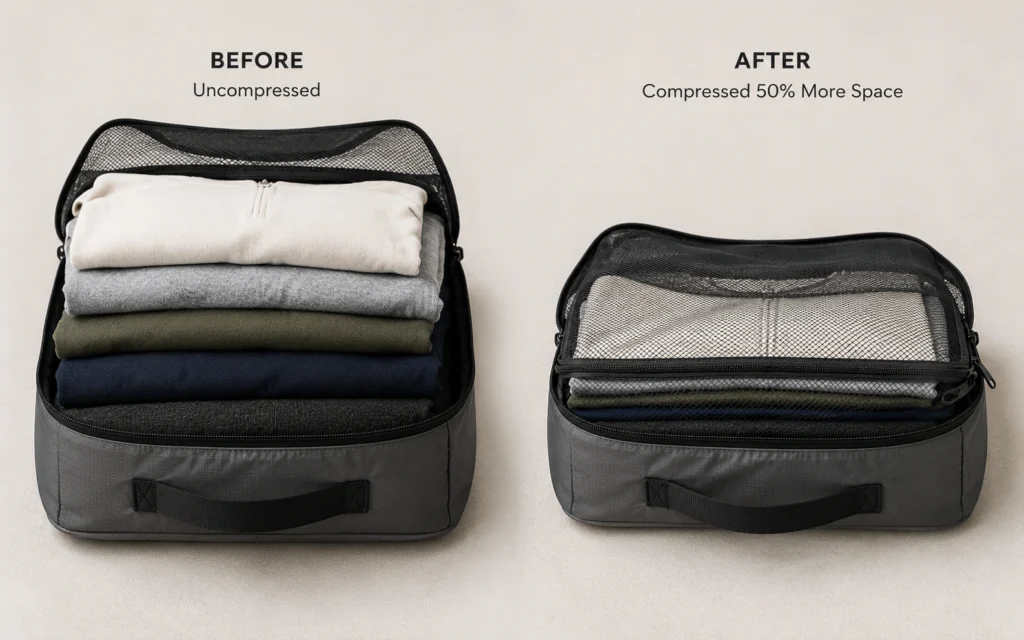
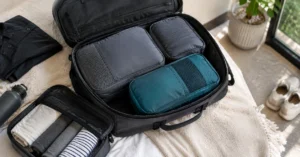
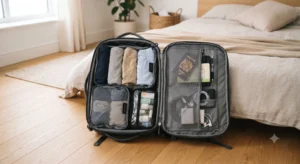
Compression cubes use a two-zipper system: one to close the cube, another to compress it down by 15-20%. This isn’t marketing exaggeration. I’ve tested this with identical clothing loads—the compressed cube takes up roughly 4 liters less space than a standard cube.
Material: Look for 200-400D ripstop nylon. The “D” stands for denier, which measures fabric thickness. Below 200D tears too easily. Above 400D adds unnecessary weight.
Zipper: YKK zippers only. This isn’t brand snobbery. YKK controls roughly 50% of the global zipper market because they work. Generic zippers fail at the pull tab or separate from the fabric under compression stress.
Weight: A set of three compression cubes weighs 12-16 oz total. Standard cubes weigh 8-10 oz. You’re trading 4-6 oz for 15-20% more capacity. For carry-on-only travelers, this trade-off makes sense. For checked bag travelers, standard cubes might suffice.
Fit profile: Compression cubes work best with synthetic blends and merino wool. 100% cotton wrinkles under compression. If you pack mostly cotton, use standard cubes instead.
Price tiers:
- Budget ($15-$25): Amazon Basics, Gonex. Standard zippers, 100-150D polyester. Expect 10-15 trips before zipper failure.
- Mid-range ($30-$50): Eagle Creek, Peak Design. YKK zippers, 200D ripstop. Last 30+ trips with proper care.
- Premium ($60-$100): Tortuga, Aer. 400D fabric, reinforced stress points, lifetime warranties. Buy once, use for years.
Maintenance: Hand wash in cool water. Air dry. Never machine dry—the heat weakens the compression zipper.
Toiletry Bags with Waterproof Linings
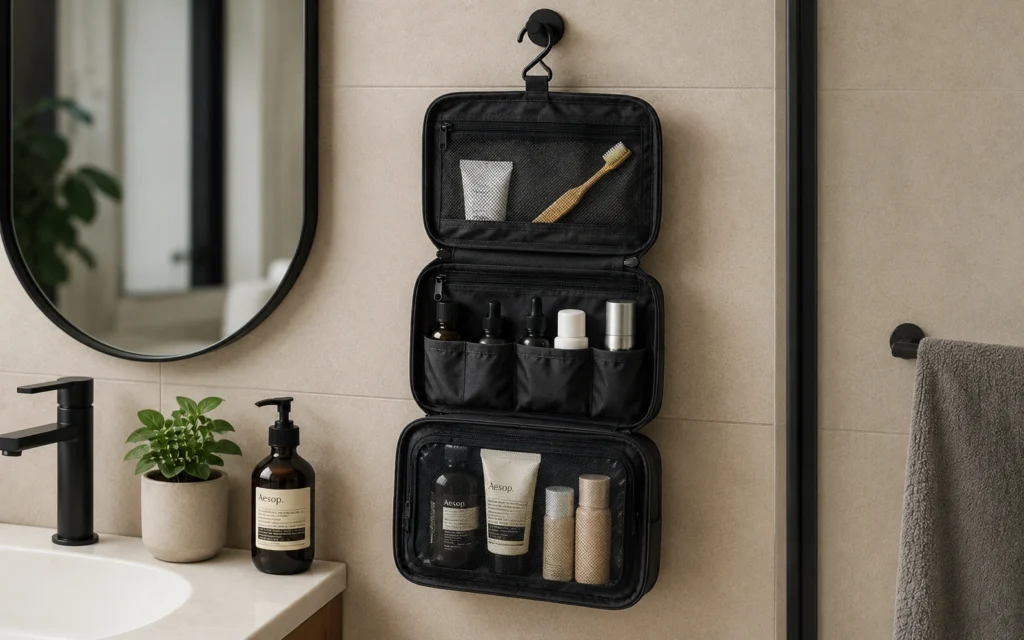
The toiletry bag is where most people make their worst organizational mistake. They buy something that looks good in a product photo but fails in a real bathroom.
Waterproof lining: This isn’t optional. Shampoo leaks. Toothpaste explodes at altitude. A waterproof TPU or PVC lining contains disasters. Unlined fabric bags absorb liquids and develop odors that don’t wash out.
Hanging hook: Test the hook before you travel. It should support 3-4 pounds without bending. Many budget bags use flimsy plastic hooks that snap under the weight of full-size bottles.
Size: For carry-on compliance, stay under 10 x 7 x 4 inches (25 x 18 x 10 cm). This fits the TSA quart-bag requirement while providing actual organization space. Larger bags tempt you to overpack liquids.
Compartments: You need at least three: one for wet items (razor, toothbrush), one for bottles, one for dry items (contacts, medications). Single-compartment bags become chaos by day three.
Material behavior: Nylon and polyester exteriors wipe clean easily. Canvas and cotton absorb water and take forever to dry. If you’re traveling somewhere humid, synthetic exteriors are non-negotiable.
Price tiers:
- Budget ($15-$25): Basic waterproof lining, plastic hook, single compartment. Works for weekend trips.
- Mid-range ($30-$50): TPU lining, metal hook, 3-4 compartments, hanging capability. The sweet spot for most travelers.
- Premium ($55-$80): Premium materials, leather accents, multiple hanging points, lifetime warranty. Worth it if you travel monthly.
Tech Organizers with Padded Compartments
Your charging cables, adapters, and portable battery deserve protection. Throwing them in a pocket guarantees tangles and potential damage.
Padding: Look for 3-5mm foam padding. This protects against drops and prevents cables from being crushed by heavier items.
Compartments: You need elastic loops for cables, a zippered pocket for adapters, and a larger pocket for your portable battery. Single-pocket organizers defeat the purpose.
Size: 9 x 6 x 2 inches (23 x 15 x 5 cm) fits most needs. Larger organizers tempt you to pack unnecessary gadgets.
Material: Water-resistant exterior is essential. You’ll set this down on wet surfaces. Nylon with DWR (durable water repellent) coating works well.
Cable management: Elastic loops should be tight enough to hold cables but loose enough to remove them without fighting. Test this in the store if possible.
Price tiers:
- Budget ($10-$20): Basic padding, single compartment, no water resistance. Better than nothing.
- Mid-range ($25-$40): Multiple compartments, water-resistant, quality zippers. Recommended for frequent travelers.
- Premium ($45-$70): Premium materials, RFID-blocking pockets, modular design. Worth it for digital nomads carrying $2,000+ in electronics.
Shoe Bags That Contain Dirt
Shoe bags serve one purpose: keeping dirty soles away from clean clothes. That’s it. Don’t overthink this.
Material: Breathable fabric is essential. Mesh panels or cotton blends allow air circulation. Sealed plastic bags trap moisture and create odor.
Size: One bag per pair of shoes. Don’t try to fit two pairs in one bag—it tears the seams.
Closure: Drawstring closures work better than zippers for shoes. They accommodate odd shapes and don’t catch on shoe hardware.
When to skip: If you’re only packing sneakers or casual shoes, you might skip shoe bags. If you’re packing dress shoes, hiking boots, or anything with aggressive tread, use bags.
Price tiers:
- Budget ($8-$15): Basic nylon, drawstring closure. Functional.
- Mid-range ($18-$30): Reinforced seams, breathable panels, brand-name quality. Last longer.
- Premium ($35-$50): Luxury materials, leather accents. Unnecessary for most travelers.
Laundry Separators
Laundry bags solve a problem you don’t anticipate on day one but desperately need by day five: separating dirty clothes from clean ones.
Material: Lightweight mesh or nylon. You’re not protecting anything—just containing.
Size: Large enough for 3-4 days of clothes. Compression capability is a bonus.
Alternative: Some travelers use a dedicated packing cube for dirty laundry instead of a separate bag. This works if you have cube capacity to spare.
When to skip: Trips under five days. You can fit everything in one load when you get home.
Price tiers:
- Budget ($8-$12): Basic mesh bag. Functional.
- Mid-range ($15-$25): Compression capability, reinforced seams. Recommended.
- Premium ($30+): Unnecessary. A laundry bag is a laundry bag.
What Separates Good Organizers from Dead Weight
The difference between organizers you’ll use for years and organizers that end up in a donation bin comes down to four factors.
Zipper quality: YKK zippers cost manufacturers more, which is why budget brands avoid them. But they’re the difference between an organizer that lasts three trips and one that lasts thirty. Check for YKK branding on the zipper pull or slider. If it’s not there, assume it’s a generic zipper with a 50% failure rate within the first year.
Fabric weight: Denier matters. Below 150D tears too easily. Above 400D adds weight without proportional durability gains. The 200-300D range is the sweet spot for most travel organizers.
Stress point reinforcement: Look for bar tacking (reinforced stitching) at stress points: zipper ends, handle attachments, hanging hooks. Cheap organizers skip this to save manufacturing time. The result: handles rip off after six months.
Weight-to-capacity ratio: Good organizers add minimal weight for maximum organization. A compression cube set shouldn’t exceed 16 oz total. A toiletry bag shouldn’t exceed 12 oz empty. If it does, you’re paying a weight penalty that compounds over long trips.
I made the mistake of buying a “luxury” toiletry bag that weighed 1.5 pounds empty. By the end of a two-week trip, I was actively avoiding using it because it made my bag feel heavier. Now I check weight specifications before buying anything. If the manufacturer doesn’t list weight, that’s a red flag.
The Three-Tier Price Reality
Travel organizers follow a predictable pricing pattern. Understanding this helps you allocate budget where it matters.
Budget Tier ($10-$30 per item):
- Materials: 100-150D polyester, generic zippers
- Lifespan: 10-15 trips with careful use
- Best for: First-time travelers testing what works, occasional travelers (1-2 trips per year)
- Trade-off: You’ll replace these within 18 months if you travel frequently
- Recommendation: Buy budget for items you’re unsure you’ll use regularly (shoe bags, laundry bags). Buy mid-range for daily-use items (packing cubes, toiletry bags).
Mid-Range Tier ($30-$60 per item):
- Materials: 200-300D ripstop nylon, YKK zippers, reinforced stress points
- Lifespan: 30-50 trips with proper care
- Best for: Regular travelers (3-6 trips per year), anyone who values reliability
- Trade-off: Higher upfront cost, but cost-per-trip drops below budget tier after trip #5
- Recommendation: This is the sweet spot for most travelers. The quality jump from budget to mid-range is massive. The jump from mid-range to premium is marginal.
Premium Tier ($60-$120 per item):
- Materials: 400D+ fabric, premium YKK zippers, leather accents, lifetime warranties
- Lifespan: 100+ trips, often backed by lifetime warranties
- Best for: Frequent travelers (monthly trips), digital nomads, anyone who travels for work
- Trade-off: Diminishing returns unless you’re traveling constantly
- Recommendation: Only buy premium if you travel monthly or if a specific feature (like a lifetime warranty) matters to you. For most people, mid-range provides 90% of the benefit at 50% of the cost.
The one exception: Compression packing cubes. If you’re carry-on-only, buy mid-range or premium compression cubes. The space savings compound over every trip, and cheap compression zippers fail catastrophically.
Five Mistakes That Waste Bag Space
Mistake 1: Buying organizers before measuring your bag. Organizers should fit your bag with 10-15% space to spare. If your cubes fill your bag to 100% capacity, you have no room for souvenirs or the inevitable extra layer. Measure your bag’s interior dimensions before buying organizers.
Mistake 2: Over-organizing. You don’t need a separate pouch for socks, underwear, chargers, cables, adapters, jewelry, medications, and toiletries. That’s eight organizers adding 2-3 pounds of dead weight. Start with five: cubes for clothes, one toiletry bag, one tech organizer, one shoe bag, one laundry bag. Add only if you identify a specific problem.
Mistake 3: Ignoring weight specifications. Manufacturers list organizer weights for a reason. A “lightweight” toiletry bag that weighs 14 oz isn’t lightweight—it’s average. Compare weights across brands. When everything else is equal, choose the lighter option. Over a two-week trip, those ounces add up.
Mistake 4: Buying matching sets when you need specific sizes. Organizer sets look cohesive but often include sizes you won’t use. You might need three medium cubes and one small, not the two-large-two-medium-one-small configuration the set provides. Buy individual cubes in the sizes that match your packing style.
Mistake 5: Skipping the test pack. Never use new organizers on an important trip without testing them first. Pack them at home. Live with them for a weekend. You’ll discover that your “perfect” toiletry bag doesn’t fit your full-size shampoo or that your tech organizer is too bulky for your day bag. Better to learn this at home than in a hotel room at 6 AM before a flight.
Specific Recommendations by Budget
Under $100 Total (Starter Kit):
- Amazon Basics Packing Cubes (4-piece set): $22
- Gonex Toiletry Bag: $18
- Bago Tech Organizer: $13
- Simple Ecology Shoe Bags (2-pack): $12
- Gonex Laundry Bag: $10 Total: $75
This setup uses budget-tier items but focuses spending on what matters. The Amazon Basics cubes have decent zippers for the price. The Gonex toiletry bag has a waterproof lining. You’ll replace these within 18 months if you travel frequently, but they’re perfect for testing what works.
$150-$200 Total (Sweet Spot):
- Eagle Creek Pack-It Compression Cubes (3-piece): $45
- Peak Design Wash Pouch: $40
- Bellroy Tech Kit: $49
- Reef Knots Shoe Bags (2-pack): $24
- Eagle Creek Clean Dirty Cube: $28 Total: $186
This is the recommended setup for most travelers. Every item uses quality materials and YKK zippers. You’ll use this setup for 30+ trips before needing replacements. The cost-per-trip drops below $6 after trip #30.
$300+ Total (Premium Setup):
- Tortuga Compression Cubes (4-piece): $85
- Aer Toiletry Bag 2: $65
- Peak Design Tech Pouch: $60
- Goyard Shoe Bags (if you must): $150+ (or skip and use Reef Knots)
- Peak Design Packing Cube (Laundry): $45 Total: $350+ (without luxury shoe bags)
Buy this only if you travel monthly or if you value lifetime warranties. The quality difference between this and the $186 setup is marginal. The price difference is not.
Frequently Asked Questions About Travel Organizers
Are packing cubes worth the investment?
Yes, if you choose compression-style cubes with YKK zippers and lightweight ripstop nylon. They add 15-20% more capacity to the same bag and keep clothes separated by category. Budget cubes under $15 often fail at the zipper after 3-4 trips. For carry-on travelers, mid-range compression cubes ($30-$50) pay for themselves in avoided baggage fees within two trips.
What size toiletry bag fits carry-on requirements?
For carry-on liquids compliance, choose a toiletry bag no larger than 10 x 7 x 4 inches (25 x 18 x 10 cm). This fits the TSA 3-1-1 quart bag requirement while providing room for organization. Hanging hooks are essential for small bathrooms. Anything larger tempts you to overpack liquids and risks TSA confiscation.
How many packing cubes do I actually need?
For a week-long trip: 2 medium cubes for clothes, 1 small for underwear/socks, 1 toiletry bag, 1 tech organizer. That’s five total. More than this adds weight without proportional benefit. Start with this baseline and adjust based on your actual packing patterns. You can always add cubes later, but you can’t remove weight you’ve already packed.
Do compression cubes damage clothes?
Compression cubes don’t damage clothes if you pack them correctly. The issue isn’t compression itself—it’s overstuffing. Leave 20% air space before compressing. Wrinkles come from cramming, not from the compression zipper. Natural fibers wrinkle more; synthetics and blends handle compression better. If you pack mostly cotton, use standard cubes instead of compression.
What’s the difference between $20 and $80 packing cubes?
The $20 cubes use standard zippers and 100-150D polyester. The $80 cubes use YKK zippers, 200-400D ripstop nylon, and reinforced stress points. After 10 trips, the cheap cubes show zipper wear and seam stress. The expensive ones look nearly new. If you travel 3+ times per year, buy once. If you travel once per year, budget cubes suffice.
Continue Exploring
- The complete travel gear guide: Once you’ve sorted your organizers, you need to know what else earns space in your bag. This guide covers the full ecosystem of travel gear, from luggage to tech, with the same honest specificity.
- Best carry-on luggage for every budget: Your organizers are only as good as the bag that holds them. This guide matches organizer systems to specific carry-on bags, ensuring everything fits together without wasted space.