A realistic travel budget guide requires $1,500 to $3,500 per person for a two-week mid-range trip, depending entirely on your destination’s economic tier. This figure covers mid-tier accommodation, dining out, and regional transport but excludes long-haul international flights.
By breaking costs into “Daily Burn Rates” and “Fixed Logistics,” you can eliminate the financial surprises that usually derail a first-timer’s trip. This guide provides the exact 2025–2026 pricing data you need to build a bulletproof plan.
Quick Overview: The Tier-Based Budgeting Framework
Building a travel budget guide starts with categorizing your destination into one of three pricing tiers to set realistic expectations.
- Tier 1 (Value): Southeast Asia, parts of Central/South America, and Eastern Europe. Budget $45–$75 per day (2025–2026 rates — verify before travel) for a comfortable solo experience.
- Tier 2 (Mid-Range): Southern Europe (Spain, Portugal, Italy), Japan, and the American Southwest. Budget $140–$210 per day (2025–2026 rates — verify before travel).
- Tier 3 (Premium): Scandinavia, Switzerland, NYC, London, and Iceland. Budget $280–$450+ per day (2025–2026 rates — verify before travel).
When I first landed in Bangkok, I expected “dirt cheap” prices based on old blog posts; however, I quickly learned that while a street side Pad Thai is still $2, a rooftop cocktail in Sukhumvit will easily run you $18. Trusting outdated “budget” advice is the fastest way to run out of cash by day four.
Top Things to Do: Planning for Activity Costs
Activities usually account for 10% to 20% of your total trip budget planning. For 2025–2026, major global attractions like the Louvre in Paris or the Colosseum in Rome now cost $22–$35 for standard entry (Verify before travel). If you are heading to a Tier 3 destination like the Swiss Alps, a single round-trip cable car ride to a peak like Mt. Titlis will cost approximately $105–$115 per person (2025–2026 rates).
To save money, look for “Free Museum Days” (often the first Sunday of the month in Europe) or walking tours. Note that while “free” walking tours exist, the standard etiquette is a tip of $10–$15 per person. Don’t be the traveler who walks away at the end without paying; it makes you look foolish and harms the local guide’s livelihood.
Where to Stay: Lodging Tiers and Hidden Fees
Lodging is your largest fixed expense, and the price you see on booking sites is rarely the final price you pay. In 2025–2026, mid-range hotels in Tier 2 cities average $120–$180 per night, while “Social Hostels” with private rooms range from $70–$100 (Verify before travel).
Beware of “Resort Fees” in US cities like Las Vegas or Miami, which can add $40–$60 per night to a bill that appeared cheap on Expedia. Similarly, many European cities now levy a “Tourist Tax” of €3–€7 per person, per night, usually payable only in cash at check-out. If you are a first-timer, always check if your booking includes these fees so you aren’t scrambling for Euros at 6:00 AM on your departure day.
Getting Around: Transport Costs and Scams
Public transportation is consistently the most efficient way to protect your travel cost breakdown. In Tokyo, a Pasmo or Suica card will cost you roughly $8–$12 per day for heavy usage, whereas a single taxi ride from Narita Airport to Central Tokyo can cost $180–$220 (2025–2026 rates — verify before travel).
Always use official rideshare apps like Uber, Grab (Southeast Asia), or Bolt (Europe) to avoid the “broken meter” scam common in tourist hubs. In Cairo, for instance, a taxi from the airport to downtown should cost roughly $10–$15 on Uber, but a street-hailed cab may demand $40. Having a local SIM card with data is not a luxury; it is a financial defense tool that pays for itself on day one.
Budget Guide: Daily Spending by Region (2025–2026)
Regional price parity dictates your spending power more than your actual savings account does. Use the following breakdown for your travel budget guide calculations.
| Region | Daily Low (Hostel/Street Food) | Daily Mid (Hotel/Sit-down Meals) |
|---|---|---|
| Southeast Asia | $35–$50 | $80–$130 |
| Western Europe | $90–$120 | $190–$260 |
| USA / Canada | $110–$150 | $250–$380 |
| South America | $45–$65 | $100–$160 |
Sample Itinerary: A 10-Day Realistic Cost Breakdown
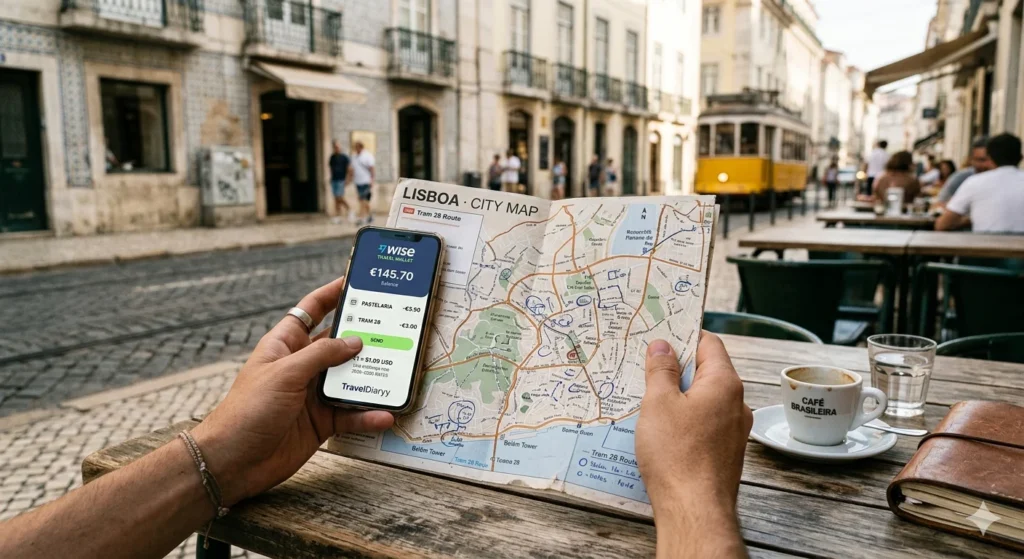
A 10-day trip to Portugal (Tier 2) for a mid-range traveler in 2025–2026 will cost approximately $2,150 excluding international airfare.
- Lodging (Lisbon/Porto): $1,400 ($140/night for boutique guesthouses).
- Food & Drink: $550 ($55/day for coffee, a light lunch, and a nice dinner with wine).
- Local Transport: $120 (Trains between cities and local metro/trams).
- Activities: $80 (Sintra palaces, Fado shows, and museum entries).
If you try to do this same itinerary in London, expect the lodging and food costs to double. The alternative for those on a tighter budget is to pivot to a city like Budapest, where your $55/day food budget would actually allow for high-end dining and cocktails.
Pro Tips: Financial Logistics and Bank Fees
Eliminating banking fees is the easiest way to “earn” an extra $100–$200 during your trip.
- The Wise Card: Essential for first-timers. It allows you to hold 40+ currencies and spend at the real mid-market exchange rate. If you lose it, the 24-hour virtual card in the app keeps you moving.
- Charles Schwab Debit: The gold standard for US travelers because they refund 100% of ATM fees globally.
- Dynamic Currency Conversion (DCC): When a card machine or ATM asks if you want to be charged in “Your Home Currency” or “Local Currency,” always choose Local Currency. If you choose your home currency, the local bank applies a predatory exchange rate (usually 5–10% markup).
For flights, remember that the “sweet spot” for transatlantic routes is 3–5 months out. Book a flight to London in June during the month of April, and you will pay a 40% premium over the February price. (2025–2026 rates — verify before travel.)
Frequently Asked Questions About Travel Budgets
How much should I save for a week-long trip?
For a mid-range traveler in 2025–2026, budget $1,200–$1,800 excluding international flights. This covers $150–$250 per day for comfortable lodging, three restaurant meals, and local transit. Adjust based on destination tier; Southeast Asia will be roughly 50% cheaper, while Western Europe or Japan will sit at the higher end of this bracket.
Are travel credit cards worth the annual fee?
They are profitable if you spend enough to earn a sign-up bonus and use the perks like lounge access or waived foreign transaction fees. If you travel once a year, a no-fee card like the Capital One VentureOne is safer. For frequent flyers, a $95–$550 fee card often pays for itself through travel credits and insurance.
Is it cheaper to exchange cash at the airport?
No, airport kiosks typically offer the worst exchange rates, often 10–15% below the mid-market rate. The most cost-effective method is using a local ATM with a debit card that waives international fees, like Charles Schwab. Always choose to be charged in the local currency to avoid Dynamic Currency Conversion (DCC) markups.
Continue Exploring:
- How to plan a trip: A masterclass in logistics that takes you from a blank calendar to a fully booked itinerary.
- Digital Nomad Tech: The essential gear list for managing your finances and staying connected while traveling long-term.