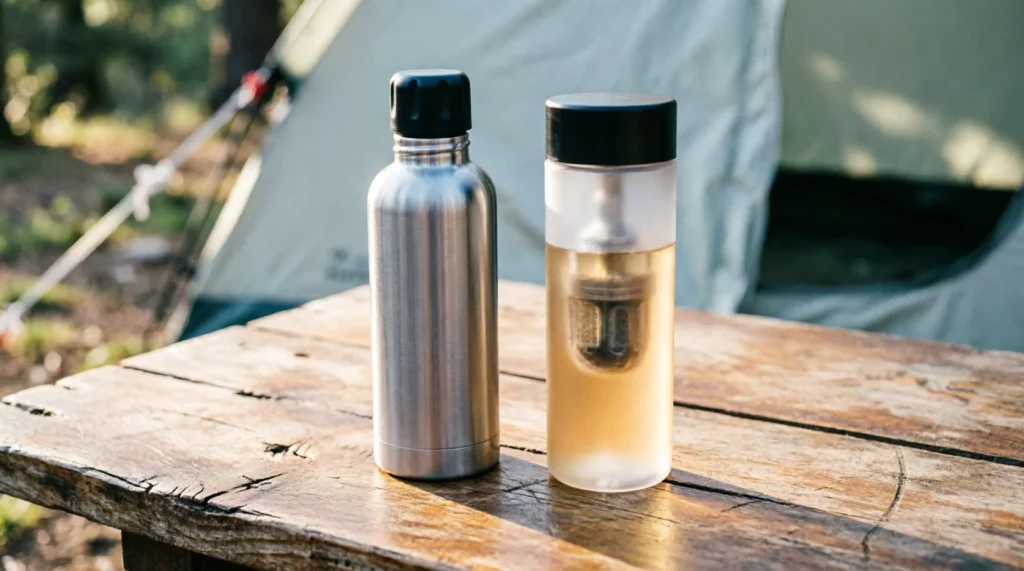
If you are visiting regions where tap water is not potable, functionality—specifically filtration—takes precedence over temperature control. The [GRAYL GeoPress ($99.95, 2026 rates — verify before travel)] is the best water bottle for travel if your priority is survival and safety.
If you are exploring developed cities with reliable tap infrastructure, the [YETI Rambler 26oz ($40.00, 2026 rates — verify before travel)] offers superior insulation, ensuring your water remains cold in tropical heat.
Overview
Most travelers default to the same heavy, insulated bottle they use at the gym. This is a mistake. Traveling with gear requires a cold assessment of your environment: do you need to treat questionable water, or do you need to keep a beverage cool during a twelve-hour train ride? The answer dictates your choice. This post helps you balance the trade-offs between essential filtration and thermal performance.
Key Differences
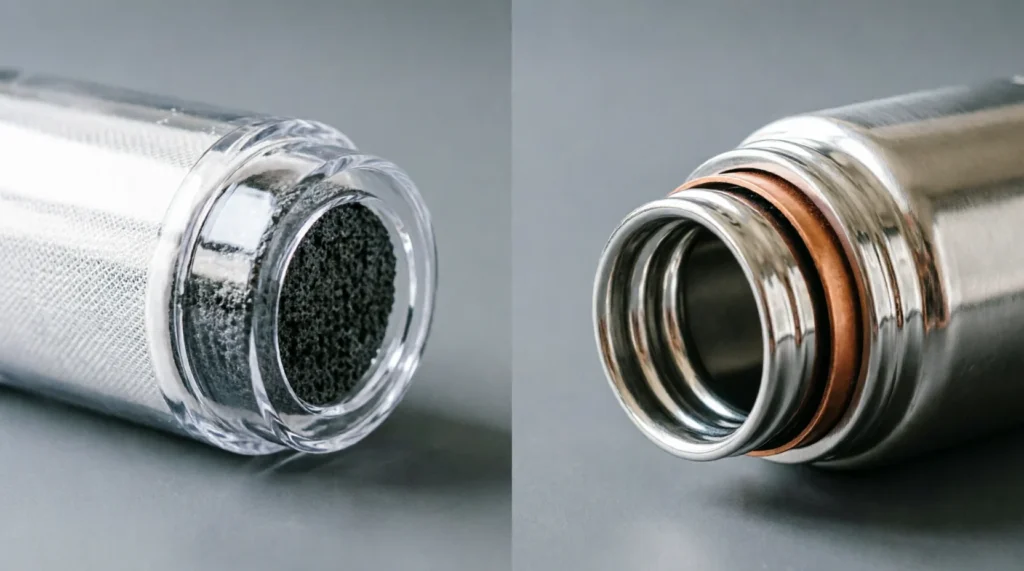
Water bottle technology has diverged into two distinct paths: passive thermal containers and active purification systems. Vacuum-insulated bottles use double-wall stainless steel to resist ambient heat transfer, keeping ice frozen for hours. Filtered bottles prioritize internal mechanics—membrane microfilters and carbon stages—designed to strip pathogens and aesthetics from water sources. You generally cannot have both without significant bulk. [IL → /travel-gear-pillar/ | Read our full Travel Gear Pillar for more packing strategies.]
For the Remote Explorer
If you are venturing into environments where infrastructure is lacking—such as rural Southeast Asia or mountain treks—the [GRAYL GeoPress ($99.95)] is the industry standard. It earns its place by purifying water in seconds, removing viruses and protozoa that standard filters miss. The trade-off is its lack of insulation and weight. If you require cold water in these environments, buy a cheap, non-insulated bottle to use as a secondary container; the GRAYL should only be used to treat the water before transferring it.
For the Urban Commuter
If your itinerary is confined to modern cities with reliable municipal water, insulation is your primary value. The [YETI Rambler 26oz ($40.00)] excels here due to its robust “Over-the-Nose” cap design, which provides a triple-seal that prevents leaks in your carry-on. Unlike cheaper alternatives, its vacuum-sealed lid maintains thermal integrity better than straw-top models. However, it is heavy and offers zero water safety benefits. If you need to fly through multiple time zones, this is the bottle that won’t leak on your laptop during turbulence.
Cost Comparison
The financial reality of these systems is stark. A high-quality insulated bottle is a one-time purchase, often lasting years. A filtration bottle requires an ongoing investment in filter replacements. The LifeStraw Go ($45.00, 2026 rates — verify before travel) is the budget-friendly filter alternative, but its filter life is finite. (Verify at Lifestraw official site — rules change without notice).
Final Recommendation
Choose based on your destination’s water safety. If you are drinking from public taps, choose the YETI Rambler for its durability. If you are venturing outside those bounds, the GRAYL GeoPress is the only logical choice.
Frequently Asked Questions About Best Water Bottle for Travel
Can I take a filtered water bottle through airport security?
Yes, but it must be empty. TSA regulations prohibit liquids over 100ml. Once you clear security, you can fill your filtered bottle from any public tap, and the internal system will ensure it is safe to drink. Schedules change — confirm before travel.
How often should I replace my travel water filter?
Most travel-grade filters, like those in the GRAYL or LifeStraw, are rated for a specific volume of water, usually between 150 and 300 liters. If you notice a significant decrease in flow rate, the filter is likely clogged with sediment and requires replacement to remain effective.
Does insulation affect filter performance?
No, insulation and filtration technologies operate independently within the bottle architecture. However, adding thick insulation layers to a bottle significantly increases its total weight and bulk, making it cumbersome for lightweight, carry-on-only travel.
CONTINUE EXPLORING:
- Travel Gear Pillar: For a complete look at one-bag travel essentials, review our comprehensive gear strategy.
- Photography & Creators:If you are documenting your trip, see our breakdown of camera and lens strategy for the serious amateur.