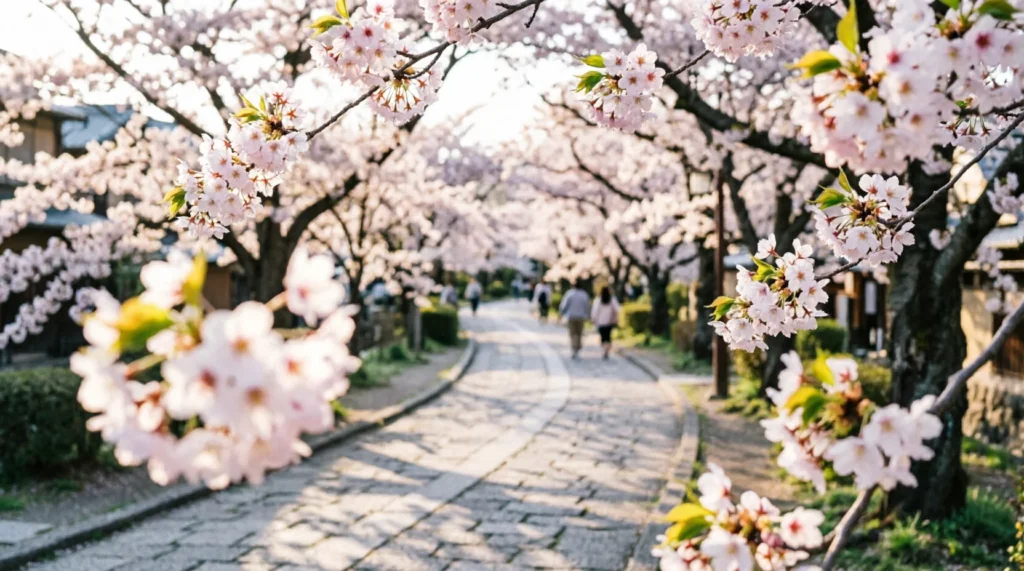
At 6:45am on April 3rd, I stood on the Philosopher’s Path in Kyoto with exactly eleven other people. By 9am, there were hundreds. By noon, you couldn’t move without bumping into a selfie stick. This is April in Japan: the country’s most beautiful season colliding with its most crowded.
Japan in April delivers peak cherry blossoms, perfect weather, and a tourism surge that transforms popular destinations into obstacle courses. The question isn’t whether the blossoms are worth seeing—they are. The question is whether you’re prepared for what comes with them.
This post covers: exact crowd patterns by location, 2025–2026 pricing for flights and accommodation, strategies for experiencing blossoms without the masses, and whether April is the right month for your first Japan trip. You’ll leave knowing exactly what to expect and how to plan around the chaos.
Weather Breakdown
April weather in Japan is temperate but unpredictable. Tokyo averages 10–18°C (50–64°F). Kyoto runs slightly cooler at 8–19°C (46–66°F). Hokkaido, up north, stays cold: 2–11°C (36–52°F).
Rain is a factor. April sees 10–12 rainy days in Tokyo, 11–13 in Kyoto. These aren’t monsoon downpours—usually light showers that pass quickly. But they will happen. Pack a compact umbrella; don’t rely on buying one at a convenience store when you’re already soaked.
The cherry blossom forecast matters more than the weather forecast. The Japan Meteorological Corporation releases sakura forecasts starting in January, updating weekly through March. In 2025, Tokyo peaked around March 27. Kyoto peaked April 2. The bloom moves north at roughly 20km per day. If you’re flexible, follow the forecast. If you’ve booked fixed dates, accept that you might catch early bloom or falling petals instead of full bloom. Both are beautiful. Neither is guaranteed.
Crowd Levels
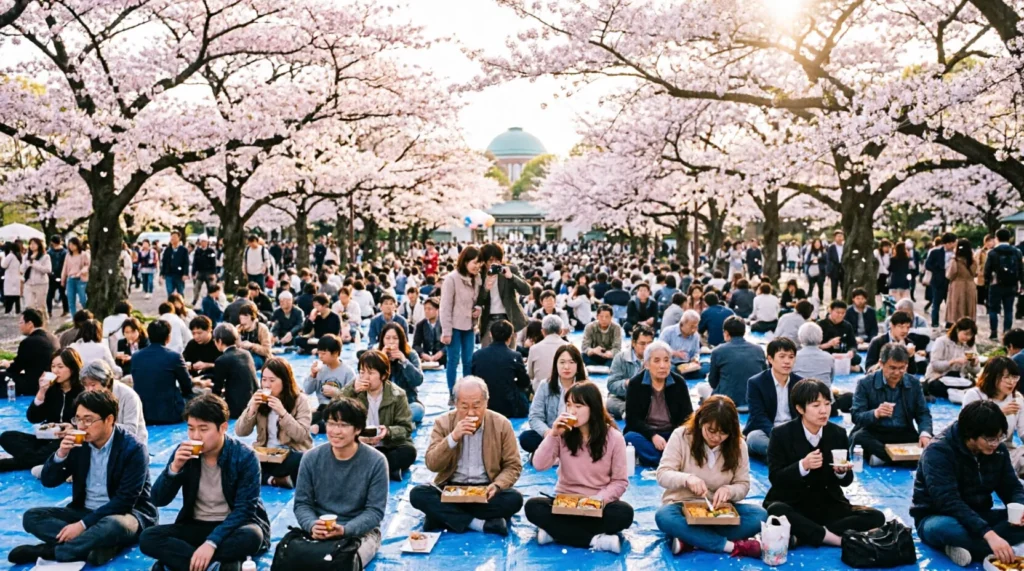
April is peak season. Not “busy.” Peak. International arrivals hit 3.2 million in April 2025, up 15% from 2024. Domestic travelers add another 8–10 million moving through major cities during Golden Week prep (late April holidays).
Here’s what that looks like on the ground:
Tokyo: Ueno Park draws 10 million visitors during sakura season. Shinjuku Gyoen limits daily entries to 10,000 and still has 90-minute entry lines by 10am. Chidorigafuchi’s boat rental queue stretches 2 hours at peak.
Kyoto: The Arashiyama Bamboo Grove at 10am is a shoulder-to-shoulder experience. Kinkaku-ji (Golden Pavilion) has timed entry and still packs 5,000+ daily visitors. Fushimi Inari’s torii gates are walkable before 7am and after 6pm. Between those hours, you’re navigating crowds.
The honest negative: Popular temples and parks during midday in April are not peaceful cultural experiences. They’re tourist attractions with all the friction that implies.
The alternative: Visit major sites before 7am or after 6pm. Seek lesser-known temples: Kyoto’s Jojakko-ji in Saga-Arashiyama, Tokyo’s Yanaka Cemetery, Kamakura’s Engaku-ji. These see 10–20% of the crowds with 80% of the beauty.
Best Destinations
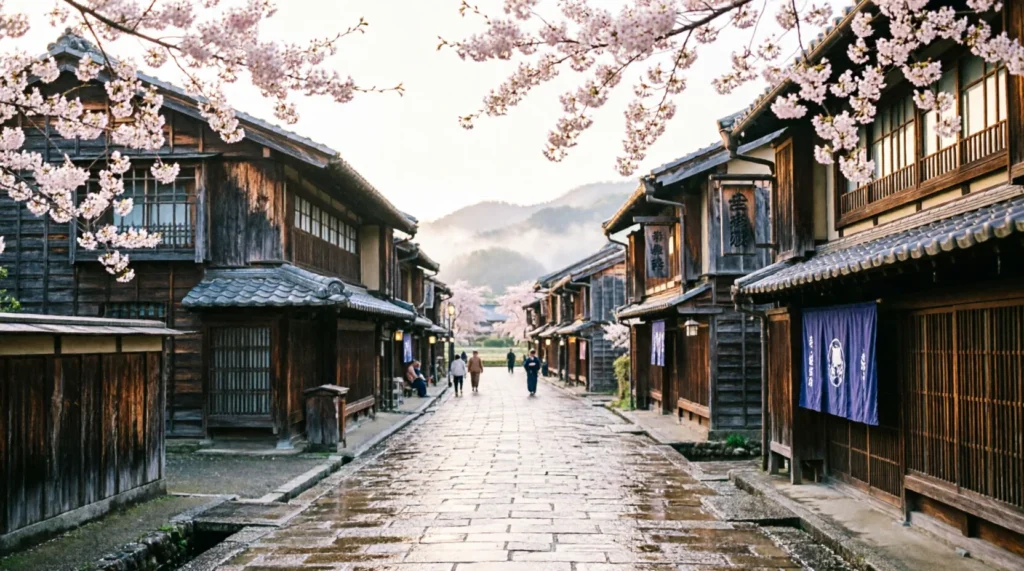
Tokyo offers the most accessible cherry blossoms. Ueno Park is the classic—massive, crowded, festive. Shinjuku Gyoen requires advance reservation but rewards with three different blossom varieties blooming at different times. Chidorigafuchi lets you row under blossoms if you’re willing to queue.
Kyoto is the postcard. Philosopher’s Path, Maruyama Park, Kiyomizu-ji Temple. All spectacular. All packed. The city’s 1,600 temples mean alternatives exist: Nanzen-ji, Eikando, Kodai-ji. Go early. Stay late.
Beyond the Golden Route:
Takayama in the Japanese Alps peaks 1–2 weeks later than Kyoto (mid-to-late April). The old town’s narrow streets framed by blossoms draw fewer crowds. The morning markets along the Miyagawa River are genuinely local, not performative.
Kanazawa on the Sea of Japan coast offers Kenrokuen Garden—consistently ranked Japan’s top three gardens—with later bloom and slightly thinner crowds than Kyoto.
Hirosaki in Aomori Prefecture (northern Honshu) peaks late April to early May. The castle park has 2,600 trees and draws domestic tourists but far fewer international visitors. If your dates are flexible and you want blossoms without the Instagram hordes, go north.
Costs
April is expensive. Not “Japan is expensive” expensive. “April specifically costs 20–40% more than other months” expensive.
Flights: Round-trip from US West Coast: $900–$1,400 in April vs. $700–$1,000 in February. Europe to Tokyo: €800–€1,300 vs. €600–€900 off-season. Book 6–9 months ahead for April travel. (2025–2026 rates — verify before travel)
Accommodation: Tokyo business hotels: ¥12,000–¥18,000/night ($80–$120) in April vs. ¥8,000–¥12,000 off-season. Kyoto ryokan: ¥25,000–¥45,000/night ($170–$300) with 3-night minimums common during peak bloom. Book 8–12 months ahead or expect limited availability.
Daily budget:
- Budget traveler: ¥8,000–¥12,000/day ($55–$80) — hostels, convenience store meals, local transport
- Mid-range: ¥15,000–¥25,000/day ($100–$170) — business hotels, mix of restaurants and street food, JR Pass or regional passes
- Comfortable: ¥30,000–¥50,000/day ($200–$340) — 3–4 star hotels, restaurant meals, taxis when needed
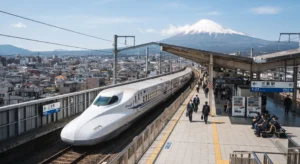
JR Pass math: The 14-day JR Pass costs ¥50,000 (2026 price increase). A Tokyo-Kyoto-Tokyo round trip on the Nozomi shinkansen costs ~¥28,000. You’d need an additional ¥22,000 in long-distance travel to break even. For a Tokyo-Kyoto-Osaka-Hiroshima-Tokyo loop, the pass pays off. For Tokyo-Kyoto-Tokyo only, it doesn’t. Calculate your specific itinerary. (2025–2026 rates — verify before travel)
Events & Festivals
Cherry blossom festivals (hanami) dominate April. These aren’t ticketed events—they’re cultural practices. People spread tarps under blossoms, share food and drinks, and stay late into the evening. You’re welcome to join, but understand the etiquette: don’t shake trees for photos, don’t climb trees, clean up your trash, keep noise reasonable after 8pm in residential areas.
Specific April events:
Takayama Spring Festival (April 14–15): One of Japan’s three most beautiful festivals. Ornate floats parade through the old town. Hotels book out a year ahead.
Sanja Matsuri (mid-May, but prep starts in April): Tokyo’s Asakusa Shrine festival. Massive, chaotic, incredible.
Golden Week (late April–early May): April 29 is Showa Day, the start of Golden Week. This is when domestic travel explodes. If you can avoid traveling April 29–May 5, do it. Trains and hotels are fully booked months ahead.
What to Pack
Clothing: Layers are essential. Mornings are cool (10°C/50°F), afternoons warm up (18–20°C/64–68°F). Pack:
- Light jacket or cardigan
- Long pants or modest skirts (temple visits require covered knees)
- Comfortable walking shoes (you’ll walk 15,000–25,000 steps daily)
- One nicer outfit for upscale restaurants (optional but appreciated)
Weather gear:
- Compact umbrella (or buy at 7-Eleven for ¥500)
- Light rain jacket
- Sunscreen (yes, even in April)
Cultural essentials:
- Small hand towel (many public restrooms don’t have paper towels)
- Cash (many small restaurants and temples don’t accept cards)
- Portable phone charger (you’ll use your phone constantly for navigation and translation)
- Small trash bag (public trash cans are rare; carry your trash)
What not to pack:
- Formal business attire (unless you’re here for work)
- Heavy winter coat (too warm for April)
- Expensive jewelry (unnecessary and draws attention)
Sample Itinerary
7 Days: Tokyo-Kyoto-Osaka (Peak Blossom Route)
Days 1–3: Tokyo
- Day 1: Arrive, check in, evening walk in Shinjuku Gyoen (closes 4:30pm, last entry 4pm—go early)
- Day 2: Ueno Park (arrive 7am), Yanaka Cemetery (quieter alternative), Asakusa evening
- Day 3: Chidorigafuchi morning, teamLab Planets afternoon, Shibuya evening
Days 4–6: Kyoto
- Day 4: Shinkansen to Kyoto (2.5 hours, ¥14,000), check in, evening Gion walk
- Day 5: Fushimi Inari (arrive 6:30am), Kiyomizu-ji (8am opening), Philosopher’s Path late afternoon
- Day 6: Arashiyama Bamboo Grove (7am), Tenryu-ji Temple, Jojakko-ji (quieter), evening Pontocho Alley
Day 7: Osaka
- Day 7: Day trip to Osaka (30 min from Kyoto), Dotonbori food tour, return to Kyoto or depart from Osaka (KIX airport)
Alternative: 10 Days with Takayama/Kanazawa Add 3 days: Kyoto → Kanazawa (2 hours by train) → Takayama (2.5 hours by bus) → Tokyo (4 hours by train). This route sees later bloom and thinner crowds.
Frequently Asked Questions About Japan in April
When is the best time to see cherry blossoms in Japan?
Cherry blossoms typically peak in late March to early April in Tokyo and Kyoto, moving north through April. The Japan Meteorological Corporation releases forecasts in January. Book 6–9 months ahead for April travel.
Is the JR Pass worth it for a 2-week Japan trip in April?
The 14-day JR Pass costs ¥50,000 (2026). A Tokyo-Kyoto-Tokyo round trip costs ~¥28,000. You’d need additional long-distance travel to break even. Calculate your specific itinerary before purchasing.
How crowded is Japan during cherry blossom season?
April is peak tourist season. Popular spots like Kyoto’s Philosopher’s Path and Tokyo’s Ueno Park draw massive crowds. Visit major sites before 7am or after 6pm. Consider lesser-known temples and parks for quieter viewing.
What should I pack for Japan in April?
Pack layers: temperatures range 10–20°C (50–68°F). Bring a light jacket, comfortable walking shoes, and a compact umbrella. April sees occasional rain showers. Modest clothing for temple visits is essential.
How much does a trip to Japan in April cost?
Budget travelers: ¥8,000–12,000/day ($55–80). Mid-range: ¥15,000–25,000/day ($100–170). April is peak season, so accommodation costs 20–40% higher than off-season. Book early for best rates. (2025–2026 rates — verify before travel)
Continue Exploring
- Japan travel guide — Complete planning resource covering visas, transportation, cultural etiquette, and regional breakdowns for first-time and return visitors.
- Kyoto travel guide — Deep dive into Japan’s cultural capital with neighborhood-by-neighborhood breakdowns, temple strategies, and local dining recommendations beyond the tourist trail.