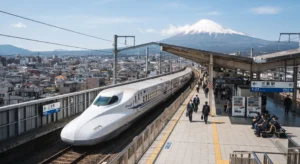
The yen hit a 34-year low against the dollar in 2024. Japan, which many Western travelers had written off as expensive, is now among the better-value destinations in East Asia for anyone arriving with dollars, euros, or pounds. A bowl of ramen at a standing counter in Shinjuku still costs ¥750. A night in a clean, well-located business hotel in Osaka still runs ¥9,000–¥12,000. The math has shifted in the traveler’s favor — but only if you plan with real numbers rather than outdated assumptions.
This guide breaks Japan trip costs into three honest tiers: budget, mid-range, and comfort. Every figure comes from 2025–2026 ground reality. By the end, you will know exactly what a week or two in Japan costs — and where the money actually goes.
Average Daily Costs in Japan
Japan does not have one price. It has three, depending on how you travel. The tier you choose determines almost everything — not just your total spend, but which Japan you experience.
Budget Tier: ¥7,000–¥10,000 per day (~$47–$67 USD)
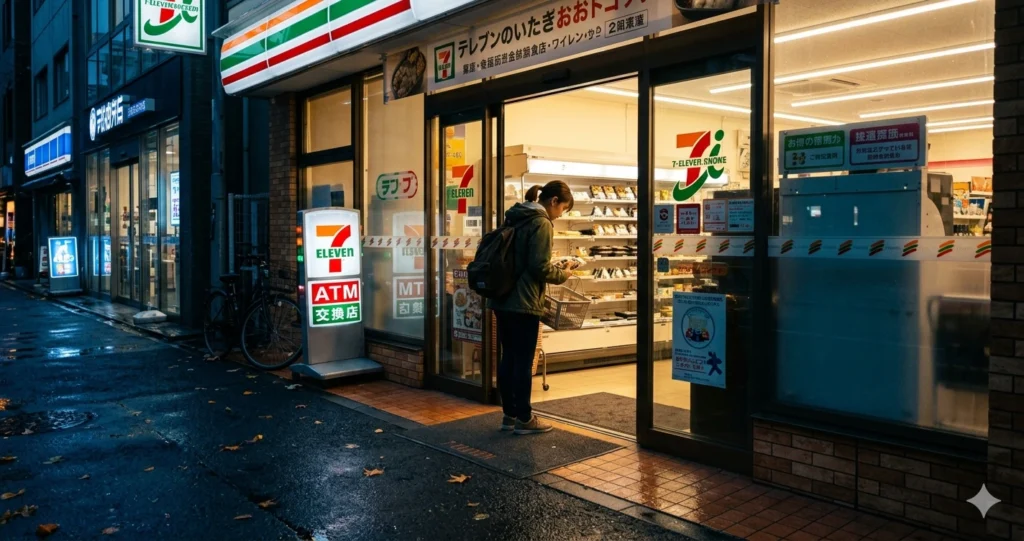
This is capsule hotels, convenience store breakfasts, standing ramen counters at lunch, and one sit-down meal in the evening. It is not deprivation. Japan’s convenience stores — 7-Eleven, FamilyMart, Lawson — sell onigiri for ¥130, hot sandwiches for ¥220, and decent coffee for ¥150. The budget tier here is qualitatively better than budget travel in most of Europe.
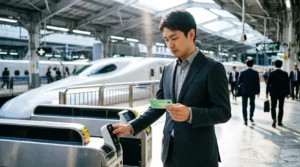
Transport at this tier means an IC card and local trains, with selective use of the Shinkansen only when the journey demands it. Activities lean toward free temples, covered market walks, and public parks — all of which are genuinely excellent.
Mid-Range Tier: ¥13,000–¥18,000 per day (~$87–$120 USD)
A business hotel with a private bathroom, two proper sit-down meals per day, one or two paid attractions, and the flexibility to take a Shinkansen without recalculating. This is where most first-time Western visitors end up, and it is a comfortable, unhurried way to travel Japan.
Comfort Tier: ¥22,000–¥35,000+ per day (~$147–$233+ USD)
A ryokan with dinner and breakfast included, taxis when convenient, kaiseki dinners, and priority entry at major attractions. Japan rewards spending at this tier with some of the finest hospitality in the world — but it is worth knowing that the gap in experience quality between budget and comfort is narrower in Japan than almost anywhere else.
Accommodation Costs in Japan
Capsule Hotels and Hostels
Capsule hotels run ¥2,500–¥4,500 per night in Tokyo and Osaka. The quality variance is significant — a well-reviewed capsule in Shinjuku (Book and Bed, for example, charges around ¥4,200) offers a private pod, solid Wi-Fi, and a locker for your bag. Dormitory hostels start at ¥2,000 in regional cities. In Tokyo, budget ¥3,000–¥4,000 minimum for anything with reliable reviews. (2025–2026 rates — verify before travel)
Business Hotels
The business hotel is Japan’s infrastructure. Dormy Inn, Toyoko Inn, and APA chains offer private rooms — typically small but impeccably clean — for ¥8,000–¥15,000 per night in major cities. Breakfast is often available as an add-on for ¥1,000–¥1,500 and is worth it: Japanese hotel breakfast buffets at this tier consistently outperform what you’d pay separately. (2025–2026 rates — verify before travel)
Ryokan and Boutique Options
A traditional ryokan with tatami floors, an onsen bath, and dinner and breakfast included starts around ¥18,000 per person per night in regional towns — higher in Kyoto. The price includes a multi-course dinner and breakfast, so the day-rate math changes. One honest note: ryokans in peak cherry blossom season (late March to early April) and autumn foliage season (late October to mid-November) book out months in advance. Planning around those windows without reservations is how people end up paying ¥30,000+ for the only room left. (2025–2026 rates — verify before travel)
Food Costs in Japan
Street Food and Standing Counters
At 7am, the covered arcade market in Nishiki in Kyoto charges ¥200–¥400 for skewered food most people walk past without stopping. Tokyo’s standing ramen counters — the kind with a ticket vending machine by the door and no stools — serve bowls for ¥750–¥950. A conveyor-belt sushi lunch runs ¥1,200–¥2,000 depending on how many plates you pull. Budget travelers eating this way spend ¥1,500–¥2,500 per day on food and eat very well.
Japan’s convenience stores are not a backup plan. They are a legitimate food strategy. Onigiri, sandwiches, hot foods kept under warming lamps, and seasonal limited-edition items make 7-Eleven a genuine destination for the first week. (2025–2026 rates — verify before travel)
Sit-Down Restaurants
A lunch set at a mid-range restaurant — typically a main, rice, miso soup, and a small side — runs ¥900–¥1,500 and represents some of the best value eating in the world. Dinner at the same restaurant costs ¥1,800–¥3,500. Izakayas, Japan’s pub-style restaurants, average ¥3,000–¥5,000 per person with drinks. The one honest negative here: tipping is not practiced in Japan, which means prices are exactly what they appear to be — but it also means that if service is slow or an order is wrong, there is no lever to pull. Patience is the price of entry. (2025–2026 rates — verify before travel)
Transportation Costs in Japan
The JR Pass: Run the Math First
A 7-day JR Pass costs ¥50,000 (2025 pricing — verify before travel). Before buying, list your specific routes and price each leg:
- Tokyo → Kyoto (Shinkansen): ¥14,170 each way
- Kyoto → Hiroshima: ¥11,220 each way
- Hiroshima → Osaka: ¥5,720 each way
A Tokyo–Kyoto–Hiroshima–Osaka loop totals approximately ¥46,000 in Shinkansen fares alone. Add Tokyo local JR lines and the pass earns its cost. A Tokyo–Kyoto–Osaka itinerary without Hiroshima totals roughly ¥34,000 return — the pass does not break even. This is not a complex calculation. Do it before you buy. (2025–2026 rates — verify before travel)
IC Cards, Local Trains, and Buses
An IC card — Suica (Tokyo) or Icoca (Osaka/Kyoto) — is the correct tool for all urban travel. Load ¥2,000–¥3,000 and tap in and out. A single subway journey in Tokyo costs ¥170–¥330 depending on distance. Buses in Kyoto, where they cover routes the subway doesn’t, cost a flat ¥230 per ride. Budget ¥800–¥1,500 per day for urban transport across a typical sightseeing itinerary. (2025–2026 rates — verify before travel)
Activities and Entrance Fees
Most of Japan’s temples and shrines charge ¥500–¥1,000 to enter the inner grounds. Fushimi Inari in Kyoto charges nothing — the entire mountain is free. Kinkaku-ji (the Golden Pavilion) charges ¥500. Tokyo’s teamLab Planets charges ¥3,200 and requires advance booking online. Hiroshima’s Peace Memorial Museum charges ¥200. The parks — Shinjuku Gyoen, Maruyama Park, Ueno Park — charge ¥200–¥500 or nothing at all.
A realistic daily activities budget is ¥1,500–¥3,000 at mid-range, assuming one or two paid sites and several free ones. Budget travelers who focus on free temples, shrine walks, and neighborhood exploration spend ¥500–¥1,000. (2025–2026 rates — verify before travel)
Money-Saving Tips That Actually Work
Eat lunch, not dinner, at nice restaurants. Lunch sets at quality restaurants offer the same kitchen for 40–50% less. A kaiseki-style lunch in Kyoto for ¥2,500 is not uncommon at a place charging ¥8,000 for the equivalent dinner.
Use the convenience store breakfast system. Two onigiri and a coffee from 7-Eleven costs ¥400–¥500. This is not roughing it. It is how millions of people start their day in Japan.
Don’t buy the JR Pass on autopilot. Price your exact itinerary first. Many first-timers buy a 14-day pass for a trip that only justifies a 7-day — or no pass at all.
Travel in shoulder season. Cherry blossom and autumn foliage are Japan at its most photographed — and most crowded, with hotel rates 30–50% higher than surrounding weeks. May and early June, or September, offer better availability at baseline prices without sacrificing weather.
Walk more than you think you need to. Japan’s urban neighborhoods reward walking in a way that subway maps obscure. The walk from Asakusa to Ueno takes 20 minutes and costs nothing. The walk from Gion in Kyoto toward Fushimi Inari passes through neighborhoods most visitors skip entirely.
Full Budget Breakdown by Tier
The table below represents a realistic single day in Japan, excluding flights and the JR Pass (which is a trip-level cost, not a daily one).
| Category | Budget Tier | Mid-Range Tier | Comfort Tier |
| Accommodation | ¥3,000 | ¥11,000 | ¥22,000 |
| Food (all meals) | ¥2,000 | ¥5,000 | ¥22,000 |
| Local transport | ¥800 | ¥1,200 | ¥2,500 |
| Activities | ¥800 | ¥2,000 | ¥4,000 |
| Miscellaneous | ¥400 | ¥800 | ¥1,500 |
| Daily Total | ¥7,000 | ¥20,000 | ¥40,000 |
| Daily (USD approx.) | ~$47 | ~$133 | ~$267 |
For a 10-day trip, that means roughly $470–$670 USD at budget tier, $1,330 at mid-range, and $2,670 at comfort — before international flights.
International flights from the US to Tokyo run $700–$1,400 USD return depending on season and booking lead time (book 3–5 months out for best fares). From Europe, expect £500–£900 GBP or €600–€1,000 EUR return. (2025–2026 rates — verify before travel)
Frequently Asked Questions About Japan Trip Costs
Is Japan expensive compared to other Asian countries?
More expensive than Thailand or Vietnam, less than Singapore or South Korea for equivalent accommodation and food. Japan’s food quality at budget price points is exceptional — ¥800 ramen competes with mid-range restaurant meals elsewhere in Asia on quality alone. The comparison that matters is value for spend, not absolute cost.
Do I need cash in Japan, or can I use cards?
Cash is still essential in Japan. Many smaller restaurants, shrines, and rural businesses are cash-only. Withdraw yen at 7-Eleven or Japan Post ATMs — they reliably accept foreign cards where bank ATMs often do not. Budget ¥10,000–¥20,000 in cash at all times when outside major cities. Card acceptance is expanding, but do not arrive assuming it is universal.
How much does a trip to Japan cost for two people?
Roughly double individual costs, with marginal savings on accommodation if booking double rooms. A business hotel double room in Tokyo runs ¥12,000–¥18,000 versus ¥8,000–¥12,000 for a single — so the per-person cost decreases slightly. Food and transport costs remain per-person. A 10-day mid-range trip for two, excluding flights, realistically costs ¥360,000–¥400,000 (~$2,400–$2,670 USD). (2025–2026 rates — verify before travel)
What is the best season to visit Japan on a budget?
May (after cherry blossom peak), June (outside the June–July tsuyu rainy season if you time it carefully), and September. These months avoid the 30–50% accommodation premium that comes with cherry blossom season (late March to early April) and autumn foliage peak (late October to mid-November). January and February offer the cheapest rates of the year outside major city business districts.
How much yen should I bring to Japan?
For a mid-range traveler, carry ¥50,000–¥70,000 in cash for a 10-day trip as a baseline — supplemented by ATM withdrawals at 7-Eleven as needed. Do not carry your entire trip budget in cash. Japan is extremely safe, but 7-Eleven ATM access is reliable enough that you do not need to arrive with everything pre-converted. (Verify current exchange rates and fees before travel.)
Continue Exploring
- Complete Japan travel guide — Everything you need to plan a first trip to Japan: where to go, when to go, and what no one tells you before you arrive.
- Travel budgeting strategies — How to build a travel budget that survives contact with reality — across currencies, trip lengths, and travel styles.