Quick Verdict: The Best Daypack for Travel in 2026
| Use Case | Winner | Primary Benefit |
| City/Tech | Aer City Pack Pro | Superior organization & RyanAir compliant |
| Hiking/Active | Osprey Talon 22 | BioStretch harness & weight distribution |
| Packable/Backup | Matador Beast18 | Technical suspension in a foldable frame |
Overview: The High Cost of the “Do-It-All” Bag
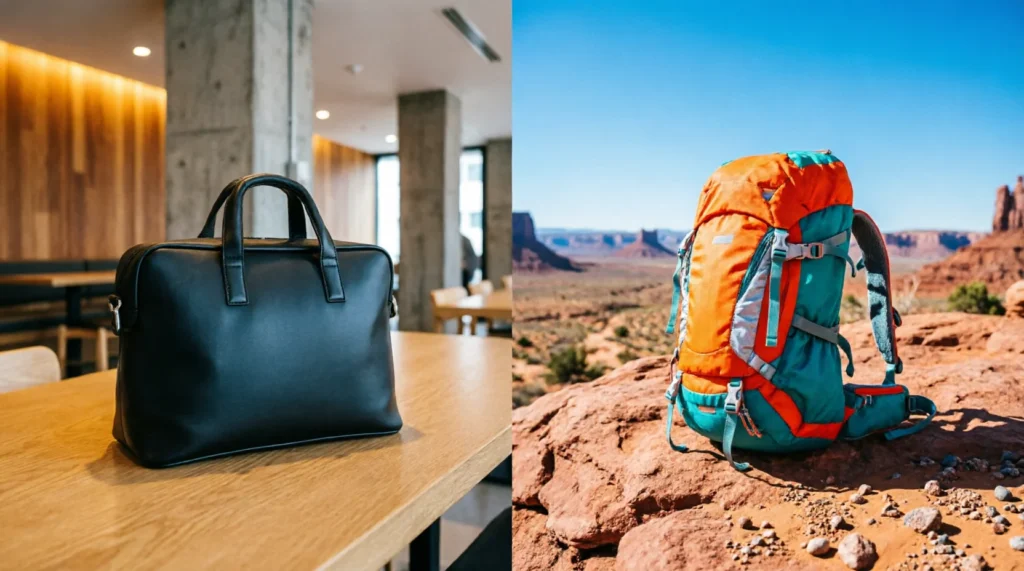
The central conflict in selecting a daypack is the battle between technical features and social friction. A technical hiking pack with a “trampoline” back panel keeps your shirt dry on a climb, but the metal frame makes it impossible to squeeze under the seat of a Spirit Airlines flight when the bin space is full. Conversely, a sleek city bag looks right in a Parisian bistro but lacks the hip belt and load lifters needed to prevent shoulder strain on a mountain.
I once took a 28L tactical pack on a walking tour through Florence in July. By 2:00 PM, the lack of ventilation left a literal salt-line on my shirt, and the tactical MOLLE webbing made me look like an extra in a low-budget action movie rather than a guest at a nice trattoria.
Key Differences: Structure, Suspension, and Aesthetics
The best daypack for travel in a city is built vertically to stay close to your center of gravity, while a hiking pack is built with a wider base to accommodate water bladders and bulkier layers.
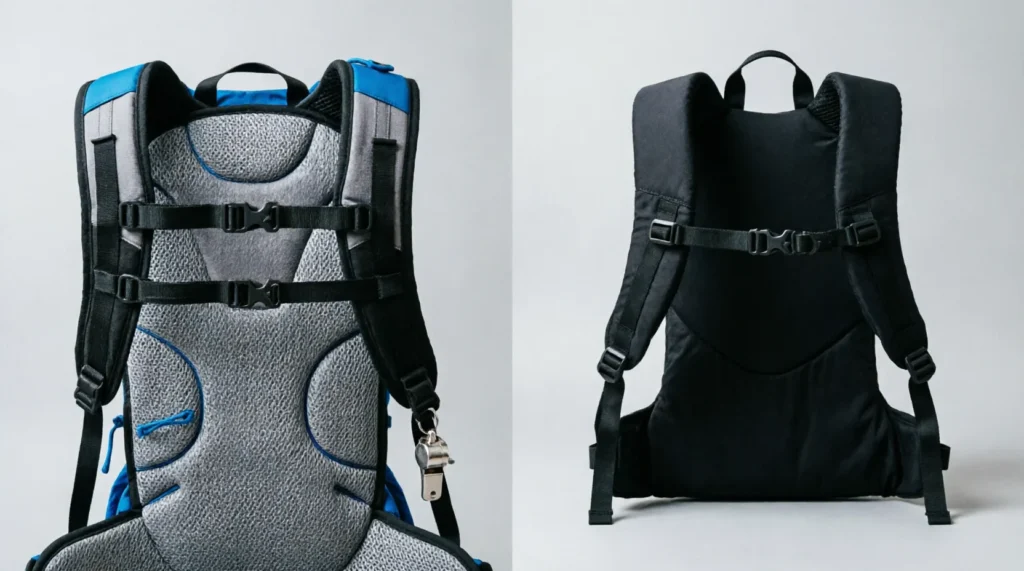
- The Laptop Sleeve: City packs have a suspended, padded sleeve (vital for the “drop test”). Hiking packs often use a thin hydration sleeve that offers zero protection for a MacBook.
- The Harness: Hiking packs utilize “load lifters”—small straps on top of the shoulders—that pull the weight off your traps. City packs usually skip these for a cleaner look.
- Water Access: If you can’t reach your bottle without taking the pack off, it’s a city bag. Hiking bags prioritize side-access mesh pockets.
For the Urban Navigator: Prioritizing Security and Tech
Recommendation: Aer City Pack Pro
- Price: $209 (2025–2026 rates — verify before travel)
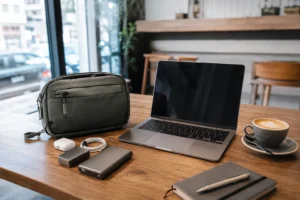
- Who it is for: The digital nomad or city explorer carrying a 16″ laptop, a camera cube, and a light jacket through airports and metros.
- Why it earns its place: Its 1680D Cordura ballistic nylon is essentially bulletproof against urban abrasion. It stands up on its own (a feature you’ll value when you’re not leaning your bag against a dirty cafe chair).
- Dimensions: 46 x 30.5 x 19 cm (18″ x 12″ x 7.5″).
- Airline Compliance: RyanAir: Yes (fits as personal item if not overstuffed); Spirit: Yes; ANA: Yes.
- Honest trade-off: The back panel, while padded, has zero airflow. In high humidity, you will sweat through your shirt.
- The Alternative: Choose the Bellroy Venture Ready Pack ($259) if you want a lighter, more organic look and don’t need the industrial-strength Cordura.
For the Trail Explorer: Prioritizing Ventilation and Weight
Recommendation: Osprey Talon 22 (Men’s) / Tempest 20 (Women’s)
- Price: $160 (2025–2026 rates — verify before travel)
- Who it is for: The traveler doing day-hikes in the Alps or New Zealand who needs to carry 3L of water, snacks, and a rain shell.
- Why it earns its place: The AirScape injection-molded back panel is the gold standard for ventilation. It moves with your body, preventing the “pendulum” effect on uneven terrain.
- Dimensions: 51 x 25 x 23 cm (20″ x 10″ x 9″).
- Airline Compliance: RyanAir: No (exceeds 40cm height); Spirit: Yes (if frame isn’t compressed); ANA: Yes.
- Honest trade-off: It is a “top-loader” or bucket-style pack. Finding a small item at the bottom requires a full excavation.
- The Alternative: Choose the Mystery Ranch Coulee 20 ($179) if you prefer the 3-ZIP design for immediate access to the entire main compartment.
Cost Comparison: Investment vs. Value Over Time
When looking for travel daypack recommendations, the “cheapest” bag often ends up being the most expensive. A $40 pack from a big-box retailer usually uses non-YKK zippers. When a zipper fails in a remote village in Georgia (the country), you aren’t just out $40—you’re spending your vacation time searching for a repair shop that likely doesn’t have the parts.
I recently tried to save weight with a $35 ultra-light packable bag in Vietnam. Within three days, the shoulder straps began to cheese-wire into my neck because the bag lacked any structural foam. (2025–2026 rates — verify before travel).
Final Recommendation: How to Choose Your Daily Carry
The best day bag travel strategy is actually a two-bag system if your trip is split 50/50 between city and trail. However, if you must choose one:
- Choose the City Pack if your “hiking” is limited to groomed gravel paths and your main goal is protecting your electronics.
- Choose the Hiking Pack if you plan to spend more than 4 hours at a time on your feet and don’t plan on bringing a laptop to the bar.
For a deeper dive into the foundation of your gear setup, see our one-bag travel guide for a masterclass in minimalist packing.
Frequently Asked Questions About Travel Daypacks
What is the maximum size for a “personal item” on budget airlines?
Most European budget carriers like RyanAir use a 40 x 20 x 25 cm limit. US carriers like Spirit are slightly more generous at 45 x 35 x 20 cm. Always measure your bag when packed, as depth can easily double if you overstuff the front pockets.
Are packable daypacks actually good for hiking?
Most are not. Without a frame or foam back panel, any hard object (like a water bottle or camera) will poke into your spine. The exception is the Matador Beast18, which uses a spring-steel frame to provide actual support while remaining foldable.
How do I stop my daypack from being stolen?
Avoid “tactical” bags that scream “I have expensive gear.” Look for bags with lockable zippers or “hidden” pockets that sit against your back. In high-risk areas, I often use a small carabiner to clip my zippers together; it won’t stop a determined thief, but it stops the “drive-by” unzip in a crowd.
Continue Exploring:
- one-bag travel guide: Our primary pillar on how to fit everything you need for a month into a single 40L carry-on.
- digital nomad tech: The essential electronics and protection gear to keep your office running from anywhere in the world.