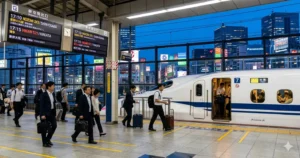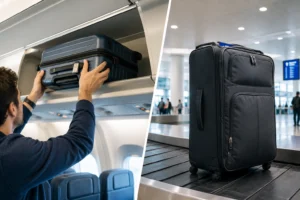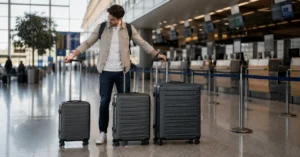
The security line at Narita Terminal 1, 6:47 AM. I watched a traveler wrestle a hard-shell suitcase into the overhead bin while I slid my backpack under the seat in front of me. Three weeks ahead. One bag. Zero checked luggage fees.
After 40 countries and countless packing experiments, I finally dialed in a Japan-specific loadout that respects ANA’s strict 55×40×25cm carry-on limit while keeping me comfortable through 15-kilometer walking days, humid Tokyo summers, and temple visits requiring constant shoe removal.
This isn’t a theoretical packing list. It’s what I actually carried for 3 weeks across Tokyo, Kyoto, Osaka, and the Japanese Alps — including the two items I never touched and the one thing I wish I’d brought.
Here’s what to pack for Japan when you want to move fast, pay less, and still have what you need.
Overview
Total base weight: 6.8 kg (15 lbs) excluding clothing worn on travel day
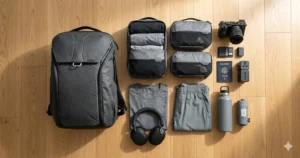
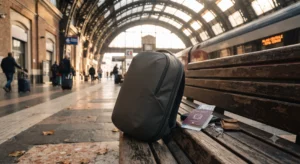
Bag: Peak Design Travel Backpack 30L
Carry-on compliance: ANA ✓ RyanAir ✗ Spirit ✓
Laundry frequency: Once per 7-8 days
Total cost of gear listed: ~$850 USD (2025–2026 rates — verify before travel)
The constraint that shapes everything: ANA allows one carry-on bag up to 10kg and 115cm total dimensions (55×40×25cm). My 30L pack measures 53×34×23cm when not overstuffed, leaving margin for the souvenirs you’ll inevitably buy.
I wore my bulkiest items on the plane — lightweight down jacket, walking shoes, jeans — which freed up 1.2 kg of pack weight for daily essentials.
Key Information
Climate considerations: Japan’s humidity hits different. Even in spring, you’re looking at 60-80% humidity in most cities. This killed my cotton t-shirts by day two — they stayed damp and smelled terrible. Switching to merino blend fabrics changed everything.
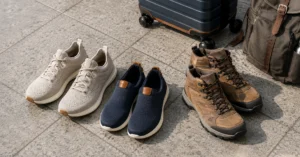
Shoe removal culture: You’ll take shoes off 4-8 times daily — temples, ryokans, some restaurants, fitting rooms, even certain cafes. Slip-on shoes or easy-lace systems aren’t a luxury; they’re a time-saver that compounds across three weeks.
Laundry infrastructure: Coin laundromats (コインランドリー) exist in every neighborhood. Expect ¥400-600 per wash/dry cycle (2025–2026 rates — verify before travel). Most have English instructions. I did laundry every 7-8 days, usually on Sunday mornings when laundromats were less crowded.
Electrical: Japan uses 100V with Type A/B outlets (two flat pins, same as North America). If you’re from the US or Canada, you don’t need an adapter. From Europe or UK, bring a simple Type A adapter. Voltage is lower than US 120V, so some high-power devices charge slower.
Connectivity: I used an Airalo eSIM (30 days, 20GB) for $29 USD (2025–2026 rates — verify before travel). Coverage was reliable in cities and rural areas. Pocket WiFi rentals cost ¥500-800/day and only make sense if you need to connect 5+ devices.
Practical Tips
Wear your weight: Travel day outfit matters. I wore my heaviest shoes, bulkiest layer, and jeans on the plane. This freed pack space and kept me under ANA’s 10kg limit even with a full water bottle and snacks.
The sink wash method: For trips under 3 weeks, you can extend clothing life between laundromat visits by sink-washing underwear and socks. Uniqlo sells travel-sized detergent packets for ¥200 at most locations. I did this twice when I pushed to day 9 between laundry runs.
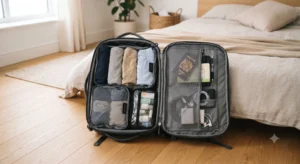
Compression cubes aren’t optional: I used three packing cubes (small, medium, large) to compress clothing by roughly 30%. This isn’t about organization — it’s about fitting 21 days into 30 liters. The Peak Design pack has internal compression straps, but cubes make repacking faster when you’re moving between cities.
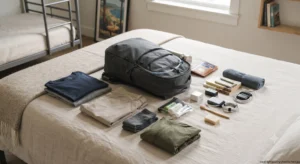
Leave space for souvenirs: I started at 60% pack capacity, leaving room for snacks, a Japanese knife from Kappabashi, and ceramics from Kyoto. By week three, I was at 90% and still under the 10kg limit.
The convenience store advantage: 7-Eleven, Lawson, and FamilyMart sell emergency clothing, toiletries, and umbrellas. I bought a ¥600 umbrella when caught in rain and tossed it before flying home. No need to pack for every scenario.
Recommendations
Peak Design Travel Backpack 30L
Price: $230 USD (2025–2026 rates — verify before travel)
Who it’s for: Solo travelers doing 2+ weeks in Japan with no checked bag who need ANA compliance and quick camera access
Why it earns its place: The external side access panel lets you grab your camera or passport without removing the pack — critical when you’re constantly taking shoes off and need your hands free. At 53×34×23cm, it fits ANA’s 55×40×25cm limit with 2cm margin on the longest dimension.
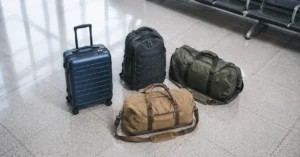
Honest trade-off: Exceeds RyanAir’s strict 40×20×25cm personal item limit by 13cm on length and 8cm on depth when fully packed. If you’re flying budget carriers in Europe before or after Japan, this won’t work as your only bag.
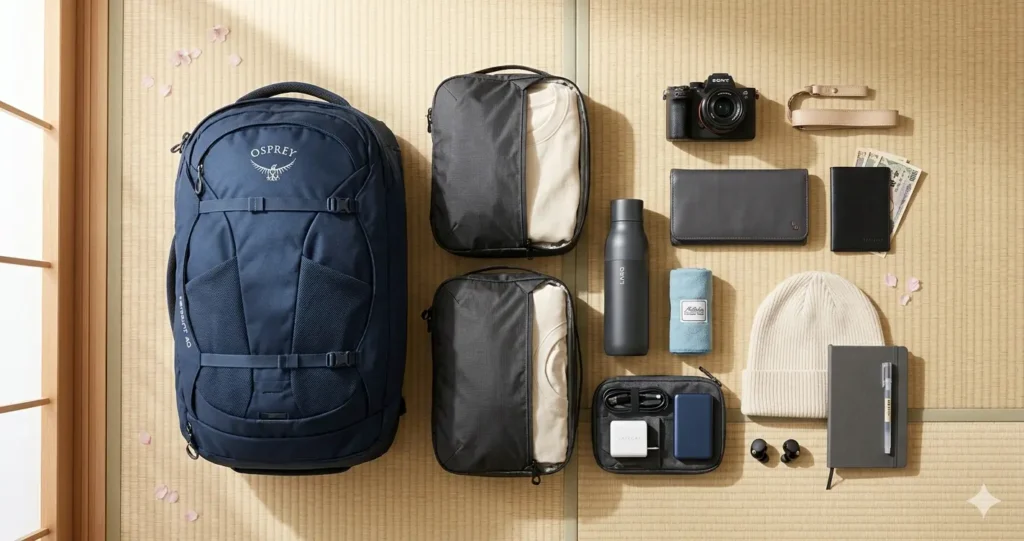
Choose the alternative if: You’re primarily flying RyanAir or Spirit’s basic fare. Buy the Osprey Farpoint 40 instead — it’s cheaper at $180 and has better hip belt padding for long walks, though it lacks the camera access system.
Airalo Japan eSIM (30 days, 20GB)
Price: $29 USD (2025–2026 rates — verify before travel)
Who it’s for: Solo travelers or couples who need reliable data for Google Maps, translation apps, and Instagram without managing a physical SIM or pocket WiFi device
Why it earns its place: Installation takes 90 seconds before you land. No need to queue at Narita’s SIM card counter or worry about returning a pocket WiFi device at the airport. I had consistent 4G/5G coverage from Tokyo to rural Nagano.
Honest trade-off: 20GB sounds like a lot until you’re using Google Lens translation constantly and uploading photos. I used 18GB in 3 weeks, but heavy video streamers will need the 50GB package at $59.
Choose the alternative if: You’re traveling with 3+ people or need unlimited data. Rent a pocket WiFi from Ninja WiFi (¥600/day, 2025–2026 rates — verify before travel) and split the cost.
Allbirds Tree Runners
Price: $105 USD (2025–2026 rates — verify before travel)
Who it’s for: First-time Japan visitors doing 12-18 km walking days who need easy on/off for temple visits
Why it’s for: The tree fiber upper is breathable enough for humid Tokyo summers, and the elastic laces mean you can slip them on/off without bending down — a small thing that saves 30 seconds per temple visit, which adds up across 3 weeks.
Honest trade-off: Minimal arch support. If you have plantar fasciitis or need serious support, these will hurt by day 5. Also, the light gray color shows dirt immediately on Kyoto’s stone paths.
Choose the alternative if: You need arch support or plan to hike. Buy the Hoka Clifton 9 instead — heavier at 250g vs. Allbirds’ 210g, but with real cushioning for long days.
Uniqlo AIRism Merino Blend T-Shirts (3 shirts)
Price: ¥1,990 each / ~$13 USD (2025–2026 rates — verify before travel)
Who it’s for: Travelers doing sink washes or weekly laundromat runs who need odor resistance in high humidity
Why it earns its place: I wore each shirt 3-4 times between washes without odor — the merino blend (15% merino, 85% polyester) resists bacteria better than pure synthetics. Buy them in Japan at Uniqlo to save 30% vs. US prices and get the Asia-fit sizing.
Honest trade-off: Less soft than 100% merino wool options like Icebreaker. The synthetic blend feels slightly plasticky when new, though it softens after 2-3 washes.
Choose the alternative if: You have sensitive skin or prefer natural fibers. Buy Smartwool Merino 150 shirts instead at $75 each — softer and more breathable, but triple the price.
Frequently Asked Questions About What to Pack for Japan
Can I do 3 weeks in Japan with just a carry-on?
Yes. I packed for 3 weeks in a 30L backpack that met ANA’s 55×40×25cm carry-on limit. The key is merino blend clothing you can wash in hotel sinks and wearing your bulkiest items on travel days. You’ll need to do laundry once per week, but laundromats are everywhere in Japanese cities.
Do I need a pocket WiFi or is an eSIM enough for Japan?
For solo travelers or couples, an eSIM like Airalo’s Japan package is sufficient and cheaper ($29 for 30 days). Pocket WiFi only makes sense if you need to connect 5+ devices or want unlimited data. I used an eSIM for 3 weeks and had reliable coverage in Tokyo, Kyoto, Osaka, and rural areas.
What shoes should I pack for Japan?
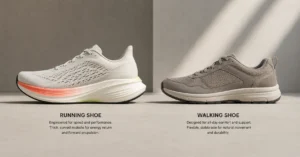
Pack one pair of comfortable walking shoes you’ve already broken in. I wore Allbirds Tree Runners for 15+ km days through Tokyo and Kyoto. You’ll remove shoes constantly at temples, ryokans, and restaurants, so slip-ons or easy-lace systems save time. Don’t bring multiple pairs—one good pair is enough.
Should I bring a power adapter for Japan?
Japan uses Type A/B outlets (same as US) at 100V. If you’re from North America, you don’t need an adapter. From Europe or UK, bring a Type A adapter. Most modern phone/laptop chargers handle 100-240V, but check your device specs. I brought a 3-port Anker charger to handle phone, camera, and e-reader simultaneously.
Continue Exploring
Japan travel guide — Complete destination guide covering Tokyo, Kyoto, Osaka, and transportation logistics for first-time visitors.