Tokyo vs Osaka Cost Comparison (2025–2026 Rates)
| Category | Tokyo | Osaka | Best For | Limitation | Verdict |
|---|---|---|---|---|---|
| Capsule hotel | ¥4,000–¥7,000/night | ¥3,000–¥5,500/night | Budget travellers | Small rooms in both cities | Osaka wins on value |
| Mid-range hotel | ¥14,000–¥28,000 | ¥10,000–¥22,000 | Comfort travellers | Tokyo rooms are often smaller | Osaka cheaper |
| Local meal | ¥900–¥1,500 | ¥700–¥1,200 | Everyday dining | Tokyo has wider range | Osaka better value |
| Subway day | ¥800–¥1,200 | ¥600–¥900 | Urban exploration | Tokyo requires more transfers | Osaka easier |
| Nightlife | Expensive quickly | Noticeably cheaper | Bars and late nights | Tokyo spreads across districts | Osaka more relaxed |
| Overall trip style | Maximum variety | Lower-friction travel | First-time Japan trips | Depends on energy level | Split decision |
All costs: (2025–2026 rates — verify before travel)
Tokyo vs Osaka: Which Japanese City Should You Visit?
Tokyo feels like the centre of something enormous. Osaka feels like a city where people still have time for you. That’s the real decision here — not “modern versus traditional,” which is how lazy comparisons frame Japan, but scale versus ease.
Most first-time visitors think Tokyo is mandatory and Osaka optional. After doing both repeatedly, the better answer is narrower: Tokyo gives you the broadest version of Japan. Osaka gives you the most liveable one. And unless you already know which experience you want, the difference matters more than the attraction list.
The mistake is trying to choose based on landmarks. You’ll remember neighbourhood rhythm more than towers or temples anyway. The quiet precision of a Tokyo subway platform at 8:12am. The salaryman beside you in Osaka explaining which takoyaki stall actually deserves the queue. That’s what stays.
If you’re building a wider trip, start with the broader context first: [IL → /japan-travel-guide/ | Japan travel guide]. It explains the transport logic, etiquette, and regional differences that shape this decision more than Instagram ever will.
Quick Verdict: Tokyo for Range, Osaka for Ease
If this is your first Japan trip and you have one week or less, choose Tokyo.
If you already know you dislike crowds, constant transit decisions, and cities that operate at maximum intensity from breakfast onward, choose Osaka instead. You’ll still get excellent food, efficient transport, and day trips to Kyoto and Nara — but without the sense that the city is slightly outperforming your ability to process it.
Tokyo is better for:
- Variety
- Museums
- Shopping
- Neighbourhood depth
- First-time “I want to see everything” trips
Osaka is better for:
- Food culture
- Slower pace
- Easier navigation
- Nightlife value
- Kansai region day trips
Here’s the blunt verdict. Most people should not skip Tokyo on a first visit to Japan. But many people enjoy Osaka more once they’re actually there.
Tokyo vs Osaka: What Each City Actually Feels Like
Tokyo works because millions of people have agreed to follow the same invisible rules. Stand left on escalators in some districts, right in others. Queue exactly where the platform markings tell you. Keep your voice low on trains. The system functions because almost nobody fights it.
And when you stop resisting that structure, Tokyo becomes easier than almost any megacity on earth.
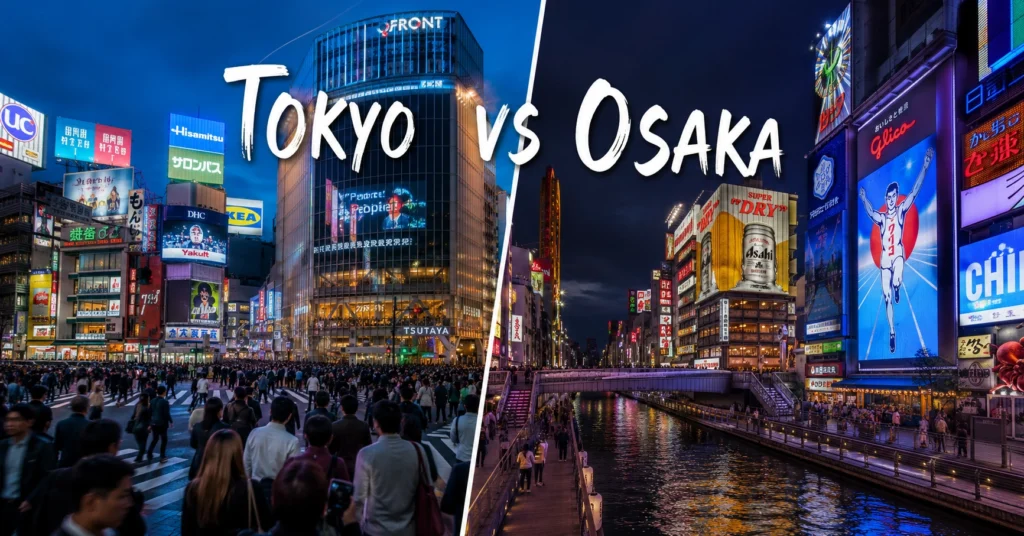
The surprise is how quiet it feels. Shibuya Crossing looks chaotic online, but the real shock is the silence after the signal changes. Hundreds of people moving at once with almost no shouting. You notice it immediately if you’ve arrived from New York, Bangkok, or London.
Osaka is looser. Still organised — this is Japan — but warmer in the way visitors usually mean when they say “friendly.” Restaurant owners talk more. Bartenders ask questions. You make mistakes without feeling like you’ve interrupted a mechanism.
Dotonbori at night is crowded, loud, bright, and touristy. Also fun. Both things are true. The mistake is pretending one cancels the other out.
The Differences That Change the Decision
Tokyo is a collection of cities pretending to be one city.
Shinjuku, Shimokitazawa, Ginza, Asakusa, Koenji, Akihabara — they barely feel connected culturally despite sharing the same train map. That’s what makes Tokyo rewarding over time. You don’t “finish” it. You keep changing versions of it.
But Tokyo extracts energy from you. Fast.
A normal sightseeing day there regularly involves 20,000+ steps, multiple train transfers, and the low-level mental effort of constant navigation. Google Maps helps, but Tokyo Station alone can feel like an airport designed by someone testing human concentration limits. I’ve exited through the wrong side there twice and added 17 unnecessary minutes each time.
Osaka is more compact emotionally as well as geographically. You understand it faster. Umeda for business and shopping. Namba for nightlife and food. Shinsekai for retro chaos and kushikatsu. Fewer moving parts. Lower cognitive load.
That’s why Osaka often becomes the recovery city in longer Japan itineraries.
Choose Tokyo If You Want Japan at Full Volume
Tokyo rewards curiosity more aggressively than any city in Japan.
You can eat a ¥1,200 bowl of ramen in Shinjuku at noon, spend the afternoon inside second-hand record stores in Koenji, then finish the night in Golden Gai drinking whisky in a six-seat bar where nobody speaks above conversation level. The density of options is the point.
It’s also the stronger choice if this is your only Japan trip for years. The museums are better. The neighbourhood variety is deeper. The shopping range isn’t close. And if your image of Japan includes neon streets, multi-floor arcades, immaculate convenience stores, and trains arriving within seconds of schedule, Tokyo delivers that version continuously.
But here’s the trade-off most guides soften: Tokyo can become performative if you overschedule it. Three major districts in one day sounds efficient. In reality, it turns the city into a checklist and you into someone spending half the afternoon underground changing train lines.
Pick fewer areas. Stay longer in each. Tokyo improves when you stop trying to conquer it.
Choose Osaka If You Want Japan Without the Exhaustion
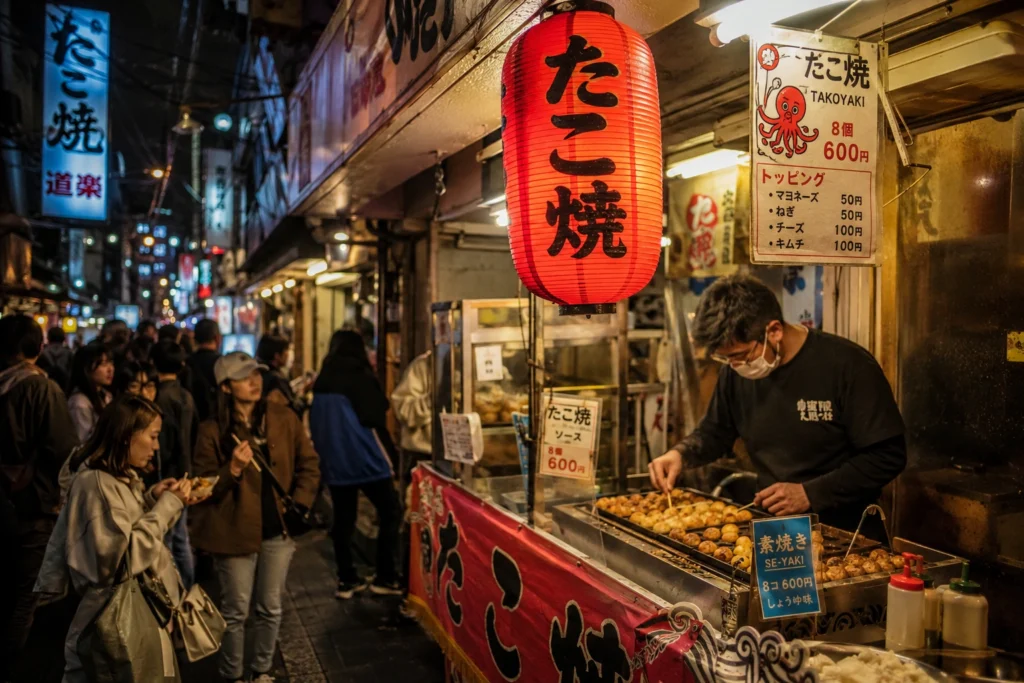
Osaka is the city people accidentally relax in.
Part of that is scale. Another part is cost. You can still find excellent meals around Namba or Tenma for ¥800–¥1,500 without planning your evening around reservations. A lot of Tokyo’s best food requires strategy. Osaka often just requires walking around hungry.
And Osaka is fun in a less curated way. Tokyo sometimes feels observed. Osaka feels lived in.
The best example is late-night food culture. In Tokyo, some neighbourhoods empty surprisingly early outside specific entertainment districts. Osaka keeps eating. Tiny izakayas stay busy. Street-side conversations spill into alleys. The city has more tolerance for improvisation.
It’s also a better base for Kansai trips. Kyoto is roughly 15 minutes away by shinkansen or around 45 minutes by regular JR train depending on route. Nara is under an hour. Kobe is even closer. You can build a calmer, region-focused Japan trip from Osaka without changing hotels constantly.
The honest downside: Osaka has fewer “wow” moments on arrival. Tokyo announces itself immediately. Osaka reveals itself over three or four days.
Tokyo vs Osaka Cost Comparison (2025–2026 Rates)
Tokyo is not ruinously expensive anymore by major global city standards. But Osaka is still cheaper across most categories that matter daily.
Budget travellers can manage:
- Tokyo: ¥10,000–¥16,000/day
- Osaka: ¥8,000–¥13,000/day
Mid-range travellers:
- Tokyo: ¥22,000–¥40,000/day
- Osaka: ¥18,000–¥32,000/day
Comfort travel:
- Tokyo: ¥45,000+/day
- Osaka: ¥35,000+/day
All costs: (2025–2026 rates — verify before travel)
The biggest practical difference isn’t hotel pricing. It’s friction cost. In Tokyo, you’ll spend more money simply because the city offers more chances to spend it — themed cafés, shopping districts, rooftop bars, ticketed exhibitions, transit hops across enormous distances.
Osaka drains your budget more slowly.
One important Japan-specific note: tipping is not done. Not expected. Not optional. Good service is already built into the price structure and social expectation. Leaving money behind can create confusion rather than appreciation.
And for connectivity, most travellers now do better with an eSIM or physical SIM card than pocket WiFi unless you’re travelling as a group. Pocket WiFi still works well for families sharing devices, but solo travellers usually end up carrying and charging an extra device unnecessarily.
Final Recommendation: The Better First Trip for Most People
For most first-time visitors deciding between Tokyo vs Osaka, Tokyo is the right answer.
Not because it’s “better.” Because it gives you the widest understanding of modern Japan in one trip. The scale, precision, food culture, neighbourhood variety, and sheer density of experiences are difficult to replicate anywhere else.
But Osaka is easier to love.
That’s the distinction most comparison posts miss. Tokyo impresses people immediately. Osaka grows on them quietly until they realise they’re checking apartment prices and wondering what six months there would feel like.
So use the decision properly.
Choose Tokyo if you want range, intensity, and the broadest first look at Japan.
Choose Osaka if you want your trip to feel less like managing a system and more like living inside it.
Frequently Asked Questions About Tokyo vs Osaka
Is Tokyo or Osaka better for first-time visitors?
Tokyo is usually the better first stop because it gives you the broadest version of Japan in one city. Osaka is easier and often more enjoyable day-to-day, but Tokyo delivers the scale and variety many first-time visitors expect.
Is Osaka cheaper than Tokyo?
Yes. Hotels, nightlife, and everyday meals are generally 15–30% cheaper in Osaka. The difference becomes noticeable over a week-long trip, especially for mid-range travellers.
How many days should you spend in Tokyo and Osaka?
Tokyo deserves at least 4–5 full days. Osaka works well with 3–4 days, especially if you’re taking day trips to Kyoto, Nara, or Kobe.
Can you visit Osaka as a day trip from Tokyo?
You can, but you shouldn’t. The shinkansen takes roughly 2.5 hours each way, and Osaka works better at night than during a rushed daytime visit. Stay at least one night.
Which city has better food?
Osaka is stronger for casual food culture and lower-cost eating. Tokyo has more range overall, including some of the best high-end dining in the world. Your budget changes the answer.
Continue Exploring
- Japan travel guide: Start here if you’re comparing regions, transport passes, timing, and how to structure a first Japan itinerary realistically.
- best time to visit Japan: Japan changes dramatically by month — especially crowd levels, hotel pricing, and regional weather patterns.