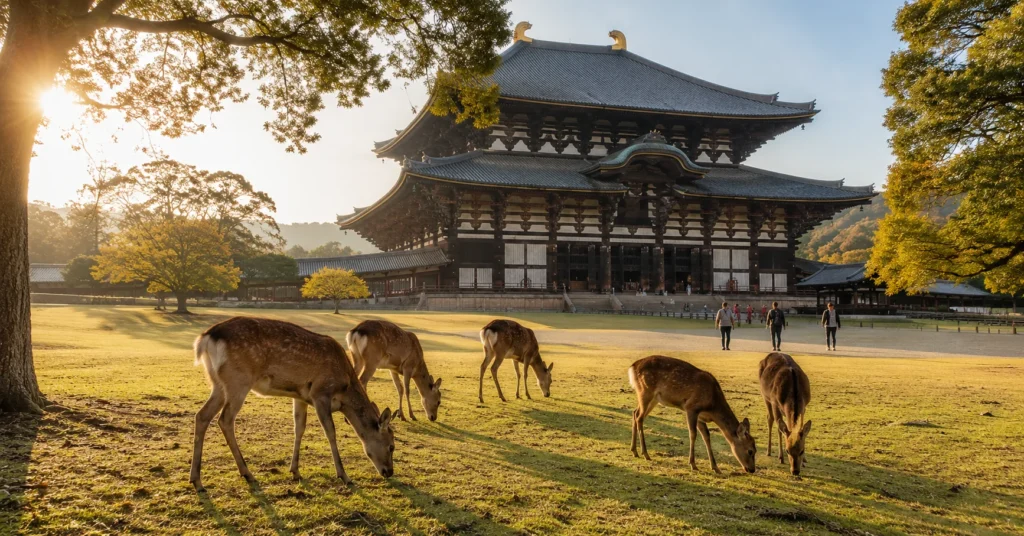
Nara at 8:15am is what you came for — deer moving through morning mist, Todai-ji’s cedar structure catching light before the tour buses arrive. Nara at 11:30am is something else entirely: 2,000 people competing for the same deer selfie, crackers running out by noon, and a park that feels more like crowd management than cultural experience.
The difference between those two scenarios isn’t luck. It’s whether you’re based in Kyoto or Osaka, what train line you chose, and what time you left your hotel. This comparison breaks down both options with real costs, actual journey times, and the honest truth about which base city makes more sense for your specific itinerary.
| Option | Journey Time | Cost (Round-Trip) | Best For | Limitation | Verdict |
|---|---|---|---|---|---|
| Kyoto Base | 45 min (JR Nara Line rapid) | ¥1,440 | Travelers spending 3+ nights in Kyoto, visiting Fushimi Inari same week | Slightly longer journey, fewer direct departures early morning | Choose if Kyoto is already your primary base |
| Osaka Base | 40 min (JR Yamatoji Line) | ¥1,600 | Budget travelers, food-focused itineraries, late starts | Less atmospheric arrival, Osaka hotels lack traditional character | Choose if you prioritize cost savings and flexibility |
The Quick Verdict: Which Base Actually Works for Nara
If you’re already booked in Kyoto for three nights or more, stay there and day-trip to Nara. The 45-minute JR Nara Line ride costs ¥720 one-way (¥1,440 round-trip), departs every 15 minutes from 6am onward, and drops you at Nara Station with a 20-minute walk to the park. If you’re based in Osaka, the journey is 5 minutes faster but costs ¥100 more round-trip, and you’ll sacrifice the atmospheric arrival that sets the tone for the day.
The real difference isn’t travel time — it’s itinerary logic. Kyoto and Nara share the same cultural register: temples, traditional architecture, quiet streets. Osaka is urban, food-focused, modern. Your base city should match the trip you’re actually building, not just the one that sounds most impressive on paper.
Kyoto to Nara: What the 45-Minute Train Ride Delivers
The JR Nara Line rapid service leaves Kyoto Station every 15 minutes starting at 6:08am, taking 45 minutes to reach Nara Station. Cost: ¥720 one-way (2025–2026 rates — verify before travel). The Kintetsu Line alternative is 35 minutes but costs ¥1,160 and requires a transfer at Takeda unless you’re starting from Tofukuji Station.
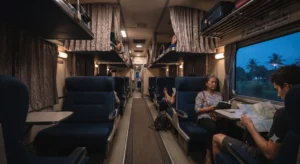
First-timers: buy tickets at the JR ticket machine — English interface, accepts credit cards, no IC card required though Suica/Pasmo work fine. The train itself is ordinary commuter stock, not the scenic route you might expect. You’ll pass suburban Kyoto, rice fields, and small stations where nobody gets off.
Experienced Japan travelers: if you’re visiting Fushimi Inari the same week, note that the JR Nara Line stops at Inari Station. You can combine both sites in one day — Fushimi Inari at 7am (before the crowds), then continue to Nara, arriving by 9:30am. This works only if you’re comfortable with a full day and don’t mind skipping lunch at a sit-down restaurant.
The walk from Nara Station to Nara Park takes 20 minutes through a commercial street that feels like every Japanese station approach — convenience stores, souvenir shops, a few restaurants. The deer start appearing about 10 minutes in, grazing on the sidewalks, completely unbothered by pedestrians. This is your first reality check: they’re not in a zoo. They’re everywhere.
Osaka to Nara: The 40-Minute Alternative Nobody Talks About
Osaka Station to Nara on the JR Yamatoji Line rapid service takes 40 minutes, costs ¥800 one-way (¥1,600 round-trip), and departs every 20 minutes from 5:45am onward. The Kintetsu Nara Line from Osaka-Namba is faster at 30 minutes, costs ¥570 one-way, and drops you closer to the park — but it’s not covered by JR Pass.
First-timers: Osaka-Namba is a different station from Osaka Station. If you’re staying in the Umeda/Osaka Station area, you’ll need to take the Midosuji subway line (¥230, 10 minutes) to Namba. Factor this into your time and cost calculation. If you’re staying in Namba itself, the Kintetsu option becomes genuinely attractive.
The journey from Osaka feels more utilitarian — you’re passing through industrial zones, smaller cities like Yao and Kashiwara, then into Nara Prefecture. There’s no scenic payoff. But the 10-minute time savings versus Kyoto adds up when you’re trying to beat crowds.
Experienced travelers: if you’re based in Osaka for budget reasons (business hotels average ¥8,000–15,000/night versus Kyoto’s ¥15,000–25,000 for comparable quality), the Nara day trip becomes even more logical. You’re already saving ¥7,000–10,000/night on accommodation. The ¥160 extra round-trip train cost is irrelevant.
The Differences That Change Your Decision
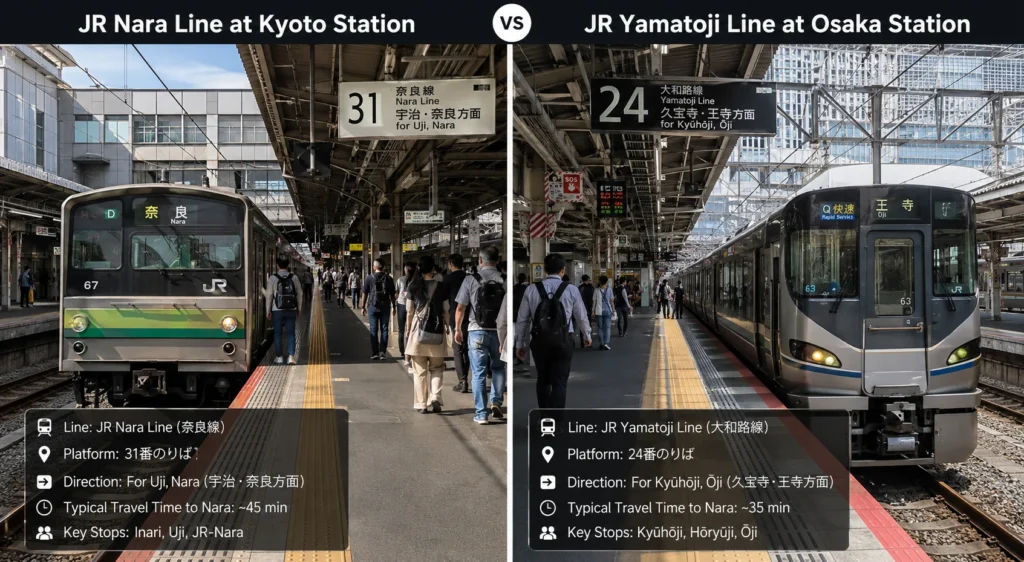
Journey time differs by 5 minutes — not enough to matter. Cost differs by ¥160 round-trip — also negligible. What actually changes your decision:
Crowd timing: Kyoto-based travelers tend to leave later (9–10am departures) because they’re already in a tourist mindset. Osaka-based travelers, especially those using Nara as a half-day trip, leave earlier (7–8am) to maximize their day. This means Osaka departures on the 7:45am and 8:05am trains are quieter, with more seat availability.
Return journey flexibility: The last direct JR train from Nara to Kyoto departs at 9:52pm. To Osaka, the last JR train leaves at 10:22pm. If you’re planning to stay for evening photography at Todai-ji (the wooden structure glows beautifully at dusk), Osaka gives you an extra 30 minutes of buffer.
Accommodation character: Kyoto ryokans and traditional guesthouses create an atmosphere that enhances temple visits. Osaka business hotels are clean, functional, and cheaper — but they don’t add to the cultural experience. If you’re doing a 7-day Japan trip with 3 nights Kyoto, 2 nights Tokyo, 2 nights Osaka, the base city question resolves itself: stay where you’re already booked.
Choose Kyoto If You’re This Traveller
You’re spending 3+ nights in Kyoto already. You want to visit Fushimi Inari, Kinkaku-ji, and Arashiyama in the same week. You value traditional accommodation and don’t mind paying ¥15,000–25,000/night for a ryokan or boutique guesthouse. You’re comfortable with a 45-minute train ride and prefer arriving at Nara Station with a 20-minute walk through a gradually unfolding landscape.
You’re also the type who wants to experience Nara before 9am and aren’t willing to wake up at 6am to make it happen from Osaka. The 6:08am departure from Kyoto gets you to Nara by 6:53am — early enough to see the deer before they’ve been fed by 500 other tourists, early enough to photograph Todai-ji without people in your frame.
Choose Osaka If You’re This Traveller
You’re budget-conscious and know that Osaka business hotels cost 40–50% less than Kyoto equivalents. You’re food-focused and want to eat your way through Dotonbori, Kuromon Market, and Shinsekai on your non-Nara days. You’re comfortable with utilitarian accommodation and prioritize location convenience over traditional atmosphere.
You’re also the type who wants flexibility — the ability to leave for Nara at 7am or 10am depending on how you feel, the option to turn it into a half-day trip and still have evening energy for Osaka’s nightlife. The 30-minute Kintetsu ride from Namba means you can leave at 9am, spend 5 hours in Nara, and be back in Osaka by 3pm with the entire evening ahead.
Real Cost Comparison: Kyoto Base vs Osaka Base
Transport (round-trip):
- Kyoto: ¥1,440 (JR Nara Line)
- Osaka: ¥1,600 (JR Yamatoji Line) or ¥1,140 (Kintetsu from Namba)
Nara activities:
- Todai-ji entry: ¥600
- Deer crackers: ¥200
- Lunch (mid-range restaurant): ¥1,200–1,800
- Optional: Nara National Museum ¥700, Kofuku-ji temple ¥500
Total day-trip cost: ¥3,740–4,540 from Kyoto; ¥3,900–4,700 from Osaka (2025–2026 rates — verify before travel)
Accommodation differential (per night):
- Kyoto mid-range ryokan/guesthouse: ¥15,000–25,000
- Osaka business hotel: ¥8,000–15,000
If you’re staying 3 nights, the accommodation savings from basing in Osaka total ¥21,000–30,000. The extra ¥460 in train costs over three days is mathematically irrelevant.
Final Recommendation: Stop Debating, Start Planning
Base yourself where your broader itinerary makes sense, not where you think you should stay for a single day trip. If you’re doing 4 nights Kyoto, 3 nights Tokyo, Nara fits naturally as a Kyoto day trip. If you’re doing 2 nights Kyoto, 4 nights Osaka, 1 night Hakone, Nara works better from Osaka.
The deer don’t care which train you arrived on. Todai-ji doesn’t check your hotel key. What matters is arriving by 8:30am, buying your deer crackers before they run out (they do, by noon on weekends), and understanding that Nara rewards early arrival and punishes the 11am–2pm window when every tour bus in Kansai converges on the park.
Book your accommodation first. Build your Nara day around that decision. Then stop worrying and go.
Frequently Asked Questions About Nara Day Trips
How long does it take to get to Nara from Kyoto?
The JR Nara Line rapid service takes 45 minutes from Kyoto Station to Nara Station, costing ¥720 one-way (2025–2026 rates — verify before travel). The Kintetsu Line is slightly faster at 35 minutes but costs ¥1,160 and requires a transfer at Takeda if you’re not starting from Tofukuji. Trains depart every 15 minutes from 6am to 10pm.
Is Nara worth a day trip from Osaka?
Yes. Nara from Osaka takes 40 minutes on the JR Yamatoji Line (¥800) or 30 minutes on Kintetsu (¥570). The closer distance means you can leave later and return earlier, giving you more time in Nara Park itself. If you’re based in Osaka for 3+ nights, Nara fits as a half-day trip without disrupting your schedule.
Do I need a JR Pass for a Nara day trip?
No. A round-trip ticket from Kyoto to Nara costs ¥1,440; from Osaka, ¥1,600. The 7-day JR Pass costs ¥50,000 (2025–2026 rates — verify before travel). Unless you’re making at least three other long-distance journeys (Tokyo-Kyoto-Osaka-Hiroshima minimum), buy individual tickets. The JR Pass math rarely works for Kansai-only itineraries.
What time should I arrive at Nara Park to avoid crowds?
Arrive by 8:30am. The deer are most active and least aggressive before 10am, when the tour buses from Kyoto and Osaka start arriving. By 11am, Nara Park has 2,000+ visitors competing for deer selfies. If you can’t arrive early, stay past 4pm when day-trippers leave and the light hits Todai-ji’s wooden structure perfectly.
How much does a day trip to Nara actually cost?
From Kyoto: ¥1,440 round-trip train + ¥600 Todai-ji entry + ¥200 deer crackers + ¥1,500 lunch = ¥3,740 (~$25 USD). From Osaka: ¥1,600 round-trip + same activities = ¥3,900 (~$26 USD). Add accommodation differential if comparing base cities — Kyoto ryokans average ¥15,000–25,000/night; Osaka business hotels ¥8,000–15,000/night (2025–2026 rates — verify before travel).
Continue Exploring
- Day trips from Kyoto — If you’re basing in Kyoto, this guide covers Fushimi Inari, Arashiyama, and Uji with the same honest specificity about timing, costs, and crowd patterns.
- Japan travel guide — Complete planning framework for first-time and return visitors, covering JR Pass arithmetic, cultural etiquette, and regional itineraries that actually work.