The Azores reward flexibility and punish rigid itineraries. Because of their isolated position in the mid-Atlantic, the islands generate their own microclimates—localized weather patterns that vary from one valley to the next. You can easily experience blue skies in the morning, heavy downpours at noon, and dense fog that drops visibility to three meters by afternoon.
The islands also punish visitors who assume European transport infrastructure extends smoothly into the ocean. Outside the main hubs, public transportation is minimal, passenger ferries between distant island groups take hours, and regional flights are highly prone to delays caused by high winds.
To enjoy this destination, you must adopt the local mindset: check the live mountain webcams every morning, pack a rain jacket even when the sun is shining, and be entirely willing to swap a planned mountain hike for a soak in a geothermal hot spring when the weather shifts.
Quick Overview: Orientation for Your First Trip to the Azores Portugal
The archipelago is divided into three distinct geographical clusters separated by hundreds of kilometers of open ocean. For a first-timer, trying to see all three groups in a single week is an expensive mistake that wastes half your trip in airport terminals.
The southern tier cost framework applies clearly here: a realistic daily budget sits between $90 and $130 per day, providing exceptionally high-quality accommodation and local food at a genuine discount compared to mainland hubs like Lisbon or Porto (2025–2026 rates — verify before travel).
- The Eastern Group: São Miguel and Santa Maria. São Miguel is the largest, most populated island and the primary entry point for international flights. It contains the capital city, Ponta Delgada, and holds the highest concentration of volcanic lakes and thermal springs.
- The Central Group: Terceira, São Jorge, Pico, Faial, and Graciosa. This cluster is ideal for island-hopping via short ferry rides. Pico holds Italy-rivaling volcanic vineyards and Portugal’s highest mountain peak, while Faial centers around the historic yacht harbor of Horta.
- The Western Group: Flores and Corvo. These are the most remote, rain-swept islands, defined by sheer cliffs, cascading waterfalls, and absolute isolation. They require dedicated travel time and are highly vulnerable to weather-related flight cancellations.
The Core Experiences Worth Building Your Trip Around
When visiting Azores, focus your energy on the specific natural phenomena that these volcanic structures create. Skip the small regional museums; the real draw is entirely outdoors.
Sete Cidades and Furnas: Volcanic Craters and Geothermal Cooking
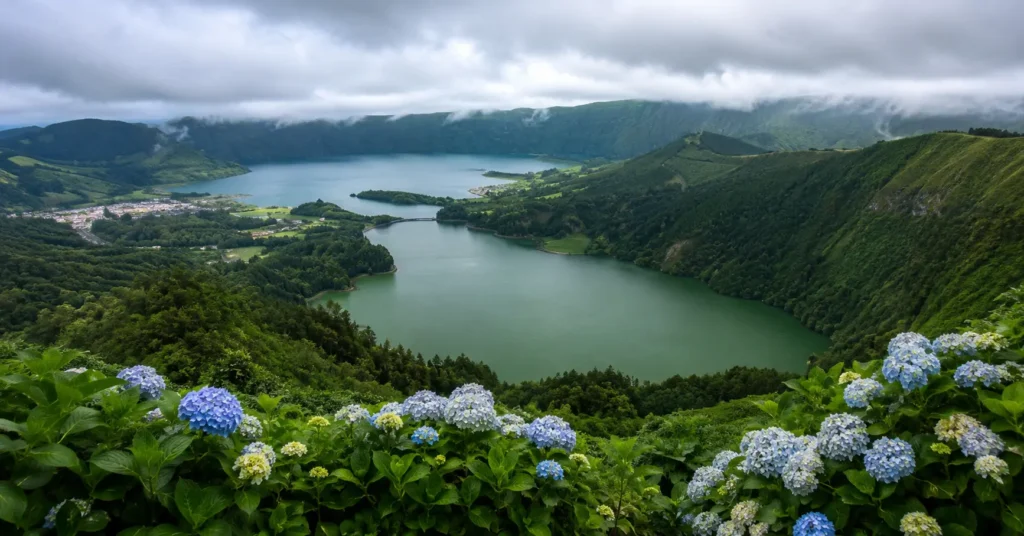
Sete Cidades is a massive volcanic caldera—a collapsed volcanic crater—containing twin lakes that reflect different hues of green and blue. Standing at the Vista do Rei viewpoint on a clear morning reveals the sheer scale of the landscape.
Drive from there to the eastern valley of Furnas, where the ground actively steams with caldeiras (boiling geothermal springs). Here, local cooks bury large metal pots inside the volcanic soil to cook Cozido das Furnas, a heavy stew of pork, beef, sausages, and root vegetables that simmers underground for six hours using nothing but natural earth heat. It costs roughly €18 per person at local restaurants like Tony’s and tastes distinctly earthy and rich.
Atlantic Whale Watching: Marine Mammal Migration Corridors
The deep underwater trenches surrounding the islands form a primary feeding ground for resident and migrating whales. Unlike locations where whale watching is highly commercialized, Azorean operators employ vigias (land-based spotters using high-powered binoculars from cliff tops) to direct boats toward the animals. Blue whales migrate through these waters in April and May, while sperm whales reside here year-round.
Book a rigid-inflatable boat excursion from Ponta Delgada harbor for roughly €60 per person; the open Atlantic swells are rough, so avoid the smaller zodiac boats if you are prone to motion sickness.
Where to Stay: Main Bases and Real Accommodation Prices
For your first visit, base yourself on São Miguel Island. It provides the most reliable infrastructure, the shortest driving distances to major highlights, and prevents your trip from being derailed by inter-island transit delays.
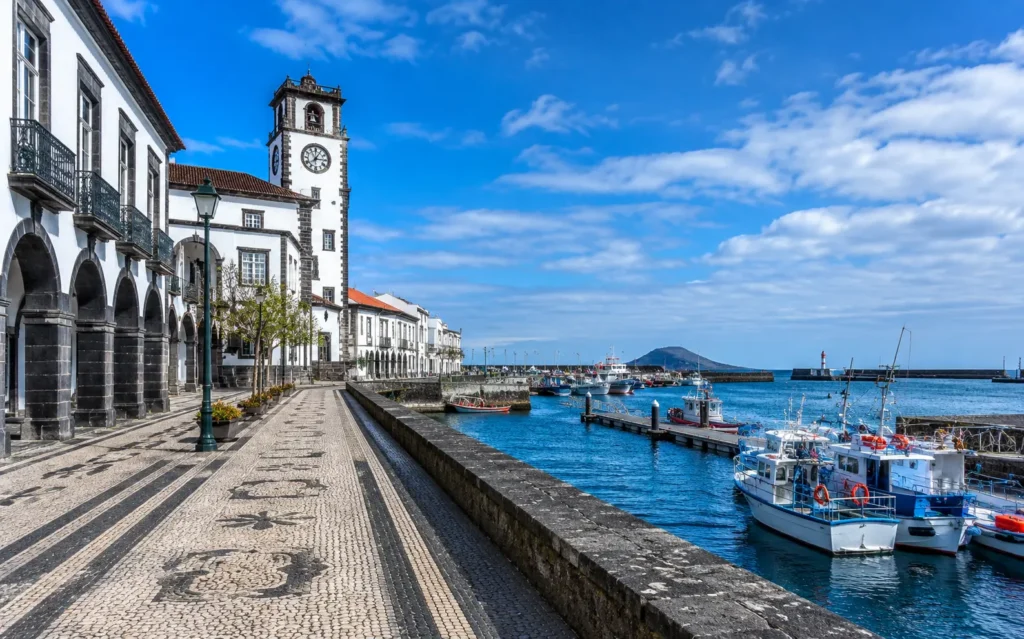
- Ponta Delgada (The Urban Base): The island capital is a walkable city built from black basalt stone and white plaster. It offers the best concentration of modern restaurants, supermarkets, and tour operators. A boutique hotel room or a high-quality guesthouse in the historic center costs between €90 and €130 per night during the shoulder months of June and September (2025–2026 rates — verify before travel).
- Furnas (The Wellness Alternative): Staying inside the volcanic valley places you within walking distance of the Terra Nostra botanical gardens and iron-rich thermal pools. It is exceptionally quiet after the day-trippers leave at 5pm. Expect to pay a premium here: rooms at the classic Art Deco Terra Nostra Garden Hotel run between €180 and €240 per night during the summer season.
Getting Around: The Logistics of Inter-Island Transit and Car Rentals
A rental car is non-negotiable for an authentic Azorean trip. Public buses exist but are strictly scheduled around local school and work hours, running only once or twice a day between rural villages and completely bypassing major trailheads or volcanic viewpoints.
- Car Rental Realities: Manual cars are the standard; automatic transmission vehicles are limited and must be booked months in advance. A compact rental car costs roughly €40 to €60 per day in June, but prices skyrocket to over €120 per day during the peak tourism months of July and August due to limited island supply. Use local operators like Ilha Verde or Autatlantis rather than international brokers to ensure better customer support if you scratch the vehicle on narrow stone village walls.
- Inter-Island Flights: SATA Air Açores operates all flights between the nine islands using small turboprop aircraft. If you book an international ticket from North America or mainland Europe with TAP Air Portugal or Azores Airlines, you are often eligible for a free inter-island connecting flight routing through Ponta Delgada (Verify details at the official SATA website—rules change without notice).
Budget Guide: Real Cost Breakdown for Visiting Azores
The Azores remain one of the most affordable island destinations in the Western world because they are not yet fully commercialized. Agriculture is still the economic driver, keeping local food prices low.
| Budget Category | Mid-Range Cost (EUR) | Mid-Range Cost (USD) | What It Gets You |
| Daily Lodging | €100 / night | $108 / night | Private room in a clean, central Ponta Delgada guesthouse |
| Car Rental | €50 / day | $54 / day | Economy manual car with basic insurance (June rates) |
| Lunch / Street Food | €8 / meal | $9 / meal | Traditional bifana (marinated pork sandwich) + local Kima passionfruit soda |
| Dinner | €25 / person | $27 / person | Fresh Atlantic seafood dish, house wine, and espresso at a local tavern |
| Activities | €0–€10 / day | $0–$11 / day | Free hiking trails; €3–€10 entry fees for managed thermal parks |
Sample Itinerary: A Balanced 5-Day Plan for São Miguel Island
This procedural layout is optimized to limit driving time and group geographic highlights together efficiently.
1. Arrive in Ponta Delgada and Explore the West Crater:Day 1.
Pick up your rental car at Joao Paulo II Airport (PDL). Drive 40 minutes west to the Sete Cidades caldera. Stop at the Miradouro da Boca do Inferno trailhead for the classic ridge view, then descend into the village for a local lunch.
2.Geothermal Springs and Volcanic Cooking in Furnas:Day 2.
Drive east along the southern highway to Furnas. Watch the extraction of the Cozido stew at the lake edge at 12:30pm. Spend the afternoon swimming in the orange, iron-rich thermal waters of Terra Nostra Park (bring an old swimsuit, as the iron permanently stains light fabrics).
3.Marine Mammals and Islet Swimming in Vila Franca:Day 3.
Book a 9:00am whale watching tour departing from the Ponta Delgada marina. In the afternoon, drive 25 minutes east to Vila Franca do Campo and take the local taxi boat to the Ilhéu de Vila Franca—a perfectly circular sunken volcanic crater forming a natural swimming lagoon.
4.The Wild North Coast and Europe’s Only Tea Plantations:Day 4.
Head to the rugged north shore. Hike the coastal trails around Ribeira Grande, then visit the Gorreana Tea Factory, which has been producing black and green tea organically since 1883. Sample the tea for free and walk through the terraced fields sloping down toward the sea.
5.High Altitude Lakes and Coastal Tide Pools:Day 5.
Drive up the winding mountain roads to Lagoa do Fogo (Fire Lake), a protected nature reserve inside a central volcano. If the peak is clear, hike down to the white sand shore. End your trip on the western tip at Ferraria, where a geothermal spring flows directly into a natural ocean rock pool, warming the sea water during low tide.
Pro Tips: Weather Realities and Packing Foundations
The key to surviving the Azorean climate is understanding that traditional seasonal labels do not apply out here in the ocean.
The Golden Weather Rule: Always use the SpotAzores mobile app or website. It streams live, real-time webcam feeds from every major viewpoint across the archipelago. If Sete Cidades is covered in fog, check the app—the north coast might be completely clear. Never drive up a mountain without checking the live camera first.
When packing, your base layer must center around technical water-resistant gear. Leave luxury suede shoes or delicate clothing at home. You need a breathable, windproof rain shell, sturdy hiking shoes with deep tread to handle slippery volcanic mud, and quick-dry clothing layers that can adapt to changing conditions within minutes.
Frequently Asked Questions About Visiting the Azores
Do I need a car to visit the Azores?
Yes, renting a vehicle is mandatory if you want to explore beyond the capital cities. Public bus networks are designed for local commuters, run infrequently, and do not service major trailheads or volcanic viewpoints.
What is the best month to visit the Azores?
June and September offer the best balance of stable weather, lower accommodation costs, and manageable crowds. July and August see peak traffic and inflated rental prices, while winter brings heavy rain and fog.
Is English widely spoken in the Azores?
Yes, English is widely understood and spoken in hotels, restaurants, and car rental agencies, particularly on São Miguel and Terceira islands, due to the region’s historical ties with North American diaspora communities.
Continue Exploring
- Portugal Travel Guide: Read our honest analysis of the Portuguese mainland, covering the absolute trade-offs between the historic streets of Lisbon and the northern food culture of Porto.
- The Ultimate Europe One-Bag Checklist: Discover how to streamline your luggage into a single carry-on backpack that fits seamlessly into regional turboprop overhead bins.