Packing light is not about proving you can survive with less. It is about making travel easier, cheaper, and less annoying once the trip starts. The real question is not whether you can fit everything into one bag, but whether the things you packed will still feel useful after the first week on the road.
A good travel light packing checklist should help you avoid baggage stress, reduce decision fatigue, and keep your trip flexible.That means choosing items that do more than one job, ignoring the fantasy version of yourself, and leaving out the extras that only look sensible at home.
Quick Verdict: Is a Travel Light Packing Checklist Worth It?
Yes, for most long-term travellers it is absolutely worth it.It is best for people who move frequently, use public transport, or want fewer luggage headaches, but it is less ideal if you need formal clothing, specialized gear, or maximum comfort.
The biggest trade-off is simple: you give up variety in exchange for freedom, speed, and less weight.
What This Packing Style Is Actually Like
Packing light works best when you stop thinking in categories like “just in case” and start thinking in daily use. The strongest version of this approach is not extreme minimalism; it is practical restraint.
Workaway’s guidance leans toward travel that stays flexible, simple, and manageable over time rather than overstuffed and inconvenient.
That matters because a bag that feels fine at home can become a burden once you are changing cities, carrying it upstairs, or living out of it for weeks. The experience is usually calmer, faster, and less expensive, but it does require discipline.
What To Pack
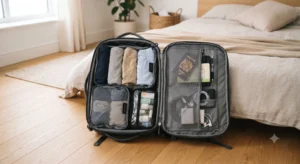
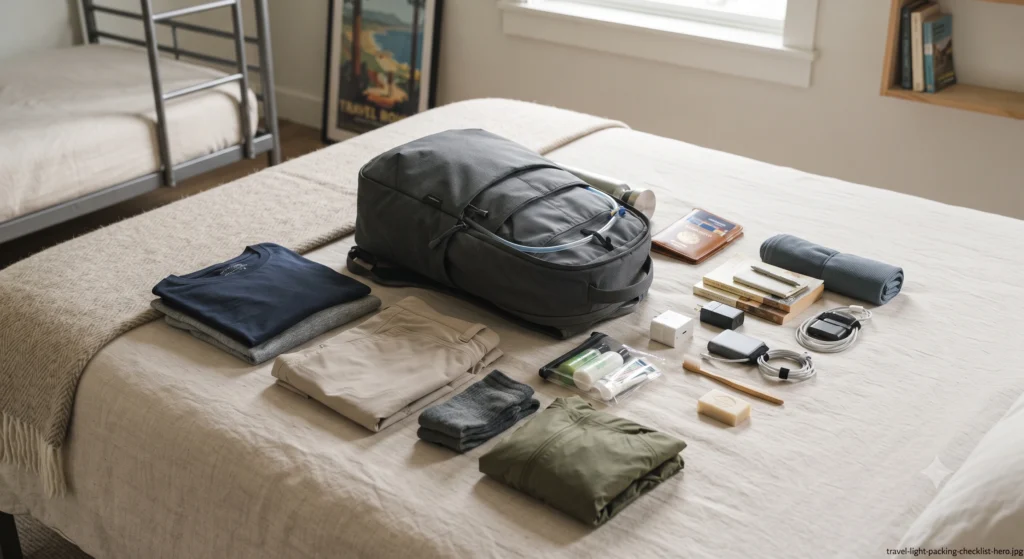
The best checklist usually starts with clothing that layers well, dries quickly, and can be worn in more than one setting. Neutral basics tend to work better than statement pieces because they reduce the number of combinations you need to plan.
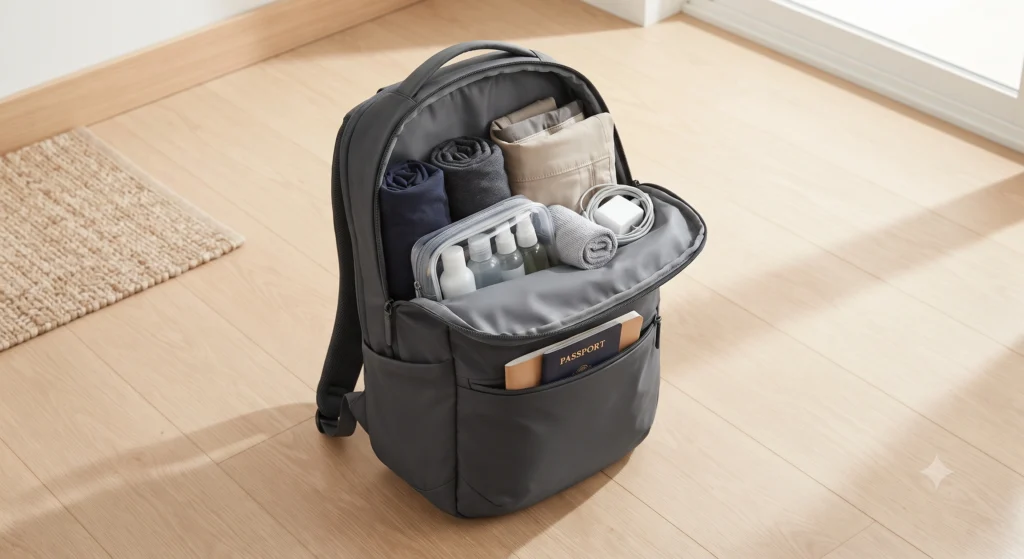
A small set of toiletries, essential documents, a charger setup, and one reliable pair of walking shoes are usually more useful than a large pile of “backup” items.For long-term travel, the goal is not to pack for every possible situation. It is to pack for the situations you are most likely to face every week.
If an item only solves a rare problem, it probably does not belong in the main bag.
What To Leave Behind
Most people overpack clothes, duplicate toiletries, and bulky accessories that feel safe but rarely get used. The classic mistake is bringing multiple “nice to have” items and assuming future-you will be grateful. In reality, future-you is usually happier with less weight and fewer decisions.
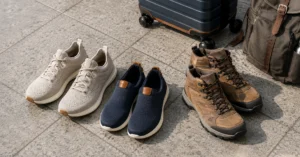
Large bottles, extra shoes, hardback books, and several electronics are common examples of things that look reasonable before departure and feel unnecessary later.
The Workaway approach is especially useful here because it encourages travellers to think about practicality instead of packing for an imaginary version of the trip.
Why It Works For Long Trips
Long-term travel punishes bad packing decisions more than short holidays do. On a weekend trip, overpacking is annoying. On a months-long trip, it becomes exhausting.
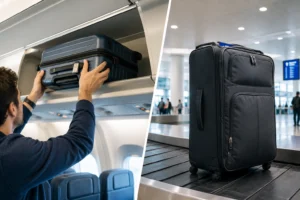
A lighter bag makes transit easier, reduces baggage fees, and lowers the chance that you will resent your own luggage. It also gives you more room to adapt. If you buy something useful on the road, swap climates, or change travel style, you are not forced to fight your own bag every step of the way.
That flexibility is the real value here, not just the weight number.
What To Skip
Skip anything that exists mainly for comfort at home but adds little value on the road. That usually includes extra outfits, multiple “special occasion” items, oversized skincare, and gadgets that duplicate what your phone already does.
Also skip packing based on fear. People often bring too much because they imagine every inconvenience at once.
A smarter approach is to cover the basics well and trust that most missing items can be replaced if genuinely needed.
This is one of the few travel decisions where less usually means better.
Common Mistakes
The biggest mistake is packing for identity instead of function. People want to feel prepared, stylish, or “the kind of traveller” they imagine themselves to be, and that leads to clutter.
Another mistake is ignoring how much weight bulky items create even when they do not take up much space. Shoes and toiletries are frequent offenders.
A third mistake is not testing the bag before leaving. If you cannot comfortably carry it at home, it will not get better at the airport or on a steep street. The checklist works best when it is edited ruthlessly before departure, not after the bag is already full.
Better Alternatives
If you are unsure whether something is worth bringing, choose the lighter version, the multipurpose version, or the item you can replace later.
A compact towel beats a large one, one versatile jacket beats three niche layers, and a short list of clothing you actually rotate beats a wardrobe built for imaginary variety.
For many travellers, the best alternative to overpacking is not buying more gear. It is narrowing the trip down to what you will actually use every few days. That is the difference between feeling “prepared” and actually travelling well.
Final Recommendation
Use a travel light packing checklist if you want a trip that feels easier to manage rather than more impressive to pack for.
It is especially smart for Workaway-style travel, long backpacking trips, and any itinerary that involves frequent movement.
The checklist is less about austerity and more about reducing friction. Done well, it saves money, time, and energy while making travel feel more flexible and less tiring.
FAQ
Do I really need a minimalist packing list for long-term travel?
Yes, because long trips expose everything you packed badly. A minimalist packing list helps you avoid carrying items that become annoying after the first few travel days. It is less about owning less and more about carrying only what stays useful.
What is the most common packing mistake?
Bringing too many clothes is the most common mistake. Travellers often pack for imagined situations instead of real routines. A better approach is to choose items that mix easily, dry quickly, and can handle repeated use without becoming a burden.
Should I pack for every climate?
No, not literally. Pack for the climate you are most likely to experience first, then choose layers and flexible basics that can adapt. If your route changes a lot, it is better to bring adaptable clothing than a huge wardrobe for every possibility.
Is this style of packing good for Workaway trips?
Yes, it suits Workaway travel very well because those trips often involve movement, simple living, and practical daily needs. A lighter bag makes it easier to settle in, move between places, and avoid carrying things you rarely use.
What should I skip first when editing my bag?
Start with duplicate items, bulky toiletries, extra shoes, and anything you packed “just in case.” Those items usually create weight without solving real problems. If something has not earned its place in your weekly routine, it probably does not need to travel with you.