Quick Verdict — Which Carry-On Is Actually Worth Buying?
| Carry-On | Price | Best For | Limitation | Who Should Use It |
|---|---|---|---|---|
| Away Carry-On | $275–$315 | Most international travellers | Scratches easily | People taking 2–5 international trips yearly |
| Travelpro Platinum Elite | $320–$380 | Frequent flyers | Softer structure | Business travellers and overpackers |
| CabinZero Classic 44L | $70–$90 | Budget travel | No wheels | Backpack-style travellers and budget airlines |
| Rimowa Original Cabin | $1,400+ | Durability and status | Price is difficult to justify | Heavy long-term travellers |
| Samsonite Freeform | $160–$220 | Mid-range value | Average wheel quality | Occasional international trips |
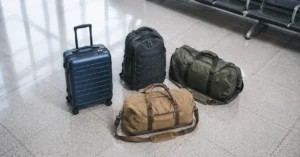
The best carry on luggage for most people is the Away Carry-On because it balances weight, wheel quality, airline compatibility, and durability better than most bags under $350. The best value option is the Samsonite Freeform. And unless you travel constantly, the Rimowa is hard to defend financially no matter how good it looks rolling through Schiphol at 6am.
That’s the short version.
The longer version is that international travel punishes luggage differently than domestic trips do. European budget airlines enforce dimensions aggressively. Southeast Asian airports destroy weak wheels. And old stone streets in Lisbon expose every marketing claim about “smooth rolling performance” within about four minutes.
I learned this the expensive way after buying a cheap spinner before a three-country Europe trip. One wheel snapped between Roma Termini station and the taxi rank — 11 minutes into day one. The bag survived. Dragging it through Florence did not.
How We Tested These Carry-Ons on Real International Trips
The best carry on bag is the one that survives inconvenience without becoming part of the inconvenience itself.
We compared these bags across four things that actually matter on international trips: airline compliance, empty weight, wheel durability, and usability during transit-heavy days. That means train stations, uneven sidewalks, budget airline sizing cages, overhead bin fights, and 20-minute terminal walks after a delayed connection.
And here’s the thing most review sites ignore: a bag that works brilliantly in a smooth US airport can become irritating fast in Europe or Asia. Four-wheel spinners glide beautifully across polished terminal floors. They become shopping trolleys with abandonment issues on cobblestones.
Testing included:
- Ryanair and EasyJet cabin checks in Europe
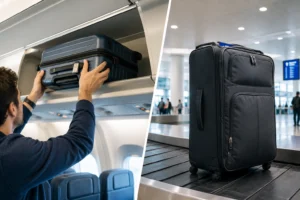
- Overhead bin fit on narrow-body Airbus A320 routes
- Stair-heavy train transfers in Italy and Japan
- Wet pavement rolling during Bangkok monsoon season
- Weight checks on AirAsia and Scoot routes
Because weight matters more internationally than most Americans realise. Many Asian and European airlines cap carry-ons at 7kg to 10kg total — including the bag itself. A heavy suitcase steals packing capacity immediately.
The Best Carry-On Luggage for Most International Travellers
The Away Carry-On is the best overall option because it solves more problems than it creates.
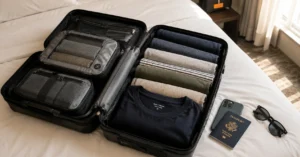
At roughly 3.1kg empty, it stays light enough for stricter airline routes while still feeling solid. The wheels are noticeably smoother than cheaper Samsonite models, especially during long airport transfers. And the compression system inside genuinely helps on multi-city trips where laundry timing becomes strategic instead of optional.
The weak point is cosmetic durability. After two Europe trips, ours looked used. Not broken. Used. The shell collects scratches quickly — especially on trains where luggage racks are basically metal cages with optimism.
Best overall: Away Carry-On
Best for:
- 1–3 week international trips
- Mixed airline itineraries
- Travellers who want simplicity
Not ideal for:
- Ultra-budget airlines with strict sizing cages
- People who overpack every trip
Best for strict airline limits: CabinZero Classic 44L
The CabinZero works because backpacks cheat physics.
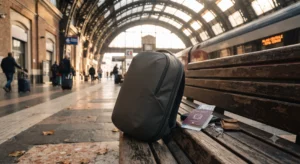
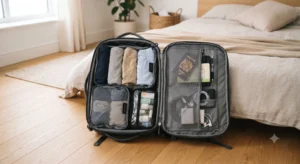
At under 800g empty depending on configuration, it gives you dramatically more usable packing weight than hard-shell rollers. That’s why experienced Southeast Asia travellers quietly move toward backpacks after their second or third trip — not because backpacks look adventurous, but because AirAsia charges can become ridiculous otherwise.
You lose wheels. You gain flexibility.
And boarding staircases stop mattering.
Best for rough travel days: Travelpro Platinum Elite
Travelpro survives abuse better than most hard-shell cases because soft-sided luggage flexes instead of cracking.
Flight crews use Travelpro constantly for a reason. The wheels are replaceable. The handles don’t wobble after six months. And the exterior pockets make security checks faster when you’re constantly pulling out chargers, passports, and liquids.
It isn’t fashionable. Good. Most fashionable luggage prioritises airport aesthetics over actual movement.
Budget Carry-Ons That Don’t Fall Apart After Two Flights
The Samsonite Freeform is the best budget carry-on because it avoids the catastrophic failures common in cheaper luggage.
The catastrophic failures are always the same:
- broken wheels
- jammed handles
- zipper splits near expansion seams
Usually in transit. Usually while you’re tired.
The Freeform isn’t premium, but it survives better than Amazon-brand luggage that costs slightly less and lasts dramatically shorter. Expect around $160–$220 depending on sales and size. (2025–2026 rates — verify before travel)
The Amazon Basics hardshell line deserves mention for one reason: price. Around $90–$130 gets you a functional carry-on for occasional travel. But the wheel quality drops off fast after repeated international use. Fine for one annual holiday. Bad choice for monthly movement.
This is the trade-off most people miss: replacing a cheap suitcase every 18 months costs more than buying a solid mid-range one once.
Premium Carry-Ons — What You Pay More For and Whether It Matters
The Rimowa Original Cabin is excellent luggage. It is also absurdly expensive for what most travellers actually need.
The aluminium shell feels indestructible. The wheel system is exceptional. And yes, the engineering difference is obvious the second you push it across a terminal. Rimowa rolls quieter and smoother than almost anything else on the market.
Still. The practical improvement over a good $300 carry-on is smaller than the price jump suggests.
You notice the difference most during constant travel — multi-flight months, repeated train transfers, hard business travel schedules. Occasional travellers won’t extract enough value from it financially.
There’s also the theft visibility problem nobody mentions. Expensive luggage broadcasts expense. In crowded train stations, especially in parts of Europe where bag theft is common, subtle luggage attracts less attention than polished aluminium.
That’s not fearmongering. That’s pattern recognition after enough train platforms.
The Differences That Actually Change the Buying Decision
Weight matters more than design.
Weight
A 4.5kg suitcase sounds manageable until a 7kg airline limit leaves you only 2.5kg for clothes, electronics, and shoes. European and Asian carriers enforce this far more aggressively than US domestic airlines.
Go lighter than you think you need.
Wheels
Cheap wheels fail before shells do.
Good wheel systems track straight, stay quiet, and survive uneven pavement. Bad wheels wobble after one rough curb drop in Athens or Naples. Once that starts, every airport becomes irritating.
Zippers vs aluminium frames
Zippers fail gradually. Aluminium dents permanently.
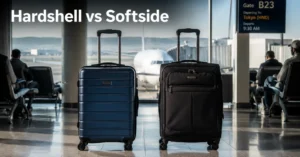
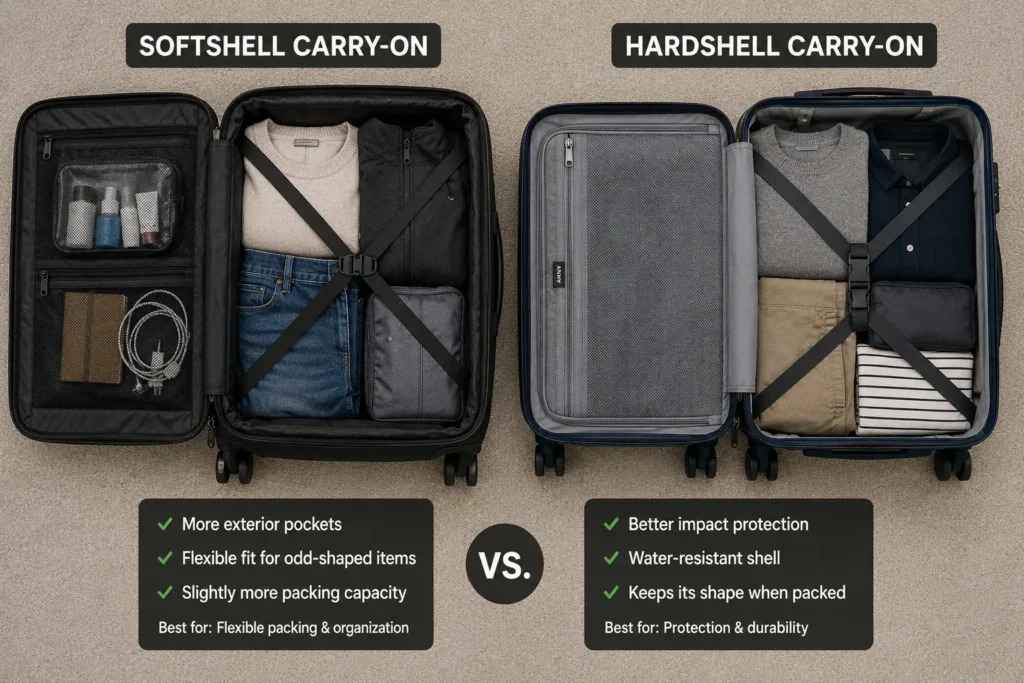
Hard-shell aluminium luggage protects contents brilliantly but accumulates visible damage fast. Soft-shell luggage ages less dramatically and fits into overhead bins more easily when airlines start gate-checking bags aggressively.
Airline size compliance
International airline sizing is less forgiving than US domestic travel.
Ryanair’s personal-item sizer is famously strict. AirAsia often weighs cabin bags. And some European regional carriers have overhead bins designed by people apparently travelling with folded scarves and optimism.
Always check dimensions before buying — not after.
(Schedules and baggage rules change — confirm before travel)
Buying Guide — Choose the Right Carry-On for Your Travel Style
The best carry on luggage depends less on destination and more on how you move through a trip.
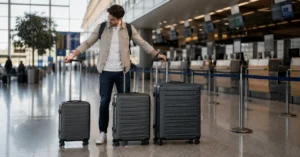
Choose a hard-shell spinner if:
- you mostly stay in hotels
- you travel through large airports
- you want organisation and structure
Choose a soft-shell roller if:
- you travel frequently
- you need external pockets
- you value repairability over aesthetics
Choose a backpack carry-on if:
- you use budget airlines regularly
- you change cities often
- you walk long distances between transit points
And here’s the blunt verdict: if you’re travelling through Europe with trains, stairs, old streets, and budget airlines, a lightweight backpack-style carry-on is often easier than a premium spinner suitcase people online swear by from the comfort of suburban Uber rides.
Mobility beats aesthetics surprisingly quickly once you’re carrying your own bag for 40 minutes.
For packing strategy itself, read How to Pack Light. Most luggage problems are actually packing problems wearing expensive branding.
And if you’re planning a bigger multi-country trip, the [IL → /trip-planning-pillar/ | Trip Planning Pillar] pulls together visas, budgeting, booking windows, and transport strategy into one framework instead of twenty disconnected tabs.
Frequently Asked Questions About the Best Carry-On Luggage
What size carry-on works for most international airlines?
A carry-on around 55 x 35 x 23cm works for most full-service international airlines. Budget carriers are stricter. Ryanair and Wizz Air frequently require paid cabin upgrades for standard roller bags. Always check the exact airline dimensions before flying. One centimetre can become an airport fee surprisingly fast.
Is hard-shell or soft-shell luggage better?
Hard-shell luggage protects electronics and fragile items better. Soft-shell luggage handles rough handling and overstuffing more gracefully. For frequent international trips involving trains and uneven streets, soft-shell often ages better physically and visually.
Are expensive carry-ons worth it?
Premium luggage is worth it for frequent travellers, not occasional ones. The wheel quality, repairability, and handle durability improve noticeably above the $250 range. But beyond roughly $400, the improvements become incremental rather than transformational for most people.
What is the lightest good carry-on option?
Backpack-style carry-ons like the CabinZero Classic remain among the lightest reliable options. Many weigh under 1kg empty. That’s a major advantage on airlines enforcing 7kg cabin limits across Asia and Europe.
Continue Exploring
How to Pack Light helps you reduce weight before you spend money on smaller luggage. Most people pack for imagined emergencies instead of actual trips.
Trip Planning Pillar connects flights, budgets, visas, travel finance, and packing into one realistic planning system instead of scattered booking advice.