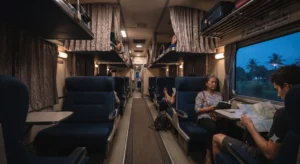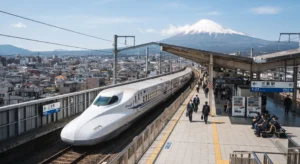
A Hiroshima day trip from Kyoto is technically possible but brutally rushed. The Shinkansen takes 1 hour 45 minutes each way — that’s 3.5 hours on trains before you’ve seen anything. You’ll arrive with enough time for the Peace Memorial Museum and maybe a quick okonomiyaki lunch, but you’ll miss Miyajima entirely or see it in a frantic 90-minute sprint.
If you’re short on days and have a JR Pass already, do it. If you’re paying for individual tickets and have flexibility, stay overnight.
Japan travel guide covers the full itinerary planning if you need broader context.
Comparison Table: Day Trip vs. Overnight Stay
| Option | Total Cost (2025–2026) | Time in Hiroshima | What You See | Best For | Limitation | Verdict |
|---|---|---|---|---|---|---|
| Day Trip | ¥26,000–29,000 ($170–190) without JR Pass | 7–8 hours max | Peace Park, Museum, maybe lunch | Tight schedules, JR Pass holders | Rushed, no Miyajima, exhausting | Only if necessary |
| Overnight (1 night) | ¥35,000–45,000 ($230–295) total | Full day + evening | Peace Park, Museum, okonomiyaki dinner, next-day Miyajima | Anyone with flexibility | Requires booking accommodation | The right call |
The Quick Verdict: Skip the Day Trip, Stay Overnight
Hiroshima deserves more than a whistle-stop visit. The city’s weight — historical, emotional, cultural — doesn’t fit neatly into an 8-hour window that includes 3.5 hours of train travel. You can physically do it. The question is whether you should.
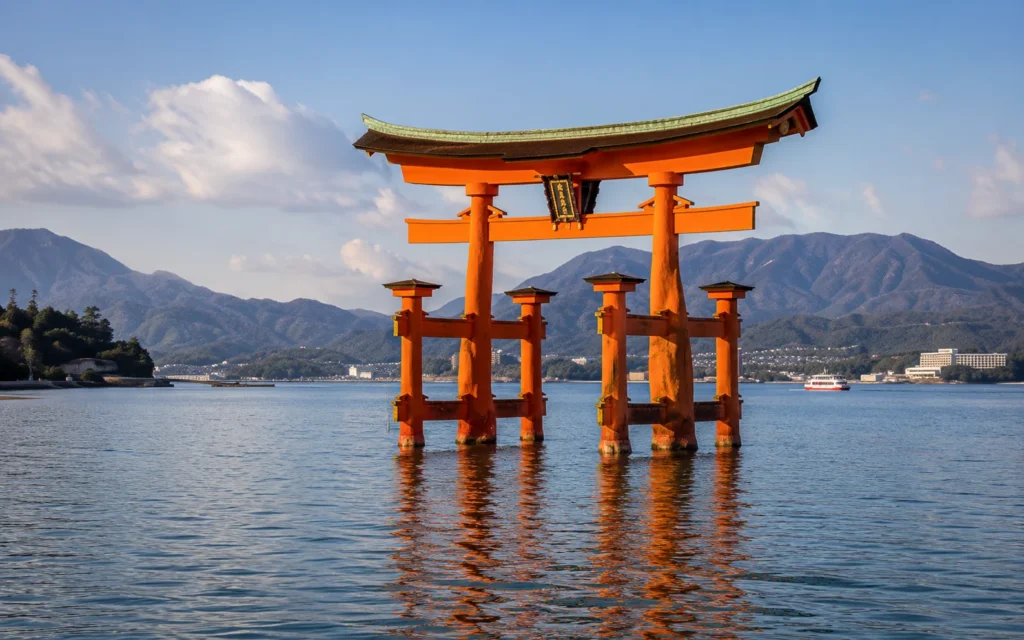
The Peace Memorial Museum alone warrants 2–3 hours if you’re engaging with it properly, not just ticking a box. Add the 20-minute tram ride each way from Hiroshima Station, lunch, and you’ve burned half your day before considering Miyajima — the island shrine with the floating torii gate that’s technically part of Hiroshima Prefecture and absolutely worth seeing.
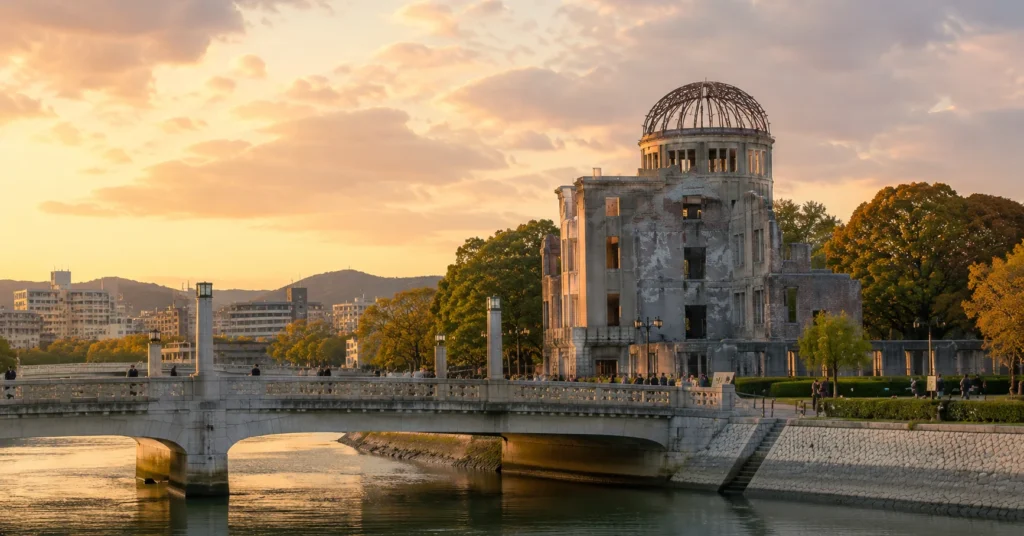
Here’s the honest trade-off: a day trip from Kyoto gives you Hiroshima’s grief but not its recovery. You’ll see the Dome, walk the park, read the exhibits, and leave before experiencing the city that rebuilt itself. An overnight stay lets you eat okonomiyaki in the Okonomimura building at 7pm when the lunch crowds are gone, catch the evening illumination at the Dome, and wake up early enough to beat the tour buses to Miyajima.
The cost difference is roughly ¥10,000–15,000 ($65–100) for a decent business hotel and dinner. That’s not trivial, but it buys you a completely different experience.
What a Hiroshima Day Trip from Kyoto Actually Looks Like
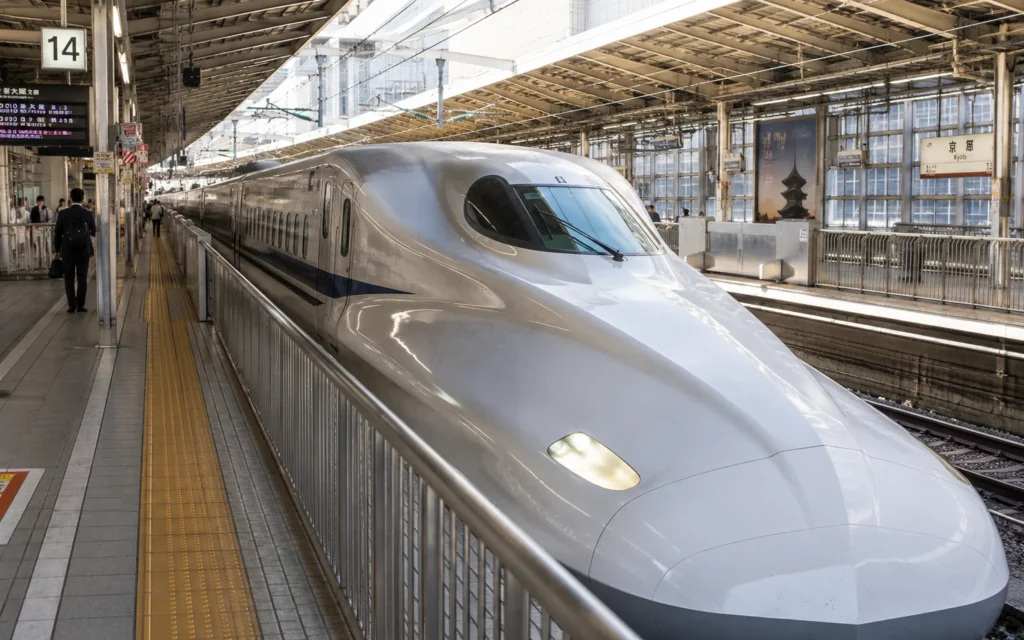
You’ll catch the 6:03am Nozomi Shinkansen from Kyoto Station, arriving Hiroshima at 7:48am. (Schedules change — confirm before travel.) That’s the earliest realistic option. From there, it’s a 20-minute tram ride to the Peace Memorial Park — tram costs ¥160–260 depending on your exact route (2025–2026 rates — verify before travel).
You’ve got roughly 7 hours before the last practical return train leaves Hiroshima Station at 8:43pm, arriving Kyoto at 10:28pm. Subtract 40 minutes for tram travel each way, 2–3 hours for the museum and park (rushing through the exhibits is disrespectful to what they document), and an hour for lunch. You’re left with maybe 90 minutes of buffer time.
That’s enough for the Peace Park, the Museum, and the Genbaku Dome. It’s not enough for Miyajima, which requires another 45-minute train ride to Miyajimaguchi Station plus a 10-minute ferry crossing. The island closes its main attractions by 5pm, and the famous torii gate looks completely different at high tide versus low tide — timing matters.
The day trip math: 3.5 hours on trains, 7–8 hours total in Hiroshima, one major site (Peace Park complex), exhaustion by evening.
What You Get with an Overnight Stay
Arrive on the same 6:03am train if you want, or take a more relaxed 8am departure and still be in Hiroshima by 10am. Check your bag at the station or your hotel — most business hotels will hold luggage before check-in.
Spend the morning at the Peace Memorial Museum without watching the clock. The museum’s exhibits are dense, emotional, and important. They deserve your full attention, not the anxiety of a 4pm train departure. Eat lunch at Okonomimura — a three-story building dedicated to Hiroshima-style okonomiyaki — around 11:30am before the noon rush.
Afternoon options: explore Shukkeien Garden (a 400-year-old landscape garden that survived the bombing), walk along the Motoyasu River, or take the 45-minute train to Miyajima for late afternoon light on the torii gate. The ferry runs until 6pm or later depending on season (Schedules change — confirm before travel).
Evening: dinner at a local izakaya, or return to Okonomimura if you missed lunch there. The city feels different after dark — quieter, reflective. Stay overnight, wake up early, and hit Miyajima at 8am before the day-trippers from Osaka and Hiroshima arrive. You’ll have the island’s main paths to yourself for about 90 minutes.
The overnight math: 2 full days, Peace Park + Museum + Miyajima + local food scene, no rushing, one night in a business hotel (¥6,000–10,000 / $40–65).
The Real Differences: Time, Cost, and What You’ll Miss
Time: A day trip gives you 7–8 hours in Hiroshima. An overnight stay gives you 24–30 hours. That’s not just more time — it’s a different category of visit.
Cost: Day trip without JR Pass: ¥26,000–29,000 ($170–190). Overnight: ¥35,000–45,000 ($230–295). The difference is ¥9,000–16,000 ($60–105) — roughly the cost of a nice dinner and a business hotel.
What you’ll miss on a day trip:
- Miyajima (or seeing it in a frantic rush)
- Evening atmosphere at the Peace Park
- Time to process the museum exhibits
- Local food beyond a quick lunch
- The rebuilt city itself — Hiroshima is not just its tragedy
What you gain overnight:
- Miyajima at sunrise or sunset, not midday
- Okonomiyaki dinner, not just lunch
- Time to wander without an itinerary
- The ability to sit with what you’ve seen
Choose the Day Trip If You’re Short on Time
You have 7 days in Japan and Kyoto is your base. You’re already stretching the itinerary thin. You have a 7-day JR Pass activated and need to maximize it before it expires. You understand you’re trading depth for breadth and accept that trade-off.
In this scenario: leave at 6:03am, prioritize the Peace Memorial Museum (arrive by 8:30am when it opens), skip Miyajima entirely, eat a proper okonomiyaki lunch, and catch the 7pm or 8pm train back. You’ll be exhausted, but you’ll have seen what matters most.
Choose Overnight If You Want to Actually Experience Hiroshima
You have 10+ days in Japan. You’re paying for individual Shinkansen tickets. You care about Miyajima. You want to understand both what happened in 1945 and what the city became after.
Book one night at a business hotel near Hiroshima Station (¥6,000–10,000 / $40–65). Take the 8am or 9am train, giving yourself a relaxed morning in Kyoto. Spend your first afternoon at the Peace Park complex. Stay overnight. Wake up early, take the 7:30am train to Miyajima, and be on the 8:15am ferry. You’ll beat the crowds and have the island’s main shrine paths to yourself.
This isn’t the cheaper option. It’s the better one.
Cost Breakdown: Day Trip vs Overnight
Day Trip (without JR Pass):
- Kyoto–Hiroshima round-trip Shinkansen: ¥23,180 (2025–2026 rates — verify before travel)
- Tram to Peace Park (round-trip): ¥320–520
- Lunch: ¥1,000–1,500
- Museum entry: Free (Peace Memorial Museum has no admission fee)
- Snacks/water: ¥500–1,000
- Total: ¥26,000–29,000 ($170–190)
Overnight Stay (1 night):
- Kyoto–Hiroshima round-trip Shinkansen: ¥23,180
- Business hotel (1 night): ¥6,000–10,000
- Dinner (okonomiyaki or izakaya): ¥1,500–2,500
- Lunch day 1: ¥1,000–1,500
- Breakfast day 2: ¥500–800
- Tram/bus transport: ¥500–1,000
- Miyajima ferry (round-trip): ¥600
- Total: ¥35,000–45,000 ($230–295)
With a 7-day JR Pass: The Pass costs ¥50,000 (2025–2026 rates — verify before travel). If you’re doing Tokyo–Kyoto–Hiroshima–Tokyo or similar multi-city routing, the Pass likely makes sense. If you’re only doing Kyoto–Hiroshima–Kyoto, buy individual tickets.
Final Recommendation
Stay overnight. The extra ¥10,000–15,000 ($65–100) buys you Miyajima, time to process what you’ve seen, and an experience that respects both the city’s history and your own capacity to engage with it.
Hiroshima isn’t a checkbox. It’s a place that asks something of you. Give it the time it deserves.
Frequently Asked Questions About Hiroshima Day Trips from Kyoto
How long does it take to get from Kyoto to Hiroshima?
The Nozomi Shinkansen (fastest bullet train) takes 1 hour 45 minutes from Kyoto Station to Hiroshima Station. The Hikari service takes 2 hours. Round-trip travel time is 3.5–4 hours minimum, which is why a day trip feels rushed. (Schedules change — confirm before travel)
Is the JR Pass worth it for a Kyoto to Hiroshima trip?
A one-way ticket from Kyoto to Hiroshima costs ¥11,590 (2025–2026 rates — verify before travel). A 7-day JR Pass costs ¥50,000. If you’re only doing Kyoto–Hiroshima–Kyoto, buy individual tickets. The Pass only makes sense if you’re adding Osaka, Tokyo, or other cities to your itinerary.
Can you see Miyajima on a day trip from Kyoto?
Technically yes, but you’ll spend 5+ hours on trains and have 90 minutes on the island before sunset. Miyajima deserves a morning or overnight stay. If you’re doing a day trip, choose: Peace Park OR Miyajima, not both.
What’s the first train from Kyoto to Hiroshima?
The first Nozomi Shinkansen departs Kyoto Station at 6:03am, arriving Hiroshima at 7:48am. The last practical return train leaves Hiroshima at 8:43pm, arriving Kyoto at 10:28pm. This gives you roughly 12 hours in Hiroshima if you do a day trip. (Schedules change — confirm before travel)
How much does a Hiroshima day trip cost?
Without a JR Pass: ¥23,180 for round-trip Shinkansen tickets (2025–2026 rates — verify before travel). Add ¥500–1,000 for the tram to Peace Park, ¥600 for the Miyajima ferry if you go, and ¥2,000–4,000 for food. Total: ¥26,000–29,000 ($170–190 USD).
Continue Exploring
- Japan travel guide — Plan your full Japan itinerary with realistic timing, JR Pass calculations, and city-by-city breakdowns.
- 3-day Kyoto itinerary — If you’re basing in Kyoto, here’s how to structure your time in the city itself before day trips.