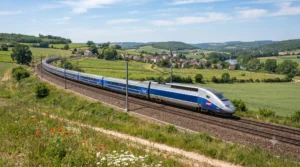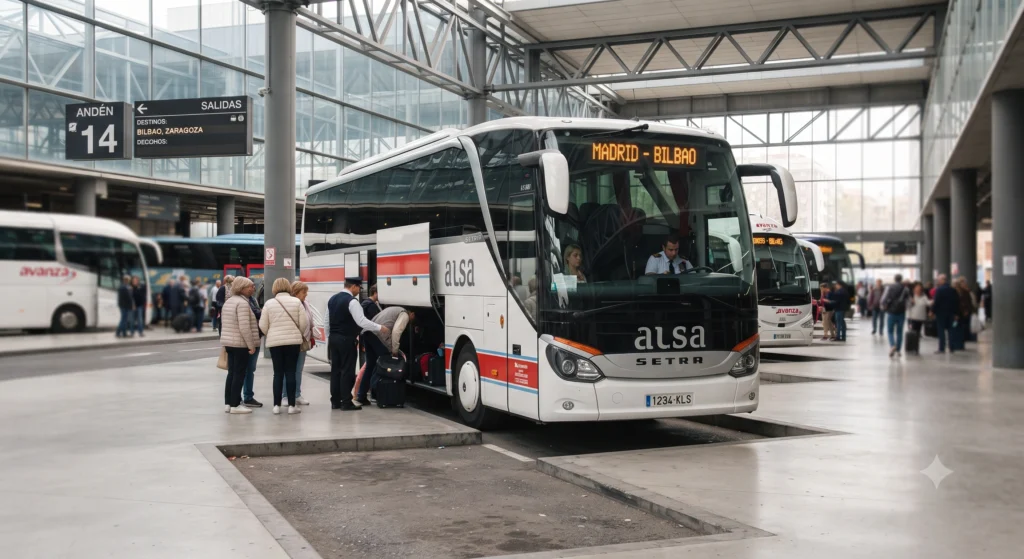
If you’re planning a Spain trip without a car, buses are the quiet backbone of the network: they go where trains don’t, cost less than most rail tickets, and connect tiny villages to big cities. But they’re not always the smartest choice. This guide explains when bus travel in Spain is a good deal, what the experience actually feels like, and where you might prefer a train or flight instead.
By the end, you’ll know if travelling Spain by bus fits your budget, your timeline, and your tolerance for long road journeys — and how to avoid common mistakes that turn a cheap trip into a stressful one.lonelyplanet+1
Quick Verdict: Is Travelling Spain by Bus Worth It?
Recommendation: Yes, for many travellers — especially if you’re budget-focused, flexible on time, and want to reach smaller towns.
Who should go with buses:
- Backpackers and students
- Slow travellers doing multi-stop itineraries
- People visiting smaller towns or rural areas
- Travellers who don’t mind 4–8 hour road journeys
Who should skip or limit buses:
- Time-pressed travellers who want the fastest connections between major cities
- People who strongly dislike long road trips or motion sickness
- travellers with significant mobility issues on older coaches
Biggest trade-off: You save money and gain route coverage, but you give up speed and sometimes comfort compared to high-speed trains.
Quick Facts
| Information | Details |
|---|---|
| Best for | Budget travel, reaching small towns, flexible itineraries |
| Typical cost | Around €5–€8 per 100 km; long routes €25–€50 |
| Main operators | ALSA, Avanza, FlixBus, many regional companies |
| Main hubs | Madrid (Estación Sur), Barcelona (Barcelona Nord), Valencia, Seville |
| Booking | Online in advance recommended; aggregators like Movelia help |
| Comfort | Standard and premium coaches; reclining seats, AC, power on many |
| Speed | Slower than high-speed trains; often similar to regional trains |
| Best time to travel | Apr–Jun, Sep–Oct; avoid major Spanish holiday weekends |
What Bus Travel in Spain Is Actually Like
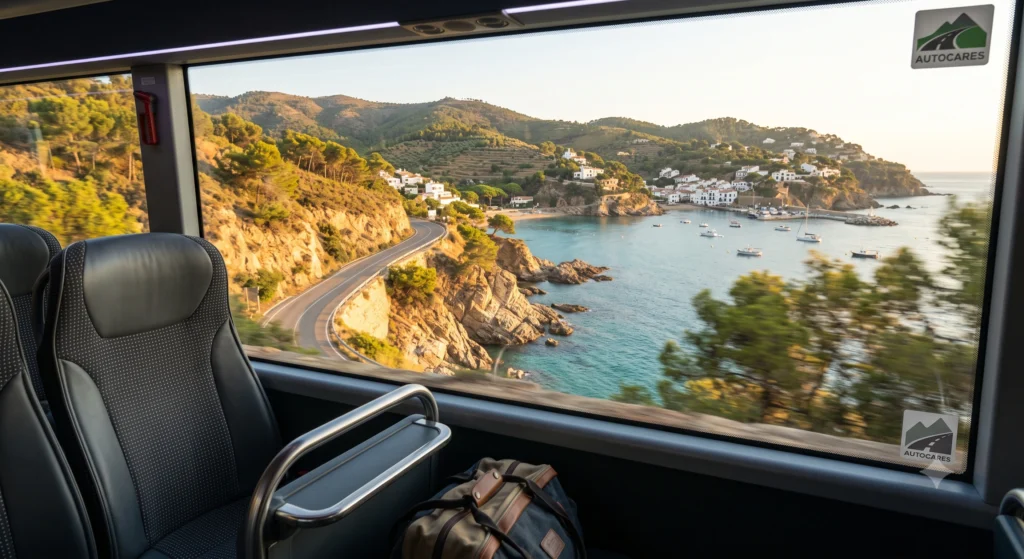
Spain has one of Europe’s most extensive bus networks. In practical terms, that means you can reach almost any city and a huge number of smaller towns without a car.
The experience:
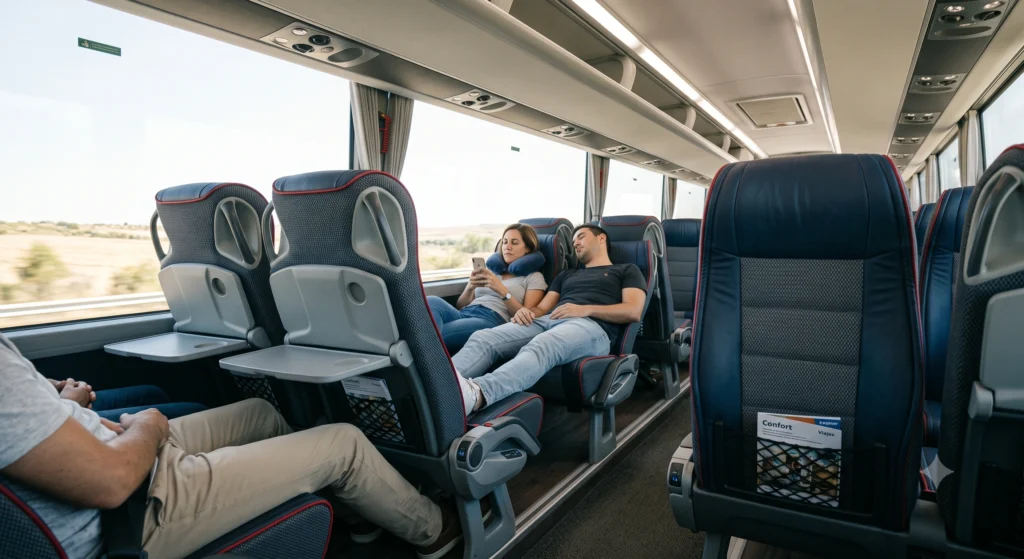
- Long-distance coaches on main routes (Madrid–Seville, Barcelona–Valencia, etc.) are usually modern, with air-conditioning, reclining seats, and often power outlets and Wi‑Fi. Premium services can feel close to a low-cost airline cabin in terms of seat comfort.busbud+1
- Regional and local buses vary more. Some are modern; others are older workhorses serving residents more than tourists. These are crucial for reaching smaller villages but may have fewer amenities and less English signage.spanish-fiestas+1
Atmosphere:
Buses are widely used by locals, students, and workers, not just tourists. On busy routes, you’ll share space with a mix of travellers, families, and commuters. It’s generally safe and orderly, but not “luxury travel” unless you specifically book a premium class.busbud+1
Pace:
Spain is large and varied. A journey that looks short on a map can take longer because of mountain roads, winding coastal routes, and multiple stops. A 400 km trip can easily take 5–6 hours. If you’re used to high-speed trains, this feels slow; if you’re used to long road trips, it’s normal.lonelyplanet+1
What Makes Bus Travel Worth Your Time
Bus travel in Spain is not just “the cheap option.” It has specific advantages that can make it the smarter choice for certain trips.
1. You can reach places trains don’t
Spain’s rail network is excellent between major cities, but many smaller towns and inland villages are only served by bus. If your itinerary includes places like white villages in Andalusia, small mountain towns, or coastal spots off the main rail lines, buses are often your only realistic public transport option.spanish-fiestas+1
2. It’s often the cheapest way to cross long distances
On many routes, buses undercut trains, especially high-speed AVE services. For a budget traveller, the savings can be significant: a Madrid–Granada or Madrid–Seville bus ticket can be half the price of a last-minute train ticket.lonelyplanet+2
3. Good for multi-stop, flexible itineraries
If you’re planning a slow trip with several stops (for example, Madrid → Toledo → Córdoba → Seville → Granada → Málaga), buses can be easier to stitch together than trains, especially when mixing big and small destinations. Aggregators like Movelia let you search many operators at once, making route planning simpler.lonelyplanet+1
4. Scenic value
Bus routes often go through countryside you won’t see on trains or flights. Olive groves, mountain passes, coastal roads, and small towns passing by your window turn travel time into part of the experience. If you enjoy watching landscapes change, this is a real plus.busbud+1
Where Buses Fit in Your Spain Transport Plan
Think of buses as one tool in your transport toolkit, not the only option.
Use buses when:
- You’re on a tight budget and time is flexible
- You’re going to smaller towns or regions with weak rail connections
- You’re comfortable with 4–8 hour road journeys
- You want to minimise your carbon footprint compared to flying
Consider trains instead when:
- You’re travelling between major cities on high-speed lines (e.g., Madrid–Barcelona, Madrid–Seville, Madrid–Valencia) and time matters
- You strongly prefer more space, smoother ride, and the ability to walk around
- You find a discounted advance train fare that’s close to the bus price
Consider flights when:
- You’re covering very long distances (e.g., Barcelona to Seville or Madrid to the Canary Islands) and have limited days
- You find a low-cost fare that’s comparable to a full-day bus journey
For many itineraries, the smartest approach is a mix: high-speed trains for the longest, time-sensitive legs, and buses for regional hops and smaller towns.roughguides+1
How Tickets & Booking Work
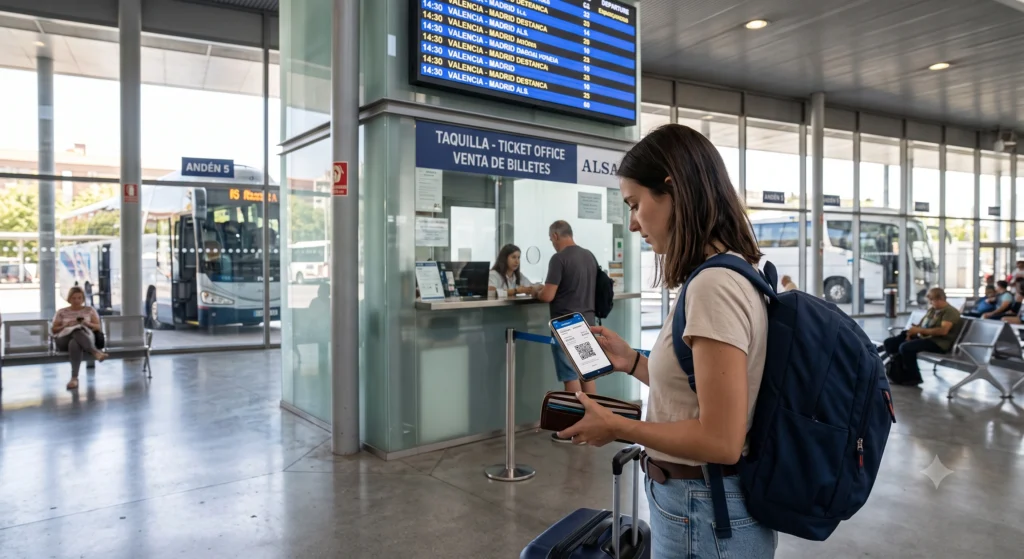
Main operators and aggregators
Key national and international operators include ALSA, Avanza, and FlixBus, plus many regional companies. Aggregators like Movelia let you search multiple operators and routes in one place, which is extremely useful for planning.lonelyplanet+2
Booking in advance vs. on the day
- Long-distance and peak-season routes: Booking online in advance is strongly recommended. Buses can fill up, especially before long weekends, in summer, and around major holidays. Prices also tend to rise as seats sell out.lonelyplanet+1
- Local and regional routes: In smaller towns, you may still buy tickets on the bus or at a small office. However, for popular routes and busy periods, assume you need to book ahead.whatspain+1
Tip: Round-trip tickets can sometimes be cheaper than two singles, and return legs may not always need a fixed date — check the fare rules when booking.whatspain
Bus stations and departure points
In big cities, buses usually leave from a central Estación de Autobuses (e.g., Madrid’s Estación Sur, Barcelona Nord). In smaller towns, buses may depart from an unmarked spot on a street or plaza. Locals will know; don’t hesitate to ask, “¿Dónde está la parada del autobús?”
Always double-check the departure location on your ticket. In cities like Madrid and Barcelona, there can be multiple terminals or stops for different operators.
Comfort & Onboard Reality
Standard vs. premium coaches
Most long-distance buses offer:
- Reclining seats with reasonable legroom
- Air-conditioning (often strong in summer)
- Toilets on board for longer routes
- Increasingly: power outlets and Wi‑Fi (quality varies)
Premium or “first class” services on some operators add:
- Extra legroom and wider seats
- More recline
- Sometimes complimentary snacks or drinks
- Entertainment screens on select routes
If you’re doing a 6+ hour journey, upgrading can be worth it, especially at night.busbud+1
Temperature, noise, and sleep
- Temperature: In summer, buses can feel very cold due to strong air-conditioning. Bring a light sweater or scarf even if it’s hot outside.
- Noise: Generally quieter than you might expect, but you’ll hear road noise, occasional announcements, and other passengers. Earplugs or headphones help if you’re sensitive.
- Sleeping: Overnight buses exist but are less common than in some other countries. If you do take a night bus, choose a premium service if possible and bring a neck pillow and eye mask.
Toilets and stops
Long-distance buses usually have toilets, but they’re small and basic. Drivers also make scheduled stops at service areas where you can stretch, use better facilities, and buy snacks or coffee. Use these breaks to move around; it makes long trips much more bearable.busbud
What It Really Costs
Exact prices change with demand, booking time, and operator, but these ranges give a realistic picture.lonelyplanet+1
Typical price benchmarks
- Short regional trips (50–150 km): €5–€15
- Medium intercity routes (200–400 km): €15–€35
- Long routes (500+ km, e.g., Madrid–Seville, Madrid–Barcelona): €25–€50+
A rough rule of thumb: €5–€8 per 100 km is a decent estimate for standard fares.whatspain
Budget vs. comfortable vs. premium
- Budget: Standard seat, booked in advance on a non-peak day. Fine for 2–4 hour trips; acceptable for longer if you’re hardened to road travel.
- Comfortable: Standard or slightly better seat, maybe an extra-legroom option, on a 4–6 hour journey. You’ll arrive tired but fine.
- Premium: Best for overnight or very long daytime trips. Extra space and recline make a noticeable difference to how you feel on arrival.
Prices can spike during holidays, summer weekends, and last-minute bookings. If your budget is tight, flexibility on dates and times is your biggest advantage.lonelyplanet+2
What To Skip and What To Do Instead
Overrated or poor-value choices
1. Very long overnight buses when you’re short on time
Spain is big. An overnight bus from, say, Barcelona to Seville can take 14+ hours. If you only have a week or two, that’s a huge chunk of your trip spent on a road. For such distances, check high-speed trains or budget flights first.roughguides+1
2. Using buses for main high-speed corridors if time matters
On routes like Madrid–Barcelona or Madrid–Seville, the high-speed train is often 2–3 times faster than the bus. If you find a discounted train fare close to the bus price, the time saved is usually worth it.roughguides+1
3. Assuming all local buses run frequently on weekends
Local routes are designed for residents, not tourists. In smaller towns, frequency can drop sharply on Saturdays and especially Sundays. If you rely on a late-afternoon bus back to a city, verify the schedule in advance so you don’t get stranded.whatspain
Better alternatives in specific situations
- Madrid ↔ Barcelona, Madrid ↔ Seville, Madrid ↔ Valencia:
Prefer high-speed trains if you can get a reasonable fare; they’re significantly faster and often more comfortable. Use buses if you’re on a very tight budget or trains are sold out.roughguides+1 - Very long north–south or east–west crossings (e.g., Barcelona ↔ Seville, Bilbao ↔ Málaga):
Check low-cost flights. A 1.5-hour flight can be smarter than a 12–14-hour bus journey, even with airport time.spainlesstraveled - Small towns without rail access:
Buses are usually your best or only option. Here, the question isn’t “bus or train?” but “bus or car rental?” If you’re confident driving in Spain, a rental can give more flexibility; if not, buses plus occasional taxis or tours work well.spanish-fiestas+1
Practical Tips to Make Bus Travel Smoother
- Book key legs in advance during peak season and around holidays.
- Use aggregators like Movelia to compare operators and routes.whatspain
- Arrive early at big stations; they can be busy and confusing the first time.
- Keep ID handy, especially on cross-border services; occasional passport checks still happen.busbud
- Bring layers: strong AC in summer, cooler nights in winter.
- Pack snacks and water, especially for long routes with few stops.
- Learn a few key phrases in Spanish (or Catalan where relevant) for asking about stops, platforms, and delays.busbud
Final Recommendation: Who Should Choose Bus Travel in Spain?
Travelling Spain by bus is worth it if:
- Your budget is tight and you want to maximise days on the ground over speed.
- You’re a slow traveller happy to spend half a day watching the landscape roll by.
- Your itinerary includes smaller towns or rural areas poorly served by trains.
- You’re comfortable with long road journeys and don’t need airline-style service.
It’s less ideal if:
- You have limited vacation days and want the fastest connections between major cities.
- You strongly dislike long bus rides or are prone to motion sickness.
- You need high accessibility and are worried about older coaches and bus stations.
For most mixed itineraries, the smartest approach is a hybrid: high-speed trains for the longest, time-sensitive legs, and buses for regional trips, smaller destinations, and budget stretches. That way you get the best of Spain’s transport network without wasting time or money.roughguides+2
FAQ
Is travelling Spain by bus safe?
Yes. Spain’s intercity and regional buses are generally safe, well-maintained, and widely used by locals and tourists alike. Major operators follow EU safety standards. As anywhere, keep an eye on your belongings at busy stations and on crowded buses, but violent crime on buses is rare. Use reputable operators and keep your ticket and ID accessible.lonelyplanet+1
Are Spanish buses comfortable for long journeys?
On main routes, yes: many long-distance coaches have reclining seats, good legroom, air-conditioning, and toilets. Premium services add extra space and sometimes snacks or entertainment. That said, a 6–8 hour bus ride is still a road journey; if you’re sensitive to motion or back issues, choose shorter legs or consider trains for the longest sections.
How far in advance should I book bus tickets in Spain?
For popular routes and peak periods (summer, Easter week, long weekends), book at least a few days to a week ahead, more if you have fixed dates. In low season and on less busy routes, you can often book a day or two before, but prices may be higher and seats limited. For critical legs of your trip, treat buses like trains: book early for the best fares.
Can I use one pass or card for all buses in Spain?
No. Unlike some countries, Spain doesn’t have a single nationwide bus pass for intercity travel. You buy tickets per route and operator, either online or at stations. Some cities have local travel cards for urban buses, but these don’t apply to long-distance services. Plan each leg separately and use aggregators to simplify searches.
Is it better to travel by bus or train in Spain?
It depends on your route and priorities. For major city pairs with high-speed rail (Madrid–Barcelona, Madrid–Seville, Madrid–Valencia), trains are usually faster and more comfortable, especially if you find a discount fare. For smaller towns, rural areas, and tight budgets, buses are often cheaper and more comprehensive. Most travellers benefit from mixing both: trains where speed matters, buses where coverage and price matter.