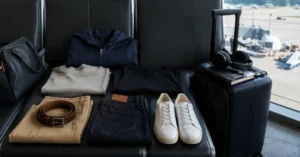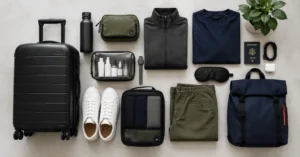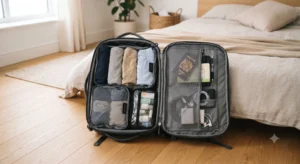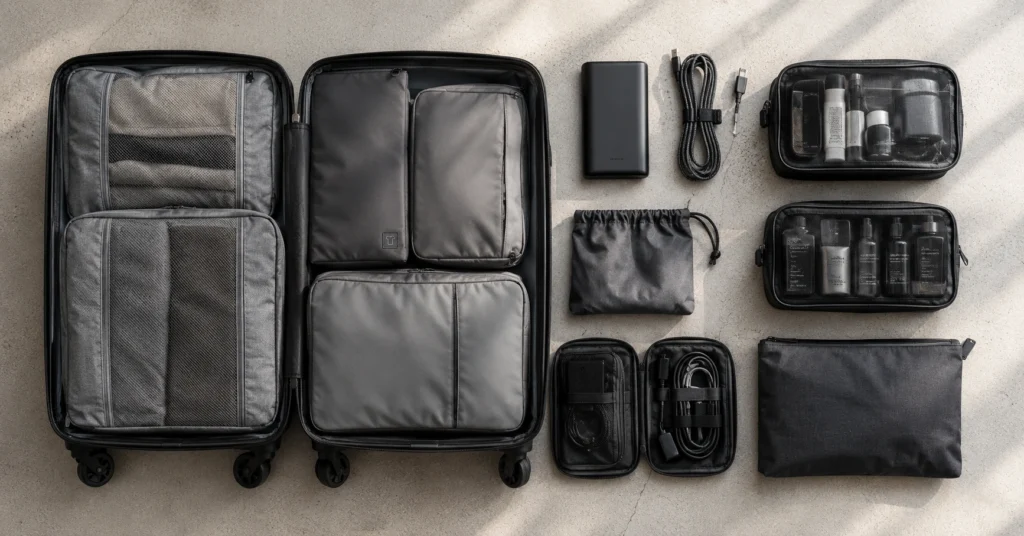
The chart below organizes essential cabin items by performance metrics based on multi-year deployment across international air networks.
| Accessory Type | Entry Price | Material Standard | Best For | Main Limitation | TravelDiaryy Verdict |
| Compression Cubes | $30–$45 per set | 40D / 70D Ripstop Nylon | Compressing knitwear and separating laundry bundles. | Adds raw weight to your bag without changing airline limits. | Buy immediately. Skip standard non-compressing variants. |
| TPU Toiletry Pouch | $15–$25 | Thermoplastic Polyurethane | Containing fluid leaks and clearing TSA checkpoints fast. | Stiff structures do not conform easily to packed corner gaps. | Mandatory upgrade from disposable zip bags. |
| GaN Wall Charger | $40–$60 | Gallium Nitride | Charging three devices simultaneously from one outlet. | Heavier than single-port phone plugs. | Invest once to save significant space and charging time. |
| Braided USB Cables | $12–$18 | Ballistic Nylon Sheathing | Surviving severe bending inside tight exterior pockets. | Less flexible than cheap rubberized cables. | Replace all basic plastic cords before departure. |
| Tech Organizer Case | $25–$40 | 1680D Ballistic Fabric | Preventing tangled cords and tracking memory cards. | Takes up roughly two liters of interior cabin bag volume. | Essential if carrying more than two power cords. |
What a Carry-On Setup Rewards—And What It Punishes When You Pack Wrong
The inside of a 40-liter cabin bag is an unforgiving piece of real estate. If you fill it with loose items, cheap plastic structural organizers, and oversized cotton laundry bags, your transit day will degenerate into a frustrating search through a chaotic pile of fabric. Commercial security checkpoints require you to extract specific hardware and liquids in seconds, not minutes. A well-considered selection of carry on travel accessories transforms an unstructured space into a highly efficient modular storage network.
This layout matters because modern air travel penalizes friction. When a gate agent pulls you aside for a random baggage check at London Heathrow or Tokyo Haneda, you do not want loose underwear tumbling onto the counter while you hunt for your power brick. The right choice of travel gear ensures everything has a fixed, predictable location. It removes the stress from security checks, protects expensive personal electronics from moisture damage, and allows you to pack two weeks of wardrobe into a standard overhead frame.
[Cabin Bag Frame]
  ├── [Compression Cube A: Tops] -> Expels dead air volume
  ├── [Compression Cube B: Bottoms] -> Dense structural block
  ├── [TPU Toiletry Pouch] -> Quick pull-out for airport security
  └── [Tech Organizer] -> Fixed spine against the back plate
We are not talking about complex, novelty items designed to solve problems that do not exist. You do not need a motorized tie rack or an inflatable footstool that takes twenty minutes to deploy. You need reliable, field-tested items constructed from industrial textiles that withstand heavy handling by airport ground crews and security staff.
Product Types: The Three Categories of Travel Gear That Matter
To organize your cabin bag layout effectively, you must understand the clear division between different packing accessories. Every accessory in your bag should fall cleanly into one of three operational systems. If a piece of gear does not serve a clear packing or utility purpose, leave it at home.
1. Compression and Organization
This category forms the primary structural foundation of your luggage interior. Standard packing cubes simply segregate your clothing into blocks, which helps with tidiness but does nothing to reduce overall physical size. Compression cubes use a dual-zipper configuration: one zip closes the bag, while a second, heavy-duty perimeter zip compresses the fabric down, expelling trapped air between shirts and trousers. Look for ripstop nylon weaves rated at 40-denier or higher to ensure the material can withstand the outward pressure of tightly packed clothing.
2. Electronics and Power Management
Your regular household charging bricks are completely unsuited for international transit. They are heavy, single-purpose blocks that crowd shared airport lounge outlets and hotel baseboards. Modern electronic accessories rely on Gallium Nitride (GaN) technology, which handles higher electrical current in a physical chassis half the size of legacy silicon chargers. A single 65-watt GaN plug can charge a laptop, a tablet, and a phone simultaneously from one wall outlet. Pair this with a structured tech case to isolate your cables from the main luggage compartment.
3. Personal Comfort and Security
Personal items must protect your essential documentation and maintain your physical well-being without occupying excessive space. This means swapping large, bulky travel pillows for flat-folding designs, and replacing loose passport covers with organized wallets that slip easily into an inside jacket pocket. For security, focus on small, tactile components like luggage locks with a flexible steel cable loop rather than a rigid brass shackle. These flexible cables snake easily through irregular zipper pulls without snapping when your bag jams inside a tight overhead compartment.
Buying Guide: How to Evaluate Materials, Weight, and Real Durability
Do not purchase travel essentials based on online styling or promotional lifestyle imagery. When an accessory fails at an overseas train terminal, its visual design means nothing. You must evaluate travel gear using four specific technical baselines: material grade, hardware construction, empty weight, and ease of cleaning.
- Material Weave and Density: Look for fabrics labeled with high denier numbers — such as 420D nylon or 1680D ballistic polyester. Denier measures the mass weight of the individual threads; higher numbers translate directly to superior puncture resistance and overall structural longevity. For internal organizers, lightweight ripstop fabrics with grid-pattern reinforcing threads offer the best strength-to-weight balance.
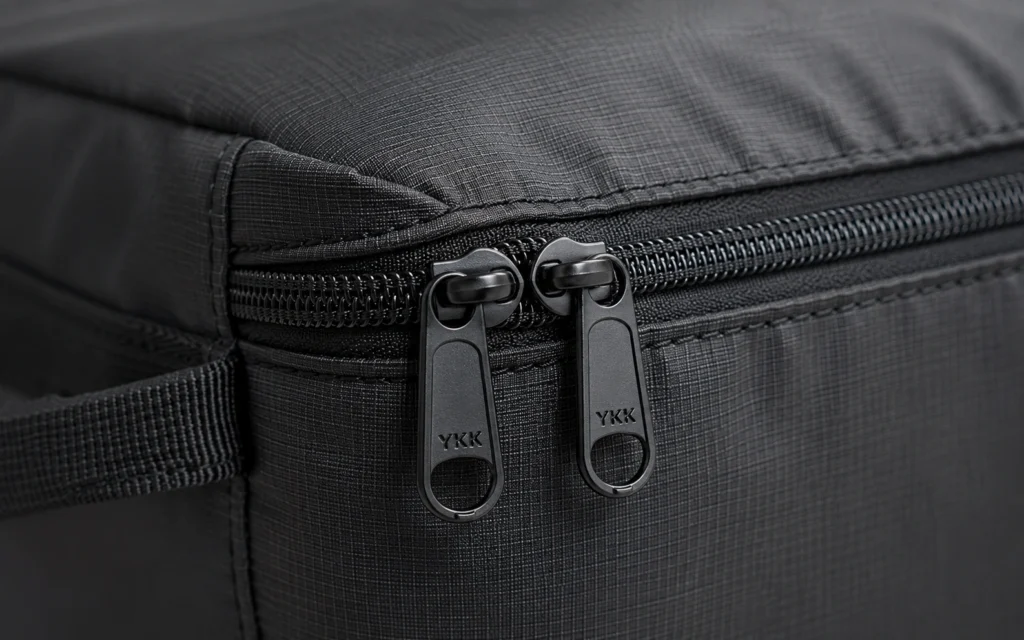
- Zipper Specification: Zippers represent the single most common failure point across all consumer luggage systems. Insist on genuine YKK or SBS brand zippers, specifically coil variants rather than metal tooth configurations. Coil zippers curve smoothly around the sharp corners of compression gear without binding or catching on stray fabric threads.
- Hardware and Buckles: Avoid brittle plastic clasps that shatter when stepped on or caught in a closing overhead locker. Choose premium hardware components manufactured from high-impact polyoxymethylene (POM) or aluminum alloys.
- Water and Stain Resistance: Toiletry kits and tech pouches need dependable exterior coatings. Look for a thermoplastic polyurethane (TPU) finish or a durable water-repellent (DWR) surface treatment. This keeps exploded shampoo bottles or unexpected downpours from ruining the dry goods inside your main bag.
Budget Guide: What It Actually Costs to Build a Multi-Year Setup
Building an optimized carry-on packing system requires upfront capital, but cheap options end up costing more when they break mid-trip. The tiers below detail exactly what you get at different investment points (2025–2026 rates — verify before travel).
The Budget Setup ($45–$65 Total)
This tier delivers basic utility using economy materials. It includes a three-piece set of basic polyester compression cubes ($20), a clear PVC zipper pouch for liquids ($10), a standard dual-port 30-watt wall adapter ($15), and two standard rubberized charging cables ($10).
- The Trade-off: The polyester fabric will show signs of seam strain within twelve months of consistent use, and the PVC pouch will yellow and crack over time. It functions adequately for one or two short holidays a year, but will fail under frequent travel demands.
The Mid-Range Setup ($110–$160 Total)
This is the optimal sweet spot for serious travelers. You receive a premium four-piece ripstop nylon compression cube set ($40), a structured TPU leak-proof toiletry case ($25), a 65-watt triple-port GaN universal charger ($45), and two braided nylon USB-C cords ($20).
- The Reality: This setup will easily last for five-plus years of frequent flying. The zippers run smoothly, the charger handles all your personal electronics concurrently, and the materials resist abrasions and stains.
The Worth-The-Splurge Upgrades ($220+ Total)
At this tier, you move into professional-grade transit gear. This adds specialized items like an ultralight tech organizer panel ($45), a custom-molded memory foam neck pillow with a compression wrap ($60), high-end aluminum luggage locks ($30), and premium weatherproof dry sacks for laundry storage ($40).
- The Reality: Only buy into this tier if your travel style involves constant nomadic work or challenging multi-destination international routes where gear failure carries severe consequences.
Common Mistakes and Exactly How to Avoid Them at the Security Gate
The most common travel accessories mistake is buying an items list that copies someone else’s trip without considering your own workflow. Many people pack a sprawling assortment of small pouches that split their gear into too many tiny compartments. You end up with a bag full of tiny sacks, wasting precious physical space on redundant layers of heavy nylon and individual zipper tracks. Keep your main compartments limited to four distinct blocks.
Another frequent error is using a dark, opaque toiletry bag for fluid storage. Security personnel at many international hubs — particularly throughout the European Union and the United Kingdom — will make you pull your liquids out and place them into a transparent bag. If your gear forces you to unpack your liquids into a flimsy, disposable airport plastic bag at the security lane, your expensive pouch has failed its primary purpose. Use a transparent TPU case from day one; it passes terminal screening inspection rules globally without a second thought.
[WRONG WAY]
[Main Bag Space] -> Packed with 8 small individual pouches.
                    Heavy zipper overhead, massive dead space.

[RIGHT WAY]
[Main Bag Space] -> Packed with 2 dense compression cubes,
                    1 tech case, 1 transparent liquids bag.
Finally, do not leave your cords plugged into your power bank while running through a terminal. The constant physical leverage exerted against the input port inside an exterior bag pocket can easily crack the internal solder joints of the lithium battery pack. Unplug your cables completely, coil them to a minimum three-inch diameter circle to prevent wire fatigue, and secure them inside your dedicated tech organizer before moving between gates.
Final Recommendations: The Exact Packing Accessories Setup for Your First Trip
If you are stepping onto an international flight for the first time, do not overcomplicate your gear list. Stick to this tested, baseline selection of essential accessories to maximize your cabin bag efficiency.
First, secure a matching four-piece set of ripstop nylon compression cubes. Use the largest cube for rolled trousers and sweaters, the medium size for shirts, and the smallest block for underwear and socks. Leave the final cube completely empty — it will serve as your isolated laundry bag to keep worn items away from fresh clothing throughout your journey.
Second, buy one high-output 65-watt GaN wall charger equipped with two USB-C ports and a single legacy USB-A slot. This single unit completely eliminates the need to carry separate power bricks for your phone, camera, and tablet. Pair it with a one-meter and a two-meter braided cable so you can easily reach awkward power outlets located far behind hotel beds or airport terminal seating.
Finally, consolidate your liquids into a structured, transparent TPU pouch using three 3-ounce silicone squeeze bottles. This simple layout satisfies international airport screening standards, eliminates unexpected cabin leaks, and saves you precious minutes at the security gate.
If you want to dive deeper into coordinating your bags and long-term travel gear luggage choices, check out our comprehensive travel gear guide to match these internal items with the right exterior cabin backpack.
Frequently Asked Questions About Carry On Travel Accessories
Are compression cubes better than regular packing cubes?
Yes. Compression cubes feature a secondary perimeter zip that physically expels excess air trapped between fabric layers, compressing clothing volume by roughly 30%. Standard cubes only organize items without reducing physical size.
Can I bring a heavy power bank through airport security?
Aviation authorities cap carry-on power banks at 100 watt-hours, which equals roughly 27,000 milliampere-hours. Anything larger gets confiscated at the security screening line. Always verify the clear text engraving on the battery casing before passing through the gate.
How do I keep my liquids from leaking inside my cabin bag?
Switch to thick silicone squeeze bottles with self-sealing valves and secure them within a transparent thermoplastic polyurethane pouch. Avoid thin polyethylene plastic bottles, which crack under commercial airplane cabin pressure changes.
Do I need a TSA-approved lock for a carry-on bag?
Yes, if you plan to ever check the bag or leave it in a hotel storage room. TSA-approved locks allow airport security screeners to open your luggage for inspection using a universal master key, preventing them from cutting your zipper pulls off if your bag is selected for a random search.