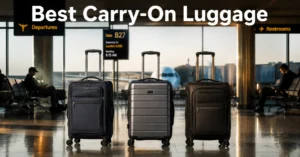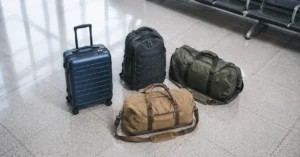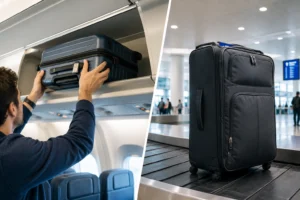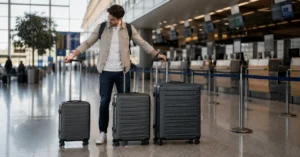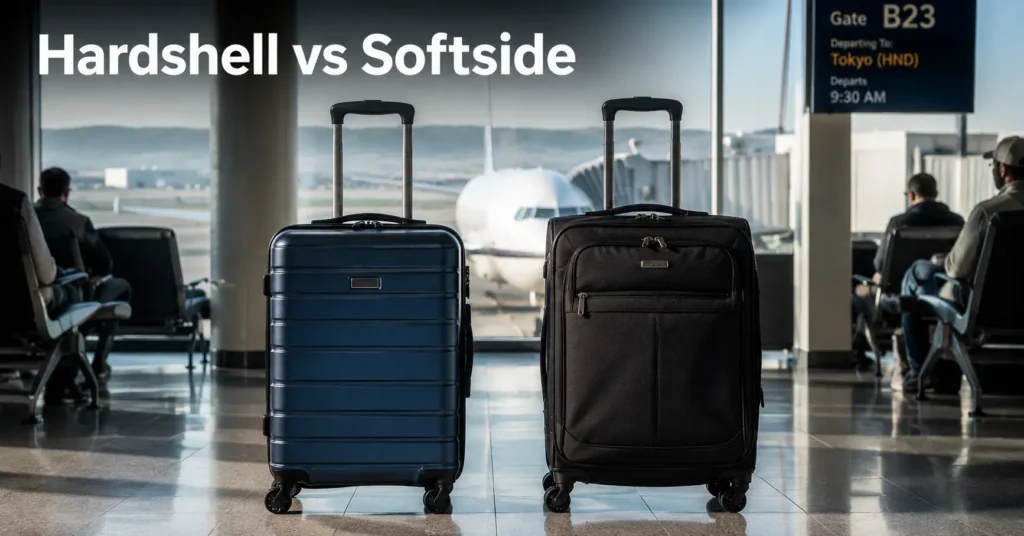
The best suitcase for international travel is usually a softside spinner if you take longer trips, shop abroad, or routinely push airline weight limits. Hardshell luggage works better if you travel light, move fast through airports, or carry fragile electronics that can’t survive baggage handlers treating your suitcase like a rugby ball. Most people buy based on aesthetics. The smarter decision is based on how often you come home with more than you left with.
And that’s the part luggage marketing avoids completely.
I’ve watched a cracked polycarbonate shell come off a Bangkok baggage belt with one wheel hanging sideways after a Doha connection. I’ve also watched a softside bag absorb rain, dirt, and airport conveyor grease until it looked like it had completed military service. Neither type is universally better. One just fits your travel style more honestly than the other.
Quick Verdict: Most International Travellers Should Buy Softside — But Not All of Them
| Option | Price | Best For | Limitation | Verdict |
|---|---|---|---|---|
| Hardshell suitcase | $180–$450+ | Short international trips, electronics, organised packers | Less flexible when overpacked | Better for structured travel |
| Softside suitcase | $140–$350+ | Long trips, shopping, multi-country travel | Fabric wears faster cosmetically | Better for most travellers |
| Aluminium suitcase | $700–$1,500+ | Frequent business travel | Heavy and expensive | Buy only if you fly constantly |
| Hybrid suitcase | $250–$500 | Mixed business + leisure travel | Usually heavier | Good compromise option |
(2025–2026 rates — verify before travel)
Softside luggage wins for most international travel because flexibility matters more than appearance after the third flight connection. A soft bag compresses into European train racks more easily, expands when you inevitably buy things abroad, and survives overpacking without splitting. That matters more in practice than scratch resistance.
But if you travel with camera gear, laptops, or anything breakable, hardshell becomes the safer call immediately. No debate there.
What Hardshell Suitcases Are Actually Like After Three International Trips
Hardshell luggage protects contents better, rolls more smoothly on flat airport floors, and looks newer longer from a distance. Up close, most polycarbonate shells start collecting scratches after the first checked flight. Especially black ones. The glossy finishes look good online and terrible under airport lighting six months later.
The bigger issue is flexibility. International airlines are stricter on size than many US domestic carriers, especially in Europe and Asia. A rigid shell gives you exactly one shape. That’s fine until you’re trying to close it after buying two sweaters in Tokyo or fitting it into an Italian train luggage rack designed sometime around 1987.
Still, hard cases have one clear advantage that frequent travellers notice immediately: weather resistance. A hardshell suitcase sitting on a wet tarmac in Frankfurt during a delayed transfer is mostly fine. A soaked softside bag eventually absorbs that airport grime smell that never completely leaves.
And wheel quality matters more than shell type anyway. Cheap spinner wheels fail long before good shells do. Four-wheel luggage under about $120 usually cuts corners here first. You feel it instantly on uneven pavement outside airports — especially in cities with cobblestones. Rome is basically a stress test for luggage wheels.
What Softside Luggage Gets Right That Marketing Photos Never Mention
Softside luggage handles real travel chaos better than most hardshell bags. That’s the simplest version.
You can overpack it slightly. You can squeeze it into overhead bins that technically look too small. External pockets actually matter during long-haul trips because digging for a passport beside a boarding gate queue is irritating faster than people admit. And softside bags usually weigh 1–2kg less than comparable aluminium or reinforced-shell cases. That difference matters on airlines with strict 23kg checked limits.
Here’s the relatable moment nobody talks about before their first international trip: the return flight is almost always harder to pack than the outbound one. Laundry expands. Souvenirs appear. Receipts multiply into strange paper ecosystems inside your bag. Softside luggage tolerates this reality better.
The downside is durability aesthetics. Fabric stains. Corners fray. After enough baggage belts, even expensive ballistic nylon starts looking tired. But structurally? Good softside luggage often survives longer than cheaper hardshell options because fabric flexes instead of cracking.
That’s why airline crews and long-term travellers still use softside surprisingly often. Not because it looks better. Because it behaves better under pressure.
The Differences That Change the Decision at the Airport
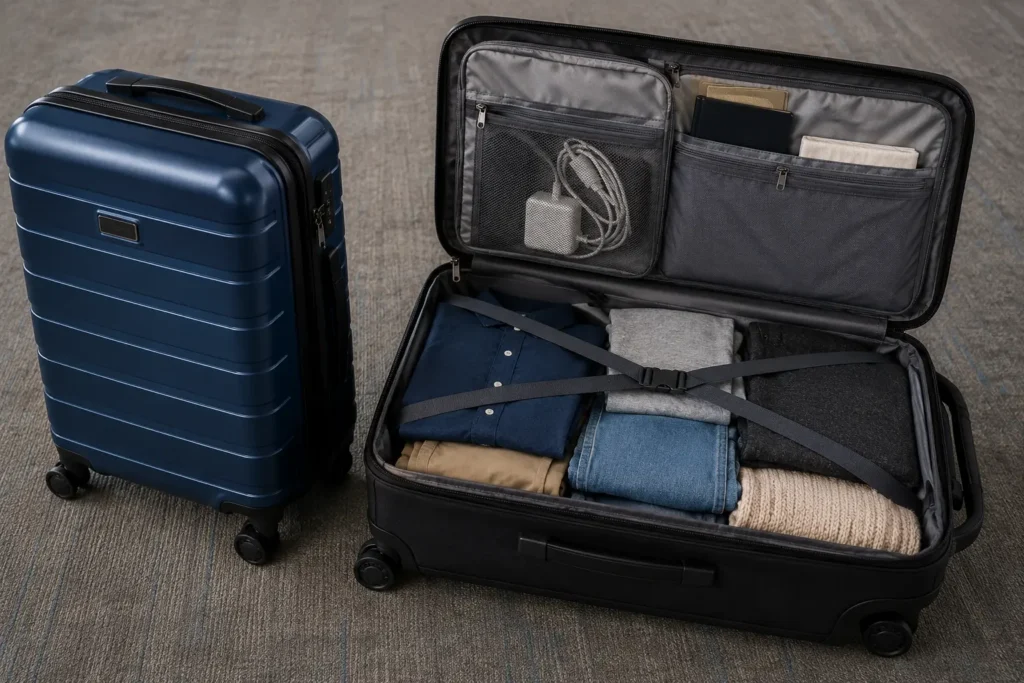
The biggest difference between hardshell vs softside isn’t durability. It’s friction.
Hardshell creates less friction moving through airports. The shape stays balanced. Wheels glide better on polished floors. Security repacking is cleaner because structured compartments stay where you left them. If most of your trip happens between taxis, airports, and hotels, hardshell feels efficient.
Softside creates less friction during the trip itself.
Train storage. Hotel stairs. Tight taxis in Lisbon. Expanding capacity after shopping in Seoul. Compressing the bag slightly to meet carry-on checks at European low-cost airline gates — where staff absolutely do notice oversized bags now. That’s where softside starts winning repeatedly.
Here’s the blunt verdict: if you routinely check luggage internationally, buy durability first and appearance second. Airports destroy pretty luggage eventually. The expensive white suitcase all over Instagram lasts about three baggage belts before it looks exhausted.
And avoid zipperless aluminium cases unless you travel constantly for work. They photograph well. They also weigh enough empty that you lose packing allowance before adding shoes.
Choose Hardshell if You Travel With Fragile Gear or Move Between Airports Fast
Hardshell luggage works best for structured trips with predictable logistics.
If you mostly stay in business hotels, move by taxi, fly direct routes, and pack carefully, a hard case feels cleaner and more controlled. The organisation stays intact. Electronics stay safer. Rain protection is stronger. And premium spinner systems on good hardshell luggage genuinely roll beautifully through large airports like Singapore Changi or Doha Hamad.
This is also the better choice for photographers and remote workers carrying monitors, drones, cameras, or multiple laptops. Softside absorbs impact poorly around corners. Hardshell distributes it.
The trade-off comes later. Specifically at the end of a two-week trip when you suddenly need 15% more space than physics currently allows.
Choose Softside if You Pack Heavy, Shop Abroad, or Take Long Trips
Softside luggage is the better suitcase for international travel for most leisure travellers taking trips longer than a week.
Long trips become unpredictable fast. You buy things. Weather changes. Laundry timing collapses. One hotel room turns out to be four flights of stairs above a Venice alley. Flexible luggage handles flexible travel better.
This matters even more across multi-country trips. European regional trains rarely prioritise luggage storage design. Japanese hotels often have compact rooms. Southeast Asian ferries occasionally involve someone throwing your bag onto a dock with concerning confidence. Softside adapts better to all of this.
My worst luggage decision was taking a rigid aluminium suitcase across Greece during ferry season. Beautiful case. Absolute mistake. Every staircase felt personal by day four.
And unless you’re carrying fragile equipment, flexibility beats armour for most international itineraries.
Cost Comparison: What You Actually Get at Every Price Tier
| Tier | Price Range | What You Actually Get | Worth It? |
|---|---|---|---|
| Budget | $80–$150 | Basic wheels, weaker zippers, lower-grade shell/fabric | Fine for occasional trips |
| Mid-range | $180–$350 | Better wheel systems, stronger handles, lighter materials | Best value tier |
| Premium | $400–$800+ | Smoother rolling, stronger warranties, lighter builds | Worth it for frequent flyers |
| Luxury | $1,000+ | Branding, aluminium shells, prestige finishes | Mostly status, not function |
(2025–2026 rates — verify before travel)
Mid-range luggage is the sweet spot for almost everyone. Around $220–$320 gets you noticeably better wheels, reinforced corners, and handles that don’t wobble after one connection through Heathrow.
Above that, you pay increasingly for refinement instead of survival.
One strong recommendation: buy from brands that sell replacement wheels and handles separately. Because luggage rarely dies completely. One wheel usually dies first.
Final Recommendation: The Best Suitcase for International Travel for Most People
The best suitcase for international travel for most people is a mid-range softside spinner around 65–75L capacity with replaceable wheels and an expansion zipper.
That’s the practical answer after enough airports.
Hardshell is better for fragile gear, short structured trips, and travellers who prioritise organisation over flexibility. Softside is better for real-world travel friction — tighter transport, changing plans, shopping abroad, and the fact that most trips become messier than expected by day six.
Don’t buy luggage based on showroom appearance. Buy for the worst transit day of the trip.
That’s the version you’ll actually remember.
Frequently Asked Questions About the Best Suitcase for International Travel
Is hardshell or softside better for international travel?
Softside is better for most international leisure trips because it flexes more easily, expands when overpacked, and handles mixed transport better. Hardshell works better for fragile gear, business travel, and travellers who pack carefully with minimal variation.
What size suitcase works best for international travel?
A 65–75L checked suitcase works best for trips longer than one week. Carry-on limits vary heavily by airline, especially across Europe and Asia, where stricter enforcement is common. Always check your airline’s exact dimensions before flying. (Schedules change — confirm before travel)
Are expensive suitcases actually worth it?
Mid-range luggage offers the best balance of durability and cost. Premium luggage improves wheel smoothness, warranty support, and weight reduction, but the jump above roughly $400 becomes increasingly about refinement rather than major performance gains.
Do hardshell suitcases crack easily?
Cheap ABS hardshell luggage cracks more often than higher-grade polycarbonate shells. Good hardshell luggage flexes slightly under pressure instead of splitting. Shell quality matters more than the category itself.
Continue Exploring
- best travel gear breaks down the equipment that actually improves trips instead of just adding weight and cost to your packing list.
- international travel gear essentials covers adapters, backpacks, organisers, and the smaller items that solve problems before they happen.