Mount Fuji is a masterclass in atmospheric frustration. The mountain is an active stratovolcano sitting roughly 100 kilometers southwest of Tokyo, rising 3,776 meters into its own stubborn microclimate. What tourism brochures fail to mention is that the peak is hidden by low-hanging weather systems for over 200 days a year.
If you board an express train at 9:00 AM hoping for a casual glimpse of the snowcapped summit, you will likely spend your afternoon staring into an unyielding wall of grey vapor. This layout is designed to eliminate that disappointment by delivering the exact transit sequences, booking intervals, and financial realities required to actually see the mountain.
             ┌────────────────────────────────────────┐
             │       THE TRANSIT TOLL REALITY         │
             └────────────────────────────────────────┘
                                  │
         ┌────────────────────────┴────────────────────────┐
         ▼                                                 ▼
┌─────────────────┐                               ┌─────────────────┐
│  HIGHWAY BUS    │                               │  JR EXCURSION   │
├─────────────────┤                               ├─────────────────┤
│ • ¥2,200/way    │                               │ • ¥4,130/way    │
│ • Direct route  │                               │ • No transfers  │
│ • Slower in traffic                             │ • Limited times │
└─────────────────┘                               └─────────────────┘
What This Destination Rewards — and What It Punishes if You Arrive Unprepared
Visiting Mount Fuji rewards strict execution, precise horizontal alignment with train timetables, and the willingness to wake up at 5:00 AM. For a first-time visitor, understanding the spatial layout is critical: you do not go to Mount Fuji for a day trip; you go to the Fuji Five Lakes basin—primarily Lake Kawaguchiko—to view it from the base.
Seasoned explorers know that the peak creates a midday thermal updraft that sucks moisture off the Pacific Coast, predictably choking the view with heavy stratus clouds by 10:30 AM. If you show up without an hourly weather tracking strategy, the mountain will punish you with a wasted four-hour round-trip commute and a view of nothing but a damp gift shop.
The social contract of regional transit here is rigid. Tour groups and independent day-trippers systematically exhaust all highway bus inventory weeks in advance. If you pull up to the ticketing counter at Shinjuku Station expecting a spontaneous seat, you will be stranded on the platform or forced onto a disjointed three-train milk run. Total self-reliance is required—monitor the regional visibility webcams maintained by the Yamanashi Prefectural Government before tap-validating your transport ticket.
What to Know Before You Go
The official climbing season is narrow, running strictly from July 1st to September 10th (2026–2026 rates — verify before travel). Outside this specific window, the higher trails are legally blocked, hazardous, and devoid of medical infrastructure, meaning your visit will be purely observational.
For first-timers, know that regional transportation is heavily fragmented; the Tokyo metropolitan transit passes like the standard 24-hour subway ticket are utterly useless out here. Seasoned commuters carry physical or digital IC cards (Suica or Pasmo) loaded with at least 5,000 yen to cover the independent local bus routes operating around the lakes.
       MT. FUJI REGIONAL VISIBILITY WEIGHT (BY MONTH)
  ┌────────────────────────────────────────────────────────┐
  │ Jan–Feb : 75% Clear Windows (Best for Day Trips)        │
  │ Mar–May : 45% Clear Windows (Haze & Mist Interference)  │
  │ Jun–Aug : 20% Clear Windows (Heavy Monsoon / Humidity)  │
  │ Sep–Oct : 35% Clear Windows (Typhoon Risk Overlaps)     │
  │ Nov–Dec : 70% Clear Windows (Crisp, High-Contrast Cold) │
  └────────────────────────────────────────────────────────┘
The Experiences Worth Building the Trip Around — Named and Specific
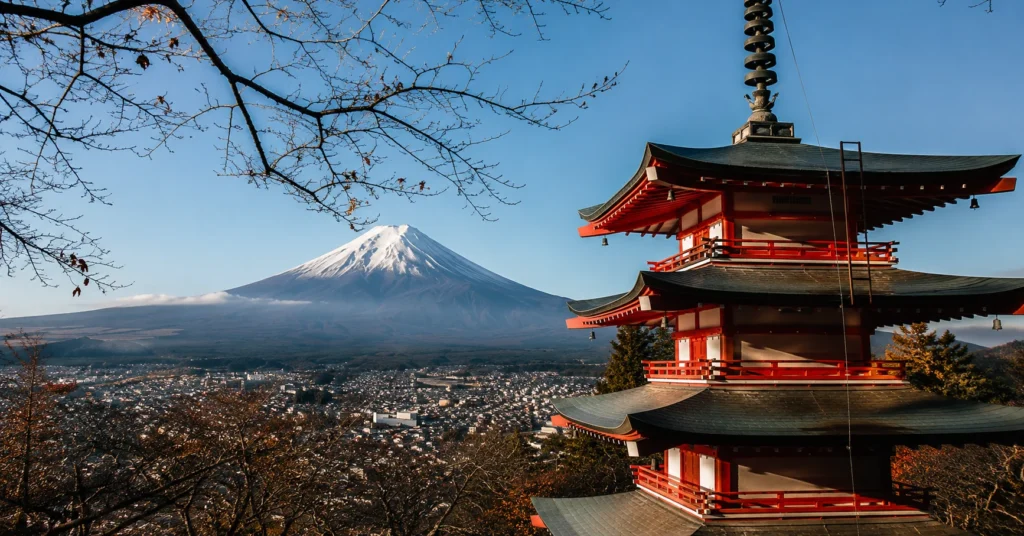
The classic postcard view lives at Arakurayama Sengen Park, a hillside shrine complex requiring a relentless 398-step climb from the base. First-timers should target the lower platform by 7:30 AM to catch the low-angle morning light hitting the five-story Chureito Pagoda with the volcano perfectly centered behind it.
Experienced trail hikers can bypass the selfie-stick crowds at the top by pushing 15 minutes past the viewing deck along the unpaved mountain singletrack toward Mount Ogura. Here, the canopy thins out entirely, offering unencumbered sightlines of the symmetrical volcanic slopes without a single tripod leg in your peripheral vision.
For an entirely different perspective that avoids the mid-day tourist rush, charter a local rental bicycle outside Kawaguchiko Station and pedal to the northern shore near Oishi Park. While the tour buses cluster near the park entrance souvenir stalls, you can follow the lakeside gravel path two kilometers west toward the Nagasaki Viewpoint.
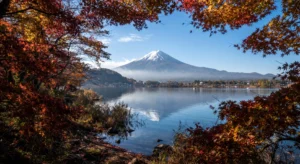
This specific bend offers an unblocked, ground-level frame across the open water where the mountain’s massive profile reflects directly off the glassy lake surface on windless autumn mornings.
Where to Stay: Zones and Real Prices
Choosing a base determines whether you wake up looking at a volcanic wall or an asphalt parking structure. The Fujikawaguchiko zone is divided by the lake itself; the southern shore near the station is built for convenience, while the northern shore holds the premium, unobstructed viewpoints.
- Lake Kawaguchiko Northern Shore (Worth-the-Splurge): Expect to pay between 45,000 yen and 85,000 yen per night for a traditional ryokan (Japanese inn) with private hot spring access facing the water. This is the only zone where the mountain is fully visible from your room without stepping foot outside.
- Fujiyoshida City Center (Mid-Range): Standard business properties and boutique hostels command 12,000 yen to 22,000 yen per night (2025–2026 rates — verify before travel). The vibe is hyper-local, located along historic streets like Kaneyama-dori, though you will need to commute 15 minutes to reach the water.
- Kawaguchiko Station Environs (Budget): High-density capsule spaces and clean bunkhouses operate between 4,500 yen and 8,000 yen per night. It is noisy and lacking in character, but it places you steps from the dawn departure platforms.
Getting Around: Named Options + Costs
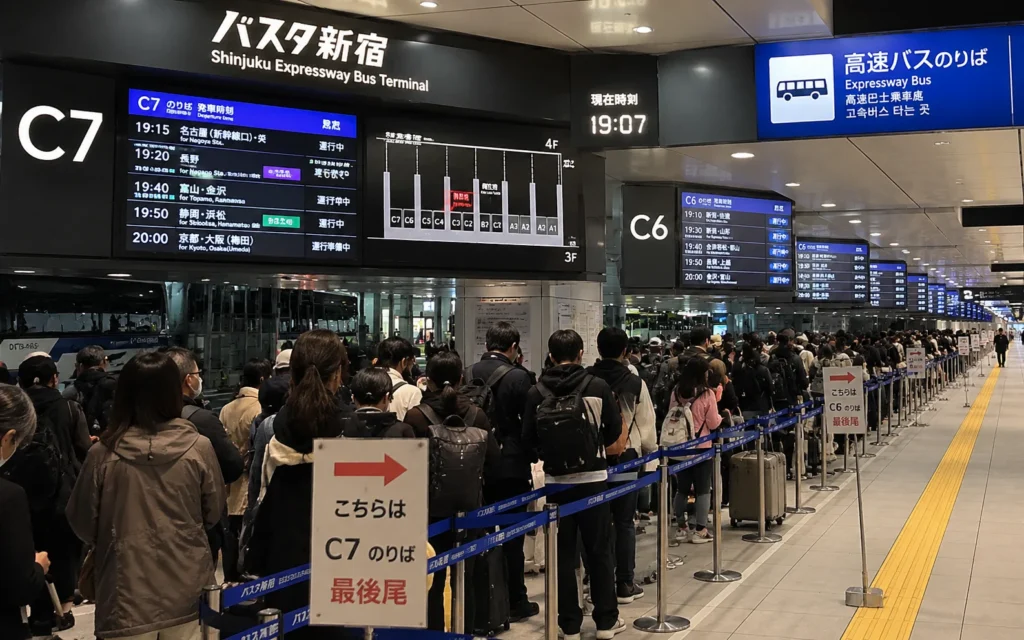
Direct transit is an absolute priority over complex route combinations. The primary choice is between the express highway bus and the direct rail line, and the math depends entirely on your starting point in Tokyo.
| Transit Option | Cost (One-Way) | Journey Time | Departure Hub | Best For |
| Fuji Excursion Train | ¥4,130 | 115 minutes | JR Shinjuku Station | Speed & punctuality |
| Express Highway Bus | ¥2,200 | 135 minutes | Busta Shinjuku (4F) | Direct budget run |
| Local JR / Fujikyu Combo | ¥3,670 | 160 minutes | Otsuki Station Transfer | JR Pass holders |
If you own a standard Japan Rail Pass, the financial logic shifts significantly. The JR Pass covers the initial leg from Tokyo to Otsuki Station via the JR Azusa or Kaiji express lines. However, the track from Otsuki to Kawaguchiko is owned by the private Fujikyu Railway line, meaning pass holders must pay an additional out-of-pocket supplement of 1,170 yen each way (2025–2026 rates — verify before travel) directly to the conductor.
For travellers without a pass, the express highway bus from Busta Shinjuku is the superior option—it cuts the price in half and eliminates the platform sprint during the Otsuki transfer.
What It Actually Costs: Three Tiers
Your financial layout around the mountain depends entirely on your tolerance for public bus schedules and your dining choices.
Budget Tier: ¥6,500 to ¥9,000 per day
This path relies completely on the express highway bus round-trip from Shinjuku (¥4,400). You will skip the paid tourist ropeways, travel entirely on foot or via the standard local red-line bus using your IC card, and eat local Hoto noodles (¥1,400) at a roadside diner. Accommodation is excluded as this assumes a return trip to Tokyo before nightfall.
Mid-Range Tier: ¥16,000 to ¥24,000 per day
This includes a one-way ticket on the premium Fuji Excursion train and a return bus leg. You will secure a two-day unlimited retro bus pass (¥1,500) to move freely between Lake Kawaguchiko and Lake Saiko, pay the entry fee for the panoramic Mt. Fuji Panoramic Ropeway (¥900), and stay in a clean Fujiyoshida business hotel.
Worth-the-Splurge Tier: ¥65,000+ per day
This tier abandons shared public transit entirely for a private chartered vehicle from Tokyo (approx. ¥48,000 per day). It includes a premium lakeside ryokan stay with an open-air bath on the balcony, and an upscale multi-course kaiseki dinner featuring local Yamanashi Wagyu beef.
How to Execute the Perfect Kawaguchiko Day Trip
The following sequence details the precise physical steps required to get from central Tokyo to the primary viewing zones and back without getting stuck in the afternoon tourist bottlenecks.
1.Secure the Seat:30 Days Prior.
Log onto the official Highway-Buses.jp portal at 10:00 AM JST exactly one month before your travel date. Book the 06:45 AM express bus from Busta Shinjuku to Kawaguchiko Station—any departure after 07:30 AM will trap you in heavy commuter traffic on the Chuo Expressway.
2.The Morning Platform Run:06:30 AM.
Arrive at the 4th floor of Shinjuku Station’s South Exit (Busta Shinjuku). Do not stop for breakfast inside the terminal; lines at the convenience stalls are notoriously long. Grab your drinks from the platform vending machines and board early.
3.The Postcard Frame:09:15 AM.
Disembark at Kawaguchiko Station, ignore the taxi lines, and immediately board the local Fujikyu Railway line bound for Shimochureito Station. Walk 10 minutes to the base of Arakurayama Sengen Park and complete the climb before the heavy tour buses arrive at 10:00 AM.
4.Northern Shore Transition:12:00 PM.
Take the local train back to Kawaguchiko Station. Walk directly across the parking lot to the bicycle rental depot and secure a standard multi-gear cruiser. Cycle along the eastern bank toward the northern shore to escape the fixed pedestrian bus queues.
5.The Escape Route:16:30 PM.
Return your bicycle and check into the station terminal. Board your pre-booked return bus or the Fuji Excursion train back to Shinjuku. Avoid regional highway departures after 17:30 PM, as weekend highway bottlenecks can extend the trip to over three hours.
What to Skip — and What to Do Instead
Skip the Fuji Subaru Line 5th Station during the off-season. Tourism agencies market it as the ultimate alpine viewpoint because it sits halfway up the mountain flank, but the reality is bleak: it is a massive asphalt bus bay crammed with large groups, overpriced souvenir stands, and an identical view of the peak that you can get from the valley floor.
If the cloud cover rolls in, you will spend your afternoon standing inside a literal cloud, unable to see more than ten meters in front of your face.
The Ground-Level Alternative: Instead of ascending into the fog, take the local green-line bus down to the Saiko Iyashi-no-Sato Nenba folk village. You will pay a modest 500 yen entry fee to enter a reconstructed settlement of traditional thatched-roof houses. On a clear day, the mountain rises directly behind the ancient roofs, giving you a historic architectural frame completely free of concrete tour bus terminals.
Frequently Asked Questions About Mount Fuji
Can I use my digital Suica card on all the regional buses around Kawaguchiko?
Yes. The red, green, and blue sightseeing Omni lines operating around the lakes fully accept all major contactless Japanese IC cards. Just remember to tap the electronic card reader at the rear door when boarding, and tap again at the front scanner next to the driver when exiting to calculate the distance fare accurately.
Is the Chureito Pagoda accessible for travellers with limited mobility?
The main viewing path consists of 398 steep stone steps which can be slick during morning dew. However, there is a paved, winding access road running parallel to the stairs that allows strollers and those with limited mobility to reach the upper pagoda platform at a gentle slope.
What should I do if the morning forecast shows 100% cloud cover over the peak?
Cancel or redirect your ticket immediately. If the mountain is completely invisible on the live Yamanashi Prefecture webcams by 6:00 AM, it will not clear up later in the afternoon. Redirect your morning to a lower-altitude destination like Hakone, where the hot spring culture and open-air museums do not depend on clear mountain vistas.
Continue Exploring
- Day Trips Tokyo Discover our comprehensive cost and transit breakdowns for alternative regional excursions across the Kanto plain, including Kamakura and Nikko.
- Japan Pillar Access our master itinerary framework to seamlessly balance your bullet train schedules and accommodation zones across the main island.