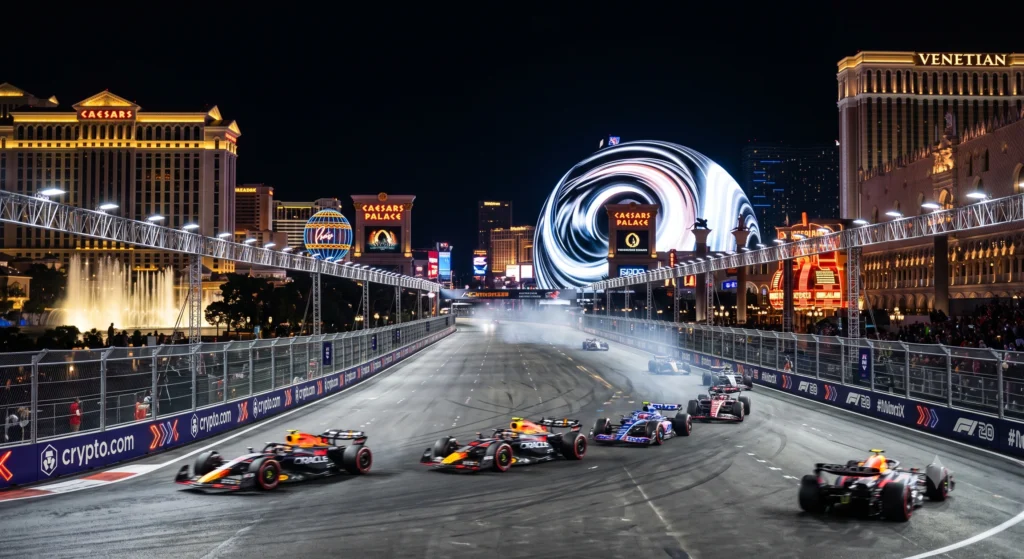
Formula 1’s return to Las Vegas was launched with hyperbole: a billion-dollar spectacle blending 210-mph racing with the world’s most aggressive entertainment backdrop. Promotional clips feature champagne towers, rooftop viewing parties, and cars tearing down a frictionless Las Vegas Boulevard.
The on-ground reality is more complicated, colder, and significantly more expensive than marketing videos suggest. A weekend at the Las Vegas Grand Prix can be an exhilarating sporting event, but it can also feel like an exercise in navigating endless barricades, fighting multi-hour transit delays, and shivering in bleachers at 1:00 AM.
Before committing several thousand dollars to tickets, hotels, and flights, you need to understand how this event functions on a practical level—where the money is worth spending, which experiences to avoid, and how to avoid the common logistical traps that catch unprepared visitors every year.
Quick Verdict: Is the Las Vegas F1 Grand Prix Worth It?
The Verdict: Yes, but only if you buy assigned seating, prepare for late-night winter temperatures, and accept severe pedestrian restrictions. If you expect a casual weekend where you can stroll the Strip while catching glimpses of the race for free, you will be disappointed.
- Who should go: Die-hard motorsport fans who value the spectacle of a night street race; travellers with generous budgets seeking premium hospitality; visitors willing to navigate complex event logistics for a unique atmosphere.
- Who should skip: Budget travellers expecting cheap general admission; families with young children sensitive to cold late nights and long walking detours; casual tourists who simply want a traditional Las Vegas sightseeing vacation.
- The Biggest Trade-Off: High costs and extreme physical inconvenience in exchange for seeing the world’s fastest cars race down one of the world’s most iconic streets.
Quick Facts
| Information | Details |
| Event Dates | Late November (Thursday–Saturday schedule, night race) |
| Budget Expectation | $1,500 (Strict Budget) to $12,000+ (Hospitality/Luxury) per person |
| Best Ticket Areas | Sphere Zone Grandstands (T-Mobile) or West Harmon Zone |
| Key Transport | Las Vegas Monorail & Walking (Avoid Taxis/Ubers completely near track hours) |
| Night Weather | 42°F to 52°F (5°C to 11°C), low humidity, high wind gusts down street canyons |
What This Event Is Actually Like
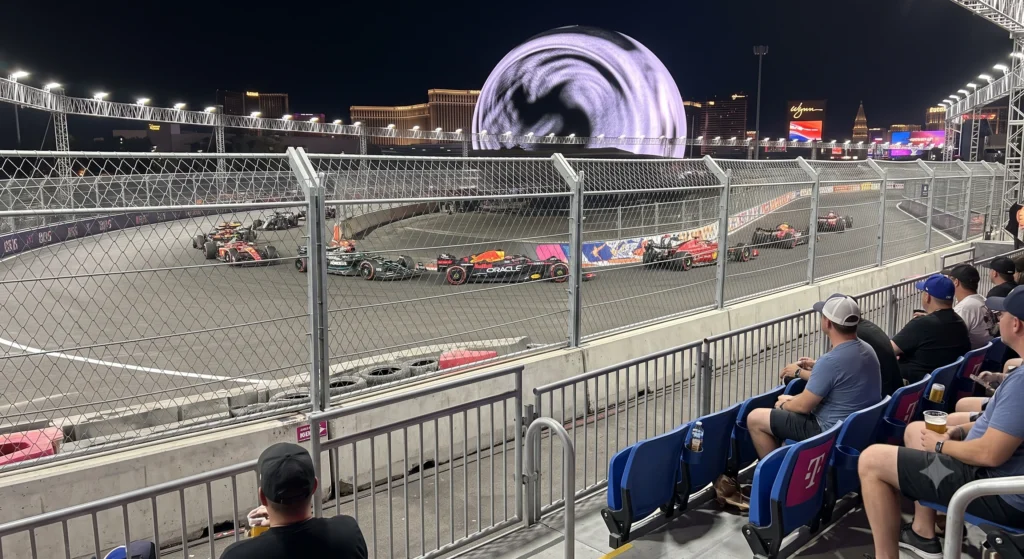
The most striking feature of the Las Vegas Grand Prix is its late-night timeline. Unlike European or Asian races that run in late afternoon or early evening local time, session times in Vegas are pushed back to accommodate global broadcast windows. Practice, qualifying, and race sessions run between 6:00 PM and midnight, with support races stretching into the early hours of the morning.
+-----------------------------------------------------------------------+
|                       DAILY EVENTTIMELINE REALITY                      |
|                                                                       |
|  05:00 PM -- Gates Open & Security Checkpoints Saturated               |
|  06:30 PM -- Support Races / Track Activity Begins                    |
|  09:30 PM -- Primary F1 Session (Practice / Qualifying / Race Start)  |
|  11:30 PM -- Track Sessions Conclude                                  |
|  12:00 AM -- Mass Exodus into Pedestrian Choke Points                  |
|  01:00 AM+-- Temperatures Drop to Lows (Mid-40s°F / ~7°C)             |
+-----------------------------------------------------------------------+
When the sun sets over the Mojave Desert in late November, temperatures drop rapidly. The illuminated casino facades give the illusion of warm summer nights, but you will be sitting on cold aluminum bleachers in 45°F (7°C) weather with wind blowing down the Strip.
Beyond the weather, the physical layout of the city changes completely during race week. The 3.8-mile (6.1 km) circuit cuts across major arteries including Las Vegas Boulevard, Koval Lane, Sands Avenue, and Harmon Avenue. To protect official broadcast rights and public safety, event organizers erect miles of temporary steel fencing, solid black privacy screens, and temporary pedestrian bridges.
You cannot simply walk up to the sidewalk on Las Vegas Boulevard to catch a quick glimpse of a car. If you do not have a ticketed ticket zone credential, you will see black vinyl barriers blocking every sightline from sidewalks, escalators, and hotel glass walls.
What Makes It Worth Your Time (and Money)
If you plan carefully, the event delivers moments that no other race on the calendar can match.
+-----------------------------------------------------------------------+
|                    CIRCUIT ZONES & SIGHTLINE MAP                      |
|                                                                       |
|  [ Sands Avenue ] -------------------------------------------------+  |
|        |                                                           |  |
|   +----+----+     +-------------------+     +------------------+   |  |
|   | SPHERE  |     |  HEINEKEN SILVER  |     |   WEST HARMON    |   |  |
|   | ZONE    |     |  MAIN GRANDSTAND  |     |   ZONE           |   |  |
|   +----+----+     +-------------------+     +------------------+   |  |
|        |                   |                         |             |  |
|  [ Koval Lane ] -----------+-------------------------+             |  |
|        |                                                           |  |
|  [ Las Vegas Blvd / The Strip ] -----------------------------------+  |
+-----------------------------------------------------------------------+
1. The Sphere Zone (T-Mobile Grandstands)
Located around Turns 5 through 9, the Sphere Zone is widely considered the best overall vantage point for ticket holders. Grandstands here surround the illuminated MSG Sphere, which displays real-time race data, telemetry art, and immersive visual effects throughout the sessions.
The cars navigate a technical sweeping chicane here before bursting out onto the Koval straight, meaning you witness braking, cornering technique, and acceleration rather than just a high-speed blur.
2. The High-Speed Strip Straight
Watching cars hit speeds exceeding 210 mph down Las Vegas Boulevard past Caesars Palace and the Bellagio fountains is surreal. The acoustic resonance of multi-million-dollar engines echoing off high-rise hotel towers creates a sound profile unique to urban street tracks.
3. All-Inclusive Food Ticketing Tiers
In recent years, F1 organizers incorporated complimentary food and non-alcoholic beverages into standard grandstand tickets within designated zones like the Sphere and East Harmony. Rather than paying $22 for a cold burger, fans access regional food partner stations (curated by local Vegas chefs) inside their fan zone hubs. This significantly reduces out-of-pocket costs during race night.
Where to Stay: Choosing the Right Zone
Hotel choices during F1 weekend dictate your entire experience. Proximity on a map is deceiving; being 500 yards from your grandstand means nothing if a track barricade forces a two-mile detour around a closed intersection.
+-----------------------------------------------------------------------+
|                 HOTEL STRATEGY & LOGISTICAL ACCESS                    |
|                                                                       |
|  STRIP TRACKSIDE RESORTS (Caesars, Venetian, Bellagio)                |
|  [+] Step straight into circuit zone; luxury service                  |
|  [-] 3x-5x room rates; extreme congestion; view restrictions          |
|                                                                       |
|  MONORAIL CORRIDOR HOTELS (MGM Grand, Horseshoe, Sahara)              |
|  [+] Fast transit via train; bypasses road closures                   |
|  [-] High demand for trains post-race; requires walking to stations   |
|                                                                       |
|  OFF-STRIP / DOWNTOWN (Palms, Virgin, Fremont Street)                 |
|  [+] Fair pricing; quieter environment; authentic dining              |
|  [-] Requires early departure; rideshare drop-offs restricted         |
+-----------------------------------------------------------------------+
Option A: Trackside Strip Resorts (Caesars Palace, Venetian, Bellagio)
- Best for: High-budget travellers wanting direct walking access to main zones.
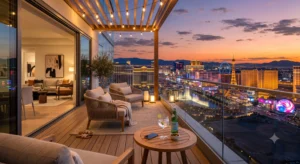
- The Reality: Rooms here command top-tier pricing. Do not expect to watch the race from your hotel window unless you explicitly purchase an F1-branded room package that guarantees an unobstructed view. Most standard windows facing the Strip are masked or positioned behind light gantries and display screens.
- Price Range: Premium / Luxury ($800–$2,500+ per night during race weekend).
Option B: Monorail Corridor Properties (MGM Grand, Horseshoe, Boingo Station adjacent)
- Best for: Smart middle-budget travellers prioritizing easy access.
- The Reality: The Las Vegas Monorail runs along the east side of the Strip circuit, directly behind Koval Lane. Staying near an active Monorail station lets you bypass road closures entirely and land within walking distance of the Sphere Zone and Main Grandstand entry gates.
- Price Range: Comfort ($350–$750 per night during race weekend).
Option C: Off-Strip & Downtown Las Vegas (Virgin Hotels, Palms, Fremont Street)
- Best for: Budget-conscious travellers who prioritize value over proximity.
- The Reality: Staying off-Strip saves hundreds of dollars per night on lodging. However, you must factor in transit time. Rideshare drivers cannot access the inner track loop, meaning you will be dropped off at designated outer perimeter hubs (e.g., Virgin Hotel or Hughes Center) and must walk 20–30 minutes to your gate.
- Price Range: Budget / Mid-tier ($180–$350 per night during race weekend).
Getting Around: The Transport Reality
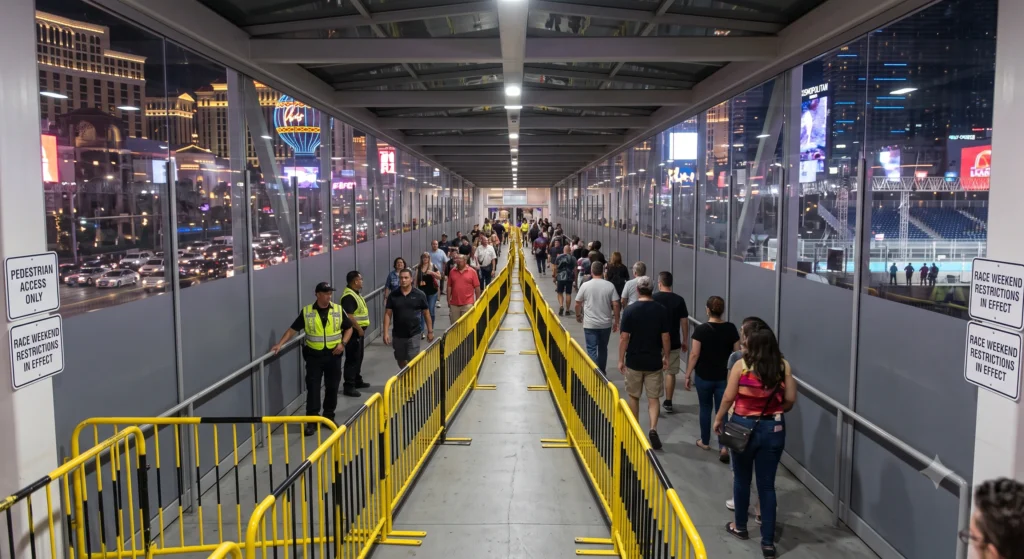
If you attempt to get around Las Vegas during race weekend using traditional methods, you will face major delays.
+-----------------------------------------------------------------------+
|                      TRANSPORT METHOD COMPARISON                      |
|                                                                       |
|  WALKING          [==========] Fastest within circuit zone            |
|  MONORAIL         [========  ] Efficient east-side track access       |
|  RIDESHARE/TAXI   [==        ] Trapped by outer perimeter gridlock    |
|  RENTAL CAR       [=         ] Severe parking restrictions & closures  |
+-----------------------------------------------------------------------+
Rideshares and Taxis: The Perimeter Trap
During track action hours (roughly 3:00 PM to 2:00 AM), major intersections across the 3.8-mile track loop are completely closed to vehicle traffic. Rideshare pickup and drop-off points are pushed blocks away from hotel entrances.
An Uber ride that normally takes 8 minutes can take over an hour due to bottlenecked detours on suburban bypass roads like Paradise Road and Dean Martin Drive. Fare surge pricing is severe.
The Las Vegas Monorail: Your Best Asset
The Monorail is the most reliable motorized option for moving parallel to the circuit. It operates continuously with stations at MGM Grand, Horseshoe/Paris, Flamingo, Harrah’s/LINQ, Boingo Station at Las Vegas Convention Center, Westgate, and SAHARA. While platforms become packed immediately following the race, it remains immune to surface street gridlock.
Walking: The Detour Factor
Walking is necessary for the final stretch to your gate, but double your estimated travel times. Pedestrian flow is funneled through security gates, temporary bridges, and narrow walkways bounded by tall fences. Plan your arrival at least 90 to 120 minutes before on-track sessions start.
What It Really Costs
Understanding the true financial breakdown helps prevent unexpected budget shocks.
+-----------------------------------------------------------------------+
|                    3-NIGHT ESTIMATED COST TIERS                       |
|                                                                       |
|  BUDGET TIER      | $1,800 - $2,500 total per person                   |
|  (Off-Strip stay + General Admission/Fan Zone + Monorail pass)        |
|                                                                       |
|  COMFORT TIER     | $4,500 - $7,000 total per person                   |
|  (Strip/Monorail stay + Sphere/Harmon Grandstand + Casino Dining)     |
|                                                                       |
|  PREMIUM TIER     | $12,000 - $25,000+ total per person                |
|  (Luxury Resort + Paddock Club/Skybox + Fine Dining Reservations)     |
+-----------------------------------------------------------------------+
The Cost Breakdown
- Tickets: General Admission / Standing Room tickets range from $500 to $800 for three-day access. Assigned Bleacher/Grandstand seats run between $1,500 and $3,000. Premium Hospitality (Paddock Club, Club SI, Skyboxes) starts around $8,000 to $15,000+.
- Accommodations: Expect a 200% to 400% markup over standard November weekend rates across all casino resorts.
- Food & Beverage: Included inside grandstand ticket zones (check current ticket inclusions before booking). Off-track dining at casual casino restaurants runs $30–$60 per meal per person; fine dining starts at $150–$300 per person without alcohol.
- Incidentals: Monorail multi-day pass (~$30), official merchandise ($80+ for t-shirts, $120+ for team hoodies), rideshares to/from Harry Reid International Airport (LAS) ($40–$90 each way with surge).
What to Skip and What to Do Instead
1. SKIP: Unreserved General Admission / Standing Room Tickets
Why: Unreserved GA tickets sound like a cost-effective entry point, but viewing angles are restricted. You will spend hours jostling for position against safety barriers, often looking through multiple layers of chain-link fence or standing behind crowds four-people deep with limited or no video screen visibility.
DO THIS INSTEAD: Pay the difference for a guaranteed assigned grandstand seat in the Sphere Zone or West Harmon Zone. Having an assigned seat with elevated sightlines, dedicated big-screen views, and accessible restrooms transforms your experience.
2. SKIP: Relying on Hotel Room Views
Why: Paying double or triple for a “Strip View” room in hopes of watching the race from your window is a gamble that rarely pays off. Security measures, directional lighting gantries, and window treatments mean most rooms do not offer clear sightlines to the track floor.
DO THIS INSTEAD: Book a standard room based purely on location and transit access (e.g., proximity to a Monorail station), and spend your budget on trackside grandstand access where the atmosphere and views are guaranteed.
3. SKIP: Trying to Dine at Major Casino Buffets Right After Sessions End
Why: When 100,000 spectators leave the circuit at 11:30 PM–12:00 AM, every late-night restaurant, food hall, and diner inside central Strip casinos develops 2-hour wait times.
DO THIS INSTEAD: Take advantage of the inclusive food stalls inside your ticketed grandstand zone right before the main race ends, or head away from the track loop toward Downtown Las Vegas (Fremont Street) or off-Strip dining spots along Chinatown (Spring Mountain Road) for fast, high-quality late-night meals.
Practical Survival Tips for Race Weekend
- Dress in Heavy Layers: Do not let the desert palm trees fool you. A thermal base layer, windproof jacket, beanie, and warm socks are essential for sitting outdoors on metal grandstands from 8:00 PM to 1:00 AM.
- Clear Bag Policies Are Strictly Enforced: F1 venues enforce strict clear-bag policies (typically clear plastic, vinyl, or PVC bags not exceeding 12″ x 6″ x 12″). Oversized backpacks, hard coolers, and opaque bags will be turned away at security.
- Bring Comfortable, Closed-Toe Shoes: Expect to walk anywhere from 5 to 10 miles per day due to perimeter walking detours, long grandstand access ramps, and casino concourses.
- Download Offline Maps and Mobile Credentials: Cellular networks on the Strip become heavily congested during peak event hours. Save your digital race tickets to your phone’s native wallet app (Apple Wallet / Google Wallet) before leaving your hotel, and screenshot walk routes.
Final Recommendation
The Las Vegas F1 Grand Prix is not a trip for casual sightseeing or bargain hunting. It is a specialized, high-energy sporting event built for fans who want to witness street racing at night in an iconic urban environment.
Go if: You are an F1 enthusiast willing to budget for assigned grandstand seating, prepare for cold weather, and navigate a complex, fenced city layout for an unforgettable weekend of racing.
Skip if: You are looking for a classic, easygoing Las Vegas vacation on a budget. You will pay higher prices for hotel rooms and meals while dealing with enclosed streets, heavy pedestrian detours, and restricted access to the city’s main attractions.
FAQ
Is the Las Vegas F1 Grand Prix cold at night?
Yes. Late November night temperatures in Las Vegas typically fall between 42°F and 52°F (5°C to 11°C). Combined with wind tunneling through street canyons, extended exposure in open-air bleachers feels very chilly. Wear thermal layers, warm jackets, and beanies.
Can I watch the Las Vegas F1 race for free from the Strip?
No. Organizers install solid black privacy screens along pedestrian bridges, sidewalks, and open windows surrounding the entire 3.8-mile track loop. Sightlines from public areas are completely blocked to non-ticket holders.
What is the best way to travel around the track on race weekend?
Walking and using the Las Vegas Monorail are the most reliable options. The Monorail runs along the east side of the circuit, bypassing surface road closures. Taxis and Ubers face extreme delays and severe perimeter detours.
Is food included in Las Vegas F1 tickets?
In most official F1 grandstand zones (such as the Sphere and East Harmony zones), basic food and non-alcoholic beverages are included with your ticket. Always confirm the specific inclusions on your ticket tier prior to booking.