You do not need a bigger bag for a longer trip. You need a tighter system. The difference between a stressful two‑week scramble and a calm two‑month rhythm is how you choose clothes, organise them, and plan for laundry.
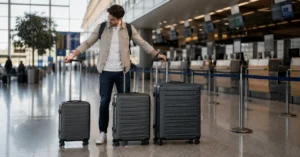
This guide pulls together proven carry‑on packing methods used by light‑travel experts and frequent flyers. It is written for people who want to move faster through airports, avoid checked‑bag fees, and still look presentable without spending their trip hunting for laundry.travelandleisure+1
Quick Verdict: Is Carry‑On‑Only Worth It?
Recommendation: Yes, for most travellers on trips from 10 days to several months, if you are willing to:
- Wear a capsule wardrobe (mostly neutrals, mix‑and‑match).
- Do laundry every 5–7 days (hand wash, laundromat, or hotel sink).
- Accept “good enough” outfits instead of “perfect for every scenario”.travelandleisure+1
Who should go carry‑on only:
- City hoppers, backpackers, digital nomads, budget travellers, anyone who hates waiting at baggage claim.the5kilotraveller
Who might struggle:
- Travellers who need highly specific gear (formal events, extreme cold, specialized sports).
- People who dislike hand‑washing clothes or re‑wearing items.charlieontravel+1
Biggest trade‑off:
You gain speed and flexibility but give up outfit variety and “just in case” comfort. For most people, that is a smart exchange.
Quick Facts
| Information | Details |
|---|---|
| Ideal bag size | 35–45 L carry‑on backpack (check your airline’s linear cm/inch limits). |
| Target weight | Aim for 5–8 kg total if you can; under 10 kg keeps you nimble. |
| Best time to use | Multi‑city trips, budget airlines, long hauls with connections. |
| Laundry reality | Plan to wash small loads every 5–7 days (sink, laundromat, or hotel service). |
| Biggest mistake | Packing “just in case” items you will never wear. |
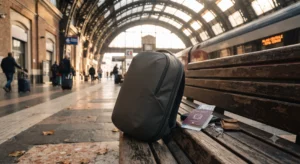
Step 1 — Choose the Right Bag (This Matters More Than You Think)
A good carry‑on backpack should:
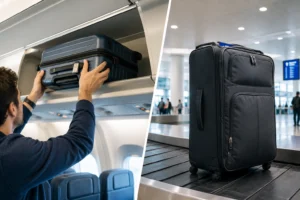
- Meet your strictest airline’s size limits (often around 55 × 40 × 20 cm, but check your carrier).
- Open like a suitcase (clamshell) for easy packing and security checks.
- Have compression straps and a separate laptop sleeve.
What to skip:
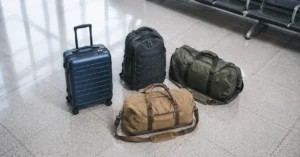
- Oversized “travel backpacks” that barely fit under seats.
- Bags with too many tiny pockets that encourage overpacking.
Better alternative:
Pick one proven carry‑on backpack and learn it deeply. Consistency beats novelty when you travel often.
Step 2 — Build a 10–12 Item Capsule Wardrobe
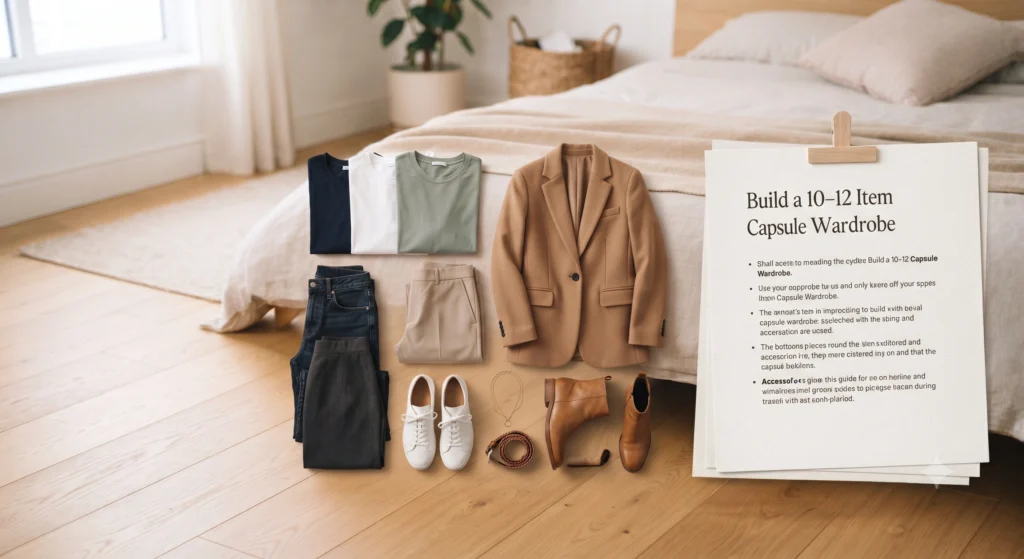
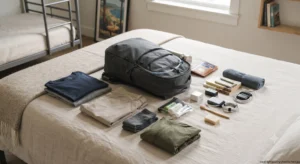
The core idea: fewer items, more combinations. Most light‑packing systems work with roughly:
- 2–3 tops worn on rotation
- 2–3 bottoms
- 1–2 layers (light jacket, cardigan, or fleece)
- 1 dress or smarter outfit (if relevant)
- 5–7 pairs of underwear
- 4–6 pairs of socks
- 1–2 pairs of shoes total (one worn, one packed if needed)travelandleisure+2
Why this works:
- Neutrals and simple patterns mix easily.
- You can re‑wear bottoms several times before washing.
- Layers adapt to changing weather without extra bulk.
Who enjoys this:
Travellers who prefer comfort and practicality over fashion variety. If you love planning outfits daily, carry‑on only will feel restrictive.
Step 3 — Plan Laundry Before You Pack
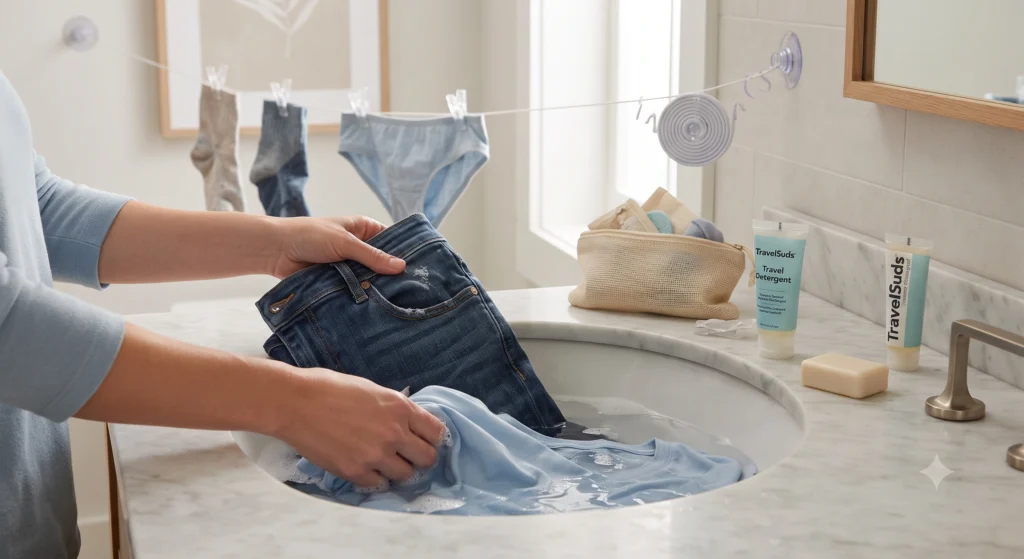
Carry‑on packing only works if you accept regular laundry. Your options:
- Hand wash in sink: underwear, socks, light tops; dry overnight in many climates.
- Laundromats: common in cities and tourist areas; budget 1–2 hours every week.
- Hotel/hostel laundry services: convenient but pricier; good for mid‑trip refresh.travelingtulls+1
Smart move:
Pack a small sink‑wash kit (travel detergent or laundry strips, a clothesline or rubber bands). This alone can cut your clothing needs by almost half.
Step 4 — Pack by Role, Not by Day
Instead of “Day 1 outfit, Day 2 outfit”, think in roles:
- Everyday: comfortable walking outfit + one slightly smarter option.
- Active: clothes for hiking, gym, or long days.
- Evening / nicer: one outfit that can be dressed up with accessories.
- Sleep / lounge: lightweight set that doubles as backup.travelandleisure+1
This prevents the classic mistake of packing 14 “complete” outfits for 14 days, which almost never matches how people actually travel.
Step 5 — Use Packing Cubes and Compression Wisely
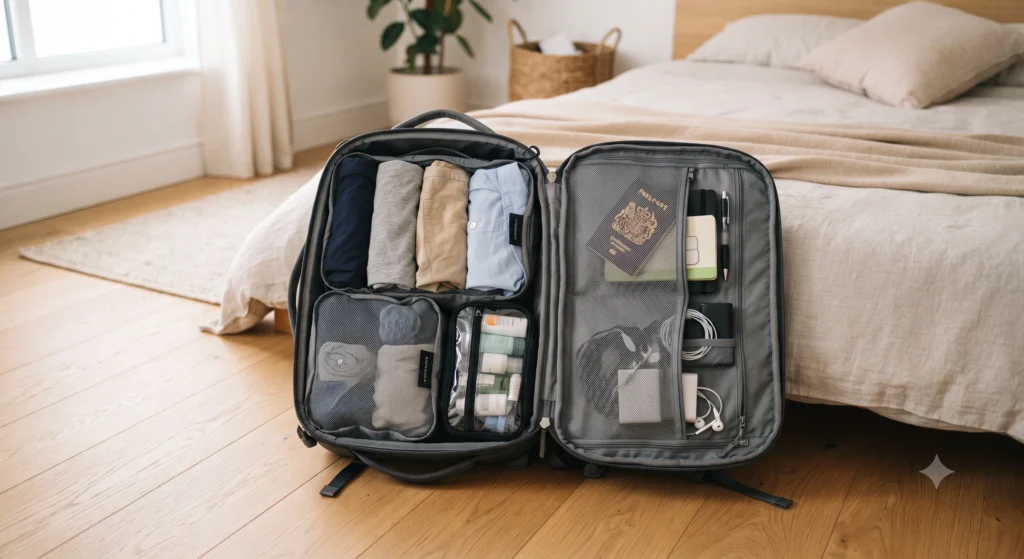
Packing cubes are not magic; they are organisation tools. Use them to:
- Group categories (tops, bottoms, underwear, tech).
- Keep clean vs dirty clothes separate.
- Compress soft items slightly (do not over‑squish everything).
What to skip:
- Buying a full set of expensive cubes before you know your system. Start with 2–3 simple ones.
Better alternative:
Use one cube for clothes, one for underwear/socks, one for toiletries and small items. Simplicity scales better than complexity.
Step 6 — Toiletries, Tech, and “Small” Items That Blow Up Your Bag
Toiletries:
- Stick to travel‑size or refillable bottles (respect liquid limits).
- Choose multi‑use products (e.g., moisturiser with SPF, shampoo‑body combo if you tolerate it).
- Avoid “just in case” beauty or grooming items you rarely use at home.
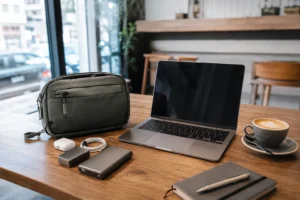
Tech:
- One phone, one charger, one power bank, maybe one small adapter.
- Keep all cables in a single pouch.
- If you do not need a laptop for work, consider leaving it behind.
Documents and money:
- Digital copies of passport, insurance, visas on your phone.
- One physical backup in a separate place.
- Minimal cards: one debit, one credit, one backup.
Step 7 — Shoes: The Make‑or‑Break Decision
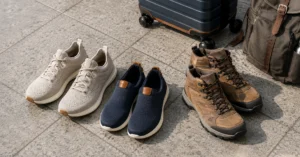
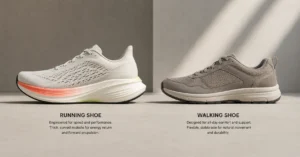
Shoes are bulky and heavy. Most light packers travel with:
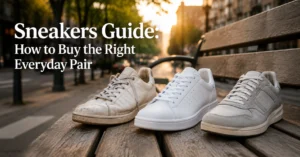
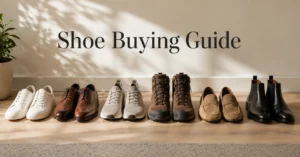
- One pair worn on the plane: comfortable walking shoes or sneakers.
- Optional second pair: compact sandals, flats, or lightweight trainers, only if your trip truly needs them.travelandleisure+1
When two pairs make sense:
- Mix of city walking + beach or formal events.
- Long trips where you want a dedicated “clean” pair.
When one pair is enough:
- Short trips, casual travel, or destinations where you can wear the same shoes most days.
Step 8 — What to Skip (And What to Do Instead)
Overrated / Skip
- “Just in case” formal outfits
Unless you know you have a specific event, you probably do not need a suit or cocktail dress.
Better alternative: One smart‑casual outfit that can be accessorised. - Multiple jackets for “maybe cold”
Layering one good jacket + a light fleece or sweater usually beats three medium layers.
Better alternative: Check the forecast for your exact dates and locations; pack for the likely range, not the worst imaginable. - Full‑size toiletries and “mini” versions of everything
You do not need a mini version of every product you own.
Better alternative: 3–5 core products, refilled into small bottles. - Extra shoes “for different vibes”
Most travellers end up wearing one or two pairs regardless of what they pack.
Better alternative: Choose the pair you will actually wear 80% of the time and build around it.travelingtulls
What This Approach Really Changes
You gain:
- Faster airport experiences (no checked bag, no waiting).
- Lower costs (no checked‑baggage fees, fewer lost‑bag risks).
- Easier movement (stairs, buses, hostels, small rooms).travelandleisure+1
You give up:
- A different outfit every day.
- Some comfort margin (e.g., multiple spares if something gets ruined).
- The feeling of being prepared for every unlikely scenario.
For many travellers, that trade‑off is worth it. For others—especially those who highly value wardrobe variety or need specific gear—it may not be.
Budget Expectations (Time and Money)
Time:
- Extra 15–30 minutes to plan your capsule and laundry strategy.
- 1–2 hours per week for laundry on longer trips.
Money:
- You may invest once in a good carry‑on backpack and a few packing cubes.
- You save repeatedly on baggage fees and potential overweight charges.
Current rates for baggage and laundry vary by airline and destination; check before you book.
Final Recommendation
Carry‑on‑only backpacking for 2 weeks or 2 months is a practical choice for travellers who:
- Are comfortable with a small, intentional wardrobe.
- Accept regular laundry as part of the rhythm.
- Value speed, flexibility, and lower costs over outfit variety.travelandleisure+1
If you love planning many outfits, need specialised clothing, or dislike re‑wearing items, a small checked bag or a hybrid approach (carry‑on + small personal item) may suit you better.