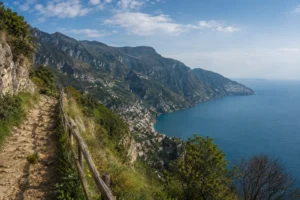
France has one of Europe’s most impressive transport networks, but that doesn’t automatically make it easy to navigate.
Many first-time visitors assume they have to choose between trains or a rental car for their entire trip. In reality, the smartest itinerary often combines several types of transport. A high-speed train might get you across the country in a few hours, but the final stretch to a vineyard in Burgundy or a hilltop village in Provence may be almost impossible without a car.
The biggest mistake isn’t choosing the wrong transport. It’s expecting one option to work equally well everywhere.
By the end of this guide, you’ll understand where France’s rail system genuinely shines, when driving saves both time and frustration, which transport choices aren’t worth the money, and how to match your plans to the type of trip you’re actually taking.
Quick Verdict: Is Getting Around France Easy?
Yes—but only if you choose the right transport for the places you want to visit.
France is one of the easiest countries in Europe for independent travel thanks to its extensive rail network, reliable city transport and well-maintained roads. The challenge comes once you leave the major cities. Rural regions, wine country, coastal villages and mountain areas often have limited public transport, making a rental car far more practical.
Choose trains if you:
- Are visiting Paris and major cities
- Prefer convenience over flexibility
- Don’t want to drive overseas
- Have limited time
Choose a rental car if you:
- Want to explore villages
- Plan scenic road trips
- Visit national parks
- Stay in rural accommodation
Biggest trade-off
Trains are faster between cities, but cars provide far greater flexibility once you’re outside them.
Quick Facts
| Information | Details |
|---|---|
| Best transport | High-speed trains between major cities |
| Best for cities | Public transport |
| Best for countryside | Rental car |
| Cheapest option | Regional buses (longer journeys) |
| Fastest long distance | TGV trains |
| Booking advice | Reserve long-distance trains early for better fares |
| Driving | Straightforward but toll roads add costs |
| Domestic flights | Usually only worthwhile for very long journeys |
What Getting Around France Is Actually Like
One reason France consistently ranks as one of Europe’s easiest countries to explore is that each transport system has a clear purpose.
The rail network is designed to move people quickly between major cities. Urban transport handles daily commuting efficiently. Roads connect smaller towns that trains often bypass. None of these systems is perfect on its own, but together they cover almost every type of journey.
That distinction matters because visitors sometimes judge France’s transport by a single experience. Someone travelling only between Paris, Lyon and Bordeaux may wonder why anyone rents a car. Another traveller spending a week among villages in Alsace might conclude the opposite.
Both are right. France rewards travellers who adapt their transport to the itinerary instead of sticking to one method throughout the trip.
Another advantage is predictability. Train stations are generally well signposted, ticketing systems are straightforward once understood, and major cities have integrated public transport. While delays can happen—as they do anywhere—most visitors find the overall network reliable enough that transport rarely becomes the defining challenge of their holiday.
Understanding France’s Transport Network
Thinking of France as a single transport system can be misleading. It’s more useful to picture three different layers working together.
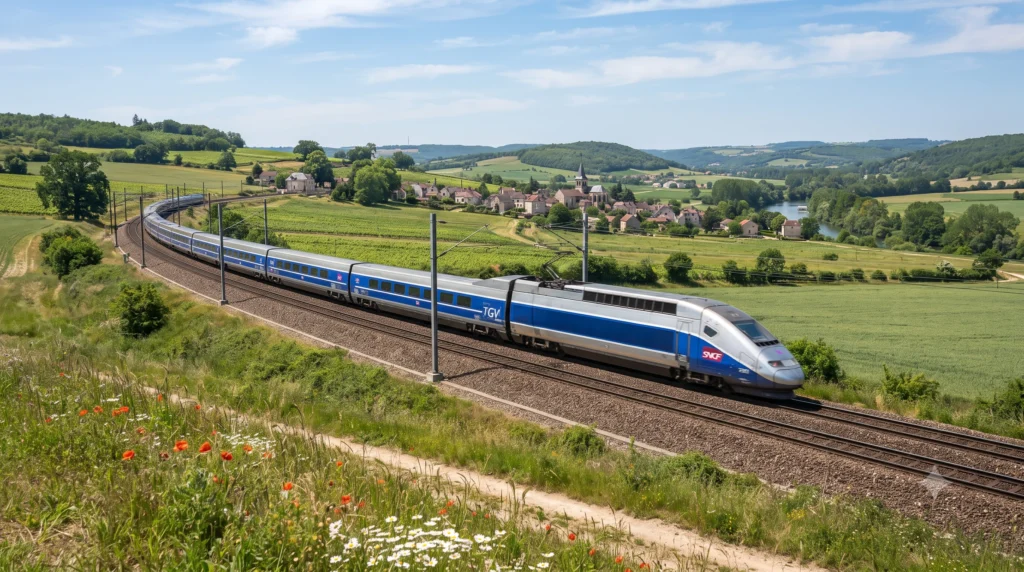
The first is the high-speed rail network. TGV trains link Paris with major cities such as Lyon, Marseille, Bordeaux, Strasbourg and Lille. These routes are built for speed rather than sightseeing. Travellers can cover hundreds of kilometres in just a few hours, often arriving directly in city centres instead of airports on the outskirts.
The second layer consists of regional TER trains. They’re slower but reach many medium-sized towns that aren’t served by the high-speed network. These services are particularly useful if your itinerary includes places such as Colmar, Annecy or Bayeux, where driving isn’t essential but high-speed trains alone won’t get you to your destination.
The final layer is the road network. This becomes increasingly important in rural France. Areas like Provence, Dordogne, the Loire Valley, Normandy’s countryside and many wine regions are best appreciated at your own pace. Buses exist, but frequencies can be limited, especially outside summer.
The key is recognising where one network ends and another begins. A common approach is arriving in a major city by train, spending a few days exploring without a car, then renting a vehicle only for the rural portion of the trip. This avoids city parking costs while still providing flexibility where public transport becomes less practical.
Trains: When They’re Worth Every Euro
If you’re travelling between France’s largest cities, trains are usually the easiest choice.
The country’s high-speed rail system is designed around direct city-centre connections. Unlike airports, where travellers need to arrive well before departure and spend additional time reaching the city after landing, train stations are typically located in central districts. That convenience often makes rail travel competitive even when the journey itself is slightly longer than a flight.
For example, routes linking Paris with Lyon, Bordeaux or Strasbourg are commonly completed in just a few hours. Once airport transfers and security checks are considered, the overall travel time can be surprisingly similar.
Another benefit is comfort. Most long-distance trains offer generous seating, luggage space and the freedom to move around during the journey. Looking out across vineyards, farmland and historic towns is also a more enjoyable introduction to the French landscape than spending the trip above the clouds.
Price, however, is where planning matters.
Unlike some countries where rail fares remain relatively consistent, long-distance French train tickets often use dynamic pricing. Booking weeks or months ahead can result in significantly lower fares, while waiting until the final days may cost considerably more—particularly during weekends, school holidays and summer.
Regional TER trains work differently. Prices are often more stable, and reservations may not even be required. They’re slower but ideal for shorter journeys where speed isn’t the main priority.
One misconception is that trains eliminate all transport planning. They don’t. If your hotel sits several kilometres outside a station, or you’re heading into a wine region with limited onward transport, you’ll still need buses, taxis or a rental car to complete the journey.
This is why experienced travellers rarely ask, “Should I use trains or drive?” Instead, they ask, “Which parts of this trip are best by train?” For many itineraries, the answer isn’t one or the other—it’s both.
Renting a Car: When It Makes Sense
If trains are France’s biggest strength, a rental car is what unlocks the country’s quieter side.
Many of France’s most rewarding destinations aren’t difficult to reach—they’re simply awkward without your own transport. A village may be only 20 kilometres from the nearest station, but if the local bus runs three times a day, you’ve suddenly built your entire itinerary around a timetable.
A car changes that. It lets you stop at a roadside bakery, detour to a château you spotted on a hill, or spend an extra hour at a vineyard without worrying about the last train home. That flexibility is often the difference between seeing France and experiencing it.
Where a Car Is Worth the Cost
A rental car is usually the better choice if you’re travelling through:
- Provence, where lavender fields, hilltop villages and local markets are spread across the countryside.
- The Dordogne, known for medieval towns, prehistoric caves and river valleys.
- The Loire Valley, where many châteaux sit well beyond walking distance from railway stations.
- Wine regions such as Burgundy, Champagne and Alsace, where villages and vineyards are scattered.
- The French Alps and Pyrenees, especially outside ski resorts with regular public transport.
- Normandy’s rural coast, where beaches, memorial sites and villages are easier to combine by road.
When a Car Becomes a Burden
Driving isn’t always the smarter choice.
In Paris, Lyon, Bordeaux, Strasbourg and several other large cities, a car often creates more problems than it solves. Parking can be expensive, traffic is heavier than many visitors expect, and historic neighbourhoods were never designed for modern vehicles.
If your trip focuses on cities connected by high-speed rail, you’ll likely spend more money on parking and tolls than you save in convenience.
Things Many Visitors Underestimate
Driving in France is generally straightforward, but there are costs beyond the rental price.
Motorways often include tolls, fuel prices vary by region, and parking charges can add up in urban areas. Manual transmission cars are more common than automatics, so travellers who require an automatic should reserve well in advance.
Before booking, compare the total cost—not just the daily rental rate. Insurance, fuel, tolls and parking can significantly change the overall expense.
Public Transport in French Cities
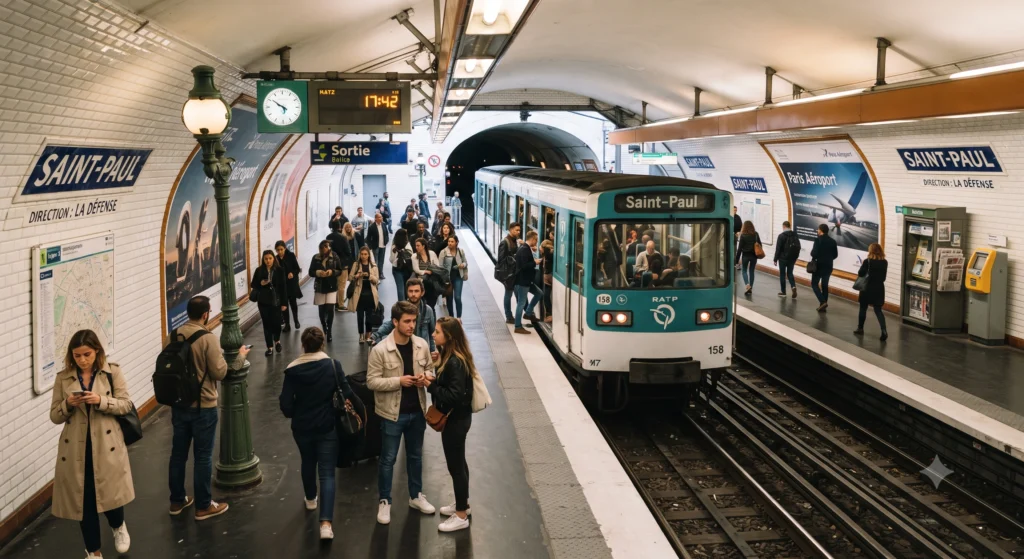
France’s major cities are designed to be explored without a car. Paris has one of Europe’s most extensive metro systems, making it easy to move between neighbourhoods without relying on taxis. Lyon, Lille, Toulouse, Marseille and Bordeaux also have efficient networks that combine metro lines, trams and buses.
For visitors, the biggest adjustment is understanding that city transport is built around everyday life rather than sightseeing. Stations may not always be next to famous attractions, but they’re usually within a comfortable walking distance.
If you’re staying several days in one city, look into multi-day transport passes if they suit your travel plans. They’re not always the cheapest option for every visitor, so estimate how often you’ll realistically use public transport before buying one.
Walking also plays a larger role than many travellers expect. Historic centres are often compact enough that combining public transport with walking creates a more enjoyable experience than repeatedly using taxis.
Are Buses Worth Considering?
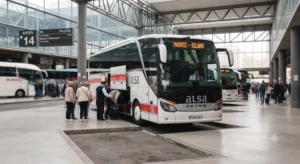
Buses rarely receive the same attention as France’s rail network, yet they can be surprisingly useful in the right circumstances. Long-distance coach services usually cost less than high-speed trains, although journeys are considerably slower. For budget-conscious travellers with flexible schedules, they can represent excellent value.
Regional buses are another story. In some departments they’re an important connection between towns, while elsewhere services may only operate a handful of times each day. Weekend schedules can be especially limited in rural areas.
Rather than planning an entire holiday around buses, it’s often better to treat them as a backup option when rail isn’t available.
Should You Take Domestic Flights?
For most visitors, domestic flights make less sense than they first appear.
France’s high-speed rail network competes directly with air travel on many popular routes. Once you factor in airport transfers, security checks and boarding times, trains frequently provide a similar total journey time while arriving in the city centre instead of on the outskirts.
Flights become more practical only for very long distances or where rail connections are indirect. Travellers heading to Corsica, for example, often combine flights or ferries depending on their itinerary. If your destination is connected by a direct TGV service, compare the complete door-to-door journey—not just the flight duration.
Cycling in France
France is one of Europe’s most rewarding countries for cycling, though the experience varies dramatically depending on where you ride. Dedicated routes such as La Loire à Vélo or sections of EuroVelo networks attract cyclists from around the world. Quiet country roads, riverside paths and vineyard landscapes make leisurely touring particularly appealing.
Urban cycling has also improved in many cities with expanded bike lanes and public bike-sharing schemes.That said, cycling isn’t equally practical everywhere. Mountain regions require strong fitness, and some rural roads can be narrow with faster-moving traffic.
If cycling is central to your holiday rather than an occasional activity, research your chosen region carefully instead of assuming conditions are similar across the country.
What It Really Costs
Transport costs in France depend less on distance than on timing and travel style.
A traveller who books train tickets months in advance and stays within major cities may spend less than someone driving between the same destinations. Conversely, a group sharing one rental car through rural Provence may find driving significantly better value than buying multiple train tickets and taxis.
Instead of focusing on the cheapest option, consider the cost of convenience.
Saving money on transport means little if you lose half a day waiting for infrequent buses or pay for expensive taxis because your accommodation sits far from public transport.
Current fares, tolls and rental prices change regularly, so check official operators before booking.
Common Mistakes Travellers Make
Booking high-speed trains at the last minute
Popular routes often become much more expensive closer to departure. Early booking usually offers the best choice of fares and departure times.
Renting a car for an entire city holiday
If you’re spending several days in Paris before heading into the countryside, collect your rental car when leaving the city—not when you arrive.
Assuming every village has good public transport
Many smaller towns have limited bus services, especially outside peak tourist seasons.
Ignoring toll roads
Motorways save time but can noticeably increase driving costs over longer journeys.
Trying to see too much
France is larger than many visitors realise. Combining Paris, the French Riviera, Brittany and the Alps in one short trip often means spending more time travelling than enjoying each destination.
What to Skip—and What to Do Instead
| Skip | Do Instead |
|---|---|
| Renting a car in central Paris | Use the Metro, buses and walking |
| Choosing flights without comparing trains | Check direct TGV routes first |
| Planning every day around regional buses | Rent a car for rural areas |
| Booking transport at the last minute | Reserve major journeys in advance |
| Trying to visit every region in one trip | Explore one or two regions properly |
Final Recommendation
Getting around France is rarely difficult. The real challenge is choosing the transport that matches your itinerary rather than relying on one option for every journey.
If your holiday centres on Paris and France’s major cities, trains and local public transport are hard to beat. They’re fast, comfortable and remove the stress of driving in unfamiliar urban environments.
If your plans involve vineyards, coastal villages, mountain roads or historic countryside, a rental car quickly becomes more than a convenience—it becomes part of the experience.
For many travellers, the smartest approach is a combination of both. Take the train where France excels, then switch to a car when flexibility matters more than speed.
That’s the balance that turns a well-planned itinerary into a relaxed and rewarding trip.
Frequently Asked Questions
Is France easy to travel around without a car?
Yes, if you’re visiting major cities such as Paris, Lyon, Bordeaux or Strasbourg. High-speed and regional trains make these destinations easy to reach. A car becomes more useful once you start exploring rural areas or smaller villages.
Is the TGV worth paying for?
Usually, yes. On long-distance routes, the TGV saves significant travel time and often provides a more convenient city-centre-to-city-centre journey than flying. Booking early generally offers better value.
Should I rent a car in Paris?
For most visitors, no. Public transport is extensive, parking is expensive and traffic can be frustrating. Renting a car after leaving Paris is often the more practical option.
Are buses cheaper than trains?
They often are, especially on long-distance routes. However, journeys usually take longer and services may be less frequent. They’re best suited to travellers prioritising budget over speed.
What’s the best way to explore rural France?
A rental car offers the greatest flexibility. It allows you to visit villages, wineries, scenic viewpoints and natural areas that may be difficult to reach by public transport.