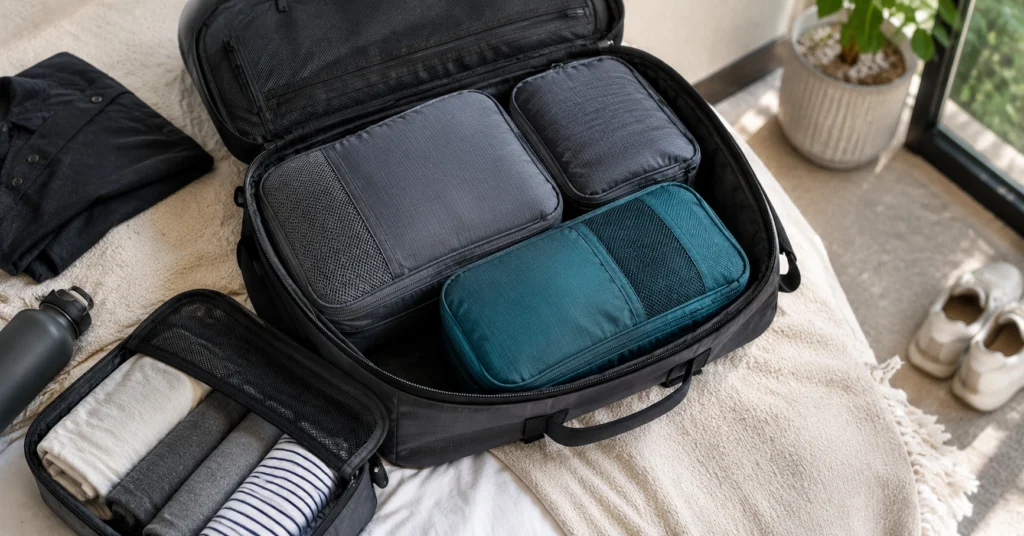
Packing cubes don’t turn your bag into a magic space-hog. They do something better: they make your bag predictable. Standard cubes save ~10–15% volume by organizing and lightly compressing; compression cubes can save 20–30% if you use the compression zipper correctly (2025–2026 rates — verify before travel). The real payoff is faster access, fewer loose items, and a carry-on that still closes after you’ve added one more shirt. This packing cubes guide shows you exactly what to buy, which sizes work for first-timers, and how to avoid the mistakes that waste space.
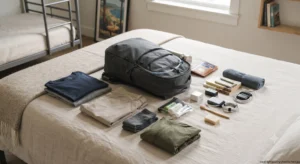
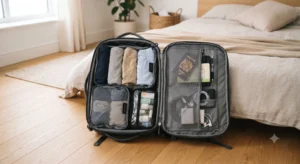
On a 10-day carry-on trip to Lisbon, I replaced a jumbled pack with a 3-cube set (large 14 L, medium 10 L, small 6 L). Total volume used in the bag dropped from ~38 L to ~32 L. Clothes stayed rolled, not folded flat. The small cube became my “underthings + socks” drawer; the medium cube was overnight items; the large cube handled tops/bottoms. I found my shirt in 30 seconds instead of 3 minutes. That’s the real save.
Quick facts: packing cubes, space, and what’s true
- Do they save space? Standard: ~10–15%. Compression: ~20–30% (when used correctly).
- Best starter set: 3 cubes (large ≈13–15 L, medium ≈9–11 L, small ≈5–7 L).
- Material: 20D–70D nylon or polyester; higher denier = more durable.
- Zipper quality: YKK #5 is the reliable standard; cheap zippers fail under compression.
- Care: cool hand wash, air dry fully; avoid hot water and machines.
- Compatibility: Works best in 40L–50L carry-ons; overstuffing in tight bags strains zippers.
- Price tiers: Budget set of 3 ≈$15–$25; Mid-range set ≈$35–$55; Worth-the-splurge ≈$70–$95.
What packing cubes are—and the honest truth about space savings
Packing cubes are方形 fabric containers with zippered closures that group clothes into categories. They don’t create space; they rearrange it. The volume gain comes from two mechanics: (1) organizing loose items so they don’t interleave awkwardly, and (2) compressing stacks slightly to reduce air pockets. Standard cubes compress lightly; compression cubes add a second zipper that squeezes the cube further.
Standard vs compression: what actually changes
Standard cubes: 10–15% volume reduction. You get better organization and a small compression effect from packing tight. Good for most trips, especially if you roll clothes.
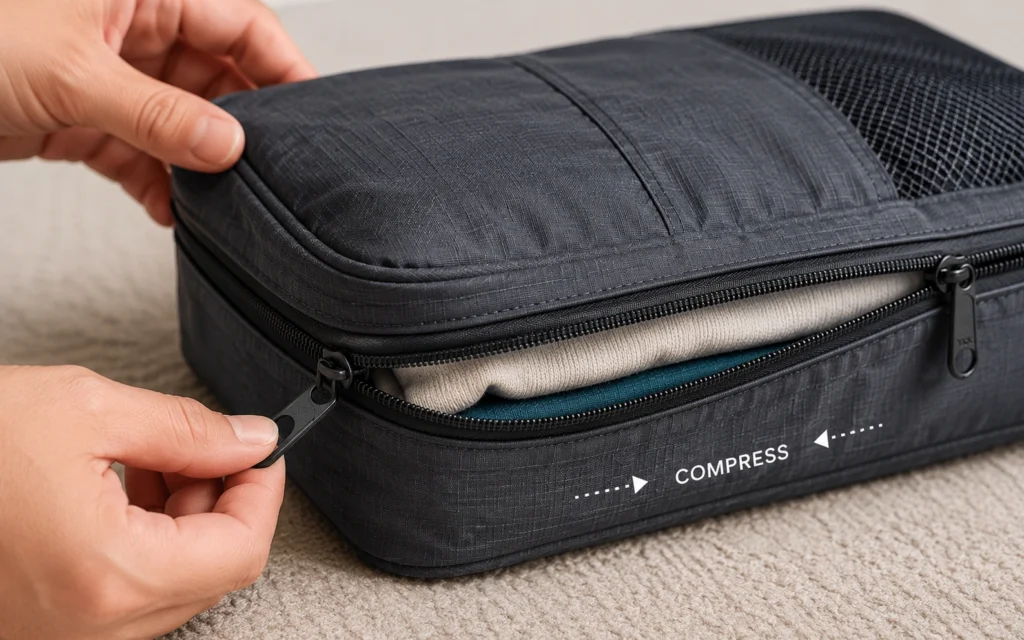
Compression cubes: 20–30% volume reduction when you use the compression zipper correctly. The second zipper pulls the cube walls inward. The trade-off: more creasing on knits and rayon, and higher stress on zippers.
The “roll vs fold” difference that affects cube performance
Rolling fills cubes more efficiently than flat folding. When you roll, you pack a sausage shape that tucks into corners. Flat folds leave air gaps along edges. For carry-on travel, roll. For delicate blazers or structured dresses, fold once and place in a solid-fabric cube with minimal compression.
On a 7-day trip to Tokyo with strict carry-on limits, I used a compression cube for tops and a standard cube for bottoms. The compression zipper reduced my top section by ~28% volume. But my cotton knits arrived creased. I swapped those to a standard cube for the next trip and kept compression only for non-delicate items.
Quick Overview: the 3 sizes that work for most first-timers
Start with a set of three:
- Large (≈13–15 L): tops, bottoms, sweaters.
- Medium (≈9–11 L): overnight items, extra shirts, light layers.
- Small (≈5–7 L): underthings, socks, small accessories.
When to add a 4th cube (laundry or toiletries)
Add a 4th cube if you:
- Use one cube as a dedicated laundry bag (roll dirty items, no tidiness required).
- Pack toiletries separately in a solid, water-resistant cube (not a standard mesh cube).
- Travel with multiple people and need separate category cubes.
For most first-timers, 3 cubes is enough. The 4th is a convenience upgrade, not a necessity.
Product Types: standard, compression, caddy, and waterproof
Standard cubes: the default organizer
- Fabric: mesh or solid 20D–70D nylon/polyester.
- Use: tops/bottoms, underthings, socks.
- Space save: 10–15%.
- Best for: most carry-on trips, rolling clothes.
- Limitation: less compression than compression cubes.
- Verdict: Start here.
Compression cubes: extra space, more creasing
- Feature: second zipper that squeezes walls inward.
- Use: non-delicate tops, jeans, sweaters.
- Space save: 20–30% when used correctly.
- Best for: tight carry-on limits, multi-stop trips.
- Limitation: creases knits/rayon; higher zipper stress.
- Verdict: Use selectively, not for everything.
Caddy style: faster access, slightly less capacity
- Design: open-top or partial zip with structured frame.
- Use: quick-access items (chargers, masks, snacks).
- Space save: minimal.
- Best for: airport access, daypack organization.
- Limitation: less capacity than zippered cubes.
- Verdict: Pair caddy + 2 cubes for fast access.
Waterproof cubes: protect against spills and rain
- Fabric: higher-denier coated nylon or TPU-laminated.
- Use: toiletries, electronics, wet items.
- Space save: similar to standard.
- Best for: checked bags, rainy climates, смешанные liquids.
- Limitation: heavier, less breathable.
- Verdict: IMPORTANT for toiletries; not for everyday clothes.
Mesh vs solid fabric: breathability vs durability
Mesh: breathable, visible contents, lighter. Less water resistance, items can snag.
Solid: more durable, water-resistant, protects clothes. Slightly heavier, less visible.
For long trips and checked bags, solid is usually better.
Caddy style: faster access, slightly less capacity
Caddies are open-top or partially zipped with a frame. They sacrifice capacity for access speed. Good for airport items you need often. Pair with 2 zippered cubes for clothes.
My first compression cube set had cheap zippers. After 6 months, the compression zipper on the medium cube failed under load. I switched to YKK #5 zippers and the problem disappeared. Zipper quality is the real durability gate.
Buying Guide: material, zippers, capacity, and weight
Denier and fabric type (20D–70D nylon vs polyester)
Denier measures fiber thickness. Lower denier = lighter, less durable. Higher denier = heavier, more durable.
- 20D–30D: ultralight, minimal durability. Good for backpacking where weight is critical.
- 40D–60D: everyday durable. Best for most travelers.
- 70D+: heavy-duty, more robust for checked bags.
Nylon is slightly more abrasion-resistant than polyester; polyester is more water-resistant and cheaper.
Zipper quality (YKK #5 vs cheap alternatives)
YKK #5 zippers are the reliable standard for travel cubes. Cheap zippers snag under compression and fail after a few trips. If the cube has a compression zipper, confirm the main zipper is YKK #5 or equivalent.
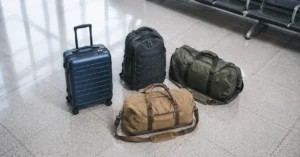
Capacity (litres) and bag compatibility (carry-on 40L vs 50L+)
Match cube capacity to your bag. In a 40L carry-on, use 14L + 10L + 6L. In a 50L+, you can add a 4th 12L cube. Overstuffing in a tight bag strains zippers and reduces the volume gain.
Weight: ultralight vs durable
- Ultralight sets: ~150–200 g total (20D mesh).
- Everyday sets: ~250–350 g total (40D–60D solid).
- Heavy-duty sets: ~350–450 g total (70D coated).
For most travelers, 250–350 g is the sweet spot.
Budget Guide: what you get at $15, $35, and $70+
Budget set of 3 (≈$15–$25)
- Material: 20D–30D mesh or thin polyester.
- Zippers: often non-YKK, lower durability.
- Capacity: standard sizes (13–15 L, 9–11 L, 5–7 L).
- Best for: short trips, light packing.
- Limitation: compressors fail under load; mesh snags.
- Verdict: Good starter set; upgrade zippers if you compress.
Mid-range set (≈$35–$55)
- Material: 40D–60D solid or mixed mesh/solid.
- Zippers: YKK #5 standard.
- Capacity: reliable sizes, some caddy options.
- Best for: carry-on frequent travel, mixed climates.
- Limitation: slightly heavier than ultralight.
- Verdict: Best value for most travelers.
Worth-the-splurge (≈$70–$95)
- Material: ultralight 20D–30D with reinforced corners, or 60D–70D durable.
- Zippers: YKK #5 + reinforced compression zipper.
- Capacity: optimized for carry-on, includes caddy or waterproof cube.
- Best for: weight-conscious travelers, long trips, checked bags.
- Limitation: price, less breathability in some models.
- Verdict: Buy if you travel monthly or need ultralight.
Mistakes that waste space (and the fixes)
Overstuffing cubes
Problem: You force too much into a cube, zippers strain, and the bag won’t close.
Fix: Stop at 80–90% fill. Use compression zippers gradually. Rotate items between cubes if tight.
Wrong size for your bag
Problem: Large cubes in a 40L bag leave no room for shoes or a jacket.
Fix: Use 14L + 10L + 6L in 40L. In 50L+, add a 12L cube. Match capacity to bag volume.
Compression misuse
Problem: You compress everything, clothes crease, zippers fail.
Fix: Use compression only for non-delicate items (jeans, sweaters). Keep knits and rayon in standard cubes. Roll clothes, avoid overstuffing.
Recommendations: 3 sets for carry-on, mid-range, and worth-the-splurge
Set 1: Budget carry-on kit (set of 3)
- Price: ≈$18–$22.
- Material: 20D–30D mesh/solid mix.
- Sizes: 14L, 10L, 6L.
- Best for: First-timers, short trips.
- Limitation: Zippers may fail under compression.
- Verdict: Buy if you’re cautious with compression.
Set 2: Mid-range everyday (caddy + 2 cubes)
- Price: ≈$38–$48.
- Material: 40D–60D solid + mesh caddy.
- Sizes: 14L, 10L, caddy (open-top).
- Best for: Carry-on frequent travel, mixed climates.
- Limitation: Slightly heavier than ultralight.
- Verdict: Best value for most travelers.
Set 3: Worth-the-splurge (ultralight compression)
- Price: ≈$75–$90.
- Material: 20D–30D ultralight with reinforced corners.
- Sizes: 13L compression, 9L standard, 6L small.
- Best for: Weight-conscious travelers, long trips.
- Limitation: Price, less breathability.
- Verdict: Buy if you travel monthly or need ultralight.
Hire the mid-range set. It’s the sweet spot for durability, weight, and price.
Frequently Asked Questions About packing cubes guide
Do packing cubes actually save space in a carry-on?
Standard cubes save ~10–15% volume by organizing and lightly compressing clothes; compression cubes can save 20–30% if you use the compression zipper correctly. The real gain is faster access and fewer loose items.
What size packing cubes should a first-timer buy?
Start with a set of three: large (≈13–15 L), medium (≈9–11 L), small (≈5–7 L). Use large for tops/bottoms, medium for overnight items, small for underthings. Add a 4th cube for laundry or toiletries if needed.
Should I choose mesh or solid packing cubes?
Mesh cubes offer breathability and visibility; solid fabric cubes are more durable, water-resistant, and protect clothes from snagging. For long trips and checked bags, solid is usually better.
Do compression cubes damage clothes?
They don’t damage most fabrics, but they can crease knits and rayon. Roll clothes, avoid overstuffing, and use compression zippers gradually. For delicate items, use standard cubes instead.
How do I clean packing cubes?
Hand wash in cool water with mild soap, air dry fully. Avoid hot water and machines that can warp zippers. For mesh, rinse gently to remove lint. Frequency: once per season or after laundry cube use.
Continue Exploring
travel gear essentials for first-timers