Sitting down at an eight-seat counter in Tokyo for the first time can feel like stepping onto a live stage without a script. The chef stands three feet away behind a stainless-steel ledge, the menu on the wall consists entirely of handwritten wooden plaques, and your fellow diners are consuming their meals in near-total silence.
First-time travelers often retreat to familiar international chains out of sheer ordering anxiety, while experienced explorers recognize that these tiny, ultra-specialized micro-restaurants serve the most technically perfect food in the country. This japanese food guide dismantles the friction points of dining in Japan, providing clear operational rules to help you order with total confidence.
Quick Facts: Navigating Japanese Dining Types
| Restaurant Category | Primary Culinary Focus | Ordering Interface | Operational Reality |
| Ramen-ya | Hand-pulled wheat noodles | Ticket Vending Machine | Fast turnover; leave immediately after eating. |
| Izakaya | Charcoal skewers, small plates | Tablet or Paper Menu | Casual tavern; expect a small cover charge (Otoshi). |
| Soba / Udon-ya | Buckwheat or thick wheat noodles | Counter / Verbal | Hot or cold variants; don’t skip the tempura sides. |
| Kushikatsu-ya | Deep-fried skewered meats | QR Code / Counter | Rigid dipping etiquette; never dip a skewer twice. |
Quick Overview: Deciphering the Culinary Specialization System
Western restaurants try to fulfill broad expectations by placing steaks, pastas, and seafood salads on the same two-page menu. Japan’s food landscape functions on the exact opposite principle: total hyper-specialization. A master chef (shokunin) will spend forty years perfecting a single discipline—whether that is the temperature of sushi rice or the precise crispness of seasonal vegetable tempura batter—and will serve absolutely nothing else.
For a first-timer, this means you do not look for a generic restaurant that happens to have sushi, ramen, and teriyaki on the list. You must decide exactly what you want to eat before leaving your hotel room, then locate the specific shop dedicated solely to that craft. Experienced food travelers prioritize these single-focus counters because the lack of menu variety guarantees absolute ingredient freshness and highly refined execution.
Top Things to Do: The Essential Dishes to Track Down
Tracking down the best food in Japan requires moving past standard tourist lists and understanding regional variations. Your culinary roadmap should focus on three foundational cornerstones that represent the peak of local cooking techniques.
1. Tonkotsu Ramen (Fukuoka Style)
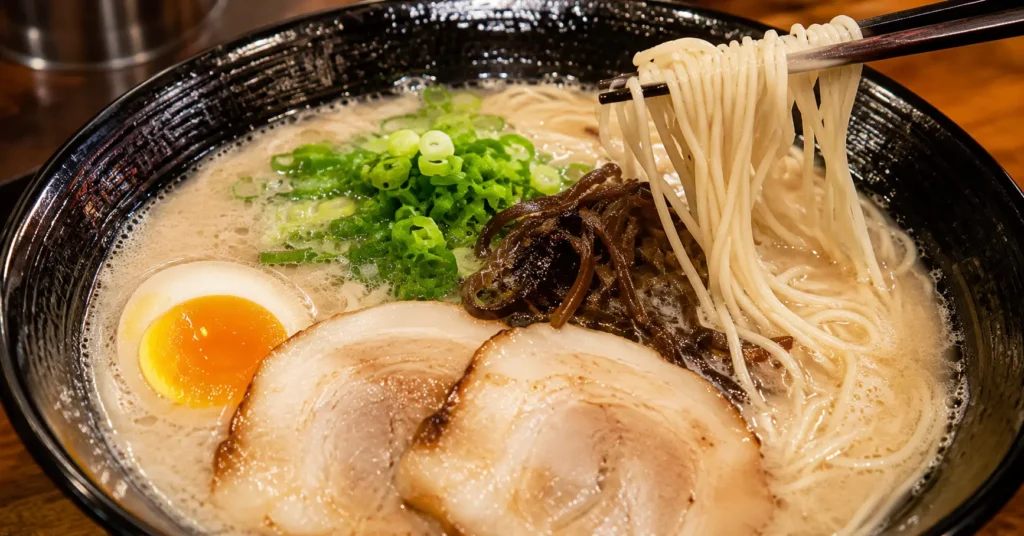
This variant features a thick, creamy broth created by boiling pork bones over high heat for up to eighteen hours until the marrow emulsifies. Order it katamen (firm noodles) to ensure they retain texture inside the boiling soup, and always save your leftover broth to request a kaedama (a second serving of fresh noodles for roughly ¥150).
2. Kushikatsu (Osaka Style)
Originating in the neighborhood of Shinsekai, these skewered, breaded, and deep-fried meats and vegetables are the ultimate casual comfort food. Sit at a stainless-steel counter where you dip your hot skewers into a communal metal vat of sweet, Worcestershire-based sauce.
The Shinsekai Rule: You must submerge your skewer in the sauce container exactly once before taking a bite. Double-dipping is strictly prohibited for public hygiene reasons; if you need extra sauce midway through, use the raw cabbage leaves provided on your tray to scoop sauce onto your plate.
3. Charcoal-Grilled Yakitori
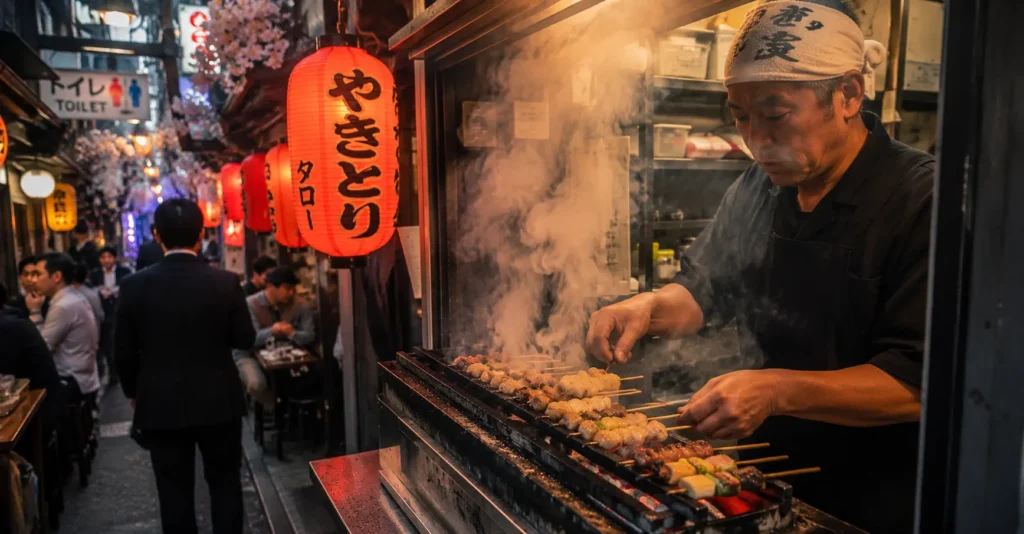
Head to the narrow alleyways of Omoide Yokocho in Shinjuku after 6pm to find tiny stalls grilling chicken skewers over binchotan (premium white charcoal). When ordering, the chef will ask you to choose between two seasonings: shio (coarse sea salt) or tare (a sweet, savory soy glaze). Opt for shio to taste the quality of the char, or choose tare for a rich flavor that pairs perfectly with cold draft beer.
Where to Stay: Positioning Your Base Near the Best Night Markets
To maximize your evening food runs without relying on late-night taxi journeys, you must position your accommodation within walking distance of key dining quarters.
- Tokyo – Shimbashi or Asakusa: Shimbashi is the capital’s corporate dining engine, filled with thousands of basement-level izakayas beneath the train tracks. Asakusa offers a slower pace, with traditional stalls lining Hoppy Street where you can dine outdoors on plastic milk crates.
- Osaka – Namba or Shinsaibashi: Staying near Namba puts you minutes away from the neon signs of Dotonbori. Avoid the main canal-side crab stalls—which charge massive tourist premiums—and walk south into the narrow corridors of Ura-Namba for exceptional local kushikatsu and okonomiyaki (savory cabbage pancakes).
Getting Around: Navigating Local Ticket Machines and Ordering Systems
The ordering process at local ramen-ya and soba shops is entirely automated through electronic vending machines located right at the entrance door. First-timers often freeze up when confronted with a machine featuring fifty buttons covered entirely in Japanese kanji characters, but the operational sequence is identical across the country.
1.Insert your physical cash:Step 1.
Feed your paper yen notes or coins into the designated slots before pressing any buttons. The machine will not register your selection or illuminate the panel if it doesn’t hold your currency first.
2.Select by photograph or position:Step 2.
Look for the large buttons at the top of the machine, which always represent the shop’s signature, fully loaded bowls. If there are no images, match the price matrix on your phone screen or look for the word “オススメ” (Recommended).
3.Collect your printed tickets:Step 3.
Press your button, collect your metal change from the bottom tray, and pull the small paper tickets from the slot. Take a seat at an open stool and place those tickets directly onto the counter ledge for the chef.
Budget Guide: Real Food Costs for Your Daily Itinerary
Dining well in Japan does not require a massive budget if you focus on local specialty shops instead of hotel dining rooms. The table below represents real, current street-level pricing across three standard dining styles.
| Culinary Tier | Average Price in Yen | Price in USD Equivalent | What You Actually Get |
| Street & Fast-Casual | ¥650 – ¥1,200 | $4.50 – $8.00 | A steaming bowl of Hakata ramen or a gyudon (beef bowl) set meal at Matsuya. |
| Mid-Range Counter | ¥2,500 – ¥5,000 | $17.00 – $34.00 | A full evening meal at a neighborhood izakaya including five skewers, a side dish, and two beers. |
| Worth-the-Splurge | ¥12,000 – ¥25,000 | $82.00 – $170.00 | A multi-course kaiseki seasonal dinner in Kyoto or a premium omakase (chef’s choice) sushi seating. |
All price standards: (2025–2026 rates — verify before travel)
Sample Itinerary: A Food-Centric Day Structure in Tokyo or Osaka
- 08:30 AM — The Convenience Store Run: Skip the expensive hotel buffet. Walk into a Lawson and grab a premium egg salad sandwich, an onigiri wrapped in crisp nori sea vegetable, and a carton of black coffee for roughly ¥550.
- 01:00 PM — The Basement Station Lunch: Head into the underground shopping corridors connected to major rail hubs like Tokyo or Osaka Station. Locate a standing-only soba shop for a quick lunch of chilled buckwheat noodles with a side of shrimp tempura for ¥750.
- 07:30 PM — The Alleyway Izakaya Dinner: Settle into a crowded counter stall along Yurakucho’s train tracks. Order a continuous stream of charcoal-grilled yakitori skewers alongside a highball, paying roughly ¥3,500 before heading back to your hotel.
Pro Tips: The Etiquette Rules That Actually Matter at Dinner
- The Chopstick Sanctuary: Never stick your chopsticks vertically into a bowl of white rice. This specific arrangement mirrors a traditional Buddhist funeral ritual and is considered deeply offensive; utilize the ceramic chopstick rest (hashioki) provided beside your plate instead.
- Embrace the Slurp: Slurping your ramen or soba noodles is not sloppy behavior—it is an essential technique. Sucking air into your mouth along with the noodles cools them down instantly and volatilizes the volatile aromas of the broth, signaling to the chef that you approve of the preparation.
- No Portable Dining: Do not consume street snacks while walking. If you purchase takoyaki (octopus balls) from a stall in Osaka, stand directly to the side of the vendor’s counter until you have finished the last bite before moving down the street.
Frequently Asked Questions About This Japanese Food Guide
How do you order at a traditional Japanese ticket machine restaurant?
Insert your cash first, press the illuminated button matching your desired dish, collect the printed paper ticket and change, then hand the ticket directly to the chef behind the counter.
Is water free at small neighborhood restaurants across Tokyo?
Yes. Small counters routinely provide either chilled tap water or hot green tea free of charge upon seating, typically presented in self-service pitchers or served directly by the cook.
Do I need to tip for exceptional service at high end sushi bars?
No. Tipping is completely non-existent throughout Japan and can cause genuine confusion or discomfort. The price listed on your final bill represents the complete cost of the meal.
Continue Exploring
- Japan travel playbook — Read our foundational master guide to align your regional transport logistics and rail ticketing with your culinary stops.