Driving across Arizona is one of the classic American Southwest journeys, but the slick Instagram clips leave out the exhaustion. You will cover 1,100 miles, shift between 1,000-foot desert basins and 7,000-foot pine plateaus, and likely spend more time staring at pavement than you bargained for if you map your days poorly.
The mistake most first-time road trippers make isn’t picking the wrong places—it’s trying to treat Arizona like a weekend getaway. If you rush through Saguaro, rush through the Grand Canyon, and speed through Sedona in six days, you won’t remember the landscapes; you’ll just remember your car seat.
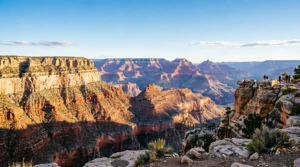
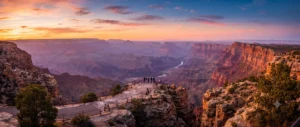
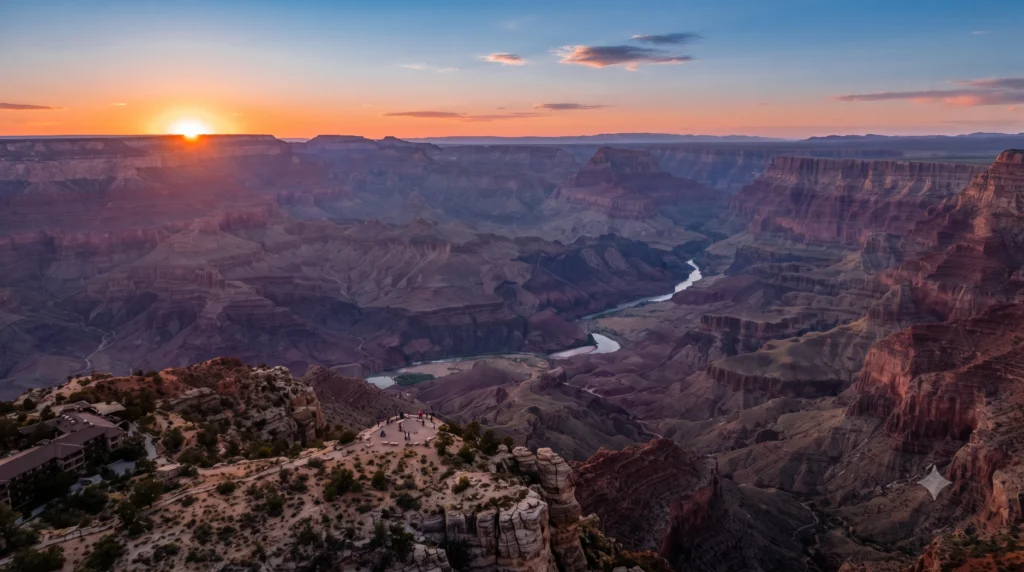
The Grand Canyon South Rim: A vast, high-altitude scale that demands slow exploration.. Source: Under Canvas
Quick Verdict: Is an Arizona Road Trip Worth It?
Yes—provided you build in rest buffer days and pre-book restricted permits.
An Arizona loop works best for travellers who enjoy active outdoor days, don’t mind 3-to-4-hour morning drives, and want extreme landscape variety—from giant saguaro cacti to towering sandstone red rocks and massive chasms.
- Who Should Go: Photographers, hikers, and active road-trippers comfortable driving 1,000+ miles over 10 days.
- Who Should Skip: Anyone seeking a relaxing beach holiday, travellers who hate packing up hotels every two nights, or those unwilling to secure timed entry permits 2–3 months ahead.
- The Biggest Trade-Off: Distance vs. depth. To see both Northern Arizona’s red canyons and Southern Arizona’s saguaro deserts, you give up leisurely multi-day stays in any single town.
Quick Facts
| Information | Details |
|---|---|
| Best Travel Period | March to May & September to November (Ideal hiking temps, open roads) |
| Realistic Budget | $2,800 – $4,500 for two people (Includes car, fuel, mid-tier lodging, permits) |
| Total Driving Distance | ~1,100 miles round-trip starting and ending in Phoenix |
| Key Reservation Deadlines | Antelope Canyon (2–4 months ahead), Grand Canyon Lodges (6–12 months ahead) |
| Ideal Trip Length | 10 Days minimum for a complete loop; 7 days for Northern Arizona only |
What This Trip Is Actually Like
Arizona’s geography is deceptively massive. Looking at a map, Saguaro National Park down near Tucson looks just a short hop from Sedona, which looks right next door to the Grand Canyon. In practice, you are constantly climbing and descending major elevation steps.
The trip begins in the Sonoran Desert lowlands around Phoenix and Tucson—hot, flat, punctuated by towering green saguaro cacti. By the time you reach Flagstaff and the Grand Canyon South Rim, you are sitting at 7,000 feet above sea level in a cool ponderosa pine forest where snow showers can linger well into April.
Expect long stretches of two-lane highway across tribal lands where cell service drops out for an hour at a time. Service stations can be 40 miles apart. It’s a trip defined by stunning morning light, intense midday desert glare, and evening exhaustion.
The 10-Day Route Breakdown: What’s Worth Your Time
Days 1–2: Phoenix to Saguaro National Park (Tucson)
Starting in Phoenix, head south to Tucson to explore Saguaro National Park. The park is split into two distinct districts separated by the city of Tucson: Saguaro West (Rincon Mountain District) and Saguaro East (Mountain District).
- What’s Worth Doing: Saguaro West has denser cacti forests and dramatic sunset views along the Signal Hill Trail, where you can see ancient Hohokam petroglyphs carved directly into brown boulders.
- The Reality: You do not need two full days inside the national park itself. A single full afternoon in Saguaro West combined with a visit to the nearby Arizona-Sonora Desert Museum (an exceptional open-air botanical and wildlife park) is more than enough.
Day 3: Petrified Forest National Park & Holbrook
Driving northeast from Tucson toward Holbrook takes you through high-desert backroads into Petrified Forest National Park.
- What’s Worth Doing: The Blue Mesa Loop—a short paved trail winding down through surreal badlands of purple, grey, and blue clay hills embedded with giant fossilized tree trunks.
- The Trade-Off: Holbrook and the surrounding towns along old Route 66 are economically depressed with limited dining and dated motel options. Treat this as an efficient transit day rather than a destination stay.
Day 4: Monument Valley Navajo Tribal Park
Crossing into the Navajo Nation, the landscape flattens into vast red dirt basins broken up by isolated sandstone monoliths.
- What’s Worth Doing: The self-guided 17-Mile Valley Drive. This rough, unpaved dirt road brings you up close to iconic formations like the Mittens and Merrick Butte. Standard cars can manage it if driven slowly, though low-clearance sedans will bounce hard.
- Where To Stay: The View Hotel is the only hotel located inside the park boundaries. Every room faces the East and West Mitten Buttes. Waking up to the sunrise over the red valley floor from your private balcony justifies the premium room rate.
Days 5–6: Page, Antelope Canyon & Horseshoe Bend
From Monument Valley, drive two hours west to Page, Arizona, the hub for Lake Powell, slot canyons, and Horseshoe Bend.
Lower Antelope Canyon: Intricate sandstone curves requiring guided Navajo tours.. Source: Antelope Canyon Navajo Tours
- Antelope Canyon Choice: You cannot enter Antelope Canyon without an authorized Navajo guide. Lower Antelope Canyon involves climbing down metal ladders into a tight, V-shaped slot. It feels like an adventure and offers continuous light reflections. Upper Antelope Canyon is flat, A-shaped, and famous for midday sunbeams, but it gets severely congested with two-way foot traffic.
- Horseshoe Bend Reality: It takes 15 minutes to walk from the paved parking lot to the edge of the 1,000-foot drop above the Colorado River. It is breathtaking, but expect a $10 city parking fee and hundreds of people jockeying for selfie angles along the safety railings. Visit at dawn for calm conditions and easy parking.
Days 7–8: Grand Canyon National Park (South Rim)
Drive west along Desert View Drive, entering the Grand Canyon through the quieter eastern gate.
- What’s Worth Doing: Skip the packed shuttle buses at Mather Point. Instead, wake up early and hike down the South Kaibab Trail to Ooh Aah Point (1.8 miles round-trip). Descending below the rim changes your entire perspective—you go from looking at a picture to standing inside the canyon geology.
- Where To Stay: Stay inside the park at Grand Canyon Village (Bright Angel Lodge or El Tovar) or in Tusayan (10 minutes outside the gate). Avoid staying in Flagstaff—driving 90 minutes each way in dark, high-altitude deer-crossing zones ruins the experience.
Days 9–10: Sedona & Return to Phoenix
Head south down Highway 89A through Oak Creek Canyon into Sedona, where towering red sandstone formations surround a resort town filled with art galleries, spa retreats, and crowded trailheads.
- What’s Worth Doing: Hike Cathedral Rock or Bell Rock for classic red rock panoramas. If trailheads are overflowing, head to West Fork Trail—a shaded hike along a cool creek beneath towering canyon walls.
- The Sedona Friction: Traffic on State Route 179 can grind to a standstill on spring and autumn weekends. Roundabout bottlenecks add 30–45 minutes to short 3-mile drives. Start every hike before 7:30 AM to secure parking spots at popular trailheads.
What It Really Costs
Road-tripping across Arizona requires factoring in high national park fees, Navajo Tribal permits, and elevated high-season hotel rates. Current rates should always be verified prior to travel.
+-------------------------------------------------------------------+
|                   ESTIMATED 10-DAY TRIP COST                      |
|                     (Based on 2 Travellers)                       |
+-------------------------------------------------------------------+
| Expense Category         | Mid-Range Budget | Premium Option   |
+--------------------------+------------------+------------------+
| Rental Car & Gasoline    | $650 – $850      | $1,100 – $1,500  |
| Accommodation (9 Nights) | $1,800 – $2,400  | $4,500 – $7,000  |
| Park Fees & Navajo Tours | $350 – $450      | $600 – $900      |
| Food & Dining            | $700 – $1,000    | $1,600 – $2,500  |
+--------------------------+------------------+------------------+
| ESTIMATED TOTAL          | $3,500 – $4,700  | $7,800 – $11,900 |
+--------------------------+------------------+------------------+
Smart Budget Tips:
- Buy the America the Beautiful Interagency Pass ($80): Covers entry to Saguaro, Petrified Forest, and Grand Canyon National Parks. Saves ~$35 compared to paying individual gate fees. (Note: Does not cover tribal parks like Monument Valley or Antelope Canyon).
- Book Antelope Canyon Direct: Book directly through official Navajo tour operators (e.g., Ken’s Tours or Dixie’s Lower Antelope Canyon Tours) rather than third-party reseller sites that mark up prices by 30–50%.
What To Skip & Smarter Alternatives
Editorial Warning: Don’t let social media hype dictate your itinerary choices. The best memories come from places where you have room to breathe.
- Skip: Mather Point at 12:00 PMWhy: Tour buses dump hundreds of visitors here simultaneously. The overlook feels like a crowded theme park plaza.Smarter Alternative: Shoshone Point. A subtle, unmarked dirt trail off Desert View Drive leads 1 mile through pine forest to an isolated rock peninsula with picnic tables and open canyon vistas.
- Skip: Trying to Drive to the Grand Canyon Skywalk (Grand Canyon West)Why: Grand Canyon West is operated on Hualapai tribal land, completely separate from the National Park. It is expensive (entry packages plus Skywalk passes run $80+ per person), prohibits personal cameras on the glass bridge, and lacks the vast depth of the South Rim.Smarter Alternative: Grand Canyon National Park South Rim. It costs $35 per vehicle for a 7-day pass and offers superior geological depth, historic architecture, and extensive hiking trails.
- Skip: Midday Upper Antelope Canyon ToursWhy: While famous for light beams, midday slots sell for elevated prices and move tourists through narrow sand corridors like assembly lines.Smarter Alternative: Lower Antelope Canyon or Canyon X. Lower Antelope offers a more interactive walk through ladder staircases at lower permit costs.
Where To Stay Along the Loop
Picking the right accommodation hubs makes or breaks your driving schedule:
- Tucson (Days 1–2): Stay in Downtown Tucson or the Foothills for great local Sonoran-style Mexican food and quick morning access to Saguaro West.
- Monument Valley (Day 4): The View Hotel (or its private cabins). Waking up inside the Tribal Park avoids an extra 45-minute drive from Kayenta.
- Page (Days 5–6): Mid-tier hotel chains (Hyatt Place, Courtyard, or Holiday Inn Express). Page is functional; treat it as a comfortable base for daytime tours.
- Grand Canyon South Rim (Days 7–8): Bright Angel Lodge or Thunderbird Lodge inside the park. Being able to walk 50 steps from your bedroom to watch sunrise over the rim without dealing with morning gate lines is invaluable.
- Sedona (Day 9): Boutique lodges along Uptown or West Sedona (e.g., Sky Rock Hotel or Wilde Resort). Stay close to your target trailheads to beat morning traffic jams.
Final Editorial Recommendation
If you have 10 full days, follow the complete loop from Phoenix up through Tucson, Monument Valley, Page, the Grand Canyon, and Sedona. It gives you the full geological story of Arizona.
If you only have 5 to 7 days, cut the southern loop entirely. Fly into Phoenix or Las Vegas, drive straight to Sedona, spend two days at the Grand Canyon South Rim, and finish with a day in Page. Rushing the full state loop in less than a week turns a vacation into an exhausting driving chore.
FAQ
Do I need a 4WD vehicle for an Arizona road trip?
No. A standard sedan or compact SUV handles 98% of this route easily, including paved highways and well-maintained park roads. The only unpaved section mentioned is the 17-Mile Drive in Monument Valley, which can be driven carefully in a standard car during dry weather.
How far in advance should I book Antelope Canyon tours?
Book 2 to 4 months in advance, especially for prime morning and mid-day time slots between April and October. Permits are strictly limited by the Navajo Nation to prevent overcrowding and protect the slot canyons.
Is it better to stay in Flagstaff or inside the Grand Canyon National Park?
Stay inside the park or in Tusayan (10 minutes outside the south entrance). Flagstaff is a 90-minute drive each way. Driving back and forth wastes three hours daily and requires navigating dark mountain roads where wildlife crossings are common.
What is the best time of year to take this road trip?
Spring (March to May) and Autumn (September to November) offer the best balance. Temperatures are warm in the desert lowlands and comfortable for high-altitude hiking at the Grand Canyon, avoiding both extreme summer heat and winter road ice.