In New York City, finding a budget-friendly hotel room requires recalibrating your expectations. Rates under $200 a night are rare in Manhattan, and anything under $300 during peak season is considered a bargain.
The secret to staying in NYC without overspending isn’t finding a hidden five-star luxury room for $90. It is understanding the trade-off between square footage and transit time. You either accept a tiny, highly efficient micro-room in Manhattan, or you move one or two subway stops into Queens or Brooklyn, where your dollar buys modern space and quieter nights.
Quick Verdict: Where Should You Stay on a Budget?
For most travelers, Long Island City in Queens is the single smartest budget base in New York, while Midtown micro-hotels work best if you demand a Manhattan street address.
- Who should choose Long Island City: First-time visitors, couples, and travelers who want modern hotel amenities, elevator access, and a full-size room just 10 minutes from Midtown Manhattan.
- Who should choose Manhattan micro-hotels: Solo travelers and light packers who only need a clean bed and plan to spend 15 hours a day out exploring the city.
- Who should skip outer-ring suburbs: Avoid staying near distant airports (JFK/EWR) or far out in New Jersey or Staten Island; saving $30 a night will cost you 2.5 hours of daily subway travel.
Quick Facts
| Information | Details |
|---|---|
| Realistic Budget Baseline | $150–$250/night off-peak; $250–$350/night peak season |
| Top Outer-Borough Pick | Long Island City, Queens (Subway lines 7, E, M, N, W) |
| Top Manhattan Value Pick | Financial District (Lower Manhattan) or Midtown East (Pod 51) |
| Key Hidden Cost | Hidden “Destination / Resort Fees” ($30–$50/night added at checkout) |
What Budget Lodging in NYC Is Actually Like
Most budget accommodations in Manhattan fall into two categories: century-old properties with tiny, aging rooms, or modern micro-hotels built around high-density, stripped-down spaces.
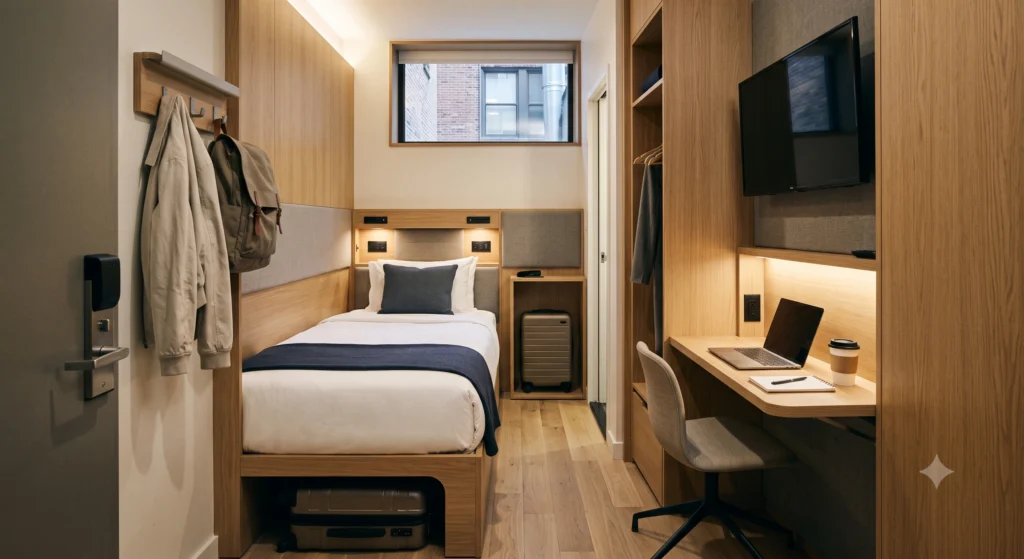
If you book a budget room in Midtown, expect a footprint of roughly 100 to 120 square feet. You can often touch both walls by extending your arms. Closet space is usually replaced by wall pegs, and bathrooms feature sliding frosted glass doors rather than full drywall partitions.
Reality Check: NYC enforced strict short-term rental laws (Local Law 18), effectively removing most whole-apartment Airbnb options from the market. Do not book residential apartments listed online for stays under 30 days without verifying legal compliance—unregistered listings face abrupt cancellations.
Realistic Layout of a Manhattan Micro-Hotel Room. Source: Booking.com

Micro-Hotels vs. Outer-Borough Bases: Making the Choice
Option A: Midtown & Lower Manhattan Micro-Hotels (Location First)
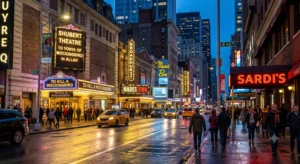
Properties like Pod 51 (Midtown East), Pod Times Square, and YOTEL excel at logistics. You can step out the front door and walk directly to Broadway theaters, Rockefeller Center, or Grand Central.
- Pros: Zero subway transfers for major central attractions; vibrant neighborhood energy right outside.
- Cons: Tiny rooms, limited luggage storage, and higher risk of street noise.
Option B: Long Island City, Queens (Space & Comfort First)
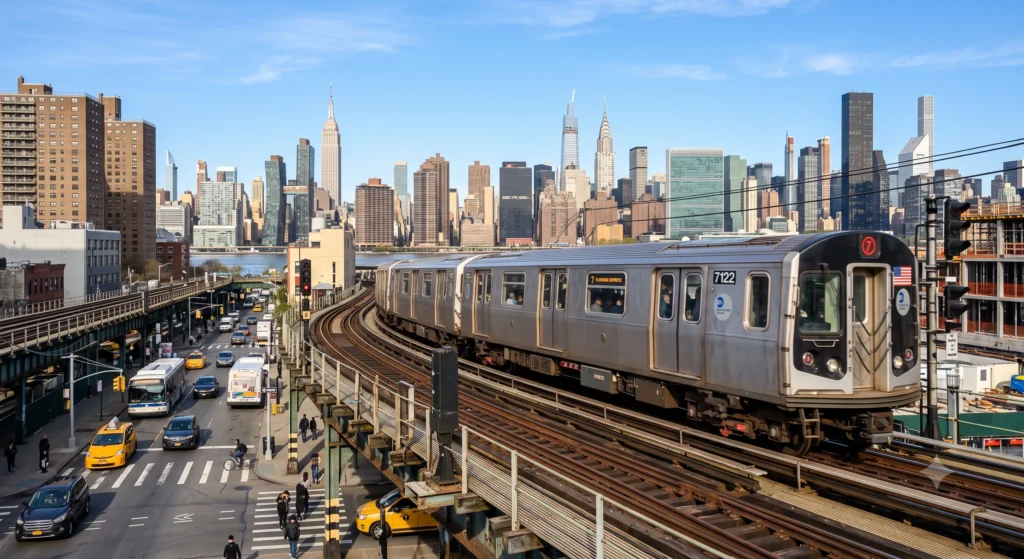
Located directly across the East River, Long Island City (LIC) was transformed over the past decade into a major hotel hub. Brands like Hilton Garden Inn, Courtyard, and boutique properties sit clustered around key transit junctions (Queensboro Plaza and Court Square).
- Pros: Rooms are 30% to 50% larger than Midtown equivalents; properties are newer; nightly rates run $50–$100 cheaper.
- Cons: Limited late-night bar scenes immediately around hotel blocks (though Astoria and Greenpoint are nearby).
Option C: Financial District (FiDi) & Chinatown (Lower Manhattan Value)
Lower Manhattan becomes remarkably quiet after business hours, meaning hotels near Wall Street drop their weekend rates significantly compared to Midtown.
- Pros: Close to Brooklyn Bridge, 9/11 Memorial, and major subway junctions (Fulton St Station); excellent street food and dining in nearby Chinatown.
- Cons: Financial District streets feel quiet and empty on Sunday evenings.
What It Really Costs (And How to Avoid Fee Traps)
Budgeting for a New York hotel requires looking beyond the initial nightly rate listed on booking search engines.
The Hidden Fee Breakdown
- NYC Occupancy Taxes: Expect roughly 14.75% tax plus a $1.50/night unit tax added to all room rates.
- Mandatory Facility / Resort Fees: Many Midtown hotels tack on $30 to $50 per night for “facility packages” (which often cover useless perks like basic Wi-Fi or bottled water). Always check fine print for mandatory daily property fees before confirming.
- Transit Expenses: Factor in an MTA 7-Day Unlimited MetroCard ($34) or contactless OMNY payment caps ($34 maximum per 7-day rolling window).
What to Skip and What to Do Instead
- SKIP: Booking cheap airport hotels near JFK, LaGuardia, or Newark for a sightseeing trip.
- DO THIS INSTEAD: Base yourself in Long Island City or Downtown Brooklyn. You get affordable rates while staying inside the 15-minute subway commute zone.
- SKIP: Staying in New Jersey along bus routes to save $40/night.
- DO THIS INSTEAD: Stay near an MTA Subway line inside NYC boroughs. New Jersey commuter buses (NJ Transit / Lincoln Tunnel) encounter severe traffic delays during morning and evening rush hours, and NJ Transit tickets aren’t covered by NYC subway passes.
- SKIP: Paying for hotel breakfast buffets ($25–$35/person).
- DO THIS INSTEAD: Grab an authentic bagel with cream cheese ($4–$6) or a egg and cheese roll from a local corner bodega or sidewalk cart.
FAQ
Is it safe to stay in Long Island City or outer-borough budget areas?
Yes. The commercial and hotel districts of Long Island City (around Queensboro Plaza, Court Square, and Queens Plaza) are well-lit, heavily trafficked by commuters, and safe. As in any major city, exercise standard awareness when walking late at night.
What is the absolute cheapest time of year to book a hotel in NYC?
January and February offer the lowest hotel rates of the year across New York City. Post-holiday tourism drops sharply, leading hotels to cut rates by 30% to 50% compared to autumn or December pricing.
Are hostels a good option in New York City?
Hostels are limited in NYC compared to European cities, but options like HI New York City Hostel on the Upper West Side offer clean, safe dorm beds. They are ideal for solo travelers, but couples often find that two hostel beds cost nearly as much as a private micro-hotel room.
How do I avoid paying mandatory resort/facility fees at NYC hotels?
Look for properties that explicitly advertise “No Destination Fees,” or book through outer-borough hotels in Queens and Brooklyn, which rarely charge facility add-ons compared to Midtown Manhattan properties.