Rome rewards curiosity more than speed. With only 24 hours, you won’t uncover every layer of the Eternal City—and that’s perfectly fine. The biggest mistake many first-time visitors make is trying to squeeze every famous landmark into a single day, leaving little time to appreciate the streets, cafés, and piazzas that give Rome its character.
A well-planned day isn’t about ticking off the longest list of attractions. It’s about choosing experiences that capture the city’s history, food, and atmosphere without spending half your visit in queues or rushing between neighbourhoods.
This itinerary focuses on what genuinely deserves your time, where shortcuts make sense, and the trade-offs worth accepting when your schedule is limited. By the end of the day, you’ll have seen Rome’s icons while still leaving with memories that feel richer than a checklist.
Quick Verdict: Is 24 Hours in Rome Worth It?
Yes—but only if you accept that this is an introduction, not a complete Rome experience.
One day is enough to understand why Rome captivates so many travellers. You’ll have time to walk among ancient ruins, admire world-famous landmarks, enjoy traditional Roman food, and experience the city’s atmosphere. What you won’t have time for is seeing everything.
This itinerary works best for first-time visitors who want to combine history, food, and wandering through beautiful streets without feeling rushed every hour. If your priority is museums, the Vatican, or exploring quieter neighbourhoods, you’ll benefit from staying at least another day.
The biggest trade-off is simple: depth versus variety. Trying to include every famous attraction usually means spending more time in queues and on transport than actually enjoying Rome.
Quick Facts
| Information | Details |
|---|---|
| Best Walking Time | Early morning and evening |
| Total Walking | Approximately 8–12 km (5–7.5 miles) |
| Ideal Start | Around 8:00 AM |
| Main Transport | Walking with occasional Metro or taxi if needed |
| Best Lunch Area | Near the Pantheon or Campo de’ Fiori |
| Best Evening | Trastevere |
| Advance Booking | Colosseum tickets recommended |
| Pace | Moderate to active |
What Rome Is Actually Like
Many cities reveal themselves through their landmarks. Rome reveals itself between them.
The Colosseum, Trevi Fountain, and Pantheon deserve their reputation, but they are only part of the experience. Walking from one attraction to the next often becomes just as memorable as the destinations themselves. Narrow streets open into lively piazzas, centuries-old churches appear unexpectedly, and neighbourhood cafés spill onto stone squares where locals and visitors slow down over coffee.
That rhythm is one of Rome’s greatest strengths. Although the city attracts millions of visitors every year, there are still moments when everyday Roman life feels close at hand. Turning down a quieter street can quickly take you away from the busiest tourist crowds.
Rome also demands patience. Traffic can be unpredictable, queues at major attractions are common, and the summer heat can make even short walks feel longer than expected. Travellers who accept this slower pace often leave with a far better impression than those trying to chase every famous landmark.
Morning: Start with Ancient Rome
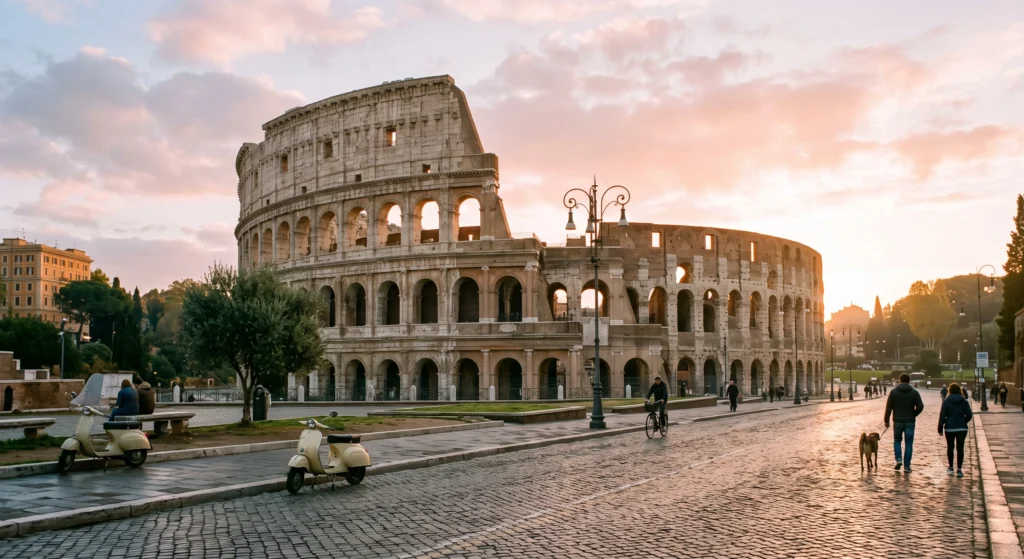
The best time to experience the Colosseum is early in the morning. Arriving shortly after opening gives you a better chance of avoiding the largest tour groups while temperatures remain comfortable for walking.
If you’ve booked tickets in advance, begin with the Colosseum itself. Inside, you’ll gain a stronger understanding of the engineering and scale that made it one of the Roman Empire’s most remarkable structures. While no building can fully recreate the atmosphere of ancient Rome, standing inside the amphitheatre provides context that photographs rarely capture.
If tickets aren’t available, don’t assume your morning is ruined. The exterior alone remains one of Europe’s most impressive landmarks, and the surrounding viewpoints offer excellent perspectives without requiring admission.
From here, continue toward the Roman Forum. Rather than attempting to study every ruin, focus on appreciating the landscape as the political and social heart of ancient Rome. Visitors often enjoy this experience more when they avoid treating it like an outdoor museum checklist.
Nearby, Capitoline Hill provides one of the most rewarding panoramic views over the Forum. It also offers a welcome opportunity to pause before continuing into the city’s historic centre.
Travel tip: If your visit falls during summer, carry water from the beginning of the day. Shade is limited around many archaeological sites.
Mid-Morning: Walk Instead of Riding
One of the biggest mistakes visitors make is relying too heavily on public transport between attractions.
Once you leave the Colosseum area, Rome becomes a city best explored on foot. Walking toward Piazza Venezia introduces you to elegant buildings, lively intersections, and everyday street life that no Metro journey can replace.
Piazza Venezia itself divides opinion. The massive white Vittoriano monument is undeniably impressive, though many travellers find the square more useful as a landmark than a destination where they’ll want to spend much time.
Instead of lingering here, continue toward the Trevi Fountain.
Along the way, resist the temptation to stop at every souvenir shop. Prices near major attractions are often higher, and similar items can usually be found elsewhere in the city.
Trevi Fountain: Visit with Realistic Expectations
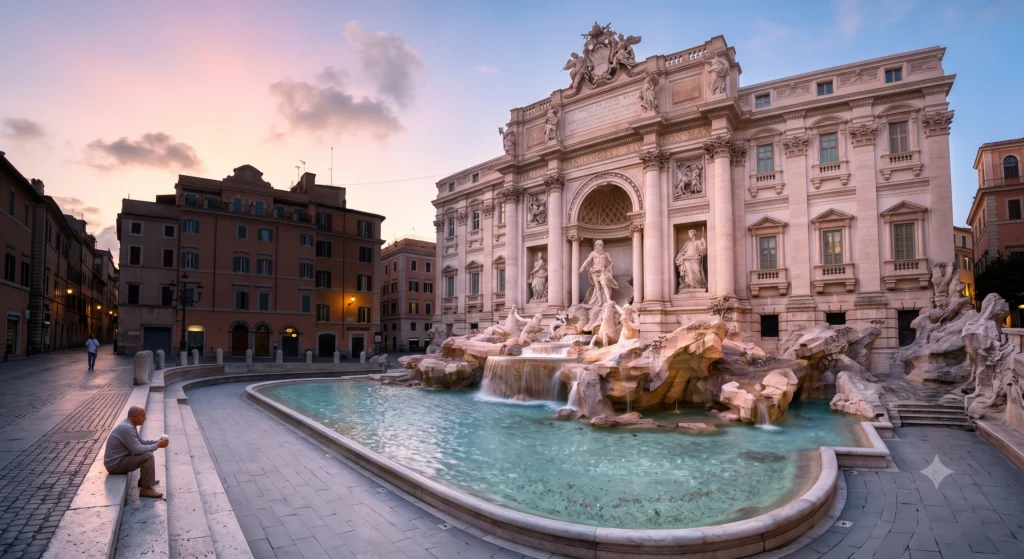
The Trevi Fountain is one of Rome’s most photographed landmarks, but it’s also one of its busiest.
If you arrive later in the morning, expect crowds. During peak travel months, finding a completely unobstructed view is unlikely.
That doesn’t mean the fountain isn’t worth visiting. Its intricate sculptures and dramatic setting remain impressive, even when shared with hundreds of other visitors.
The key is adjusting expectations. Spend enough time to appreciate the craftsmanship, toss a coin if the tradition appeals to you, then continue your walk instead of trying to wait for the perfect photograph.
Trying to visit before sunrise solely for empty pictures may not be worthwhile if it leaves you exhausted for the rest of the day.
Lunch: Slow Down for an Hour
After a busy morning, Rome rewards those who pause.
The area around the Pantheon offers numerous restaurants, but quality varies considerably. Rather than choosing the first place overlooking a famous square, walk one or two streets away. You’ll often find more authentic neighbourhood trattorias serving traditional Roman dishes in a quieter setting.
Classic choices include cacio e pepe, carbonara, amatriciana, or saltimbocca alla Romana.
Lunch in Rome isn’t simply about eating. It provides a chance to recover from the morning’s walking before continuing into the afternoon.
If you’re hoping to save money, a slice of pizza al taglio or freshly prepared panini can also make an excellent meal without taking too much time.
The Pantheon: One of Rome’s Greatest Surprises
Unlike many famous attractions that rely on dramatic exteriors, the Pantheon becomes truly impressive once you step inside.
Its enormous dome continues to inspire architects nearly two thousand years after its construction. The building feels surprisingly calm despite its popularity, particularly if you visit outside the busiest afternoon periods.
Many travellers arrive expecting another historic monument and leave considering it one of Rome’s highlights.
Take a few moments to look upward through the oculus. It’s one of those simple experiences that often remains more memorable than rushing toward the next attraction.
Afternoon: Piazza Navona and the Historic Centre
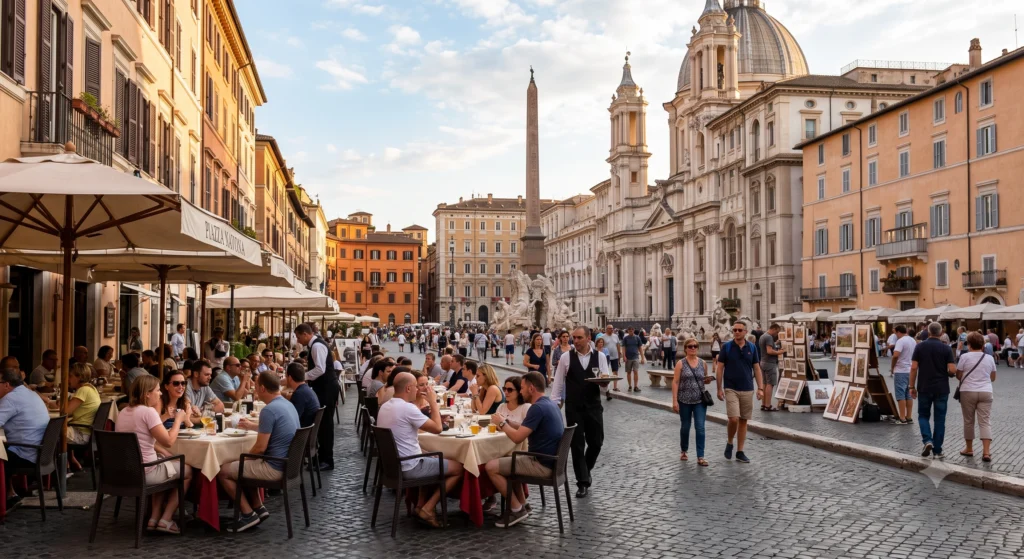
From the Pantheon, Rome naturally slows down.
The walk toward Piazza Navona passes elegant streets filled with cafés, artisan shops, and small churches that rarely appear on standard itineraries but add depth to the experience.
Piazza Navona remains one of the city’s finest public spaces. Street artists, musicians, and outdoor cafés create an atmosphere that encourages lingering rather than constant movement.
This isn’t necessarily the place where you’ll “see” the most attractions. Instead, it’s where you’ll begin to understand why visitors often describe Rome as a city best experienced slowly.
If your schedule allows, enjoy a coffee or gelato here instead of immediately moving to the next landmark.
What to Skip If You Only Have One Day
A limited schedule requires difficult choices.
One of the most common mistakes is attempting to include both the Vatican Museums and the Colosseum on the same day. While technically possible, the result is usually a rushed itinerary dominated by queues, security checks, and long walks.
Similarly, don’t feel obligated to enter every church, museum, or palace simply because they’re famous.
Instead, focus on creating a balanced day that combines major landmarks with time to absorb the city’s atmosphere.
Skipping attractions isn’t wasting opportunities. It’s often what makes the experiences you do choose far more enjoyable.
Evening: Finish in Trastevere
As daylight begins to soften, cross the Tiber River into Trastevere.
The neighbourhood feels noticeably different from the historic centre. Narrow cobbled streets, ivy-covered buildings, local restaurants, and lively squares create a more relaxed atmosphere than the busier tourist districts.
This is an excellent place to end the day.
Whether you choose a traditional trattoria, a wine bar, or simply wander through the streets after dinner, Trastevere offers the kind of experience many travellers remember long after returning home.
Rome at night feels less hurried. The crowds thin, monuments glow under warm lighting, and conversations spill from restaurant terraces into the streets.
If your energy allows, take one final walk before returning to your accommodation. Some of Rome’s most memorable moments happen after the sightseeing has officially finished.
What It Really Costs
Rome can accommodate a wide range of budgets, but a one-day visit becomes more enjoyable when you spend selectively rather than constantly.
Budget-conscious travellers can comfortably explore much of the historic centre on foot, choosing one paid attraction while relying on casual cafés and local bakeries for meals.
Mid-range visitors often find the best balance by reserving Colosseum tickets, enjoying a relaxed lunch and dinner, and staying within walking distance of the city’s main sights.
Higher budgets primarily buy convenience rather than dramatically different experiences. Private guides, premium hotels, and taxis reduce logistical challenges, but Rome’s greatest attractions—its streets, piazzas, architecture, and atmosphere—remain accessible to almost everyone.
The smartest investment is usually advance planning rather than additional spending.
Final Recommendation
If one day is all your itinerary allows, don’t let that stop you from visiting Rome.
The city isn’t the kind of destination that can be “completed” in a single visit, but it doesn’t need to be. A thoughtfully planned day offers enough time to understand why Rome continues to rank among Europe’s most rewarding cities. Ancient landmarks, remarkable architecture, neighbourhood cafés, and lively public squares all combine to create an experience that feels distinct from anywhere else in Italy.
If seeing the Colosseum, wandering through the historic centre, enjoying authentic Roman food, and ending the evening in Trastevere sounds like a satisfying day, then 24 hours can absolutely be worthwhile.
However, if your priorities include exploring the Vatican Museums in depth, visiting several art galleries, discovering quieter neighbourhoods, or taking long breaks without watching the clock, Rome deserves at least three days.
One final piece of advice is perhaps the most important: don’t measure your trip by the number of attractions you manage to tick off.
Some of the most memorable moments in Rome happen between the famous landmarks—finding a quiet piazza, watching everyday life unfold over an espresso, or turning a corner to discover another church or fountain that wasn’t on your itinerary.
A successful day in Rome isn’t the busiest one.
It’s the one that leaves you wanting to return.
Frequently Asked Questions
Is one day enough to visit Rome?
One day is enough to experience Rome’s atmosphere and visit several of its most famous landmarks, but it isn’t enough to explore the city in depth. Prioritising a handful of major sights rather than trying to see everything usually results in a far more enjoyable visit.
Should I visit both the Colosseum and the Vatican in one day?
It’s possible, but it isn’t the best use of limited time for most first-time visitors. Security checks, queues, and travel between the two areas can consume several hours. If you only have one day, choosing one major complex usually creates a more relaxed itinerary.
Do I need to book Colosseum tickets in advance?
Yes, especially during spring, summer, and early autumn. Advance booking reduces waiting time and helps secure your preferred entry slot. If tickets are unavailable, visiting the exterior and surrounding viewpoints still provides an impressive experience.
Is Rome easy to explore on foot?
The historic centre is highly walkable, and many of the city’s best-known attractions are connected by pleasant walking routes. Comfortable footwear is essential, as uneven cobblestones and several hours of walking are part of most one-day itineraries.
Where should I stay if I only have one day in Rome?
Staying in or near the Historic Centre, Pantheon, Trevi, Monti, or Trastevere allows you to spend more time sightseeing and less time commuting. While Termini Station offers convenient transport connections, many visitors prefer the atmosphere of central neighbourhoods for a short stay.