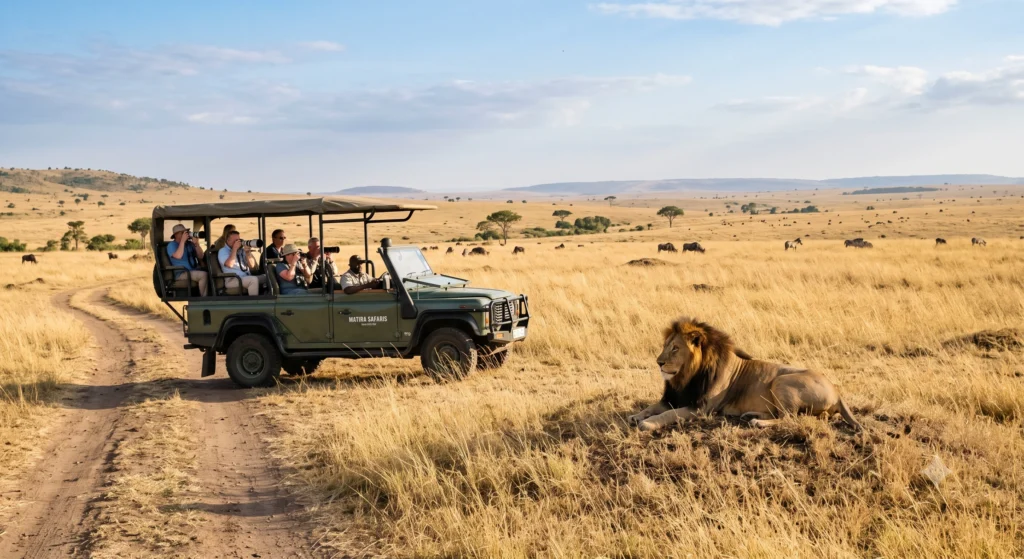
Most travellers picture a Kenya safari as an uninterrupted horizon of golden grass where lions prowl in quiet solitude. While that Kenya exists, so does another reality: forty minibuses surrounding a single leopard, jaw-jolting eight-hour road transfers on rutted tracks, and park entry fees that can quietly devour a third of your total vacation budget.
A safari in Kenya is one of the most rewarding wildlife journeys on the planet, but it is not a trip where you can simply book a highly rated hotel and figure out the rest on arrival. The choices you make regarding regional combinations, transport modes, and camp ownership models will fundamentally shape your day-to-day experience.
Quick Verdict: Is a Kenya Safari Worth It?
The Short Answer: Yes, absolutely—provided you understand that you are paying for access and space, not just luxury bedding. Kenya delivers unmatched wildlife density, rich tribal heritage, and extraordinarily skilled local guides.
- Who Should Go: Wildlife enthusiasts who want to see apex predators and iconic herds in vast numbers, photograhers, and travellers looking for a seamless “bush and beach” combination. Timbuktu Travel
- Who Should Skip: Anyone seeking a completely solitary wilderness experience on a shoe-string budget, or travellers who react poorly to early mornings, dust, and light-aircraft flights.
- The Biggest Trade-Off: Solitude vs. Price. Low prices inside main public reserves come with heavy vehicle traffic around major sightings. True quiet requires paying a premium for private conservancy access. Sola Safari Travels+ 1
Quick Facts for Decision-Makers
| Factor | Editorial Guidance |
|---|---|
| Best Time to Visit | July to October (Great Migration & dry bush); Jan–Feb (Lower crowds, crisp skies). |
| Realistic Budget Tier | Mid-Range: $450–$750/person/day; Luxury Conservancies: $950–$1,800+/person/day. Current rates should be checked before booking. |
| Transport Sweet Spot | Fly-in light aircraft between distant parks (Wilson Airport hub); open 4×4 Land Cruisers on game drives. |
| Recommended Duration | 7 to 10 days (e.g., 3 nights Mara, 2 nights Samburu/Amboseli, 3 nights Coast). |
What This Trip Is Actually Like
A typical day on safari runs on nature’s clock, not yours. You are awake by 5:30 AM to hot tea and cool morning air before rolling out of camp at dawn when predators are active. Game drives last three to four hours over uneven dirt tracks.
Midday is reserved for lunch, rest, and avoiding the intense heat when animals retreat to deep shade. By 4:00 PM, you depart for an afternoon drive that transitions into “sundowners”—drinks served in the wild as light fades.
The key frustration for unprepared travellers is visual congestion. In public national reserves, when a leopard is spotted, dozens of vehicles receive the radio call and converge within minutes. If you want off-road tracking, uncrowded sightings, night drives, and guided bush walks, you need to look beyond standard public park boundaries.
Choosing Your Regions: Beyond Just the Masai Mara
While the Masai Mara gets the headline attention, Kenya’s safari landscape divides into distinct eco-zones, each offering entirely different visual settings and animal encounters.
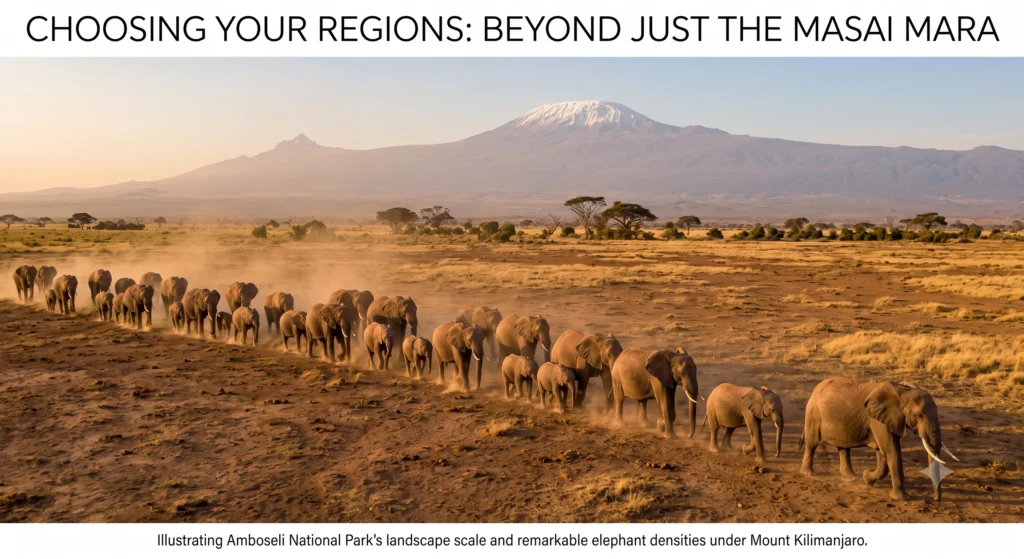
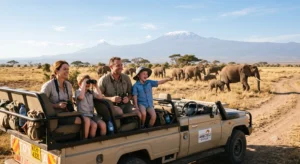
Amboseli’s backdrop: Swampy marshes fed by Kilimanjaro’s snowmelt bring massive elephant herds into clear view.. Source: Travel Butlers
1. The Masai Mara Ecosystem
- The Atmosphere: Rolling open grasslands teeming with wildebeest, zebra, topis, and large lion coalitions.
- The Reality: High wildlife volume year-round, but severe vehicle density inside the public reserve during the July–October Migration window. Safari Bookings
2. Amboseli & The Chyulu Hills
- The Atmosphere: Open dusty plains punctuated by lush green swamps fed by Mount Kilimanjaro’s melting snow.
- The Reality: The best place in Africa to view habituated big-tusked elephant herds up close. Midday heat can be intense, and clouds often cover Kilimanjaro’s peak by 9:00 AM, making early mornings critical for photography.
3. Laikipia & Lewa Conservancy
- The Atmosphere: High-altitude plateau with sweeping views toward Mount Kenya.
- The Reality: A global model for community-driven conservation. This region houses a huge portion of Kenya’s endangered black and white rhino populations. It feels far more exclusive and active, offering horseback safaris, walking treks, and quad-biking. Timbuktu Travel
4. Samburu Special Reserve
- The Atmosphere: Rugged, semi-arid northern terrain cut through by the Ewaso Nyiro River.
- The Reality: Home to the “Samburu Special Five” (Gerenuk, Reticulated Giraffe, Grevy’s Zebra, Beisa Oryx, and Somali Ostrich). It delivers a striking desert aesthetic that feels starkly different from southern plains.
Where To Stay: Public Reserves vs. Private Conservancies
The single biggest decision in your planning is whether to stay inside the public national reserve or on an adjacent private conservancy.
Conservancy camps: Smaller bed counts mean fewer vehicles on the land and a significantly quieter wildlife experience.. Source: Masai Mara
Key Takeaway: Private conservancies are community-owned lands leased by eco-tourism operators. They cap the total number of guest beds per acre and restrict vehicle counts at animal sightings (usually a maximum of 3 to 5 vehicles).
- Public National Reserve Camps: Lower nightly room rates, but strict park rules apply (no driving off-road, no night drives, compulsory return to camp by dusk). High vehicle congestion near main entry gates.
- Private Conservancy Camps: Higher upfront cost, but includes flexible benefits: off-road driving for major predator sightings, night game drives with spotlights, guided bush walks, and direct financial contributions to local landowners. Guests staying in conservancies can still drive into the main reserve to view river crossings. Timbuktu Travel
What It Really Costs
Safari pricing can be confusing because quotes generally cover accommodation, game drives, park fees, and full-board meals.
Sola Safari Travels
- Budget Tier ($200–$350 per person/day): Staying in large lodges or basic tented camps outside public park gates. Game drives are conducted in closed 9-seater safari vans with pop-up roofs rather than open 4x4s. Sola Safari Travels
- Mid-Range Tier ($450–$750 per person/day): Comfortable classic tented camps inside reserves or smaller conservancies. Game drives in open-sided 4×4 Land Cruisers with qualified local guide-drivers. Sola Safari Travels
- Luxury Tier ($950–$1,800+ per person/day): All-inclusive high-end camps in exclusive private conservancies. Fly-in bush transfers included, custom 4×4 vehicles, private vehicle options, fine dining, and full bar spreads included. Sola Safari Travels+ 1
Note: Government park conservation fees are substantial—ranging from $100 to $200 per adult per 24-hour period in peak seasons for major reserves like the Mara. Current rates should be checked before booking.
Getting Around: Drive vs. Fly
Many travel agents sell “driving safaris” from Nairobi to cut initial package quotes. What they don’t always emphasize is the wear and tear of those transits.
[Nairobi] --- 5 to 6-Hour Bumpy Road Drive ---> [Masai Mara]
    |                                                |
    +---- 45-Minute Light Aircraft Flight (Wilson) ---+
Driving from Nairobi to the Mara takes 5 to 6 hours over roads that transition from heavy city traffic to severe rutted gravel. It burns nearly two full days of your vacation in transit.
The Better Alternative: Fly out of Nairobi’s domestic hub (Wilson Airport) directly to bush airstrips via bush operators like Safarilink or Airkenya. A flight takes roughly 45 minutes, lands you directly in the bush, and saves your energy for actual game drives.
What To Skip And What To Do Instead
1. The Multi-Park Dash
- Skip: Trying to see Masai Mara, Nakuru, Naivasha, Amboseli, and Tsavo in a 6-day driving trip. You will spend 70% of your daylight hours inside a dusty van moving between highway toll points and park gates.
- Do Instead: Pick two complementary ecosystems (e.g., 3 nights in the Mara + 3 nights in Samburu or Laikipia) and stay long enough to settle into the wilderness rhythm. Timbuktu Travel
2. Fixating Solely on River Crossings
- Skip: Spending 7 hours parked by a riverbank in 30°C heat waiting for wildebeest that may not cross. Sola Safari Travels
- Do Instead: Spend your morning tracking big cats or hunting plains game across conservancies. If a crossing happens nearby, your guide can head there, but making it your sole objective often leads to frustration.
3. Overscheduling the Beach Finish
- Skip: A rapid 24-hour overnight trip to Diani Beach just to say you hit the coast.
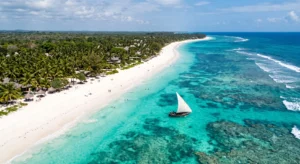
- Do Instead: Add a minimum of 3 nights on the Swahili Coast—either Diani for watersports and dining, or Lamu Island for quiet historical Swahili architecture and dhow sailing. Timbuktu Travel
Final Recommendation
- Choose a Kenya Safari if: You want world-class wildlife concentrations, open vistas, and high-caliber guide expertise. If you can afford private conservancies or travel during shoulder months, it remains one of the ultimate nature trips on Earth. Timbuktu Travel
- Look Elsewhere if: You want a low-budget, self-drive wilderness trip where you rarely see another soul. Places like Southern Tanzania or Namibia are better suited to that specific travel style.
FAQ
How many days do I actually need for a Kenya safari?
A 7-to-9-day itinerary is the sweet spot. This allows 3 nights in a Mara conservancy, 2–3 nights in a second distinct ecosystem (like Samburu or Amboseli), and a 3-night relaxing wind-down on the Swahili Coast.
What is the difference between a safari van and an open 4×4 Land Cruiser?
Safari vans are closed minibuses with a pop-up roof panel. They are cheaper but restricted on rough terrain. Open 4×4 Land Cruisers offer tier seating, better photography angles, superior off-road capability, and a much truer connection to the outdoors.
Do I need a private vehicle or are shared game drives fine?
Shared game drives in mid-range and luxury camps are generally excellent, capping passengers at 4 to 6 people. A private vehicle is only necessary if you are traveling with young children, have specialized camera gear requirements, or want complete control over schedule timings.
Is the Great Migration visible year-round in Kenya?
No. The wildebeest herds typically arrive in the Masai Mara from Tanzania’s Serengeti between July and August and remain until October before moving back south. However, resident wildlife—including lions, leopards, cheetahs, and elephants—remains plentiful year-round.