The hardest part of planning a trip to New York City isn’t deciding which museums to visit or how many slices of pizza you can consume in a weekend. It is accepting the brutal arithmetic of Manhattan real estate.
When you type “where to stay in NYC on a budget” into a search engine, you are immediately met with a wall of contradictory advice: overpriced closet-sized rooms in Times Square claiming to be “cozy,” or cheap listings deep in industrial outer-boroughs that will cost you two hours of your day just to reach a museum.
Most travel guides treat New York like a theme park where every neighborhood is interchangeable as long as it has a bed. That approach is a fast track to burnout. In reality, choosing where to stay in New York is an exercise in compromise. You trade square footage for location, quiet suburban comfort for 24-hour urban energy, or a slightly longer subway ride for hundreds of dollars in savings.
This guide strips away the marketing gloss. It examines where your money actually goes, which neighborhoods deliver real value, and what compromises you must accept to keep your trip from derailing your bank account.
Quick Verdict: Is a Budget Trip to NYC Worth It?
The Short Answer: Yes, but only if you abandon the idea of staying in Midtown Manhattan and accept that your hotel room will be smaller than your bedroom back home.
- Who should go: Independent travelers, urban explorers, and couples willing to embrace public transit in exchange for world-class food, culture, and energy.
- Who should skip: Travelers looking for spacious resort-style comfort, families requiring sprawling multi-room suites on a modest budget, or anyone who refuses to ride a crowded subway.
- The Biggest Trade-Off: You will either pay a premium to walk everywhere in Manhattan or trade your time by commuting 15 to 30 minutes from a cheaper neighborhood in Brooklyn, Queens, or New Jersey.
Quick Facts
| Information | Details |
| Best Budget Season | January to February (lowest rates); April–May and September–October (good balance) |
| Average Budget Nightly Rate | $120–$200 for outer-borough hotels/private rooms; $80–$130 for hostel dorm beds |
| Best Budget Areas | Long Island City (Queens), Williamsburg/Greenpoint (Brooklyn), Harlem (Manhattan) |
| Primary Transit Lifeline | MTA Subway ($2.90 per ride) and PATH train (for New Jersey options) |
| Main Planning Rule | Never book a hotel more than a 10-minute walk from a major express subway station. |
What Budget Accommodation in NYC Is Actually Like
If you have never visited New York before, the physical reality of its budget lodging can come as a mild shock. Space is the city’s rarest commodity.
A standard budget hotel room in Manhattan or the inner boroughs often measures under 150 square feet. Bathrooms can feature European-style wet-room layouts where the shower head sits inches from the toilet, and closets are frequently replaced by a few wall hooks and a narrow shelf.
Travelers frequently notice that budget properties in older Manhattan buildings lack soundproofing. Sirens wail at 3 AM, historic steam pipes clank rhythmically during winter nights, and elevator cars move at a deliberate, vintage pace.
However, what budget rooms lack in square footage, they usually make up for in strategic positioning. The best budget accommodations aren’t meant for lounging all day; they are clean, secure crash pads designed to give you a horizontal surface after walking twelve miles across the five boroughs. Understanding this mindset shift is vital.
If you plan to spend your vacation inside your hotel room, you will need to dramatically increase your lodging budget.
Where to Stay: Breaking Down the Smart Budget Neighborhoods
To find affordable lodging without ending up isolated, you have to look beyond Midtown. Several specific corridors offer the right balance of price, safety, and transit convenience.
1. Long Island City, Queens
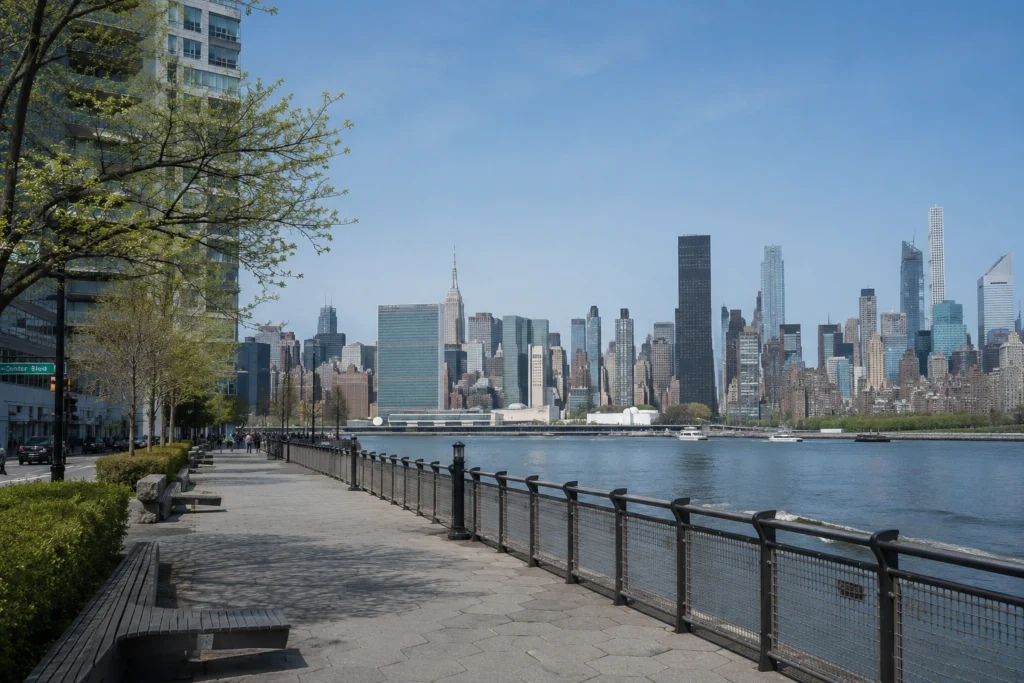
- The Vibe: A former industrial waterfront rapidly transformed into a forest of glass residential towers. It feels orderly, modern, and remarkably quiet at night compared to Manhattan.
- Why It Works: It sits right across the East River from Midtown Manhattan. Subway lines like the 7, N, and W can drop you at Grand Central or Times Square in less than ten minutes.
- The Catch: Evening dining and nightlife options can feel corporate and sparse once office workers clear out. It lacks the gritty neighborhood charm of Brooklyn.
- Best For: First-timers who want lightning-fast access to Manhattan sights without paying Manhattan prices.
2. Williamsburg and Greenpoint, Brooklyn
- The Vibe: Creative, heavily walkable, packed with independent coffee shops, thrift stores, and celebrated restaurants.
- Why It Works: You get an authentic slice of contemporary New York culture right outside your door. You are close to McCarren Park, waterfront promenades, and the L or G subway lines.
- The Catch: True budget options here are dwindling as the area gentrifies. Prices creep upward quickly, especially during spring and fall weekends.
- Best For: Food lovers, design-conscious travelers, and those who want evening culture without stepping foot back in Manhattan.
3. Harlem (Central and South Harlem), Manhattan
- The Vibe: Historically rich, culturally vibrant, featuring stunning brownstone architecture, bustling avenue commerce, and a strong sense of community identity.
- Why It Works: You stay in Manhattan, avoiding inter-borough commutes entirely, while accessing lower hotel and guesthouse rates than the Upper West Side or Midtown. The A, B, C, D, and 2/3 express trains make getting downtown remarkably fast.
- The Catch: You must exercise standard urban awareness, particularly late at night around certain quiet blocks. First-time visitors unfamiliar with city dynamics can sometimes feel intimidated needlessly.
- Best For: Culture enthusiasts, jazz history buffs, and travelers who refuse to leave Manhattan island.
4. Jersey City, New Jersey (The Out-of-State Alternative)
- The Vibe: A bustling, waterfront commuter city offering dramatic views of the Manhattan skyline across the Hudson River.
- Why It Works: Hotels near the Newport or Exchange Place PATH stations often provide larger, modern rooms at a fraction of Manhattan prices. The PATH train runs 24/7 straight into downtown Manhattan (World Trade Center) or midtown (33rd Street).
- The Catch: You are crossing a state line, meaning your transit fare requires a separate MetroCard/OMNY setup (though OMNY is rolling out integration, check current rules), and late-night PATH schedules can involve longer headways.
- Best For: Value-maximizers who want spacious, comfortable hotel rooms and don’t mind a 20-minute commuter rail ride.
What It Really Costs: Breaking Down the Budget Tiers
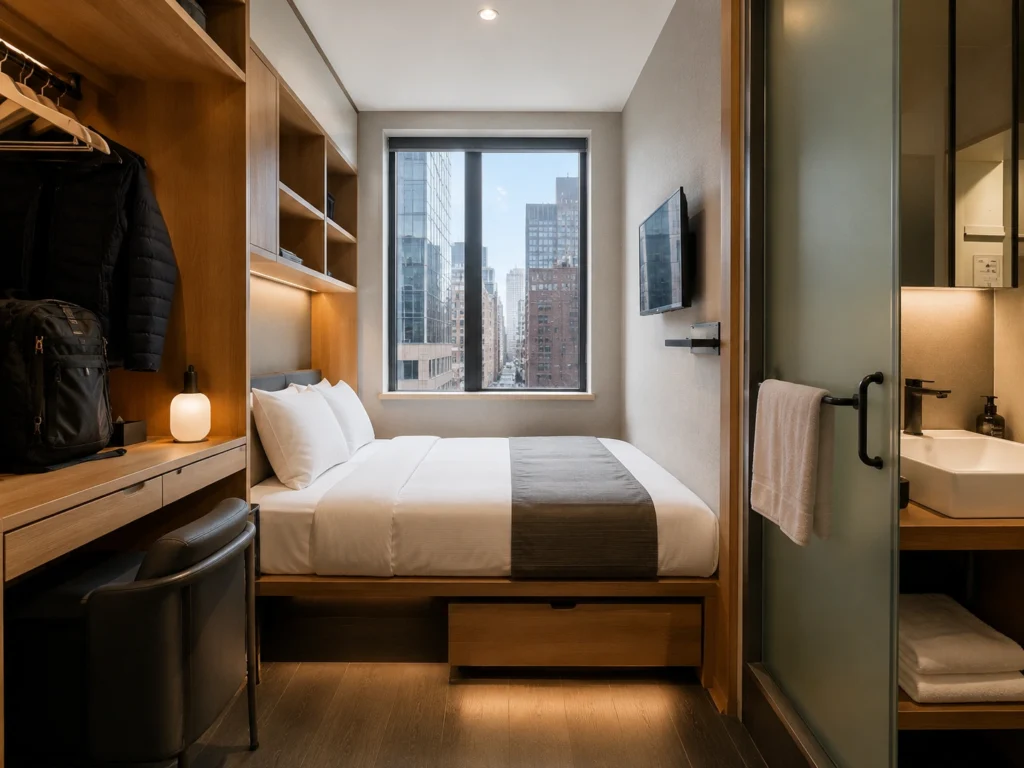
To set realistic expectations, budget accommodation in New York falls into three distinct financial brackets:
- The Hostel Tier ($75–$130/night): Primarily dormitory beds in boutique hostels (such as HI New York City on the Upper West Side or select properties in Brooklyn). Ideal for solo travelers who don’t mind communal living. Private hostel rooms exist but often approach the cost of a budget hotel.
- The Outer-Borough/Micro-Hotel Tier ($130–$200/night): Efficient, compact private rooms in Long Island City, Brooklyn, or outer Manhattan districts. This is the sweet spot for couples or friends splitting a double bed, offering privacy and modern amenities without breaking the bank.
- The Commuter Savings Tier ($110–$170/night): Larger chain properties located in New Jersey or deep Queens. While nightly rates look attractive, factor in extra transit time and occasional commuter ticket costs.
Note: Always factor in New York City’s steep lodging taxes—hovering around 14.75% plus a flat city room fee per night—which are rarely included in initial search engine headline rates.
What To Skip and What To Do Instead
- Skip: Midtown Manhattan budget motels and nameless off-brand motor inns near commercial strips.
- Why: They charge high rates purely for a zip code, offer threadbare amenities, and sit in concrete wind-tunnels that empty out completely after dark.
- Do Instead: Book a clean, modern micro-hotel in Long Island City or a reputable boutique property in Brooklyn. You will get a cleaner room, a safer walk home, and a faster subway connection.
- Skip: Relying on informal short-term rental apartments without verifying local compliance.
- Why: New York enforces strict short-term rental laws (such as Local Law 18), requiring hosts to be present and registered. Unlicensed listings face sudden platform crackdowns and last-minute cancellations that can ruin a trip.
- Do Instead: Stick to licensed hotels, aparthotels, or official regulated hostels where your booking is legally protected.
- Skip: Staying deep in outer boroughs (like southern Brooklyn or eastern Queens) just to save $30 a night.
- Why: A 60-minute one-way commute eats up two hours of your vacation every single day, drains your energy, and forces you to pay heavy taxi fares if you stay out late.
- Do Instead: Pay slightly more to stay within a 15-minute express subway zone of central attractions. Your time and energy are worth more than the marginal savings.
Final Recommendation
Finding budget accommodation in New York City requires letting go of illusions. You will not find a spacious, quiet, cheap room in the heart of Manhattan.
If it is your first time visiting and you want maximum convenience, book a compact micro-hotel in Long Island City, Queens. It gives you rapid access to the city’s pulse without the exorbitant island markup. If you prefer neighborhood culture, cafes, and a creative evening atmosphere over corporate skyline views, target Williamsburg or Greenpoint, Brooklyn.
Accept the small rooms, respect the power of the subway map, and remember that the best parts of New York happen on the street, not inside your hotel room.
Frequently Asked Questions
Are hostels in New York City safe for solo travelers?
Yes, reputable hostels in Manhattan and Brooklyn, such as HI NYC, maintain strict security protocols, keycard access, and secure lockers. Solo travelers frequently use them safely, though dorm living requires basic courtesy, earplugs, and mindfulness regarding personal belongings.
Is it better to stay in New Jersey or Queens to save money?
Queens is generally more convenient because it relies on the NYC subway system ($2.90 flat fare), keeping transit seamless. New Jersey (Jersey City/Hoboken) offers larger, cheaper rooms and great skyline views, but requires the separate PATH train system and slightly more complex late-night transit planning.
How far in advance should I book a budget hotel in NYC?
Because affordable, well-located inventory is scarce, you should book at least 3 to 5 months in advance. Waiting for last-minute deals in New York rarely works out; prices tend to spike as inventory shrinks, especially during spring and autumn peak travel seasons.
Are taxes included in New York hotel listing prices?
No. New York City charges a combined state and city hotel tax of roughly 14.75% plus a per-night occupancy fee. Always check the final checkout screen on booking platforms to see the actual total cost before confirming your reservation.