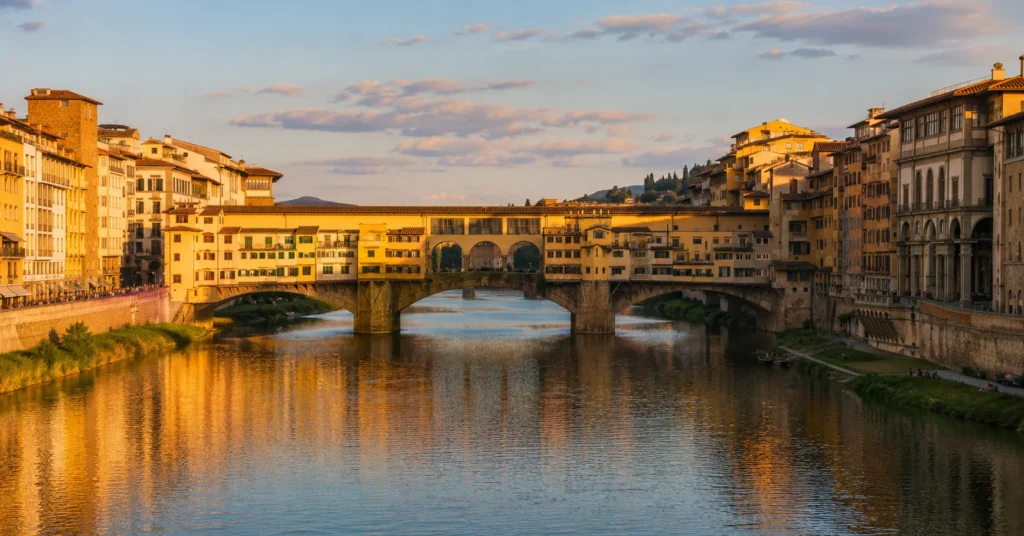
Florence hits you immediately — the Duomo’s terracotta dome dominates every view, the Arno cuts through the center, and Renaissance art sits around corners you’re just trying to navigate with a gelato in hand. What nobody mentions is that the city center operates on two speeds: yours (slow, map-consulting, photo-taking) and everyone else’s (cruise ship groups moving at 3km/h between the Uffizi and Ponte Vecchio).
This florence travel guide cuts through the postcard version. You’ll get real prices (2025–2026 rates — verify before travel), honest takes on what’s worth your time, and specific advice for first-timers who want to experience Renaissance art without spending three hours in line. I’m including the names of actual restaurants, exact ticket prices, and what to skip entirely.
You’re visiting florence for the art, the food, and the architecture. Let’s make sure you actually experience those things instead of just queuing for them.
What Florence Rewards — and What It Punishes
Florence rewards slow mornings and advance planning. It punishes spontaneity and July afternoons.
The city’s compact size means you can walk everywhere, but that same compactness creates bottlenecks. The Uffizi sees 10,000 visitors daily in peak season. The Accademia, home to Michelangelo’s David, operates on timed entry for a reason — without it, you’d spend two hours in a courtyard just to see one statue.
Here’s what works: Book your major museums before you arrive. Wake up early — 8am at the Duomo means you share it with serious photographers, not selfie sticks. Eat lunch at 1pm when Italians eat, not noon when tour groups descend. Stay in the Oltrarno (south side of the river) where prices drop 20% and you walk five minutes to everything.
What doesn’t work: Showing up at the Uffizi at 11am without a ticket. Trying to see everything in one day. Eating anywhere with a “menu turistico” sign. Driving — the ZTL (limited traffic zone) cameras will fine you €100+ automatically if you enter without permission.
Florence isn’t a city you conquer. It’s one you navigate with patience and a good booking strategy.
The 5 Things That Make Florence Worth the Trip
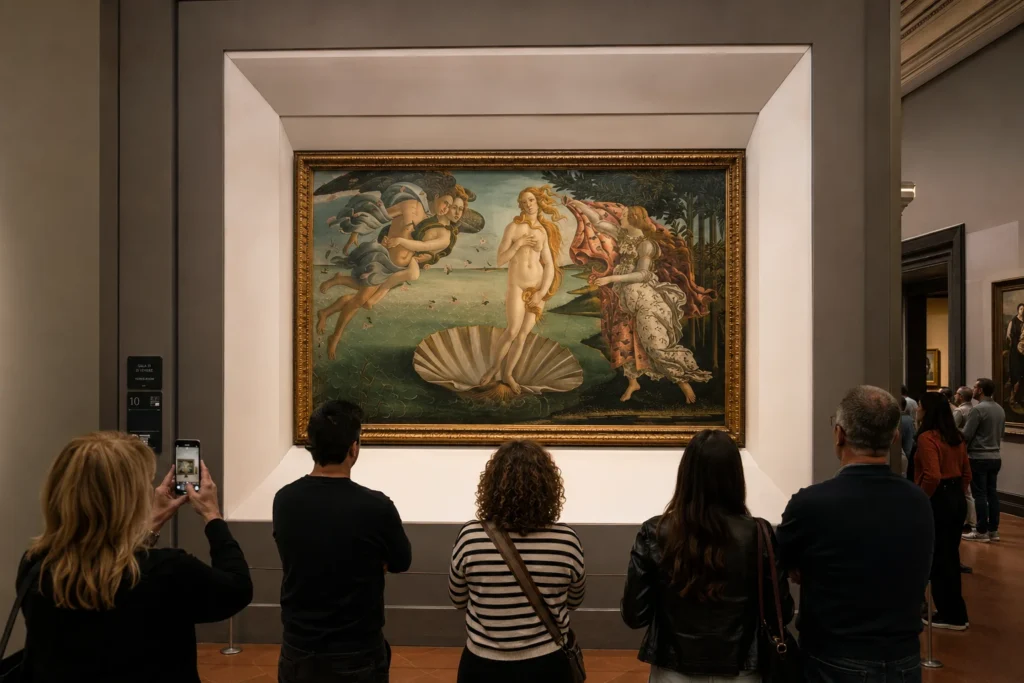
Uffizi Gallery — Book the 8:15am entry slot. You’ll have Botticelli’s Birth of Venus mostly to yourself for 20 minutes before the tour groups arrive. Full price: €20 (2025–2026 rates — verify before travel). Allow three hours minimum; this isn’t a one-room museum. The corridor alone — lined with self-portraits from the 16th to 20th centuries — deserves 45 minutes.
Accademia Gallery — Yes, you’re here for David. Yes, it’s worth it. The statue stands 5.17 meters tall, and seeing it in person reorganizes your understanding of scale. Book timed entry: €16. The museum’s smaller than the Uffizi — 90 minutes covers it properly. Go right after the Uffizi or save it for a separate morning.
Duomo Complex — The cathedral itself is free but requires a timed reservation (book at duomo.firenze.it). Climb the dome: €18, 463 steps, no elevator. The view over terracotta rooftops justifies the sweat. Giotto’s Bell Tower climb (€15, 414 steps) offers a different perspective — you see the dome itself rather than look out from it. Pick one climb unless you’re training for something.
Ponte Vecchio at sunset — The bridge survives on gold shops and tourists, but the view from Piazzale Michelangelo at 7pm in May is what you’re actually after. Walk up from the Oltrarno (20 minutes, steady incline). The city glows gold, the Duomo dome catches the last light, and you understand why the Renaissance happened here.
Oltrarno neighborhood — Cross the river and everything changes. Artisan workshops still operate on Via Santo Spirito. The restaurants fill with Florentines, not tour groups. Piazza Santo Spirito hosts a morning market (Monday–Saturday, 8am–2pm) where locals buy produce and you buy espresso for €1.50. This is where you stay if you want to experience Florence instead of just visiting it.
Where to Stay: Named Zones + Real Prices
Santa Maria Novella (around the train station)
- Pros: Central, walkable to everything, good for first-timers
- Cons: Touristy, higher prices, can be noisy
- Budget: Hotel Malaspina, €85–110/night
- Mid-range: Hotel Cellai, €140–190/night
- Splurge: Palazzo Vecchietti, €280–350/night
San Lorenzo/Mercato Centrale
- Pros: Food market on your doorstep, central but less chaotic
- Cons: Market area gets crowded midday
- Budget: Plus Florence Hostel, €35–55/night (private rooms available)
- Mid-range: Hotel Perseo, €120–160/night
- Splurge: Hotel Davanzati, €220–280/night
Oltrarno (south of the river) — RECOMMENDED
- Pros: Authentic neighborhood, lower prices, 5-minute walk to Ponte Vecchio, better restaurants
- Cons: Slightly uphill walk back from the center
- Budget: The Space Florence, €75–95/night
- Mid-range: Hotel Pitti Palace al Ponte Vecchio, €130–170/night
- Splurge: Portrait Firenze, €400–550/night
Santa Croce
- Pros: Lively evening scene, near the basilica, good restaurant density
- Cons: Can be noisy at night, further from Uffizi
- Budget: Hotel Balestri, €95–125/night
- Mid-range: Hotel Pendini, €115–150/night
Book direct with hotels when possible. Many offer free cancellation up to 48 hours before arrival. The tourist tax (€5–7/night depending on hotel rating) is paid at checkout, not included in online prices.
Getting Around Florence: Named Options + Costs
Walking — Your primary mode. The historic center is 2km across. Comfortable shoes aren’t optional; cobblestones punish flip-flops and thin soles.
ATAF buses — €1.50 per ride, valid 90 minutes. Useful only if you’re staying outside the walls or visiting Fiesole (bus #7, €1.50, 25 minutes from Piazza San Marco). Day pass: €5. Buy at tabacchi or newsstands, not from drivers.
Taxis — Fixed rates from airport to center: €25 daytime (6am–10pm), €30 nighttime. Within the city, expect €8–15 for most trips. Book via AppTaxi or FreeNow apps; hailing on the street rarely works.
Bike/scooter rental — Don’t. Florence’s cobblestones and pedestrian zones make e-scooters impractical and dangerous. Bikes are better for day trips to Chianti, not city navigation.
Car rental — Only if you’re doing Tuscany day trips. Never drive in Florence itself. The ZTL (Zona a Traffico Limitato) covers the entire historic center. Cameras photograph every plate; fines arrive by mail 6–12 months later at €100–300. If you rent a car, pick it up the day you leave Florence, not when you arrive.
Where to Eat: Named Dishes + Real Prices
Trattoria Mario — Via Rosina 2r, near Mercato Centrale. No reservations, cash only, shared tables. Lunch only (open 12–3:30pm, closed Sunday). Ribollita (Tuscan bread soup): €8. Bistecca alla fiorentina (for two, order 24 hours ahead): €55. Expect to wait 20–30 minutes at noon. Worth it.
All’Antico Vinaio — Via dei Neri 65r. The sandwich shop that broke the internet. Schiacciata with truffle cream and mozzarella: €8.50. Lines stretch around the block at 1pm. Go at 11:30am or 3pm. Yes, it’s touristy. Yes, it’s still excellent.
Trattoria Sostanza — Via del Porcellana 25r. Oltrarno institution. Butter chicken (yes, in Florence): €18. Artichoke torta: €12. Reservations essential — book 2–3 weeks ahead. Dinner only, closed Sunday and August.
Mercato Centrale (upstairs food hall) — Piazza del Mercato Centrale. Tourist trap on the ground floor (avoid). Second floor has quality vendors: pizza, pasta, seafood, gelato. Expect €12–18 per person. Good for groups with different tastes. Open 10am–midnight.
Gelato rules — Avoid places with neon colors or mountain-high displays. Look for “gelato artigianale.” Try Gelateria dei Neri (Via dei Neri 20r) or Vivoli (Via dell’Isola delle Stinche 7r). Single scoop: €2.50–3.50. Pistachio should be brown-green, not bright green.
Wine bars — Enoteca Pinchiorri (Via Ghibellina 87) for splurge tastings. Il Santino (Via Santa Monaca 9r) in Oltrarno for €5 glasses and €8 crostini.
What to order — Bistecca alla fiorentina (T-bone steak, sold by weight, €50–65/kg). Pappa al pomodoro (tomato bread soup, €8–10). Lampredotto (tripe sandwich from street carts, €4.50 — adventurous but authentically Florentine).
What to Skip — and What to Do Instead
Skip: Climbing Giotto’s Bell Tower AND the Duomo dome
- Do instead: Pick one. The dome climb (€18) gives you the iconic view over Florence. The bell tower (€15) lets you see the dome itself up close. Doing both in one day means 877 steps and diminishing returns. Choose based on your knees and your patience.
Skip: Eating anywhere near Piazza della Signoria
- Do instead: Walk five minutes to Via Santo Spirito or Via dei Neri. A pasta dish costs €18 near the Duomo, €12 in Oltrarno. The quality difference is even larger.
Skip: The Leonardo da Vinci Museum
- Do instead: It’s a collection of replica machines with minimal context. Spend that €12 and 90 minutes at the Bargello Museum instead (sculpture by Donatello, Michelangelo, Cellini) or just buy another gelato.
Skip: Day trips to Pisa if you have less than 4 days
- Do instead: Use that time for Siena or Fiesole. Pisa’s Leaning Tower is a 90-minute train ride each way (€8.20 regional train, 1 hour). You’ll spend more time traveling than actually seeing it. If you must go, combine it with Lucca and make it a full day.
Skip: Buying leather near the Duomo
- Do instead: The San Lorenzo Market leather stalls sell mostly imported goods at tourist prices. Real Florentine leather workshops operate in Oltrarno. Scuola del Cuoio (Via San Giuseppe 5r) offers quality at fair prices, though still premium.
What Florence Actually Costs: Three Tiers
Budget: €70–90/day
- Accommodation: Hostel dorm or budget hotel, €35–55/night
- Food: Panini from markets (€5–7), pizza al taglio (€4–6), one trattoria meal (€15–20)
- Attractions: Pick one major museum (€16–20), free cathedral entry, walking tours
- Transport: Walking only
- Reality check: Possible but tight. You’ll skip some major sites and eat simply.
Mid-range: €130–180/day
- Accommodation: 3-star hotel or quality B&B, €90–130/night
- Food: Breakfast at hotel/café (€5), lunch at trattoria (€15–20), dinner at proper restaurant (€30–40), gelato (€3)
- Attractions: Uffizi (€20), Accademia (€16), one dome/bell tower climb (€15–18), other museums (€10–15)
- Transport: Walking + occasional bus
- Reality check: The sweet spot. You see everything important and eat well without splurging.
Worth-the-splurge: €280–400/day
- Accommodation: 4–5 star boutique hotel, €220–350/night
- Food: All meals at top trattorias/osterie, wine pairings, cooking class (€80–120)
- Attractions: All major sites, private guided tour (€150–250), skip-the-line everything
- Transport: Private transfers, taxi when tired
- Reality check: You experience Florence at its most comfortable. Book restaurants 2–3 weeks ahead.
Fixed costs to budget:
- Tourist tax: €5–7/night (paid at hotel)
- City tax: Included in accommodation prices
- Museum combo tickets: Duomo complex (€18 dome climb, €15 bell tower, €15 baptistery)
A Realistic 3-Day Florence Itinerary
Day 1: Renaissance Heavy Hitters
- 8:15am: Uffizi Gallery (pre-booked, 3 hours)
- 12pm: Lunch at Trattoria Mario (cash only, arrive by 12:15)
- 2pm: Piazza della Signoria, Palazzo Vecchio exterior
- 3:30pm: Gelato at Gelateria dei Neri
- 4:30pm: Ponte Vecchio walk
- 7:30pm: Dinner in Oltrarno (Trattoria Sostanza if booked, or Il Santo Bevitore)
Day 2: David and Duomo
- 9am: Accademia Gallery (pre-booked, 90 minutes)
- 11am: Duomo exterior, baptistery visit (€15)
- 12:30pm: Climb the dome OR bell tower (€15–18, pre-book)
- 2:30pm: Lunch near San Lorenzo Market (avoid tourist traps)
- 4pm: Mercato Centrale browsing (ground floor for souvenirs, upstairs for food)
- 7pm: Aperitivo in Santa Croce neighborhood
- 8:30pm: Dinner at All’Antico Vinaio (go at 7pm to avoid lines) or nearby trattoria
Day 3: Oltrarno and Views
- 9am: Pitti Palace (€16) or skip for neighborhood wandering
- 11am: Boboli Gardens (€10, included with Pitti ticket)
- 1pm: Lunch at Piazza Santo Spirito market area
- 3pm: Artisan workshop browsing on Via Santo Spirito
- 5:30pm: Walk to Piazzale Michelangelo (20 minutes uphill)
- 7pm: Sunset views over Florence
- 8:30pm: Farewell dinner in Oltrarno
If you have Day 4: Day trip to Siena (1.5 hours by bus, €10 round-trip) or Fiesole (30 minutes by bus #7, €3 round-trip).
Frequently Asked Questions About Florence
How many days do you need in Florence?
Three full days covers the essentials without rushing. Day one: Uffizi and historic center. Day two: Accademia and Oltrarno. Day three: day trip to Siena or Fiesole. Add a fourth day if you want to visit the Uffizi properly — two hours isn’t enough for one of the world’s great collections.
Is the Firenze Card worth buying?
Only if you’re museum-marathoning. The 72-hour card costs €85 and includes skip-the-line at major sites. Do the math: Uffizi (€20), Accademia (€16), Palazzo Vecchio (€12.50), Bargello (€9). You need four major sites in three days to break even. Most first-timers don’t. Buy individual tickets with timed entry instead.
What’s the best time to visit Florence?
Late April to early June, or September to mid-October. July and August hit 35°C (95°F) with cruise ship crowds — the Uffizi becomes an oven with lines. November through March is quieter but some smaller restaurants close for vacation. May gives you warm weather, long days, and manageable crowds if you book timed entries.
Do you need to book Uffizi tickets in advance?
Yes, always. The Uffizi sells out weeks ahead in peak season. Book timed-entry tickets directly through the official Uffizi website (uffizi.it) to avoid third-party markups. First entry at 8:15am means 45 minutes with Botticelli’s Birth of Venus before the tour groups arrive. That’s the difference between art appreciation and crowd management.
Is Florence walkable or do you need public transport?
Completely walkable. The historic center is compact — you can cross from the Duomo to Pitti Palace in 20 minutes. Buses only matter if you’re staying outside the walls or visiting Fiesole. Don’t rent a car for Florence itself; ZTL zones (limited traffic areas) will fine you €100+ automatically. Save the car for Tuscany day trips.
Continue Exploring:
- Italy travel guide — Expand your trip beyond Florence with honest takes on Rome, Venice, and the Amalfi Coast, plus real costs for a two-week Italy itinerary.
- Best Tuscany day trips from Florence — Siena, San Gimignano, Chianti wine tours, and when to rent a car versus join a group tour.