Los Angeles punishes visitors who try to “do LA” in one trip. The city is 502 square miles (1,300 sq km), traffic turns short distances into negotiations, and first-timers lose entire afternoons crossing town for attractions they saw on TikTok three months ago. The mistake isn’t choosing the wrong hotel. It’s treating Los Angeles like a normal city.
Because it isn’t one city. It’s a collection of neighbourhoods stitched together by freeways, tacos, palm trees, and ambition.
The Hollywood Walk of Fame disappoints almost everyone the first time. Venice Beach before 10am is better than Venice Beach at sunset. And Santa Monica feels completely different on a foggy June morning than it does on an October afternoon when the marine layer finally gives up. That’s LA. Timing matters here more than most destinations.
This los angeles travel guide is built for first-timers who want the version of the city locals actually use — not the one tour companies glue together. You’ll leave understanding where to stay, how to move around, what things cost, and which experiences are worth reorganising your trip around.
Quick Overview
| Category | What You Need to Know |
|---|---|
| Best First-Time Base | West Hollywood or Santa Monica |
| Airport | LAX is 18 miles (29km) from Downtown LA |
| Car Required? | Usually yes |
| Best Months | March–May and October–November |
| Summer Warning | Inland temperatures regularly exceed 95°F (35°C) from June–September |
| Wildfire Season | June–October. AQI above 150 = poor air quality |
| Budget Expectation | $100–$150/day minimum (2025–2026 rates — verify before travel) |
| Traffic Reality | Santa Monica to Hollywood: 35 minutes at 10am, often 75+ minutes at 5pm |
| Typical First-Timer Mistake | Staying in Downtown LA for a beach-focused trip |
Los Angeles works best when you build your trip around zones instead of checklists. Westside for beaches. Eastside for food. Hollywood Hills for views. Trying to bounce between all three in one day usually ends with brake lights on Interstate 10 and a cold burrito eaten in a rental car.
Top Things to Do in Los Angeles Without Wasting Half Your Trip in Traffic
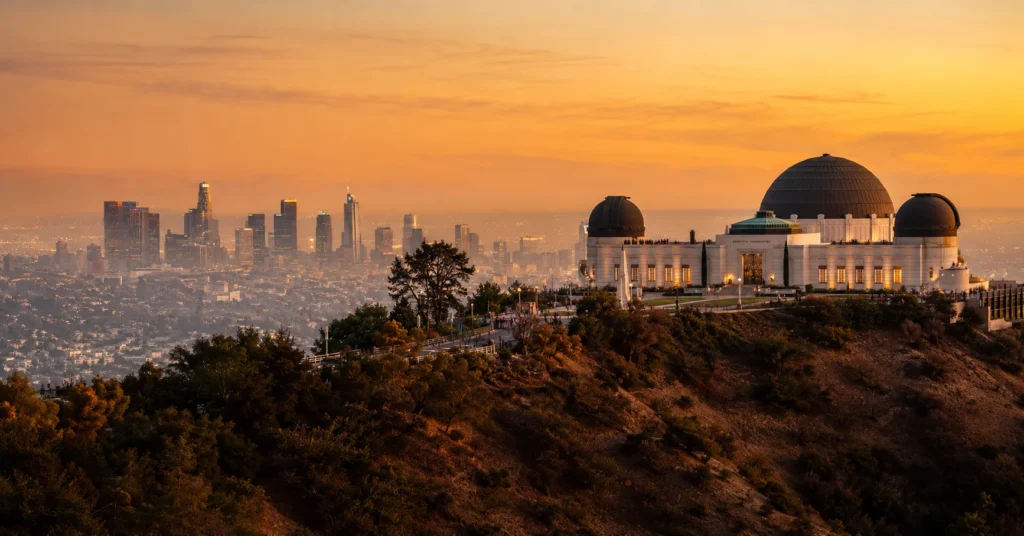
Griffith Observatory is still worth it. That’s the surprising part.
Go at 4:30pm on a weekday, not sunset itself. The light over the Hollywood Hills softens first, then downtown starts glowing roughly 25 minutes later. Most people arrive too late, circle the parking lot in frustration, then spend sunset looking for a space instead of looking at the city.
The Getty Center handles crowds better than almost any major museum in America. The tram ride up the hill feels theatrical in a very LA way, and the gardens are quieter after 3pm when school groups disappear. Entry is free. Parking is not — $25 per car (2025–2026 rates — verify before travel).
And then there’s the beach question.
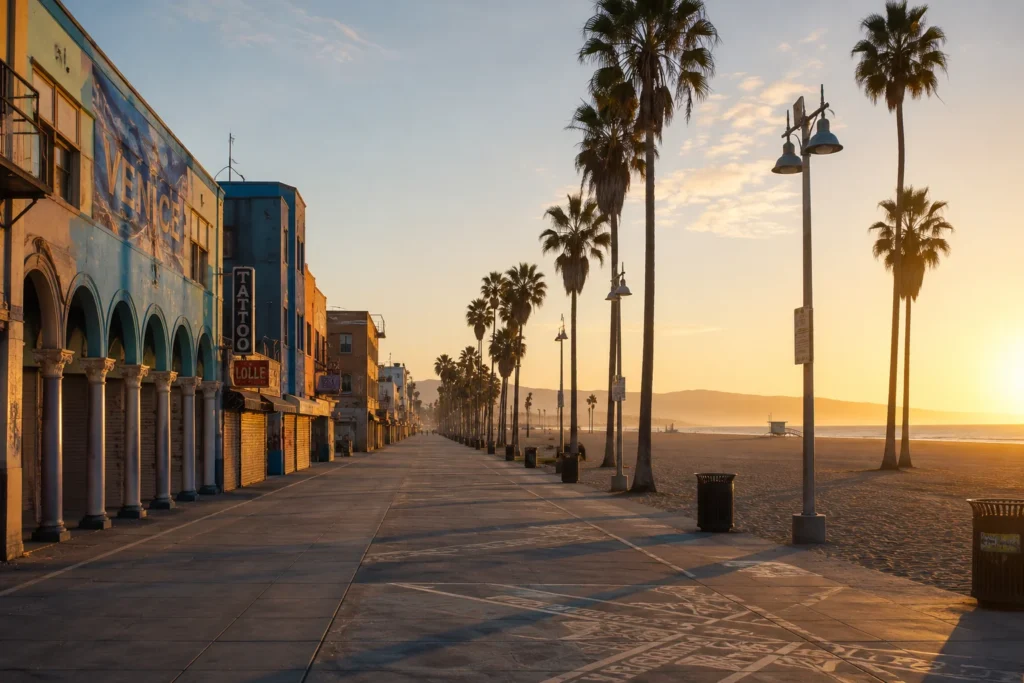
Santa Monica is cleaner, easier, and more comfortable for first-timers. Venice Beach is more interesting. The stretch between Venice Skatepark and Muscle Beach at 8am on a Sunday tells you more about Los Angeles than most studio tours ever will — roller skaters, coffee runners, bodybuilders, tourists looking slightly overwhelmed by all of it.
Skip the Hollywood Walk of Fame during midday. The reality: souvenir shops, costumed characters demanding tips, and traffic noise bouncing between buildings. Instead, hike Runyon Canyon before 8am. You’ll still get the skyline views and celebrity-adjacent atmosphere without standing beside a Spider-Man arguing with Elmo.
One honest admission: Universal Studios Hollywood was more fun than expected. The studio tram tour still leans heavily on staged effects, but the backlot sections give first-timers something genuinely useful — scale. You finally understand how much of Los Angeles is built around the entertainment industry after seeing entire fake neighbourhoods hidden behind soundstages.
Where to Stay: The LA Neighbourhood You Pick Changes the Entire Trip
First-timers should narrow Los Angeles down to three realistic bases.
Santa Monica
Best for beach-focused trips and visitors without a car.
You can walk to restaurants, the Metro E Line connects to Downtown LA, and mornings along Ocean Avenue feel calmer than most people expect from Los Angeles. Hotel prices don’t. Expect $300–$450 a night for decent 3–4 star properties near the beach (2025–2026 rates — verify before travel).
Still, the walkability changes the trip enough to justify the cost.
West Hollywood
The best all-round choice.
You’re positioned between Beverly Hills, Hollywood, and the restaurants around Fairfax and Melrose. Sunset Boulevard traffic remains chaotic, but you’re central enough that crossing the city becomes manageable instead of exhausting.
And the food scene here is stronger than most first-time visitors realise. Late-night tacos on Santa Monica Boulevard outperform several expensive rooftop restaurants charging triple the price for the same sunset.
Downtown Los Angeles (DTLA)
Good for museums, sports, and shorter stays. Wrong for most beach-first vacations.
DTLA improved dramatically over the last decade, but first-timers often underestimate the scale of Los Angeles. Staying downtown because it’s “central” is how people accidentally spend two hours getting to Malibu.
That’s not central. That’s a logistics error.
Getting Around Los Angeles: The Car Question You Need to Answer Early
Most visitors need a car. Say yes to that reality early and the trip becomes easier.
Public transport exists, but Los Angeles isn’t built around it the way New York or Chicago are. The Metro helps for specific corridors — Santa Monica to Downtown LA, for example — but many first-time itineraries involve neighbourhood jumps that become awkward without a car.
The real issue isn’t distance. It’s timing.
Beverly Hills to Venice Beach is 12 miles (19km). That sounds manageable until it takes 70 minutes on a Friday at 4:30pm. GPS apps assume movement. Los Angeles often disagrees.
If you rent a car, budget for parking everywhere:
- Hotel parking: $25–$60/night
- Beach parking lots: $15–$25/day
- Valet parking in West Hollywood: commonly $18–$25
(2025–2026 rates — verify before travel)
Blunt verdict: hire the car if your trip includes beaches, Griffith Observatory, or multiple neighbourhoods. Don’t hire it if you’re staying entirely inside Santa Monica and taking occasional rideshares.
What Los Angeles Actually Costs: Budget, Mid-Range, and Premium
| Tier | Daily Cost | What It Actually Gets You |
|---|---|---|
| Budget | $100–$150/day | Hostel or budget motel, tacos and fast casual meals, Metro + rideshares |
| Mid-Range | $200–$350/day | 3-star hotel or Airbnb, rental car, sit-down dinners, paid attractions |
| Premium | $400+/day | Boutique hotels, valet parking, rooftop dining, ocean-view stays |
All costs: (2025–2026 rates — verify before travel)
Food swings wildly in Los Angeles.
A $4 taco from Leo’s Tacos Truck near Mid-City can outperform a $28 entrée in Beverly Hills. In-N-Out still delivers one of the best value meals in California at around $12. And yes — people really do debate burger orders there with the seriousness of political negotiations.
The hidden budget killer is parking. Not accommodation. Not food. Parking.
A cheap hotel in Hollywood charging $42 nightly parking fees stops being cheap immediately.
A 3-Day First-Timer Los Angeles Itinerary That Doesn’t Try to Do Everything
Day 1 — Westside LA
Start in Santa Monica before 9am. Walk south to Venice Beach while the boardwalk still belongs to runners and dog walkers instead of bike traffic and street performers.
Afternoon: Getty Center. Evening: dinner around Abbott Kinney Boulevard.
Day 2 — Hollywood Hills + Central LA
Morning hike at Runyon Canyon or Griffith Park. Griffith Observatory late afternoon. Dinner in West Hollywood.
Do not attempt Disneyland as a day trip from central LA unless you’re prepared for a 2-hour return drive in traffic. Many visitors learn this too late.
Day 3 — Museums or Malibu
Choose one direction.
Either stay urban with LACMA, The Broad, and Koreatown food stops. Or drive north on Pacific Coast Highway toward Malibu before 8am. Big Sur gets the headlines. Malibu gets the sunsets you can actually reach on a short trip.
Pro Tips That Make Los Angeles Easier the Moment You Arrive
June Gloom is real. Coastal Los Angeles often stays grey and overcast through late morning in June despite the reputation for endless sunshine.
Book airport transfers carefully at LAX. Rideshare pickup zones confuse exhausted arrivals constantly — especially international visitors adjusting after long-haul flights.
And don’t overbook your days.
This city rewards empty space in your schedule more than tightly planned itineraries. Some of the best LA moments happen accidentally: a taco stand in Echo Park, sunset traffic crawling along Mulholland Drive, the strange quiet of Beverly Hills residential streets at 7am before gardeners start their leaf blowers.
That’s the version of Los Angeles most guides miss entirely.
Frequently Asked Questions About Los Angeles
How many days do you need in Los Angeles?
Four to five days works best for first-timers. Less than that turns the trip into constant driving. More gives you time for neighbourhood days instead of attraction-hopping.
Is Los Angeles expensive for tourists?
Yes. Accommodation, parking, and transport add up quickly. Budget travellers can still manage on $100–$150/day with careful planning and limited rideshares.
Do you need a car in Los Angeles?
Usually yes. If you’re staying entirely around Santa Monica or West Hollywood, you can rely on rideshares and limited Metro use. Multi-neighbourhood trips work better with a rental car.
What is the best month to visit Los Angeles?
October is hard to beat. Warm weather, lower coastal fog, and lighter summer crowds. August heat inland can exceed 95°F (35°C).
Is Hollywood worth visiting?
Briefly. See it once, then move on. Griffith Observatory, West Hollywood, and the beach neighbourhoods leave a stronger impression on most first-time visitors.
Continue Exploring
- California travel guide helps you decide whether LA should anchor a wider California road trip or stay a standalone city break.
- visiting California gives you the broader seasonal and logistics context that changes how you plan distances, national parks, and Pacific Coast Highway drives.