The beauty industry loves complexity. Ten-step routines. Ingredient charts that look like chemistry exams. Products promising overnight transformation. Then six weeks later, the bathroom shelf is crowded, the budget is lighter, and the skin looks exactly the same.
Healthy skin usually starts somewhere less exciting: cleansing, moisturizing, and daily sunscreen.
That’s the foundation. Everything else comes later.
This skin care guide for beginners follows a routine-first framework. Instead of chasing trends, you’ll learn what each step does, who needs it, how long results take, and where products fit into a routine that you can actually maintain.
Quick Overview: The Beginner Skin Care Routine in Four Steps
| Step | Product Type | Frequency | Purpose | Typical Results Timeline |
|---|---|---|---|---|
| 1 | Cleanser | Morning & Night | Remove oil, dirt, sunscreen | Immediate comfort |
| 2 | Moisturizer | Morning & Night | Support skin barrier | 1–2 weeks |
| 3 | Sunscreen SPF 30+ | Every morning | Prevent UV damage | Long-term protection |
| 4 | Treatment (Optional) | Based on concern | Address acne, pigmentation, dryness | 4–12 weeks |
If you’re completely new to skincare, start with the first three steps only.
Not for a week. Not until the products run out.
For at least one month.
Many beginners introduce five new products at once, then have no idea which one caused irritation or which one is helping. Simplicity wins early.
Why a Consistent Skin Care Routine Matters More Than Expensive Products
The most expensive serum in the world cannot compensate for skipping sunscreen five days a week.
That’s not marketing advice. It’s how skin biology works.
Your skin barrier acts as the body’s front-line defense. When it stays hydrated and protected from UV exposure, it performs better. When it’s constantly stripped by harsh cleansers or left unprotected in the sun, irritation, dryness, uneven tone, and premature aging become more likely.
A beginner routine should focus on:
- Gentle cleansing
- Daily hydration
- Consistent sun protection
Everything else is secondary.
And here’s the mistake many people make: they judge products too quickly.
Niacinamide may need 6–8 weeks before redness starts improving. Retinol often requires 8–12 weeks before visible texture changes appear. Even a basic moisturizer may take a couple of weeks before dry patches noticeably improve.
Skin rarely changes overnight. Social media just edits out the waiting period.
The Routine-First Framework: Build Your Skin Care Routine Step by Step
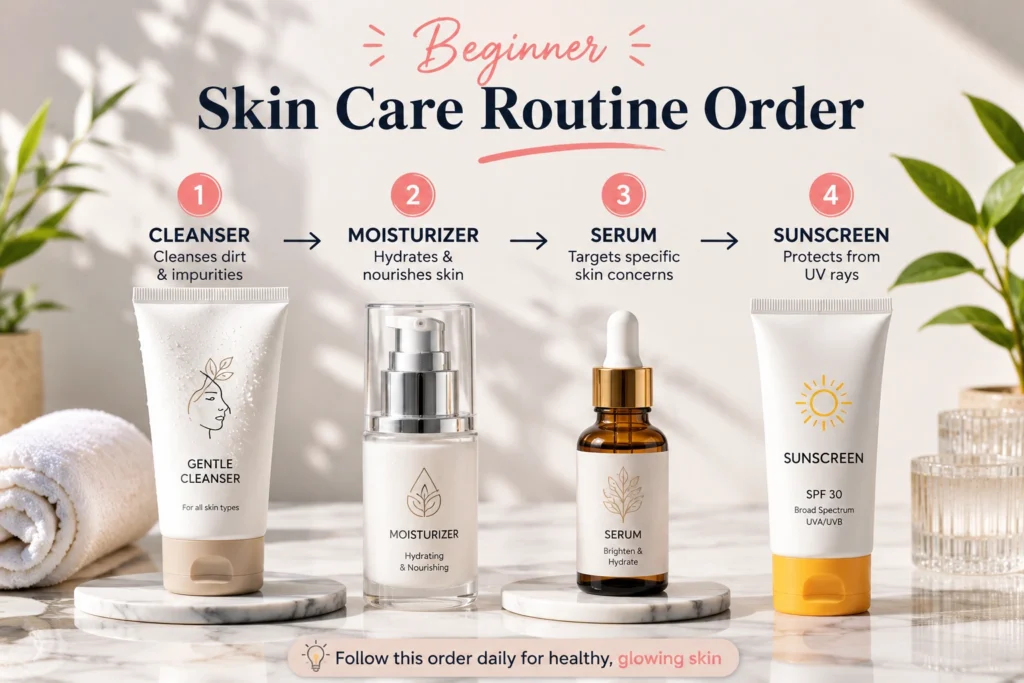
Step 1: Start With a Gentle Cleanser
A cleanser removes sweat, oil, pollution, makeup, and sunscreen.
That’s its job.
If a cleanser leaves your face feeling tight, squeaky, or uncomfortable afterward, it’s probably removing too much.
Look for:
- Ceramides
- Glycerin
- Hyaluronic acid
Suitable for:
- Most skin types
- Beginners
- Sensitive skin
Potential limitation:
- Foaming cleansers can sometimes feel drying for people with very dry skin.
Use:
- Morning: optional for dry skin
- Evening: essential
Step 2: Add a Moisturizer
Moisturizers help reduce water loss and support the skin barrier.
Think of moisturizer as maintenance rather than treatment.
Useful ingredients include:
- Ceramides
- Glycerin
- Squalane
- Panthenol
Suitable for:
- All skin types
Texture guidance:
- Gel moisturizer: oily skin
- Lotion: normal or combination skin
- Cream: dry skin
Expected timeline:
- Improved comfort within days
- Better hydration in 1–2 weeks
Step 3: Wear Sunscreen Every Morning
If beginners only adopt one habit from this guide, it should be sunscreen.
UV exposure contributes to:
- Uneven pigmentation
- Fine lines
- Sun spots
- Loss of elasticity
Choose:
- SPF 30 or higher
- Broad-spectrum protection
Apply every morning as the final step of your routine.
And yes, even on cloudy days.
The most common reason treatment products fail isn’t because the formula is weak. It’s because sunscreen wasn’t used consistently alongside it.
Step 4: Add Treatments Only After the Basics Are Established
Once cleansing, moisturizing, and sunscreen become automatic, introduce treatments.
One at a time.
For Acne
Look for:
- Salicylic Acid (0.5–2%)
Benefits:
- Helps unclog pores
- Reduces blackheads
Timeline:
- 4–8 weeks
Limitation:
- Overuse may cause dryness.
For Redness or Oiliness
Look for:
- Niacinamide (2–10%)
Benefits:
- Helps regulate oil production
- Supports barrier function
Timeline:
- 6–8 weeks
Limitation:
- Higher percentages don’t always work better.
For Fine Lines and Texture
Look for:
- Retinol
Benefits:
- Supports skin renewal
Timeline:
- 8–12 weeks
Limitation:
- Irritation is common if introduced too quickly.
Start with two nights per week.
Don’t rush this step.
A slower start usually produces better long-term results.
Common Skin Care Mistakes Beginners Make
Buying Products Before Understanding Skin Type
Dry skin needs different support than oily skin.
Combination skin often needs a balanced approach rather than products designed for either extreme.
Before purchasing anything, spend two weeks observing how your skin behaves after cleansing.
Chasing Every Trend
One month it’s snail mucin.
Next month it’s hypochlorous acid.
Then it’s a new peptide serum.
Most trends aren’t harmful. They just distract people from consistency.
A routine you follow for six months beats a perfect routine you follow for six days.
Using Too Many Active Ingredients
Retinol.
Vitamin C.
Salicylic acid.
Glycolic acid.
Using all of them immediately is one of the fastest ways to irritate healthy skin.
Introduce one active ingredient at a time.
Wait two to four weeks before adding another.
Expecting Instant Results
This might be the biggest misconception in skincare.
Most visible improvements require multiple skin cycles.
For many concerns:
- Hydration: days to weeks
- Acne: 4–8 weeks
- Pigmentation: 8–12 weeks
- Texture concerns: 8–12 weeks
Consistency is usually the missing ingredient.
Product Recommendations for Different Skin Types
Oily Skin
Focus on:
- Lightweight gel moisturizers
- Salicylic acid treatments
- Non-greasy sunscreen
Priority:
Oil control without over-drying.
Dry Skin
Focus on:
- Ceramide-rich moisturizers
- Cream textures
- Gentle cleansers
Priority:
Barrier support and hydration.
Sensitive Skin
Focus on:
- Fragrance-free formulas
- Minimal ingredient lists
- Barrier-supporting moisturizers
Priority:
Reduce irritation risk.
Combination Skin
Focus on:
- Lightweight moisturizers
- Gentle cleansers
- Broad-spectrum sunscreen
Priority:
Balance rather than extremes.
Frequently Asked Questions About Skin Care for Beginners
How many products should a beginner use?
Three products are enough to start: cleanser, moisturizer, and sunscreen. Build consistency first before introducing treatments.
How long does it take to see results from a skin care routine?
Hydration improvements may appear within days. Concerns like acne, pigmentation, and texture often require 4–12 weeks of consistent use.
Do I need a toner?
Most beginners don’t. A cleanser, moisturizer, and sunscreen provide more value than adding a toner immediately.
Can I use retinol as a beginner?
Yes, but slowly. Start one or two nights per week and increase frequency only if your skin tolerates it.
Is expensive skincare better?
Not necessarily. Ingredient quality and formulation matter more than price. Many affordable products contain the same active ingredients found in premium products.
Continue Exploring
- Complete Beauty Guide: A broader look at skin care, hair care, eye care, and body care if you’re building an entire personal care routine from scratch.