Your eyes work harder than most parts of your body. They read messages before breakfast, stare at screens through work meetings, scroll social media during breaks, and then spend another hour watching videos before bed.
That’s normal now. The problem is that many people only think about eye health when something starts hurting.
A dry, gritty feeling. Headaches after screen time. Blurry focus when shifting between near and distant objects. Redness that seems to appear out of nowhere.
Most eye problems don’t begin suddenly. They build through small daily habits repeated hundreds of times.
This eye care guide focuses on those habits. You’ll learn what affects eye health, what daily actions make the biggest difference, and how to build a practical routine that supports healthy vision without turning eye care into another complicated task.
Quick Overview: The Daily Habits That Matter Most for Eye Health
| Habit | Frequency | Best For | Limitation | Verdict |
|---|---|---|---|---|
| Follow the 20-20-20 rule | Every 20 minutes of screen use | Digital eye strain | Requires consistency | Essential |
| Wear UV-protective sunglasses | Outdoors | Long-term eye protection | Doesn’t replace regular exams | Essential |
| Stay hydrated | Daily | Dry eyes | Not a complete solution for severe dryness | High priority |
| Get comprehensive eye exams | Every 1–2 years | Early detection | Doesn’t replace daily care | Essential |
| Use lubricating eye drops when needed | As directed | Mild dryness | Not all drops suit sensitive eyes | Helpful |
| Sleep 7–9 hours | Daily | Eye recovery | Benefits build over time | Essential |
Direct answer: The best eye care routine combines screen breaks, UV protection, hydration, quality sleep, and regular eye examinations. Most people don’t need expensive products. They need consistent habits that reduce strain and protect eye tissues over years, not days.
Why Eye Problems Develop More Quickly Than Most People Realize
Many first-time eye care readers assume vision changes happen only with age.
That’s partly true. But daily habits often accelerate the process.
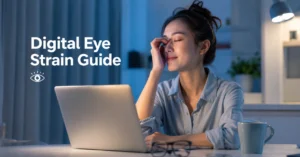
The average office worker can spend eight or more hours looking at digital screens. During intense screen use, blink rates can drop significantly. Less blinking means tears evaporate faster, leaving eyes feeling dry and irritated.
And dry eyes aren’t the only issue.
Long periods of near-focus work can contribute to eye strain, headaches, temporary blurred vision, and difficulty refocusing on distant objects.
One of the easiest observations to make is this: people often notice discomfort late in the day, not during the activity causing it. The afternoon headache may have started with the morning screen session.
Eye sensitivity can also increase because of environmental factors:
- Air conditioning
- Indoor heating
- Smoke exposure
- Dust
- Allergies
- Poor sleep
Most people blame the symptom. The cause is often hiding in the routine.
What Good Eye Care Prevents — and What It Can’t
Good eye care supports comfort, reduces unnecessary strain, and helps detect problems earlier.
It can help prevent:
- Digital eye strain
- Dry eye symptoms
- UV-related damage risks
- Eye irritation from environmental factors
- Delayed detection of vision changes
What it cannot do is guarantee perfect vision.
That’s an important distinction.
You’ll see products marketed as solutions for every eye concern imaginable. Most legitimate eye care focuses on maintenance and protection rather than dramatic transformation.
A lubricating eye drop may improve comfort within minutes.
Better sleep may reduce eye fatigue within days.
Consistent screen breaks may reduce strain over several weeks.
But no healthy routine can promise permanent correction of underlying medical conditions.
That’s why regular examinations remain one of the strongest eye care habits available. Early detection often matters more than treatment after symptoms become obvious.
A Routine-First Eye Care Guide You Can Actually Follow
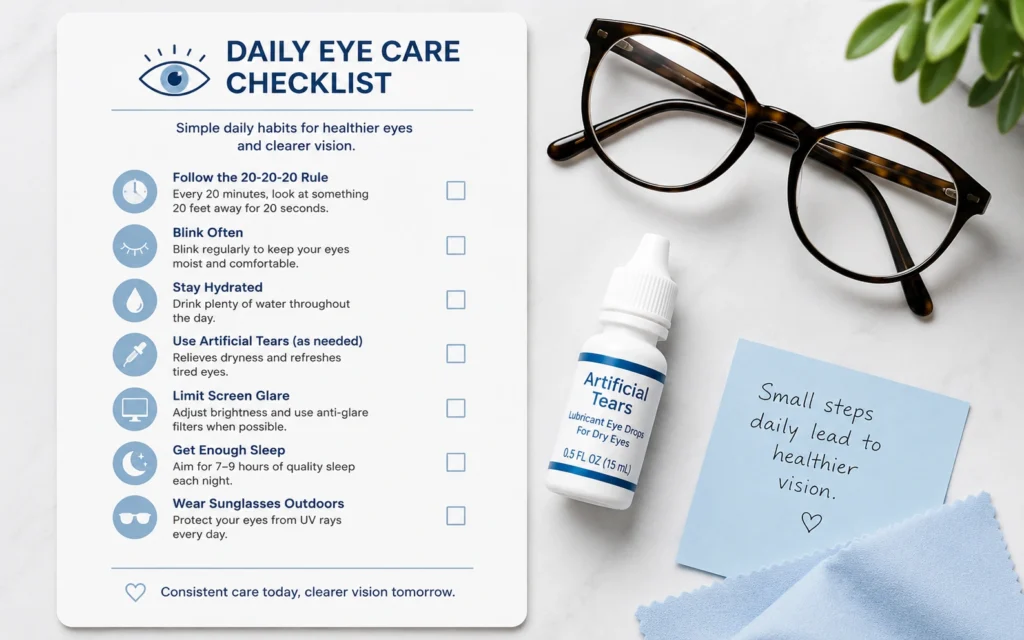
The strongest eye care routine isn’t the most complicated one.
It’s the routine you’ll still be following six months from now.
Morning
Start with hydration.
After several hours of sleep, mild dehydration can contribute to eye dryness. Drinking water early in the day helps support tear production and overall eye comfort.
If you wear contact lenses, always wash and dry your hands before handling them. This sounds basic. It also prevents a surprising number of avoidable eye infections.
Apply prescribed eye products exactly as directed.
For people with sensitive eyes, look for preservative-free lubricating drops when recommended by an eye care professional. They’re often better tolerated during frequent use.
During the Workday
This is where most eye strain develops.
Use the 20-20-20 rule:
Every 20 minutes, look at something roughly 20 feet away for at least 20 seconds.
It sounds almost too simple.
Still, it’s one of the most effective eye care tips because it interrupts continuous close-focus work.
Also pay attention to screen position.
Ideally, screens should sit slightly below eye level. Looking slightly downward helps reduce tear evaporation compared with staring straight ahead for hours.
Another overlooked habit is blinking intentionally during focused work.
Not glamorous. Not complicated.
But often surprisingly effective.
Outdoors
Ultraviolet exposure accumulates over time.
Choose sunglasses that provide 100% UVA and UVB protection. Lens color matters less than actual UV protection.
A common mistake is assuming dark lenses automatically provide adequate protection. They don’t.
The label matters.
And even on cloudy days, UV exposure remains present.
Evening
Your eyes need recovery time.
Late-night screen sessions often combine bright light exposure, reduced blinking, and fatigue.
If possible, reduce screen brightness in the final hours before sleep.
Then prioritize rest.
Seven to nine hours of sleep gives eyes time to recover from daily strain and supports overall eye health.
One honest admission: many people spend money on eye products while consistently cutting sleep short. The sleep usually delivers more benefit.
Common Eye Care Mistakes That Cause More Problems Than They Solve
Ignoring Minor Symptoms
Mild dryness today can become persistent discomfort later.
Persistent symptoms deserve attention rather than assumption.
Overusing Redness-Relief Drops
Some redness-relief products can create a cycle where redness returns after effects wear off.
Temporary improvement isn’t always long-term improvement.
Wearing Contact Lenses Too Long
Contact lenses are convenient.
They’re also one of the easiest ways to irritate eyes when recommended wear schedules are ignored.
Follow replacement schedules exactly.
Don’t negotiate with them.
Skipping Eye Exams Because Vision Seems Fine
Some eye conditions develop gradually and without obvious symptoms.
Good vision doesn’t automatically mean healthy eyes.
Regular examinations help identify issues before they affect daily life.
Believing Every Social Media Eye Hack
This deserves a blunt verdict.
Skip it.
Eye care is one category where internet experiments can create real consequences. If advice sounds dramatic, miraculous, or medically questionable, leave it alone and rely on qualified professional guidance.
Frequently Asked Questions About Eye Care
How often should I get my eyes checked?
Most healthy adults benefit from comprehensive eye examinations every one to two years. People with existing eye conditions, diabetes, significant vision changes, or other risk factors may need more frequent evaluations based on professional recommendations.
What is the best daily habit for eye health?
Consistent screen breaks are among the most effective habits for modern lifestyles. Combined with hydration, UV protection, and adequate sleep, they help reduce strain and support healthier vision over time.
Can eye exercises improve vision?
Eye exercises may help certain focusing or coordination issues when prescribed by professionals. They generally do not replace corrective lenses or permanently correct common refractive errors.
Are blue-light glasses necessary?
Some people report improved comfort when using them during extended screen sessions. Current evidence is mixed, and screen habits, lighting, and regular breaks often have a larger impact on eye comfort.
What ingredients should I look for in eye drops?
For basic lubrication, ingredients that mimic natural tears are commonly used. People with sensitive eyes often prefer preservative-free formulations for frequent use. Always follow professional advice for specific conditions.
Continue Exploring
- complete beauty guide: If you’re building a broader self-care routine, this guide connects eye care with skin care, hair care, and body care habits that work together rather than competing for your time.