Your skin care routine has six products. Three of them are active ingredients you bought because Instagram said they’d fix everything. Six weeks later, your face is red, flaky, and breaking out worse than before.
Here’s what nobody told you: active ingredients skin care isn’t about stacking the most trending serums. It’s about choosing the right one for your specific concern, using it at the correct frequency, and giving it enough time to actually work. Most people quit retinol at week three — right when it starts working. Others mix vitamin C with niacinamide and wonder why their skin feels tight.
This guide cuts through the noise. You’ll learn which actives actually deliver on their promises, how to layer them without destroying your skin barrier, and realistic timelines for results. No hype. Just what works.
QUICK FACTS BLOCK
| Active Ingredient | Best For | Frequency | Timeline to Results | Key Limitation |
|---|---|---|---|---|
| Retinol (0.25–1%) | Fine lines, texture, acne | 2–3x/week, PM only | 12–16 weeks | Causes purging weeks 2–6; increases sun sensitivity |
| Vitamin C (10–20%) | Brightening, dark spots | Daily, AM only | 8–12 weeks | Unstable; oxidizes quickly; can irritate sensitive skin |
| Niacinamide (5–10%) | Pores, oil control, redness | Daily, AM or PM | 4–6 weeks | Generally well-tolerated; minimal side effects |
| Glycolic Acid (5–10%) | Surface texture, dullness | 2–3x/week, PM | 2–4 weeks | Can sting; not for sensitive or compromised barriers |
| Salicylic Acid (0.5–2%) | Blackheads, oily skin, acne | Daily or 3–4x/week | 4–8 weeks | Drying; avoid if using retinol same night |
| Hyaluronic Acid (1–2%) | Dehydration, plumping | Daily, AM and PM | Immediate (temporary) | Needs moisture on top or it pulls water from skin |
What Active Ingredients Actually Do (And What They Don’t)
Active ingredients are the workhorses in your skin care routine — the compounds that actually change your skin’s structure or function. Everything else (emollients, preservatives, thickeners) just keeps the formula stable and pleasant to apply.
But here’s the problem: marketing has turned “active ingredient” into a buzzword that means nothing. Your moisturizer might list “active hyaluronic acid” when it’s really just 0.5% in a sea of silicones. That’s not going to do much.
The reality check: For an active to work, it needs three things. First, the right concentration (retinol below 0.25% is basically decorative). Second, the correct pH (vitamin C needs pH under 3.5 to penetrate). Third, stable packaging (light and air destroy most actives within weeks if they’re in clear dropper bottles).
I learned this the expensive way. I bought a $65 vitamin C serum in a clear glass bottle. By week three, it had turned orange — a sign of oxidation. It wasn’t doing anything except staining my pillowcase. The brand knew this would happen. They just didn’t care.
What actives can’t do: No serum will shrink your pores permanently (they’re not muscles). No ingredient will erase deep wrinkles overnight (that’s retinol over 16 weeks, maybe). And nothing topical will fix hormonal acne without addressing the root cause.
The Six Actives Worth Knowing — Matched to Your Concerns
Forget the 20 trending ingredients you saw on TikTok. These six have the most research backing them, and they cover 90% of skin concerns.
Retinol (and prescription retinoids)
Retinol increases cell turnover, boosts collagen production, and unclogs pores. It’s the only topical ingredient with decades of research proving it reduces fine lines and improves texture.
Who it’s for: Anyone over 25 concerned with aging, or anyone with persistent acne that hasn’t responded to salicylic acid.
Who should skip it: Pregnant or breastfeeding individuals (use bakuchiol instead). People with active eczema or rosacea flares.
What to buy: Start with 0.25% retinol if you’re new. Work up to 0.5% after 8 weeks, then 1% if your skin tolerates it. Prescription tretinoin (0.025–0.1%) is stronger and more effective but requires a dermatologist visit.
Real cost: Drugstore retinol runs $15–30 (CeraVe, The Ordinary). Mid-range formulas with encapsulated retinol (more stable, less irritating) cost $40–70 (Paula’s Choice, SkinCeuticals). Prescription tretinoin is $20–50/month with insurance.
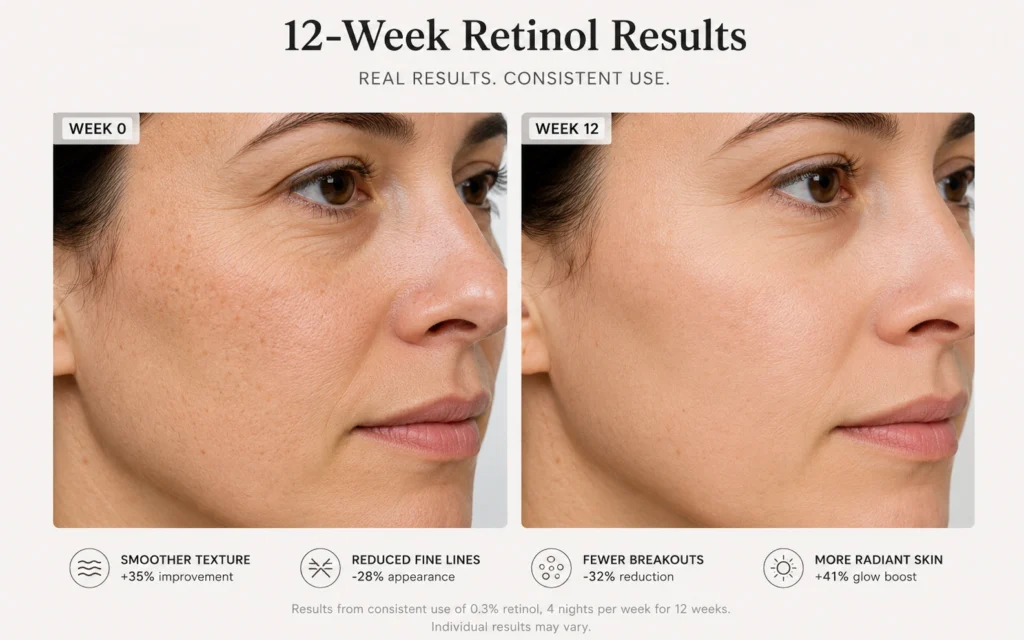
Timeline: Weeks 1–4: possible purging (breakouts as congestion surfaces). Weeks 6–8: skin adjusts, texture improves. Weeks 12–16: visible reduction in fine lines.
Vitamin C (L-ascorbic acid)
Vitamin C is an antioxidant that neutralizes free radicals from UV exposure and pollution. It also inhibits melanin production, which fades dark spots over time.
Who it’s for: Anyone with hyperpigmentation, dull skin, or who wants preventive anti-aging.
Who should skip it: Extremely sensitive skin (try magnesium ascorbyl phosphate instead, a gentler derivative).
What to buy: Look for 10–20% L-ascorbic acid with ferulic acid and vitamin E (these stabilize it). Packaging must be opaque and air-restrictive (pump bottles, not droppers).
Real cost: Stable, well-formulated vitamin C serums cost $40–90 (SkinCeuticals C E Ferulic is $182 but lasts 3 months). Budget options under $20 often oxidize within weeks.
Timeline: 8–12 weeks for visible brightening. You’ll notice immediate glow from the acidic pH, but that’s temporary.
The honest negative: Vitamin C is finicky. It oxidizes when exposed to light, air, or heat. If your serum turns brown or orange, it’s useless. Store it in the fridge and use it within 3 months of opening. If you travel frequently or forget to use it daily, skip it — you’re wasting money.
Niacinamide (Vitamin B3)
Niacinamide regulates oil production, minimizes the appearance of pores, reduces redness, and strengthens the skin barrier. It’s one of the most versatile and well-tolerated actives.
Who it’s for: Literally everyone. It works for oily skin, dry skin, sensitive skin, acne-prone skin.
Who should skip it: Almost nobody. Rare cases of flushing at concentrations above 10%.
What to buy: 5–10% concentration. Higher isn’t better — studies show 5% is effective, and 10% can cause irritation in some people.
Real cost: $10–30 (The Ordinary, Good Molecules, Paula’s Choice). This is one ingredient where cheap works fine.
Timeline: 4–6 weeks for oil regulation and pore refinement. Redness reduction takes 8–12 weeks.
Glycolic Acid (AHA)
Glycolic acid is an alpha hydroxy acid that dissolves the “glue” holding dead skin cells together. It smooths texture, fades surface hyperpigmentation, and improves product absorption.
Who it’s for: Dull skin, rough texture, mild hyperpigmentation, clogged pores.
Who should skip it: Sensitive skin, rosacea, active breakouts (can sting), dark skin tones prone to post-inflammatory hyperpigmentation (start with lactic acid instead, which is gentler).
What to buy: 5–10% for beginners in a toner or serum format. pH should be 3–4 for effectiveness.
Real cost: $15–40 (The Ordinary, Pixi Glow Tonic, Paula’s Choice).
Timeline: 2–4 weeks for smoother texture. 8–12 weeks for hyperpigmentation fading.
Frequency: Start with 2x/week at night. Never use the same night as retinol.
Salicylic Acid (BHA)
Salicylic acid is oil-soluble, which means it penetrates into pores to dissolve sebum and dead skin cells. It’s the gold standard for blackheads and oily skin.
Who it’s for: Oily skin, blackheads, whiteheads, mild to moderate acne.
Who should skip it: Dry or sensitive skin (use mandelic acid instead). People using prescription retinoids (too drying together).
What to buy: 0.5–2% in a leave-on toner or serum. Wash-off cleansers with salicylic acid aren’t on skin long enough to work.
Real cost: $12–35 (Paula’s Choice 2% BHA Liquid is $35 and lasts 4 months).
Timeline: 4–8 weeks for clearer pores. Blackheads return if you stop using it — this is maintenance, not a cure.
Hyaluronic Acid
Technically not an “active” in the traditional sense (it doesn’t change skin structure), but it’s worth mentioning because everyone asks about it. Hyaluronic acid is a humectant that holds 1,000 times its weight in water.
Who it’s for: Dehydrated skin (different from dry skin — dehydrated means lacking water, dry means lacking oil).
Who should skip it: Nobody, but it’s not a miracle worker.
The catch: Hyaluronic acid pulls moisture from wherever it can find it. If you apply it to dry skin in a dry climate, it’ll pull water from your skin and make dehydration worse. Always apply to damp skin and seal with a moisturizer on top.
Real cost: $8–50. Again, cheap versions work fine.
How to Layer Active Ingredients Without Wrecking Your Skin Barrier
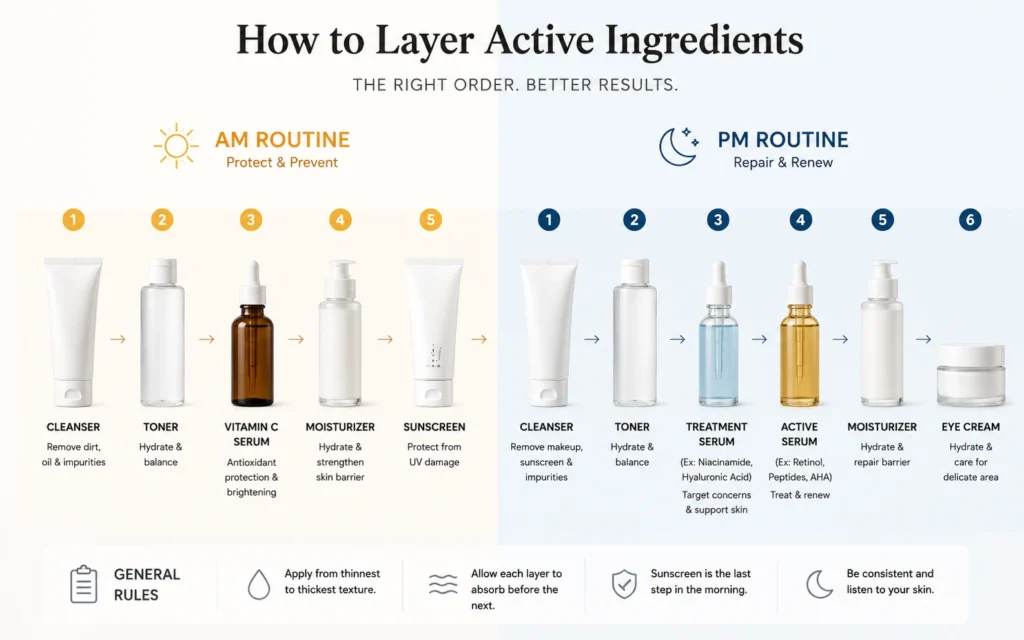
You can’t use everything at once. Your skin barrier is a physical structure — think of it like a brick wall. Active ingredients temporarily disrupt that wall to penetrate deeper. Too much disruption, and you get transepidermal water loss, redness, and breakouts.
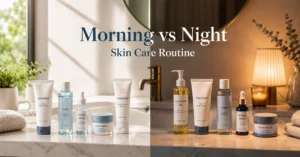
The morning routine (AM)
- Cleanser: Gentle, pH-balanced. Skip if you have dry skin.
- Vitamin C serum: Apply to dry skin. Wait 2–3 minutes.
- Niacinamide serum (optional): Can layer over vitamin C despite old myths. Wait 2 minutes.
- Moisturizer: Locks everything in.
- Sunscreen SPF 30+: Non-negotiable. Actives increase photosensitivity.
The evening routine (PM)
- Cleanser: Double cleanse if wearing makeup or sunscreen.
- Active ingredient (choose ONE per night):
- Monday/Thursday: Retinol
- Tuesday/Friday: Glycolic acid OR salicylic acid
- Wednesday/Saturday/Sunday: Rest nights (just moisturizer)
- Moisturizer: Always. Even if your skin feels oily.
What not to mix
- Retinol + AHAs/BHAs: Too irritating. Alternate nights.
- Vitamin C + Retinol: Vitamin C is AM, retinol is PM. Different routines.
- Multiple acids same night: Pick one. Glycolic OR salicylic, not both.
The Five Mistakes That Sabotage Results (And How to Fix Them)
Mistake 1: Using actives every single night
Your skin needs recovery time. Using retinol or acids nightly doesn’t speed up results — it causes barrier damage that sets you back weeks.
The fix: Start with 2–3 nights per week. After 8 weeks, if your skin tolerates it, increase to every other night. Daily use is rarely necessary.
Mistake 2: Quitting retinol during “the purge”
Weeks 2–6 of retinol often bring increased breakouts. This is congestion surfacing faster than normal. Most people quit here, right before it gets better.
The fix: Push through to week 8. If breakouts are severe (cystic, painful), reduce frequency to once weekly. But don’t quit entirely unless you have signs of allergic reaction (hives, swelling).
Mistake 3: Skipping sunscreen
Actives like retinol and AHAs increase photosensitivity. Using them without daily SPF causes more damage than the actives fix.
The fix: SPF 30+ every single morning, even indoors, even in winter. Reapply if you’re outside for more than 2 hours.
Mistake 4: Buying trendy ingredients instead of proven ones
Snail mucin, centella asiatica, bakuchiol — these aren’t bad. But they don’t have the decades of research that retinol, vitamin C, and niacinamide have.
The fix: Master the basics first. Once you’ve used retinol consistently for 6 months, then experiment with trendy ingredients. Don’t start there.
Mistake 5: Expecting overnight results
Skin cell turnover takes 28 days at age 20, 40+ days after 40. No serum overrides biology.
The fix: Commit to 12 weeks before judging results. Take photos in consistent lighting every 4 weeks. Day-to-day changes are invisible.
Product Picks That Work: Budget, Mid-Range, and Splurge
Retinol
- Budget: CeraVe Resurfacing Retinol Serum ($18, 1 fl oz) — encapsulated retinol, gentle, good for beginners.
- Mid-range: Paula’s Choice Clinical 1% Retinol Treatment ($58, 1 fl oz) — high concentration with peptides, results in 8–12 weeks.
- Splurge: SkinCeuticals Retinol 1.0 Maximum Strength Refining Night Cream ($102, 1 fl oz) — pharmaceutical-grade, fastest results but highest irritation risk.
Vitamin C
- Budget: Mad Hippie Vitamin C Serum ($34, 1.02 fl oz) — sodium ascorbyl phosphate (stable derivative), good for sensitive skin.
- Mid-range: Timeless 20% Vitamin C + E Ferulic Acid Serum ($26, 1 fl oz) — L-ascorbic acid formula similar to SkinCeuticals at 1/7 the price.
- Splurge: SkinCeuticals C E Ferulic ($182, 1 fl oz) — gold standard, patented formula, 8x photoprotection. Expensive but proven.
Niacinamide
- Budget: The Ordinary Niacinamide 10% + Zinc 1% ($6, 1 fl oz) — high concentration, can pill under makeup.
- Mid-range: Good Molecules Niacinamide Brightening Toner ($14, 4 fl oz) — 5% concentration, gentler, doubles as toner.
- Splurge: Paula’s Choice 10% Niacinamide Booster ($49, 0.68 fl oz) — can mix with moisturizer or use alone, stable formula.
Glycolic Acid
- Budget: The Ordinary Glycolic Acid 7% Toning Solution ($13, 8.1 fl oz) — large bottle, effective, can be drying.
- Mid-range: Pixi Glow Tonic ($15, 3.4 fl oz) — 5% glycolic with aloe, gentler, good for beginners.
- Splurge: SkinCeuticals Glycolic 10 Renew Overnight ($78, 1.7 fl oz) — 10% glycolic with soothing agents, overnight treatment.
Salicylic Acid
- Budget: The Inkey List Beta Hydroxy Acid ($11, 1 fl oz) — 2% salicylic, simple formula.
- Mid-range: Paula’s Choice 2% BHA Liquid Exfoliant ($35, 4 fl oz) — cult favorite, gentle, effective.
- Splurge: SkinCeuticals Blemish + Age Defense ($108, 1 fl oz) — 2% salicylic plus glycolic and citric acids, targets aging and acne.
Frequently Asked Questions About Active Ingredients in Skin Care
Can I use retinol and vitamin C together?
Not in the same routine. Vitamin C works best in the morning (it’s an antioxidant that fights daytime damage). Retinol belongs at night (it breaks down in sunlight and increases photosensitivity). Using both AM and PM is fine — just not layered on top of each other. If you have sensitive skin, alternate nights instead of daily use.
How long before I see results from active ingredients?
Realistic timelines: niacinamide (pore refinement) shows changes in 4–6 weeks. Retinol (texture, fine lines) takes 12–16 weeks for visible improvement. AHAs (surface smoothness) work within 2–4 weeks. Vitamin C (brightening) needs 8–12 weeks. Anything promising faster results is either lying or using harsh concentrations that damage your barrier.
Do I need all these actives or can I just use one?
Start with one active that targets your biggest concern. Adding multiple actives at once makes it impossible to identify what’s working — or what’s causing irritation. Master one ingredient for 8–12 weeks before introducing another. Most people see excellent results with just 2–3 well-chosen actives used consistently.
What’s the difference between chemical and physical exfoliants?
Chemical exfoliants (AHAs like glycolic acid, BHAs like salicylic acid) dissolve dead skin cells using acids. Physical exfoliants (scrubs, brushes) manually remove them through friction. Chemical exfoliants are gentler and more even. Physical scrubs can cause micro-tears if particles are jagged or you scrub too hard. Stick to chemical exfoliants 2–3 times weekly.
Can active ingredients make my skin worse before it gets better?
Retinoids can cause “purging” — a temporary increase in breakouts as cell turnover accelerates (weeks 2–6). This is normal. But persistent redness, burning, or flaking after 8 weeks means you’re overdoing it or the product isn’t suitable. Healthy skin should never feel constantly irritated. Scale back frequency or switch to gentler concentrations.
Continue Exploring
Want to build a complete routine from scratch? Start with our complete beauty guide for beginners that covers everything from cleansing to sunscreen.
For targeted concerns like hyperpigmentation or acne, check out our deep-dive guides on [IL → /vitamin-c-for-dark-spots/ | vitamin C for dark spots] and retinol for acne treatment.