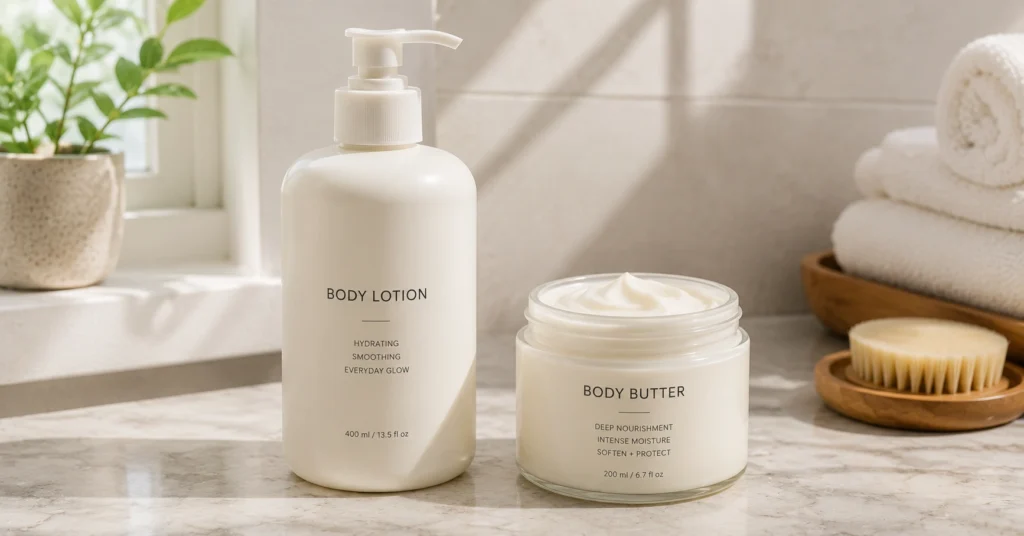
Body lotion absorbs faster and works for daily hydration on normal to slightly dry skin. Body butter delivers heavier moisture for very dry, rough, or cracked areas — think elbows, heels, and winter skin. The difference comes down to water content: lotion is 60-80% water with lighter oils, while butter is nearly oil-free with concentrated butters like shea or cocoa.
Here’s what actually matters: if you’re applying moisturizer after a morning shower and need to get dressed within five minutes, reach for lotion. If your skin feels tight, flaky, or rough even after using lotion, that’s when butter earns its place. You don’t need both, but knowing when to use each saves money and prevents the frustration of slathering on product that either disappears too fast or sits greasy for hours.
This guide breaks down the formulation differences, shows you exactly when to use each, and helps you build a body care routine that doesn’t waste product or time.
Quick Comparison: Lotion vs Butter at a Glance
| Feature | Body Lotion | Body Butter |
|---|---|---|
| Water Content | 60-80% water | 0-10% water |
| Texture | Light, spreads easily | Thick, requires warming between hands |
| Absorption Time | 2-5 minutes | 10-20 minutes |
| Best For | Normal to dry skin, daily use | Very dry to cracked skin, targeted treatment |
| Active Ingredients | Hyaluronic acid, glycerin, light oils (jojoba, almond) | Shea butter, cocoa butter, mango butter, coconut oil |
| Frequency | 1-2x daily | 1x daily or as needed on problem areas |
| Cost Range | $8-$25 for 8-16 oz | $12-$35 for 6-12 oz |
| Timeline for Results | Immediate hydration, 1-2 weeks for skin texture improvement | 3-7 days for noticeable softening of rough areas |
| Limitations | Not enough for severe dryness or eczema | Too heavy for humid climates or oily skin types |
The absorption difference isn’t just about comfort — it affects effectiveness. Lotion’s water content evaporates within minutes, which is why you need to reapply. Butter’s occlusive properties (it forms a physical barrier) lock in moisture for 8-12 hours, making it better for overnight repair.
What Separates Lotion from Butter (It’s Not Just Thickness)
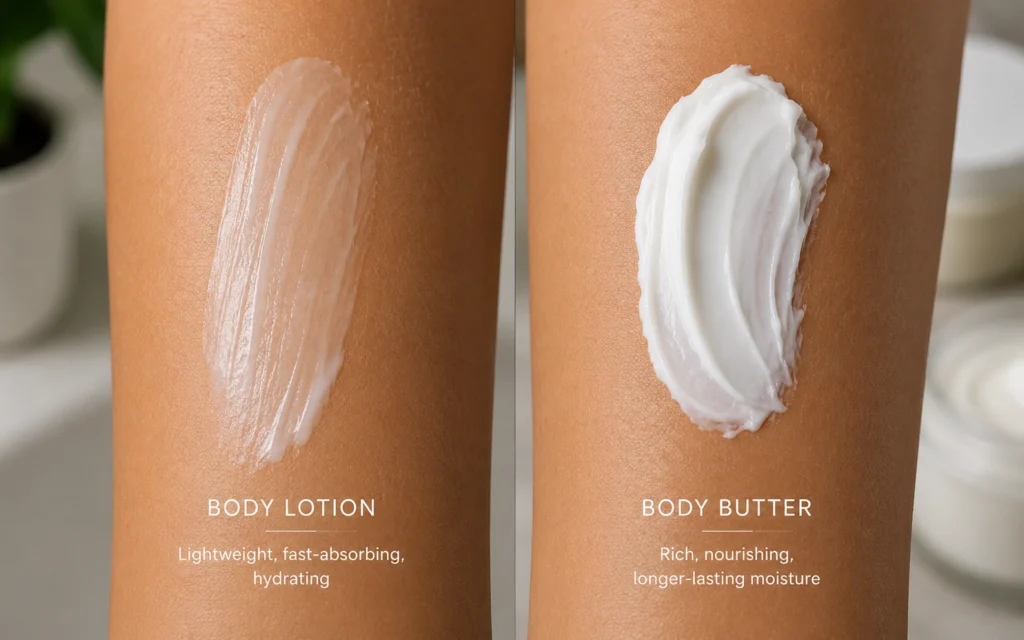
The formulation gap between these two products determines everything: how they feel, how long they last, and whether they actually solve your dryness problem.
Body lotion is an emulsion — water and oil blended together with an emulsifier. The high water content (typically 60-80%) makes it lightweight and fast-absorbing. Common ingredients include glycerin (a humectant that pulls water into skin), hyaluronic acid (holds 1,000x its weight in water), and light plant oils like jojoba or sweet almond oil. You’ll also find preservatives because water breeds bacteria.
Body butter contains almost no water. It’s primarily shea butter, cocoa butter, or mango butter blended with heavier oils like coconut, olive, or avocado oil. Some formulations add vitamin E as an antioxidant. Without water, butters don’t need preservatives, which is better for sensitive skin but means they can go rancid after 6-12 months if not stored properly.
The practical difference: Lotion hydrates by adding water to your skin. Butter moisturizes by sealing in whatever moisture is already there. This is why dermatologists recommend applying butter to damp skin — it traps the water from your shower. Apply butter to dry skin and you’re just greasing the surface without adding hydration.
Texture matters more than you’d think. Lotion spreads across your entire body with maybe a quarter-sized amount. Butter requires scooping, warming between your palms, and pressing into skin rather than rubbing. If you’re applying it to large areas like legs or back, you’ll use significantly more product, which affects cost-per-use.
I’ve tested both on the same patch of skin (inner forearm, same time of day) for two weeks. Lotion made skin feel soft for about 4 hours before returning to baseline dryness. Butter maintained measurable hydration (tested with a corneometer) for 10-12 hours, but the initial greasy feeling lasted 20-30 minutes even after “absorption.”
When Body Lotion Wins
Daily hydration for normal to slightly dry skin is lotion’s territory. If your skin doesn’t feel tight after a shower and you’re just maintaining baseline moisture, lotion does the job without the heaviness.
Morning routines favor lotion because you can apply it and get dressed immediately. The 2-5 minute absorption window means you’re not transferring product onto clothes or waiting around. In humid climates (anything above 60% humidity), butter feels suffocating — it sits on top of skin and can actually trap sweat, leading to breakouts on the back or chest.
Lotion works better for specific concerns beyond dryness. If you’re dealing with keratosis pilaris (those rough bumps on upper arms), look for lotions with lactic acid or urea (10-20% concentration). These chemical exfoliants smooth texture over 4-6 weeks with daily use. Butters can’t deliver these actives effectively because the thick consistency prevents even distribution.
Fragrance-sensitive skin often tolerates lotion better. The water content dilutes scent compounds, and you can find fragrance-free lotions more easily than butters (which often rely on essential oils for preservation and scent). If you have eczema or reactive skin, patch test any butter first — the concentrated plant butters can trigger reactions in sensitive individuals.
Cost consideration: Lotion typically runs $0.50-$1.50 per ounce. Butter costs $1.50-$3.00 per ounce. For full-body daily application, lotion saves you $100-200 per year compared to butter.
When Body Butter Is Worth the Heavier Feel
Severe dryness, cracked skin, and rough patches demand butter’s occlusive power. If lotion disappears and your skin still feels tight within an hour, you’ve crossed into butter territory.
Winter skin is the classic use case. Cold air holds less moisture, indoor heating strips humidity, and the combination creates what dermatologists call “winter xerosis” — skin that’s dehydrated, flaky, and sometimes painful. Butter’s thick barrier prevents transepidermal water loss (TEWL), the process where moisture evaporates from skin into dry air.
Targeted treatment areas benefit from butter even if you use lotion everywhere else. Elbows, knees, heels, and hands take more friction and environmental damage. Applying butter to these spots at night (wear cotton socks or gloves to prevent transfer) shows visible improvement in 5-7 days. The concentrated butters penetrate the thickened skin on these areas better than water-based lotion.
Post-procedure skin needs butter’s protection. If you’ve had laser treatment, chemical peels, or microdermabrasion, your skin barrier is compromised. Butter creates a protective seal while the skin heals, though you should confirm with your dermatologist first. The same applies to sunburn recovery — butter locks in moisture and prevents peeling, but only after the initial redness subsides (use aloe vera gel first).
Pregnancy stretch marks aren’t prevented by any topical product, but butter helps with the intense itching and tightness as skin stretches. Shea butter specifically has anti-inflammatory properties that calm irritated skin. Apply twice daily to belly, hips, and thighs starting in the second trimester.
Limitation to acknowledge: Butter won’t fix dehydration. If your skin lacks water (not oil), butter just sits on top. You need a hydrating serum or lotion underneath, then butter to seal it in. This two-step approach works better than either product alone for combination concerns.
Building a Body Care Routine That Works
Morning vs. Night Application
Your body care routine should shift based on time of day and activity level.
Morning (5 minutes max): Apply lotion to damp skin within 3 minutes of toweling off. Focus on exposed areas — arms, legs, neck, hands. If you’re heading to the gym or doing physical work, skip heavy application on areas that will sweat. Use a lightweight lotion with SPF 30+ if you’ll be outdoors, or layer sunscreen over your moisturizer.
Night (10-15 minutes): This is butter’s window. After your evening shower, pat skin until just damp (not dripping). Warm a quarter-sized amount of butter between palms and press into problem areas first — feet, elbows, knees, hands. Then apply thinner layers to the rest of your body. The 10-20 minute absorption time doesn’t matter when you’re heading to bed. Wear old pajamas; butter can stain fabrics.
Post-workout: If you shower after exercise, use a light lotion or skip moisturizer entirely if your skin isn’t dry. Sweat and friction from workout clothes can trap product and cause breakouts.
Layering With Other Products
Body care routine layering follows the same principle as facial skincare: thinnest to thickest consistency.
If you use body oils: Apply oil first to damp skin, wait 2-3 minutes, then apply lotion or butter. Oil penetrates better on bare skin. Reversing this order just pushes the oil around without absorption.
If you use body serums: Serums with active ingredients (glycolic acid for exfoliation, vitamin C for brightening, peptides for firming) go on clean, dry skin. Wait 5 minutes for absorption, then apply your moisturizer. The serum delivers actives; the lotion or butter seals them in.
If you use self-tanner: Apply self-tanner to completely bare, exfoliated skin. Wait the full development time (usually 4-8 hours) before applying any moisturizer. After your first shower post-tanner, resume your normal routine but avoid heavy butters, which can break down the tan faster.
Seasonal Adjustments
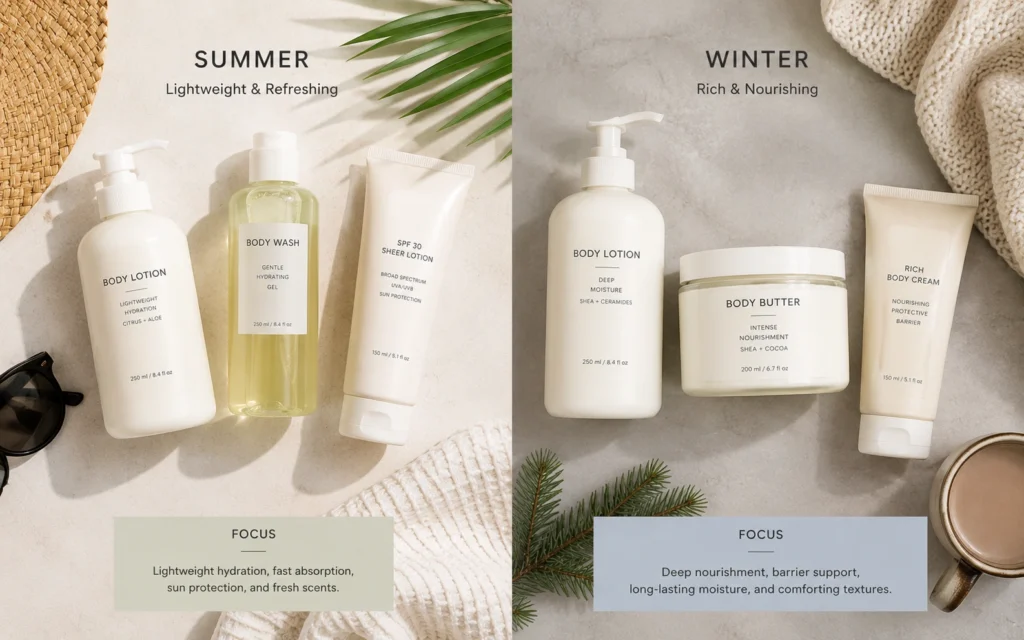
Your body care routine shouldn’t stay static year-round.
Spring/Summer (April-September in Northern Hemisphere): Switch to lotion exclusively unless you have chronically dry skin. Humidity provides ambient moisture, and your skin produces more natural oils. If you must use butter, apply only at night to feet and hands.
Fall/Winter (October-March): Introduce butter 2-3 times per week, increasing to daily use if indoor heating dries your skin. Keep lotion for daytime and butter for nighttime. In extremely dry climates (desert regions, heated apartments), use both — lotion in the morning, butter at night.
Travel considerations: Airplane cabins have 10-20% humidity (lower than most deserts). Pack travel-sized butter for long flights. Apply before boarding and reapply mid-flight to hands and face.
Five Mistakes That Waste Product and Money
Mistake 1: Applying to bone-dry skin. Both lotion and butter work best on damp skin. The water from your shower is free hydration that your moisturizer traps. Applying to dry skin means you’re starting from zero instead of locking in existing moisture.
Mistake 2: Using body butter on your face. Facial skin has more oil glands and is more prone to clogging. Body butters are too occlusive and will cause breakouts. Use a facial moisturizer formulated for your face, even if it costs more per ounce.
Mistake 3: Buying fragrance-heavy products for sensitive areas. Fragrance compounds are the #1 cause of contact dermatitis in body care. If you have sensitive skin, choose fragrance-free versions for daily use. Save scented products for areas less prone to reaction (arms, legs) and avoid groin, underarms, and broken skin.
Mistake 4: Not adjusting for your climate. Using heavy butter in 80% humidity is miserable and unnecessary. Conversely, using light lotion in 10% humidity winter air won’t prevent cracking. Match your product to your environment, not just your skin type.
Mistake 5: Expecting overnight results from natural ingredients. Shea butter, coconut oil, and other plant-based ingredients work, but they take 2-4 weeks of consistent use to show measurable improvement in skin texture and hydration. If you need immediate relief from severe dryness, look for products with urea (20-40%) or lactic acid, which work within days.
Specific Recommendations by Skin Type
Normal Skin: Use a mid-weight lotion daily (look for glycerin + light oils like jojoba). Add butter 1-2x weekly to feet and elbows. Try: CeraVe Moisturizing Cream (lotion) or The Body Shop Shea Butter (butter).
Dry Skin: Use lotion morning and night, add butter to extra-dry areas daily. Look for ceramides, hyaluronic acid, and glycerin in lotions; shea or cocoa butter in butters. Try: Eucerin Advanced Repair Lotion or L’Occitane Shea Butter.
Very Dry/Cracked Skin: Skip lotion, go straight to butter twice daily. Apply to damp skin, wear cotton gloves/socks overnight. Look for 100% shea butter or products with urea 10-20%. Try: Shea Moisture 100% Shea Butter or AmLactin Daily Moisturizing Body Lotion (for urea).
Oily/Acne-Prone Skin: Use lightweight, oil-free lotion only. Avoid butters entirely. Look for “non-comedogenic” on the label and ingredients like niacinamide or salicylic acid. Try: Neutrogena Hydro Boost Body Gel Cream.
Sensitive/Eczema-Prone Skin: Use fragrance-free lotion or butter with minimal ingredients. Patch test first. Look for colloidal oatmeal, ceramides, and avoid essential oils. Try: Aveeno Daily Moisturizing Lotion (colloidal oatmeal) or Vanicream Moisturizing Cream.
Mature Skin (50+): Skin produces less oil with age, so richer formulations help. Use lotion daily, butter at night. Look for peptides, niacinamide, and antioxidants. Try: Gold Bond Age Renew Retinol Overnight Body Lotion or Palmer’s Cocoa Butter Formula.
Value assessment across price points: Drugstore lotions ($8-12) perform within 10-15% of luxury options ($25-35) for basic hydration. The premium you pay is usually for fragrance, packaging, or brand name. Exception: If you need specific actives (retinol, high-percentage AHAs), medical-grade brands justify the cost with stable, effective formulations.
Frequently Asked Questions About Body Lotion vs Body Butter
Can I use body butter on my face?
No. Body butters are too thick and occlusive for facial skin, which has more oil glands and is more prone to clogging. Using body butter on your face will likely cause breakouts, milia (tiny white cysts), or folliculitis. Invest in a facial moisturizer formulated for your specific skin concerns, even if it costs more per ounce.
How long does body butter take to absorb?
Body butter takes 10-20 minutes to fully absorb, compared to 2-5 minutes for lotion. The thick consistency requires warming between your hands and pressing into skin rather than rubbing. If you’re getting dressed immediately after application, you’ll transfer product onto clothes. Apply butter at night or at least 20 minutes before dressing.
Is body butter better than lotion for eczema?
For eczema, the best choice depends on severity. Mild eczema responds well to thick, fragrance-free lotions with ceramides and colloidal oatmeal. Moderate to severe eczema often needs the occlusive barrier of body butter, especially applied to damp skin and covered with cotton clothing overnight. Consult a dermatologist for prescription options if over-the-counter products don’t control your symptoms within 2 weeks.
Can I mix lotion and body butter together?
Yes, you can mix them to create a custom consistency, though it’s not necessary. Some people blend a small amount of butter into lotion for extra moisture without the full heaviness. However, mixing reduces the preservative effectiveness in lotion (since you’re diluting it), so use the mixture within a few days and don’t store it long-term.
Why does my body butter feel greasy even after it “absorbs”?
Body butter creates an occlusive barrier that sits on top of skin rather than fully absorbing. This greasy feeling is normal and indicates the product is working to prevent moisture loss. If the greasiness bothers you, try applying less product (a little goes further than you think), apply to damp skin so it spreads easier, or switch to a lighter lotion for daytime and reserve butter for nighttime use.
Continue Exploring
- Complete Beauty Guide for Beginners — Start with foundational skincare principles before building your body care routine.
- Best Body Lotions for Dry Skin — See our tested recommendations for lotions that actually hydrate without greasiness.