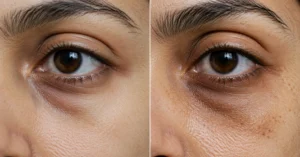
The skin around your eyes is roughly 0.5mm thick—about a third of the thickness on the rest of your face. It has fewer oil glands, which is why it is usually the first place to show dehydration, sun damage, and fatigue. Most eye creams ignore this biology. They package basic face moisturizers in tiny jars and charge triple the price.
This eye cream guide strips away the marketing. We are looking at the exact active ingredients that address dark circles, puffiness, and fine lines, who they actually work for, and where they fit in a routine. No miracle claims. Just the formulation facts you need to stop wasting money on products that cannot possibly deliver what they promise.
The Ingredients That Actually Work (And the Ones That Don’t)
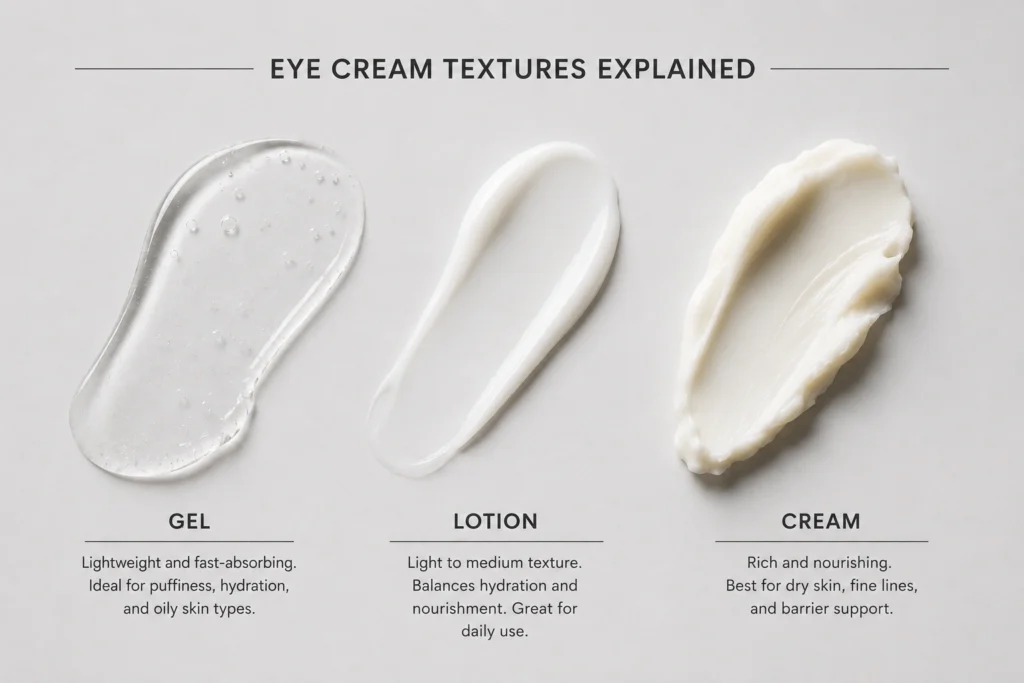
If you want to target dark circles, look for caffeine or vitamin K. For puffiness, caffeine and peptides constrict blood vessels and drain fluid. For fine lines, retinol and ceramides build collagen and repair the moisture barrier. There is no single ingredient that does all three.
Quick Facts: The Biology of the Eye Area
- Skin thickness: ~0.5mm (compared to 2mm on the rest of the face)
- Blink rate: 15,000 to 20,000 times a day (causes constant mechanical stress)
- Sebaceous glands: Significantly fewer than facial skin (prone to dryness)
- Extrinsic aging: UV exposure accounts for up to 90% of visible aging in this area
Let’s break down the formulation. The eye area is highly permeable, meaning ingredients absorb quickly but also have a higher risk of causing irritation. You need actives that are effective at lower concentrations.
Caffeine (1% to 5%) Caffeine is a vasoconstrictor. It shrinks the blood vessels under the skin. If your dark circles are vascular—meaning they look blue or purple because the thin skin is showing the blood pooling underneath—caffeine will temporarily tighten the area and reduce the darkness. It also helps drain excess fluid, which tackles morning puffiness.
The catch? It only lasts a few hours. It is a temporary fix, not a cure.
Retinol (0.01% to 0.1%) Retinol increases cell turnover and stimulates collagen production. Over three to six months, it thickens the deeper layers of the skin, making the under-eye area less translucent. This helps hide vascular dark circles and softens fine lines. Because the eye area is thin, you need a low concentration. Start with 0.01% twice a week. If you jump straight to 0.5%, you will burn your skin.
Peptides (Matrixyl, Copper Peptides) Peptides are short chains of amino acids that act as building blocks for proteins like collagen and elastin. They signal your skin to start repairing itself. They are much gentler than retinol, making them the right choice if your skin barrier is easily compromised. They will not erase deep wrinkles, but they improve skin texture and firmness over time.
Vitamin C (5% to 15%) L-ascorbic acid inhibits melanin production. If your dark circles are brown and caused by hyperpigmentation (sun damage or genetics), vitamin C will gradually fade them. The problem is formulation. L-ascorbic acid at an effective pH is notoriously unstable and often irritating. If you have sensitive eyes, look for THD ascorbate or sodium ascorbyl phosphate instead. They are slower but much better tolerated.
Ceramides and Hyaluronic Acid These are the baseline. Hyaluronic acid is a humectant—it pulls water into the skin. It plumps fine lines temporarily but washes off at night. Ceramides are lipids that make up your skin barrier. They prevent water loss. If your under-eyes are crepey and dry, a ceramide-heavy cream will smooth them out by repairing the barrier. They do not build collagen. They just keep the skin you have hydrated and functioning.
What Doesn’t Work Ignore any product that markets itself with “plant stem cells” or “marine collagen.” The collagen molecule is simply too large to penetrate the skin barrier. It sits on top, hydrates briefly, and washes off. Plant stem cells are destroyed during the extraction process and cannot interact with human cells. You are paying for a story, not a formulation.
What Actually Causes Dark Circles, Puffiness, and Fine Lines
You cannot fix a problem if you misdiagnose it. Most people buy the wrong eye cream because they assume all dark circles are the same. They are not.
Dark Circles There are three distinct types.
- Vascular: Blue, purple, or pinkish. Caused by blood pooling under thin skin, or by allergies causing congestion in the nasal cavity (which dilates the veins under the eyes).
- Pigmented: Brown or black. Caused by melanin overproduction from sun exposure, genetics, or chronic eye rubbing.
- Structural: Shadows cast by the physical anatomy of your face. As you age, you lose fat pads in the tear trough. The hollow casts a shadow.
If your dark circles are structural, no topical cream will fix it. You need a dermatologist and a hyaluronic acid filler, or simply a good concealer. This is an honest admission that saves you hundreds of dollars.
Puffiness Morning puffiness is usually fluid retention. When you lie flat, fluid pools in the loose tissue under your eyes. It drains once you stand up. True under-eye bags, however, are herniated fat pads. This is genetic and structural. Creams with caffeine will slightly reduce the fluid component, but they cannot dissolve fat.
Fine Lines Crow’s feet are caused by repetitive muscle movement—smiling, squinting, rubbing. Static lines (the ones that are there when your face is resting) are caused by collagen depletion and chronic dehydration. The skin literally loses its structural scaffolding and folds.
How to Protect the Eye Area Before Damage Happens
Prevention is cheaper and more effective than correction. If you are in your twenties or early thirties, your primary job is to stop the damage before it starts.
Wear Sunglasses This is non-negotiable. UV radiation breaks down collagen and elastin faster than anything else. Squinting in bright sunlight also physically carves crow’s feet into the skin over time. A pair of wraparound sunglasses blocks the UV and stops the squinting. As a bonus, wearing UV-blocking sunglasses doesn’t just prevent wrinkles; it protects your retina and supports long-term eye health and healthy vision.
Manage Allergies Chronic allergies cause you to rub your eyes. Rubbing breaks capillaries (causing vascular dark circles), triggers melanin production (causing pigmented dark circles), and stretches the delicate skin (causing laxity). Take an oral antihistamine or use a steroid nasal spray. Stop the itch at the source.
Sleep on Your Back If you wake up puffy every morning, your sleeping position is likely the culprit. Sleeping on your stomach or side allows fluid to pool in your face. Elevating your head with an extra pillow uses gravity to keep fluid from settling under your eyes.
Where Eye Cream Fits in Your Routine (And How to Apply It)
Getting the order of operations wrong reduces the effectiveness of your products. Here is the exact sequence for a morning and night routine.
The Order
- Cleanser
- Toner (if you use one)
- Water-based serums (Vitamin C, Hyaluronic Acid)
- Eye cream
- Face moisturizer
- SPF (morning only)
Apply eye cream before your heavy face moisturizer. If you apply a thick occlusive moisturizer first, it creates a barrier that prevents the smaller, active molecules in your eye cream from penetrating.
Morning vs. Night Your morning eye cream should focus on protection and depuffing. Use a lightweight gel with caffeine and vitamin C. It absorbs quickly under makeup and sunscreen.
Your night eye cream should focus on repair. This is where you use retinol or peptides. The richer texture sits on the skin longer while you sleep, and you do not have to worry about it pilling under makeup.
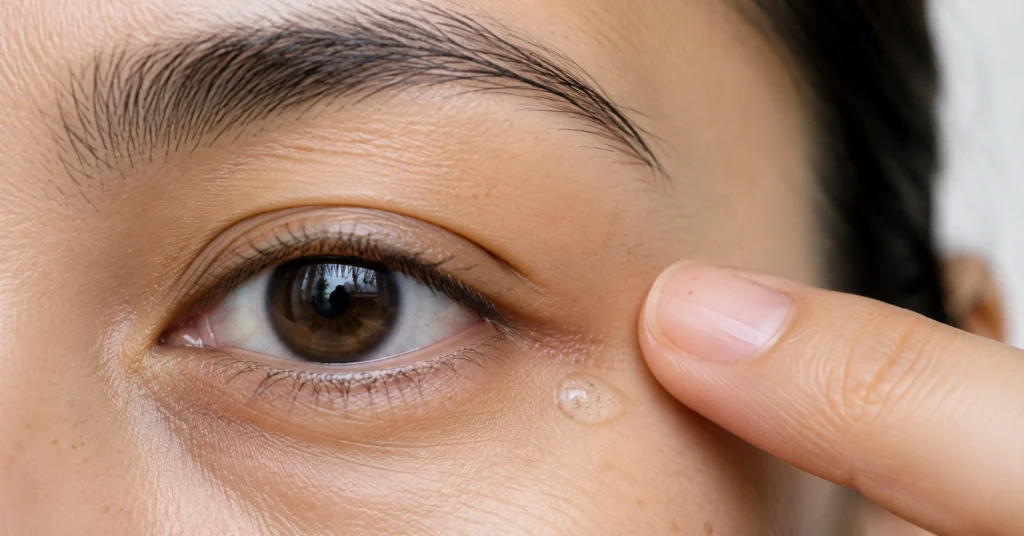
The Application You do not need to slather it on. The eye area is small. Use a rice-grain amount total—half a grain for each eye.
Use your ring finger. It is your weakest finger, which prevents you from accidentally pulling the skin. Dot the cream along your orbital bone—the hard bone you feel right under your eyebrow and along your cheekbone. Do not apply it directly to your lash line. The product will migrate into your eye as it warms up on your skin, causing stinging and irritation. Gently tap the skin until the product absorbs. Do not rub.
These are the most practical eye care tips you will get: keep it on the bone, use a tiny amount, and tap, don’t drag.
Five Eye Care Mistakes That Waste Your Money
Even with the right product, bad habits will ruin your results. Avoid these.
1. Using Face Retinol Too Close to the Lash Line Retinol migrates. If you apply it right on the lash line, it will seep into your eye over the course of the night. This causes chronic dry eye, redness, and irritation. Keep retinol strictly on the orbital bone. If your eyes are highly sensitive, use the “sandwich method”—apply a basic moisturizer first, let it dry, then apply the retinol.
2. Expecting Creams to Erase Genetic Fat Pads Marketing tells you that a $90 cream will melt away under-eye bags. It will not. If your bags are fat pads (which you can test by looking up at the ceiling—if the bulge remains, it is fat, not fluid), you are wasting your money on topical treatments. Save for a lower blepharoplasty or learn to use color corrector.
3. Applying Heavy Creams Right Before Bed If you use a very rich, occlusive eye cream right before you lie down, it can trap fluid and actually make you look puffier in the morning. If you are prone to morning puffiness, apply your heavier eye cream in the morning, and use a lightweight, gel-based formula at night.
4. Rubbing the Product In Aggressively Pulling and dragging the skin damages the elastin fibers. This leads to premature sagging. If you have to tug to spread the cream, you are using too much. Tap it in gently and let the warmth of your skin do the work.
5. Skipping SPF Because “It Stings My Eyes” Chemical sunscreens often cause severe stinging if they migrate into the eye. This leads people to skip SPF around the eyes entirely, guaranteeing collagen breakdown. Switch to a mineral sunscreen (zinc oxide or titanium dioxide) for the eye area, or use a dedicated mineral eye SPF. They do not sting.
I spent three months using a high-strength glycolic acid near my eyes because a blog told me it would fade pigmentation. It did not. It gave me contact dermatitis and a flaky eyelid that took six weeks to repair. Keep acids at least a centimeter away from the orbital bone.
Frequently Asked Questions About Eye Creams
Can I just use my face moisturizer around my eyes?
You can, if your face moisturizer is gentle, fragrance-free, and does not contain high-strength active ingredients like exfoliating acids. However, face moisturizers are often too heavy for the eye area and can cause milia (small, hard white cysts) or morning puffiness. A dedicated eye cream is formulated with smaller molecular weights and lower concentrations of actives specifically for thin skin.
How long does it take for eye cream to actually work?
It depends on the ingredient. Hydrating ingredients like hyaluronic acid plump the skin immediately, reducing the appearance of fine lines for about 12 hours. Caffeine reduces puffiness within 30 to 60 minutes, but the effect is temporary. Ingredients that actually change the skin structure—like retinol, peptides, and vitamin C—require consistent daily use for a minimum of 12 weeks before you will see visible changes in collagen density or pigmentation.
Do eye creams with caffeine work for genetic dark circles?
No. Caffeine is a vasoconstrictor, meaning it shrinks blood vessels. It only works if your dark circles are vascular (caused by visible blood pooling under the skin). If your dark circles are caused by hyperpigmentation (melanin) or structural shadows (bone structure and tear trough hollows), caffeine will do absolutely nothing. You need vitamin C for pigment, or a concealer for structural shadows.
Should I keep my eye cream in the fridge?
Yes, if it helps you depuff. The cold temperature causes immediate vasoconstriction, which shrinks blood vessels and reduces fluid accumulation. A chilled roller-ball eye cream or a basic gel kept in the fridge is highly effective for morning puffiness. However, do not refrigerate products containing retinol or unstable vitamin C, as the fluctuating temperatures can degrade the active ingredients and shorten their shelf life.
Continue Exploring
- The complete beauty guide: If you want to understand how eye care fits into a broader skincare strategy, this guide breaks down the foundational routines for every skin type.