Under-eye dark circles are among the most stubborn issues in skincare—precisely because marketing departments treat them as a single, easily solved problem. The multi-billion-dollar beauty industry routinely promises that a single jar of expensive cream can erase shadows in seven days. What those brands omit is that an eye cream formulated to treat hyperpigmentation will do absolutely nothing for shadows caused by structural aging or poor microcirculation. If you apply products blindly without determining why your skin looks dark, you will waste months of effort and hundreds of euros at the retail counter.
To understand how to reduce dark circles, you must treat your under-eye area with tactical, ingredient-focused specificity. This cornerstone guide breaks down the biological categories of under-eye shadows, establishes a daily routine-first framework, and outlines the physical limitations of topical skincare so you can manage your expectations realistically.
What Eye Care Rewards—And What It Punishes If You Arrive Unprepared
The thin periorbital skin surrounding your eyes operates on its own physiological rules, rewarding strict consistency and punishing aggressive intervention. This tissue layer is up to ten times thinner than the skin on your cheeks, meaning it possesses fewer oil glands, a highly delicate moisture barrier, and an incredibly dense network of microscopic capillaries. If you approach this fragile zone with high-strength facial acids or forceful physical rubbing, the skin will respond with chronic inflammation, accelerated collagen breakdown, and increased hyperpigmentation.
To achieve genuine progress, you must understand exactly what type of shadow you are dealing with before spending money on raw ingredients. Here is the operational data block for identifying and treating dark circles:
| Circle Category | Primary Visual Indicator | Underlying Cause | Effective Active Ingredients | Realistic Expectation Floor |
| Vascular | Blue, purple, or pink hue | Leaky capillaries & thin skin | Caffeine, Vitamin K, Peptides | Temporary constriction (6–8 hours) |
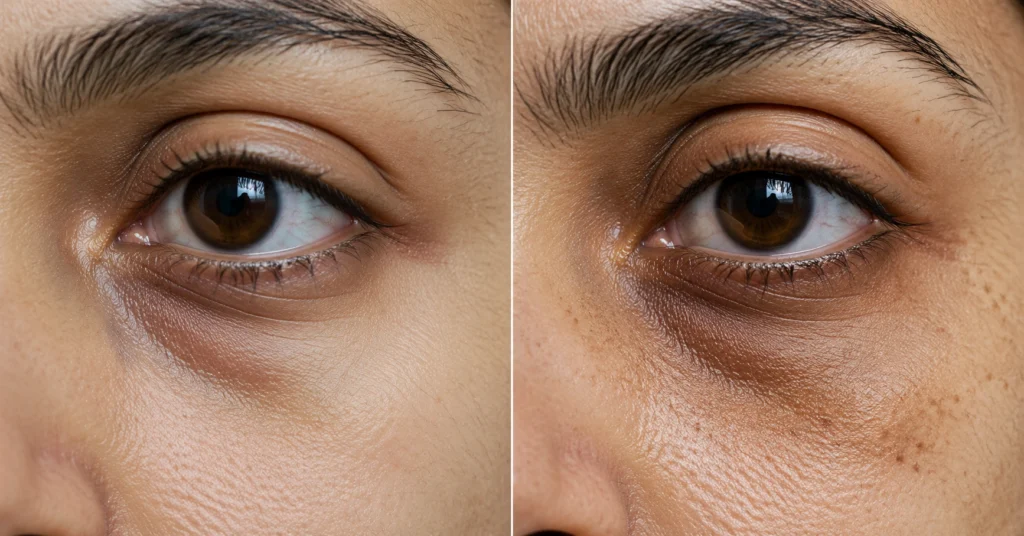
| Pigmented | Brown, black, or muddy tint | Melanin overproduction | Vitamin C, Arbutin, Retinoids | Gradual fading over 8–12 weeks |
| Structural | Shadow shifts with lighting | Deep orbital bone or fat loss | Hyaluronic Acid, Ceramides | Surface plumping only (No structural alteration) |
What to Know Before You Try to Treat Your Under-Eye Shadows
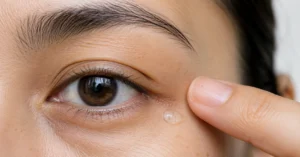
Before buying any targeted product, you must perform a simple, five-second diagnostic test in front of a mirror to verify your circle category. Sit under direct overhead lighting and look straight ahead. Place the tip of your index finger on the dark area and press down gently for three seconds, then release.
If the color momentarily blanches or fades completely when pressed, you are dealing with vascular pooling—blood leaking from tiny vessels that shows through your translucent skin layer. If the dark tint remains unchanged and moves along with your skin when you slide your finger slightly to the side, it is surface hyperpigmentation caused by excess melanin production. Finally, if tilting your chin down toward your chest amplifies the darkness while looking directly up at the ceiling erases it, your circles are entirely structural shadows cast by your natural bone structure.
The Core Causes: Identifying Your Specific Dark Circle Typology
Vascular dark circles are heavily influenced by fluid retention and vascular pooling. When you remain horizontal for eight hours during sleep, blood fluid naturally pools in the delicate capillaries beneath your lower eyelids. If your skin is genetically thin or lacks dense collagen support, this underlying purple pool becomes starkly visible the moment you wake up. This effect is why allergies, sinus congestion, and late nights dramatically intensify vascular circles—they physically gorge the local veins with stagnant blood.
Pigmented dark circles, or orbital hyperpigmentation, are driven by an entirely different biological pathway: melanocyte activity. This overproduction of pigment can be triggered by genetic factors common in darker skin tones, or it can be a direct side effect of chronic post-inflammatory hyperpigmentation. Every single time you aggressively rub your eyes due to seasonal allergies, contacts, or harsh makeup removal, you cause micro-trauma that commands your skin cells to produce protective melanin, darkening the surface tissue permanently.
The Preventive Habits That Protect Long-Term Eye Health
Protecting your periorbital area requires a combination of behavioral changes and targeted eye health habits that go beyond the skincare aisle. Your daily screen time habits play an unexpected role in vascular pooling. Straining your eyes in front of a monitor for nine hours straight causes the delicate ocular muscles to demand more oxygenated blood, which forces the local capillaries to dilate and swell, worsening the appearance of purple shadows. Taking a systematic 20-second break to look at an object 20 feet away every 20 minutes is a foundational move for both eye care tips and healthy vision maintenance.
Furthermore, sleep positioning directly governs the structural volume of your under-eye tissue each morning. Sleeping completely flat on your stomach or side creates a physical gravity well that promotes fluid accumulation in the loose tissues beneath your eyes, resulting in a combination of morning puffiness and dark vascular shadows. Switching to back-sleeping and elevating your head with an extra pillow uses gravity to drain fluid away from the face overnight, preventing the morning stretching of delicate skin fibers that leads to early sagging.
The Step-by-Step Routine Guide to Fading Under-Eye Discoloration
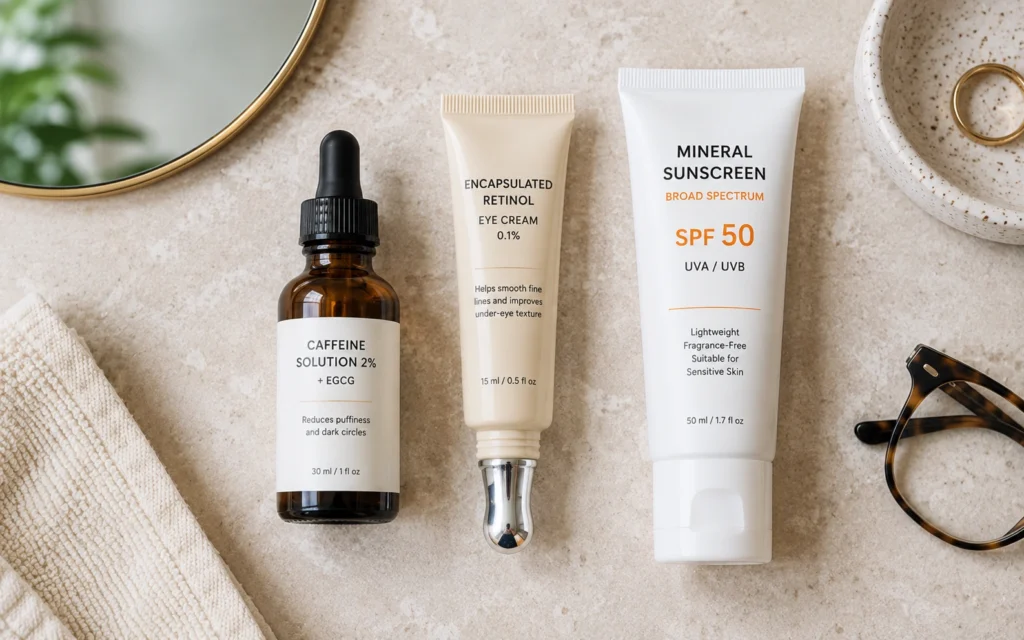
To manage dark circles effectively, you must execute a predictable, two-phase daily routine that addresses both immediate vascular swelling and long-term pigment production. Do not introduce five new products at once; start with this basic, structurally sound routine-first framework.
Step 1: The Morning Constriction and Protection Layer
Your morning focus must center entirely on vascular drainage and environmental defense. Apply a water-based serum containing 2% Caffeine directly to your clean under-eye skin before your facial moisturizer. Caffeine acts as a potent topical vasoconstrictor, physically narrowing the widened capillaries to reduce the volume of visible blood pooling beneath the surface within twenty minutes.
Once your caffeine layer dries completely, apply a dedicated mineral sunscreen containing Zinc Oxide or Titanium Dioxide across your entire orbital bone. UV radiation actively destroys the sparse collagen matrix supporting your lower eyelids and accelerates melanin production, rendering your entire evening routine useless if you step outside unprotected.
Step 2: The Evening Barrier Repair and Cellular Turnover Layer
Your night-time phase shifts the focus away from temporary constriction toward structural cellular renewal and pigment inhibition. After a gentle water-based wash, apply a pea-sized amount of a specialized eye cream containing 0.1% Encapsulated Retinol or Retinaldehyde across the lower orbital rim, patting it from the outer cheekbone inward using your ring finger. Encapsulated retinoids slowly release into the thin tissue over several hours, safely stimulating collagen synthesis to thicken the translucent skin layer over a twelve-week period.
Follow your retinoid layer with an emollient moisturizer rich in Ceramides and Niacinamide. Niacinamide actively blocks the transfer of melanin packets into your surface skin cells, while ceramides seal the delicate lipid barrier to prevent the transepidermal water loss that causes under-eye skin to look deflated, papery, and unnaturally shadowed by morning.
Common Mistakes and Eye Care Tips to Avoid Skin Barrier Damage
The absolute most damaging mistake a beginner can make is using harsh, alcohol-laden waterproof makeup removers paired with coarse cotton pads to scrub away daily mascara. This violent physical friction causes immediate micro-tears in the delicate periorbital barrier and triggers post-inflammatory hyperpigmentation that can take months to fade. Switch permanently to a nourishing cleansing balm or a lipid-replenishing micellar water; hold the damp pad gently over your closed eye for fifteen full seconds to dissolve the pigment before wiping it away with a single, weightless downward motion.
Another critical routine error is applying your targeted under-eye treatments too close to your actual eyelash line or directly onto your upper eyelids. Active ingredients migrate naturally across the skin surface as your face warms up during sleep. If you place a retinoid or an acidic vitamin C derivative right along your lower lid margin, the formula will seep directly into your eye, causing chemical conjunctivitis, chronic tear duct irritation, and systemic dry eye symptoms that destroy your eye health and increase vascular redness.
Frequently Asked Questions About How to Reduce Dark Circles
Can an over-the-counter eye cream completely remove genetic dark circles?
No, a topical cream cannot alter your genetic bone structure or skin density. If your dark circles are caused by deep-set orbital hollows or naturally translucent skin that exposes underlying blood vessels, topical skincare will only provide minimal cosmetic brightening, not total elimination.
How long does it take to see visible results from a targeted under-eye routine?
You must maintain a consistent routine for at least eight to twelve weeks to observe actual structural fading. Pigment-correcting ingredients like vitamin C derivatives and retinoids depend entirely on the skin’s natural 28-day cellular turnover cycle to bring fresh, unblemished cells to the surface.
Does drinking more water daily eliminate dark circles?
Drinking water will only improve under-eye shadows if your circles are exacerbated by acute dehydration, which causes the thin under-eye tissue to flatten and reveal the dark capillary bed underneath. If your shadows stem from hyperpigmentation or genetics, hydration alone will not fix them.
Is it safe to apply my regular face retinol directly under my eyes?
Avoid using high-strength facial retinols directly on the thin periorbital area. The skin layer beneath your eyes is up to ten times thinner than the rest of your face, meaning facial formulas can quickly cause chemical burns, severe scaling, and chronic inflammation.
Continue Exploring
- The Complete Skin Barrier Playbook — Read our foundational guide on how to identify a damaged skin barrier and rebuild your lipids using targeted ceramide ratios.
- Topical Antioxidant Selection Guide — Learn how to pick a non-irritating vitamin C derivative that safely brightens facial hyperpigmentation without causing chemical inflammation.