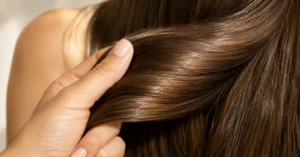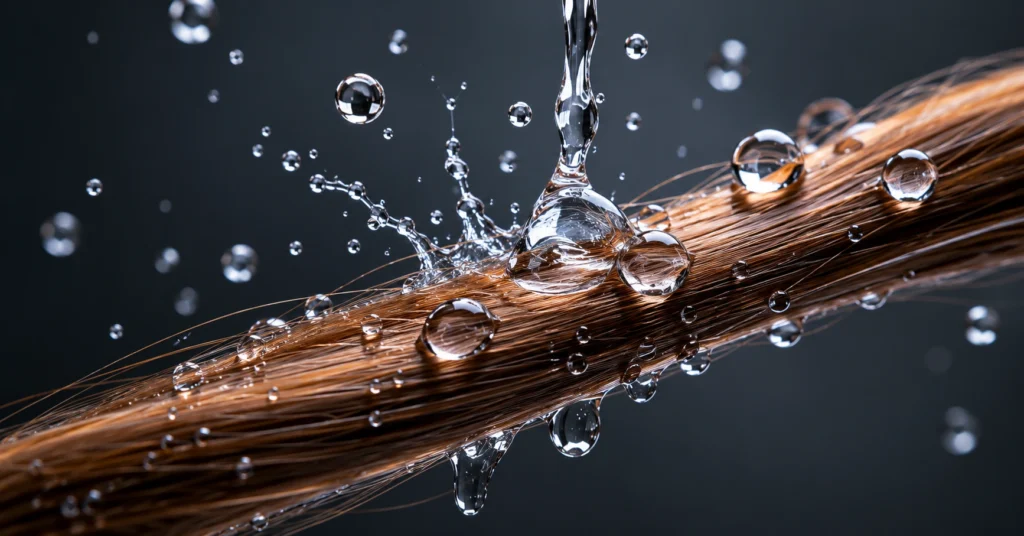
You know that feeling when you rub your hair between your fingers after washing it, and it actually makes a faint squeaking sound? Marketing tells you that means it’s perfectly clean. It doesn’t. That squeak is the physical sensation of a stripped cuticle. Your hair is essentially begging for moisture, and you’ve just washed away every lipid protecting it.
Most people treat their hair wash products like a matched set of soap. They aren’t. Shampoo is a surfactant designed to strip oil, dirt, and product buildup from your hair shaft. Conditioner is an emollient designed to put moisture back in and seal the cuticle. Using them interchangeably, or skipping one because your hair “feels fine,” is the fastest way to wreck your scalp barrier or turn your ends into straw.
The fundamental difference in the shampoo vs conditioner debate is their chemical purpose: shampoo cleanses by lifting away sebum and debris using surfactants, while conditioner deposits cationic polymers and lipids to smooth the hair cuticle and reduce friction. For most hair types, shampooing the scalp and conditioning the mid-lengths to ends is the baseline requirement for healthy hair.
Here is the exact breakdown of what these products do, why the marketing surrounding them is largely misleading, and how to build a routine that actually works without wasting your money.
Quick Facts: The Baseline Mechanics
Before diving into the routine, you need to understand the chemical division of labor. If you don’t know what these products are actually doing to your hair structure, you will buy the wrong ones.
- Primary Function (Shampoo): Lifts and removes sebum, environmental pollutants, and styling product residue using anionic (negatively charged) surfactants.
- Primary Function (Conditioner): Deposits moisture, smooths the cuticle, and reduces friction using cationic (positively charged) polymers and emollients.
- Ideal pH Level: 4.5 to 5.5 for both. This matches the natural acidity of the scalp and keeps the cuticle lay flat.
- Application Zone: Shampoo belongs strictly on the scalp. Conditioner belongs strictly on the mid-lengths and ends.
- Water Temperature: 35°C (95°F). Hot water swells the cuticle and strips natural oils; cold water fails to emulsify the sebum properly.
What Shampoo Actually Strips and What Conditioner Replaces
To understand why you need both, you have to look at the chemistry of the hair shaft. Your hair is covered in overlapping scales called the cuticle. When your hair is healthy, these scales lay flat, reflecting light and feeling smooth.
Shampoo works because its main ingredients—surfactants—have a hydrophilic (water-loving) head and a lipophilic (oil-loving) tail. When you massage shampoo into your scalp, the tails bind to the sebum and dirt, while the heads bind to the water. When you rinse, the entire structure is pulled away. But surfactants are not perfectly selective. They also strip away the 18-methyl ester layer, the natural lipid coating that keeps the cuticle flat.
This is where the negative charge matters. Because shampoo is typically anionic, it leaves the hair shaft with a slight negative electrical charge. This causes the cuticle scales to repel each other and stand up, making the hair feel rough and prone to tangling.
Conditioner is the chemical counter-measure. It relies on cationic ingredients, like behentrimonium chloride or cetrimonium bromide. Because opposite charges attract, these positively charged molecules bind directly to the negatively charged, damaged areas of the hair shaft. They lay the cuticle scales back down, neutralize the static charge, and deposit a thin layer of silicones or natural oils to lock in moisture.
Skip the conditioner, and you are leaving the cuticle raised, negatively charged, and exposed to mechanical damage from brushing.
Why Using Both Matters (And When One Is Enough)
There is a massive industry built around simplifying your shower routine. Co-washing—using only conditioner to wash your hair—is heavily marketed, particularly for curly hair textures. The premise is that traditional shampoos are too harsh and strip natural oils, so you should just use a cleansing conditioner.
For thick, highly textured, or severely dry hair, this can work. The hair produces sebum, but the tight curl pattern prevents it from traveling down the shaft. A cleansing conditioner provides gentle slip to remove surface dust without stripping the little moisture the hair has.
But for fine, straight, or oily hair? Co-washing is a disaster.
I spent three months trying the “no-poo” and co-washing methods to train my hair to produce less oil. It didn’t work. My scalp just developed severe seborrheic dermatitis because the cleansing conditioners lacked the surfactant strength to break down the sebum, leaving my hair follicles suffocated in lipid buildup within 48 hours. If you have fine hair, skip the conditioner-only trend. It will leave your hair flat, greasy, and smelling stale by the second day.
If you find traditional shampoo too drying but co-washing too heavy, the middle ground is a sulfate-free shampoo paired with a lightweight, silicone-free conditioner. This gives you the cleansing power of a surfactant without the aggressive stripping of sodium lauryl sulfate, followed by hydration that won’t weigh fine hair down.
How to Build a Hair Care Routine From Scratch (Beginner Guide)
Knowing what the products do is only half the battle. How you apply them dictates whether they actually work. Most people wash their hair incorrectly, diluting the products or applying them to the wrong zones.
Here is the exact sequence for a functional hair care routine.
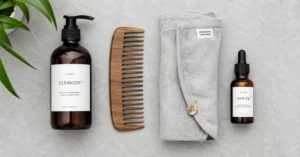
Step 1: Detangle before you wet your hair. Hair is at its most fragile when it is saturated with water. The hydrogen bonds in the hair shaft swell and weaken. If you try to brush out knots in the shower, you will snap the hair. Use a wide-tooth comb on dry hair before you even turn on the water.
Step 2: Regulate the water temperature. Set your shower to roughly 35°C (95°F). It should feel warm, not hot. Boiling water strips the scalp of its natural acid mantle and forces the cuticle wide open. If the water is too cold, the shampoo won’t emulsify the oils properly, leaving a dull film on the scalp.
Step 3: Emulsify the shampoo first. Do not squirt shampoo directly onto the crown of your head. It will pool in one spot and be incredibly difficult to rinse out. Pump the shampoo into your palms, rub them together to create a lather, and then apply it to your scalp.
Step 4: Focus strictly on the scalp. Your hair length gets cleaned by the suds running down it when you rinse. You do not need to scrub the ends of your hair. That just causes friction and tangles. Use the pads of your fingers—not your nails—to massage the scalp for exactly 60 seconds. This breaks up the sebum and stimulates blood flow without causing micro-tears in the skin.
Step 5: Squeeze out the water before conditioning. This is the most skipped step in any beginner guide. If your hair is soaking wet, the water acts as a barrier. The conditioner will slide right off and go down the drain. Gently squeeze the excess water out of your hair, or run a wide-tooth comb through it to remove the bulk of the moisture.
Step 6: Apply conditioner mid-length to ends. Start applying the conditioner about two inches below your ears. Work it down to the tips. Never put conditioner on your scalp unless you have exceptionally dry, coily hair and are using a specifically formulated scalp treatment. On a normal scalp, it will clog the follicles and cause flat, greasy roots.
Step 7: Let it sit for three minutes. Conditioner is not a instant rinse-off. It needs time for the cationic polymers to bind to the hair shaft. Leave it on for at least 120 to 180 seconds while you wash your body, then rinse thoroughly with cool water to seal the cuticle.
Five Hair Care Tips That Waste Your Time and Money
The beauty aisle is designed to make you buy products you don’t need. Here are five common practices that actively damage your hair or just burn through your wallet.
1. Washing your hair every single day. Unless you work in a highly polluted environment, sweat heavily every day, or use massive amounts of heavy styling products, you do not need to shampoo daily. Daily washing strips the scalp, which often triggers a rebound effect where the sebaceous glands overproduce oil to compensate. Try stretching your washes to every other day, or every three days for thicker hair.
2. Using a 2-in-1 shampoo and conditioner. These products attempt to combine anionic surfactants and cationic polymers in the same bottle. The chemistry requires a complex suspension system that usually fails in practice. The conditioning agents are often washed away before they can bind to the hair, or they leave a heavy, uneven residue. Buy separate products.
3. Rough towel drying with a standard bath towel. Standard cotton bath towels have a rough texture that creates massive friction on the raised, wet cuticle. This causes breakage and severe frizz. Swap the terrycloth for a microfiber hair towel or a clean, soft cotton t-shirt. Gently press the water out; do not rub.
4. Ignoring hard water buildup. If you live in an area with hard water, minerals like calcium and magnesium bind to your hair shaft. No amount of clarifying shampoo will remove this because minerals are not organic debris. You need a chelating shampoo, which contains EDTA (ethylenediaminetetraacetic acid) to bind to the metals and wash them away. Use it once a month if you have hard water.
5. Applying heat protectant after you start styling. Heat protectants work by forming a thermal barrier over the hair cuticle. If you spray it on section by section while you are already holding the straightener, the first sections are getting unprotected heat. Spray the protectant on your damp hair, distribute it evenly with a comb, and let it dry completely before applying any hot tools.
What to Buy: Real Products for Real Hair Types
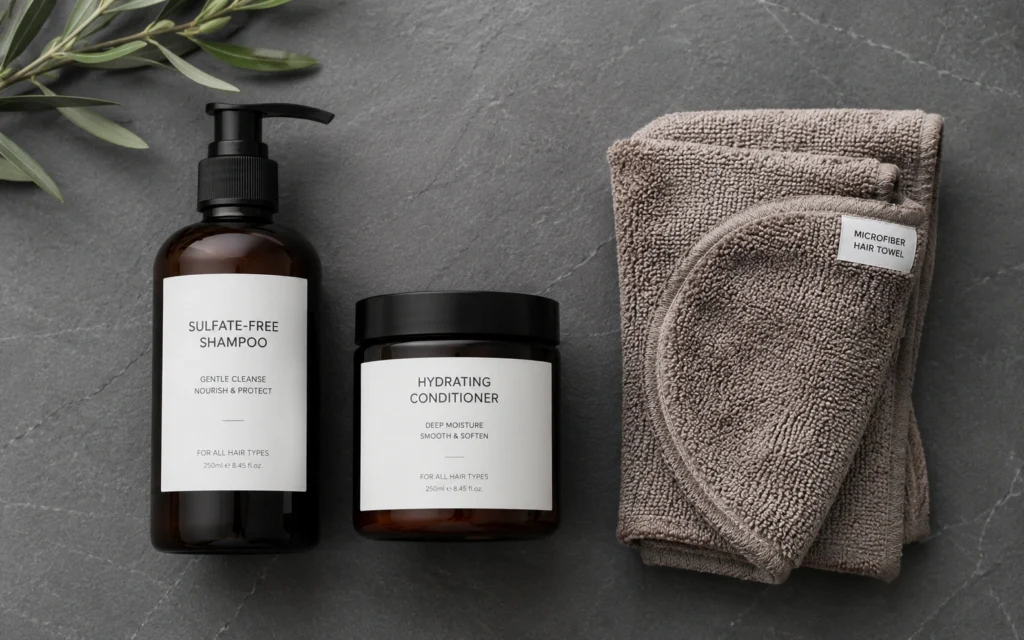
Stop buying products based on the aesthetic of the bottle. You need to buy based on your hair’s porosity and density. Here is what actually works for the four main hair profiles, with realistic pricing.
Fine, Straight Hair You need volume and lightweight hydration. Heavy butters and silicones will flatten your hair instantly. Look for shampoos labeled “volumizing” and conditioners with hydrolyzed wheat protein. Avoid products where cetyl alcohol or shea butter are in the top five ingredients.
- Target Price: A 250ml bottle of a reliable drugstore volumizing shampoo costs around $8 (2025–2026 rates — verify before travel).
Thick, Coarse Hair Your hair has a wide diameter and naturally resists moisture. You need heavy emollients. Look for ingredients like argan oil, shea butter, and dimethicone. Dimethicone gets a bad reputation, but for thick hair, it is the most effective ingredient for sealing the cuticle and preventing humidity-induced frizz.
- Target Price: A 300ml bottle of a hydrating salon-grade conditioner costs roughly $24 (2025–2026 rates — verify before travel).
Curly, Coily Hair Your primary enemy is friction and moisture loss. You need high “slip” to detangle without breaking the curl pattern. Sulfate-free shampoos are non-negotiable here; sulfates will turn coily hair into a dry, tangled mat. Look for cleansers using cocamidopropyl betaine, and conditioners packed with glycerin and aloe vera.
- Target Price: A 350ml bottle of a sulfate-free curl cleanser averages $16 (2025–2026 rates — verify before travel).
Color-Treated Hair The chemical process of dyeing your hair forces the cuticle open to deposit pigment. This permanently compromises the hair’s structural integrity. You need low-pH shampoos to keep the cuticle closed, and UV filters to prevent the sun from oxidizing the color. Avoid clarifying shampoos entirely, as they will strip the color molecules right out of the cortex.
- Target Price: A 250ml bottle of a color-safe, UV-protectant shampoo costs about $22 (2025–2026 rates — verify before travel).
Frequently Asked Questions About Shampoo vs Conditioner
Can I use conditioner as shampoo?
No. Conditioner lacks the anionic surfactants required to lift sebum, environmental pollutants, and product buildup from the scalp. Using it to cleanse will leave your hair coated in a heavy lipid film that attracts more dirt, leading to dullness and potential scalp irritation within a few washes.
How often should I actually wash my hair?
It depends entirely on your hair texture and scalp oil production. Fine, straight hair typically requires washing every other day because sebum travels down the shaft quickly. Thick, coily hair can often go one to two weeks between washes because the natural oils struggle to navigate the tight curl pattern.
Does shampoo expire if it is unopened?
Yes. Most commercial shampoos have a shelf life of 18 to 24 months, even when sealed. Over time, the preservative system degrades, and the emulsion can separate. Using expired shampoo risks scalp irritation and reduced cleansing efficacy because the active surfactants break down.
What is the difference between a regular conditioner and a hair mask?
A regular conditioner uses lighter emollients and cationic polymers to smooth the outer cuticle layer for daily manageability. A hair mask contains a much higher concentration of heavy butters, oils, and proteins designed to penetrate the cortex, requiring a longer processing time of 10 to 20 minutes to be effective.
Continue Exploring
If you want to expand this logic to the rest of your regimen, understanding the foundational steps is critical.
- complete beauty routine: This resource breaks down the exact order of operations for skincare and hair care, ensuring your active ingredients actually penetrate instead of sitting on the surface.
- basic skincare routine: While hair care focuses on the cuticle and shaft, skincare requires a completely different approach to the acid mantle; this guide covers the non-negotiable steps for facial skin health.