Most hair advice fails because it treats hair as static fabric rather than a living scalp ecosystem. The beauty industry wants you to buy an eight-step regimen packed with masks, serums, and oils that promise immediate, glassy transformation. But stacking heavy silicone products onto an unwashed scalp simply glues down debris, suffocates follicles, and leads to long-term breakage.
A functional hair care routine requires exactly three core steps: cleansing the scalp, conditioning the mid-lengths to ends, and protecting the structural cuticle layer. Strip away the marketing jargon, stop buying products based on how they smell, and build a system based entirely on your specific biological baseline.
The Three-Tier Hair Care Routine Blueprint
| Option | Cost (Monthly Average) | Best For | Limitation | Verdict |
| The Baseline Routine | ¥3,500 – ¥5,000 | Beginners, low-maintenance styles, and healthy scalps. | Will not repair severe chemical damage or thermal breakdown. | Start here. Master cleansing and basic hydration before buying extras. |
| The Moisture-Heavy Routine | ¥6,000 – ¥9,500 | Coarse, curly, highly porous, or heavily color-treated hair. | Weighs down fine strands; can cause scalp buildup if overused. | Use if your hair feels rough like wool 24 hours after washing. |
| The Balancing Scalp Routine | ¥5,500 – ¥8,500 | Fine hair, over-productive oil glands, and flaky scalps. | Ends can dry out if protective steps are omitted during styling. | Choose this if your roots look slick or wet by hour 24 post-wash. |
What This Routine Rewards — and What It Punishes If You Arrive Unprepared
A successful hair care routine rewards consistency and biological tracking over raw product spend. If you take the time to figure out your scalp type, you can fix issues like chronic oiliness or flaking within 21 days. The system punishes laziness at the washing stage and impatience during drying. Rubbing your head violently with a standard terrycloth towel will shred the cuticle layer when it is at its most vulnerable.
You cannot fix a fundamentally broken structural layer with an expensive post-wash serum. Hair is dead keratin; once the outer shingles are torn off by heat or friction, they do not grow back. Your goal is preservation, not resurrection.
What to Know Before You Go: Porosity, Density, and Scalp Chemistry
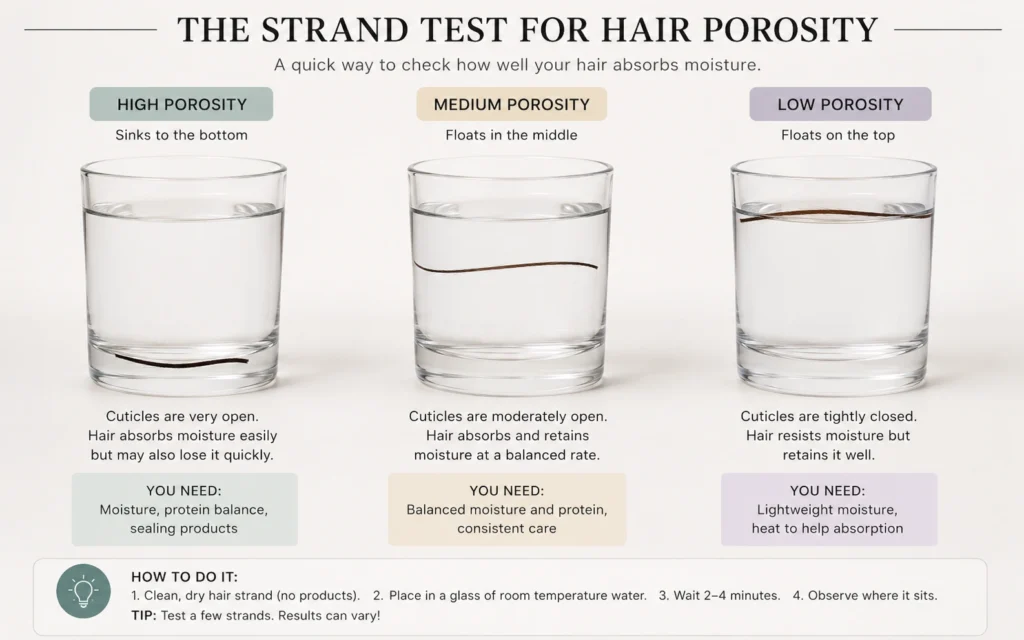
Before buying a single bottle of shampoo, you must execute a simple diagnostic check. Wash your hair with a basic clarifying formula, omit conditioner, and let a single clean strand air-dry. Drop that strand into a glass of ambient room-temperature tap water and watch it for exactly five minutes.
- High Porosity: If the strand sinks straight to the bottom of the glass within 60 seconds, your hair structure is porous. Water moves in and out easily, meaning you need rich creams and heavy oils to lock in hydration.
- Low Porosity: If the strand sits on top of the water after five minutes, your cuticle shingles are tightly locked. Heavy products will just sit on the surface like grease, so you require lightweight, water-based lotions.
- Scalp Assessment: Touch your roots exactly 24 hours after washing. If they slick your finger with oil, your scalp is overproductive. If they feel tight or show fine powder flakes, your scalp lacks natural lipids.
The Experiences Worth Building the Trip Around: The Three-Step Method
Building the daily protocol is an exercise in editing. Do not add complex steps until your basic cycle is flawless.
Step 1: Scalp Cleansing
The shampoo is strictly for your skin, not your ends. Wet your hair completely with warm water for 60 seconds to loosen water-soluble debris. Apply a nickel-sized amount of shampoo directly to your fingers, then work it into your scalp using the pads of your thumbs—never your fingernails. Focus entirely on the crown, temples, and the nape of your neck, allowing the suds to run down the lengths naturally when you rinse.
Step 2: Mid-Length Hydration
Conditioner belongs exclusively on the bottom two-thirds of your hair. Squeeze out excess water before application so the formula isn’t diluted immediately. Work a quarter-sized amount through your strands, using your fingers to gently untangle any knots. Leave it on for exactly 120 seconds before rinsing with cool water, which helps smooth down the cuticle shingles.
Step 3: Cuticle Protection
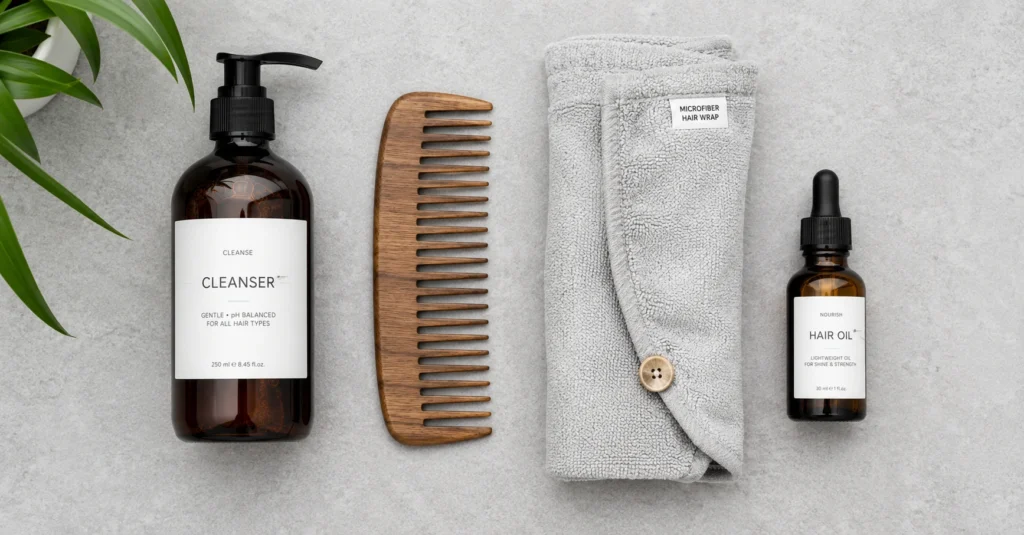
Never leave the shower and go straight to high-heat styling tools. Wrap your hair in a smooth microfiber cloth or an old cotton t-shirt for 15 minutes to pull out excess moisture without friction. If you use a hair dryer, apply a dedicated dimethicone-based heat protectant across all damp sections. Keep the nozzle moving constantly at a distance of 15 centimeters from your head.
Where to Stay: Product Categories and Real Prices
The market is saturated with misleading labels, but products fit into clear operational price tiers.
The Cleansing Tier
A standard, functional drugstore shampoo containing sodium laureth sulfate or sodium cocoyl isethionate costs between ¥1,200 and ¥2,200 (2025–2026 rates — verify before travel). These clear away oils effectively. Salon-grade formulations that omit harsher detergents and use concentrated amino-acid surfactants sit between ¥3,500 and ¥6,000 per bottle.
The Conditioning and Treatment Tier
Basic rinse-out conditioners cost roughly ¥1,500 for a standard 300ml bottle. If you require deep conditioning masks with high concentrations of hydrolyzed vegetable proteins or hydrolyzed keratin to patch up bleach damage, expect to pay between ¥4,000 and ¥7,500 per tub.
Getting Around: Tools, Combs, and Brushes
The physical tools you drag through your hair matter more than the liquids you put on it.
- The Wide-Tooth Comb: A solid wooden or high-grade acetate wide-tooth comb costs roughly ¥1,800. This is the only tool that should touch your hair when it is wet. It glides through tangles without snapping the elastic keratin bonds.
- The Detangling Brush: Flexible plastic bristle brushes designed with multi-tiered lengths cost around ¥2,500. Use these exclusively on completely dry hair, starting from the tips and working your way up to the roots in 10-centimeter sections.
- The Silk Pillowcase: A genuine 22-momme mulberry silk pillowcase costs between ¥4,500 and ¥7,000. It eliminates the overnight cotton friction that causes rough morning frizz and microscopic split ends.
What to Skip — and What to Do Instead
Skip the co-washing trend entirely if you have fine hair or suffer from a flaky scalp. Washing your hair solely with conditioner does not remove sebum; it simply deposits a layer of fatty alcohols over your follicles, leading to irritation, product buildup, and eventual thinning. If your hair feels dry, do not stop washing. Instead, keep using a proper shampoo on your roots, but apply a protective coat of lightweight conditioner to your ends before you apply the shampoo. This blocks the surfactants from stripping the dry lengths while allowing your scalp to get thoroughly cleaned.
Frequently Asked Questions About Hair Care Routines
How often should you actually wash your hair?
Wash frequency depends entirely on your scalp’s sebum production. Oily scalps require washing every 1 to 2 days using a clarifying or balancing formula, while dry or coarse hair textures should limit washing to once or twice a week to preserve natural lipids.
Do expensive hair products make a real difference?
Price does not guarantee efficacy. Salon brands often contain higher concentrations of active ingredients like hydrolyzed proteins, meaning you use less product per wash, but budget options with targeted surfactants work perfectly well for basic cleansing.
How do you stop hair breakage immediately?
Stop rubbing wet hair roughly with standard cotton towels, which tears fragile strands. Switch to a microfiber wrap or an old cotton t-shirt, use a wide-tooth comb starting strictly from the ends upward, and apply a heat protectant before using any hot tools.
Continue Exploring
- The Definitive Guide to Modern Skincare Fundamentals
- Learn how to align your facial skincare habits with your scalp health using simple, scientifically backed ingredient choices.
- Scalp Exfoliation Tactics for Chronic Buildup
- A deep dive into chemical versus physical scalp exfoliants and how to clear away stubborn styling buildup without inducing irritation.